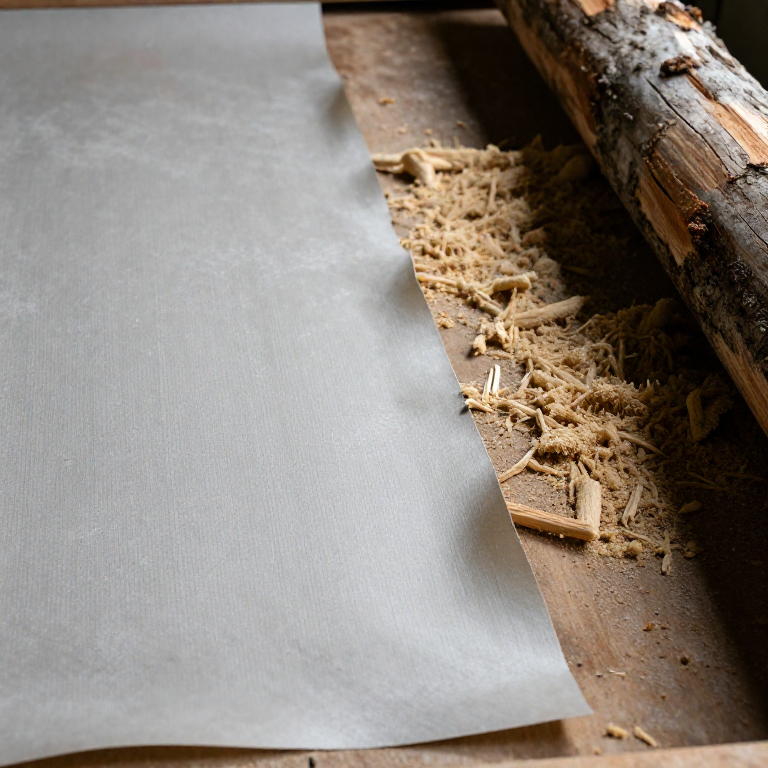


Making Paper from Wood Pulp — The Groundwood Process That Made Paper Cheap
For nearly two thousand years, paper was made from rags — worn-out linen and cotton beaten to pulp. It was good paper, but rags were scarce, and as literacy spread the world simply ran out of them. The answer, found in the 1840s, was to make paper from the most abundant fibre on Earth: wood.
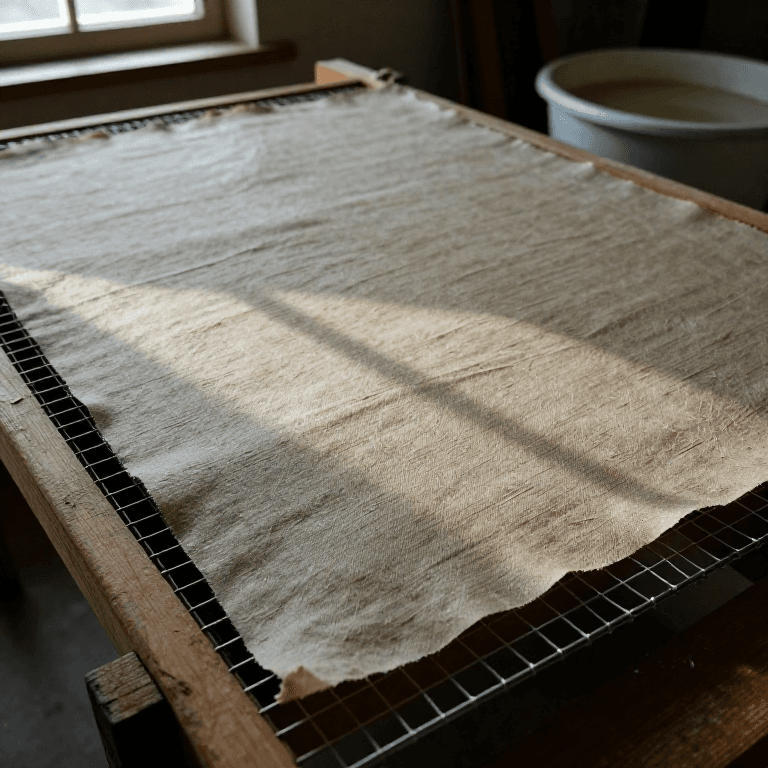
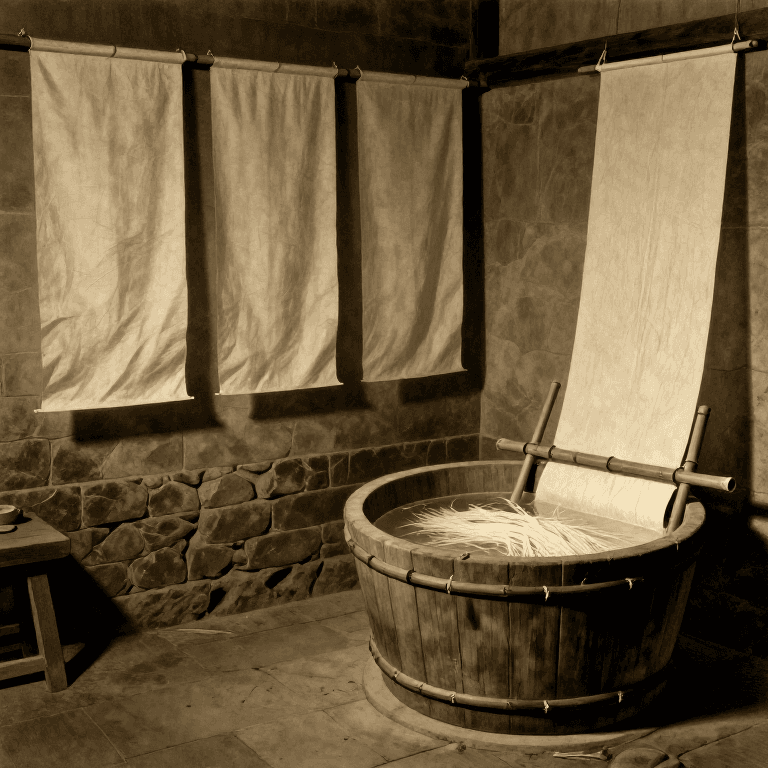
The simplest method is mechanical groundwood pulp. A log is pressed against a wet, spinning grindstone, which tears the wood into a slush of short fibres. Screened, refined, and matted on a wire, those fibres dry into paper. It is fast and cheap and turns a forest into newsprint — which is exactly what put a daily newspaper into every household.
Groundwood pulp keeps the wood's lignin, so the paper is weak and yellows with age, as old newspapers show. Removing the lignin by chemical pulping gives the white, durable paper of books — a more advanced step that built on this one. But it was cheap wood paper that truly democratised the printed word.
手順
Understand the shift to wood
Understand the shift to wood
Select softwood
Select softwood
このステップの材料:
 針葉樹材の丸太5 kg
Debark the logs
Debark the logs
必要な工具:
 ドローナイフ
Grind the wood to pulp
Grind the wood to pulp
このステップの材料:
 水40 リットル
必要な工具:
 回転砥石
回転砥石Screen the pulp
Screen the pulp
必要な工具:
 60 メッシュふるい
Refine the stock
Refine the stock
Add sizing and filler
Add sizing and filler
このステップの材料:
 松脂(ロジン)50 g
 ミョウバン(カリミョウバン)30 g
Form the sheet
Form the sheet
必要な工具:
 紙すき用の型
Couch and press
Couch and press
このステップの材料:
 ウールフェルト2 個
必要な工具:
 プレス
プレスDry the sheets
Dry the sheets
Finish the paper
Finish the paper
必要な工具:
プレスKnow its strength and weakness
Know its strength and weakness
材料
5- 5 kgプレースホルダー
- 40 リットルプレースホルダー
- 50 gプレースホルダー
- 30 gプレースホルダー
- 2 個プレースホルダー
この設計図で作るもの

関連ブループリント
これらのブループリントは知識を共有しています — 技術、材料、原理


CC0 パブリックドメイン
このブループリントはCC0で公開されています。許可を求めずに、自由にコピー、修正、配布、あらゆる目的で使用できます。
メイカーを応援するには、ブループリント経由で製品を購入してください。メイカーには メイカーコミッション がベンダーにより設定されています。または、このブループリントの新しいイテレーションを作成し、自分のブループリントにコネクションとして含めて収益を共有できます。