Ushirikiano
SANAA
UREMBO NA USTAWI
UJANJA
UTAMADUNI NA HISTORIA
BURUDANI
MAZINGIRA
CHAKULA NA VINYWAJI
UHANDISI WA KINYUME
SAYANSI
MICHEZO
TEKNOLOJIA
VAZI
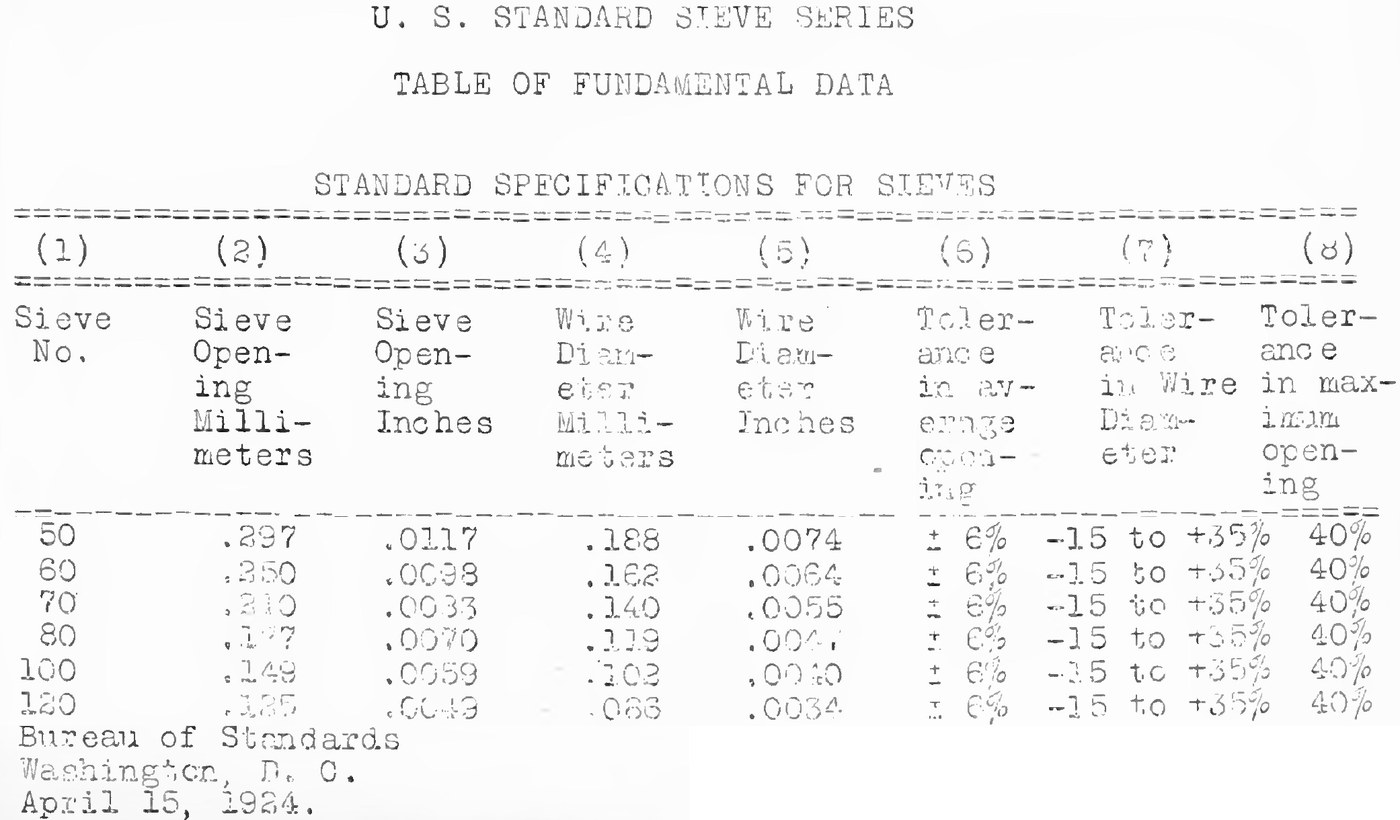

60-Mesh and 80-Mesh Sieves: U.S. Standard Sieves No. 60 and No. 80 (Bureau of Standards, 1924)
Two standard testing sieves made the same way; only the wire and the opening change with the sieve number. Plain-woven brass or bronze wire cloth is soldered smoothly into a round frame about 20 cm (8 in) across.
No. 60 has 0.250 mm openings (the 60-mesh sieve); No. 80 has 0.177 mm openings (the 80-mesh sieve). The finer the cloth, the finer the grains that pass.
Source: Bureau of Standards, Letter Circular 74, Standard Specifications for Sieves (revised 1924). Unknown: the frame metal and the weaving. Picture: the Bureau's table.
Kati
Unknown
Maagizo
1
1
Choose the sieve number
Choose the sieve number
The sieve number sets the wire and the opening (Bureau of Standards table, 1924):
No. 60: opening 0.250 mm (0.0098 in), wire 0.162 mm (0.0064 in).
No. 80: opening 0.177 mm (0.0070 in), wire 0.119 mm (0.0047 in).
The opening is the clear space between adjacent wires. No. 60 passes grains under 0.250 mm; No. 80 passes grains under 0.177 mm.
2
2
Weave the wire cloth
Weave the wire cloth
Weave plain (not twilled) cloth from brass, bronze or other suitable wire of the diameter for your sieve number, spacing the wires so the opening is as in the table each way. Ours: bronze wire. Not given: how it is woven.
Vifaa kwa hatua hii:
 Waya wa shaba-nyeusi1 warp and shoot wires
Zana zinazohitajika:
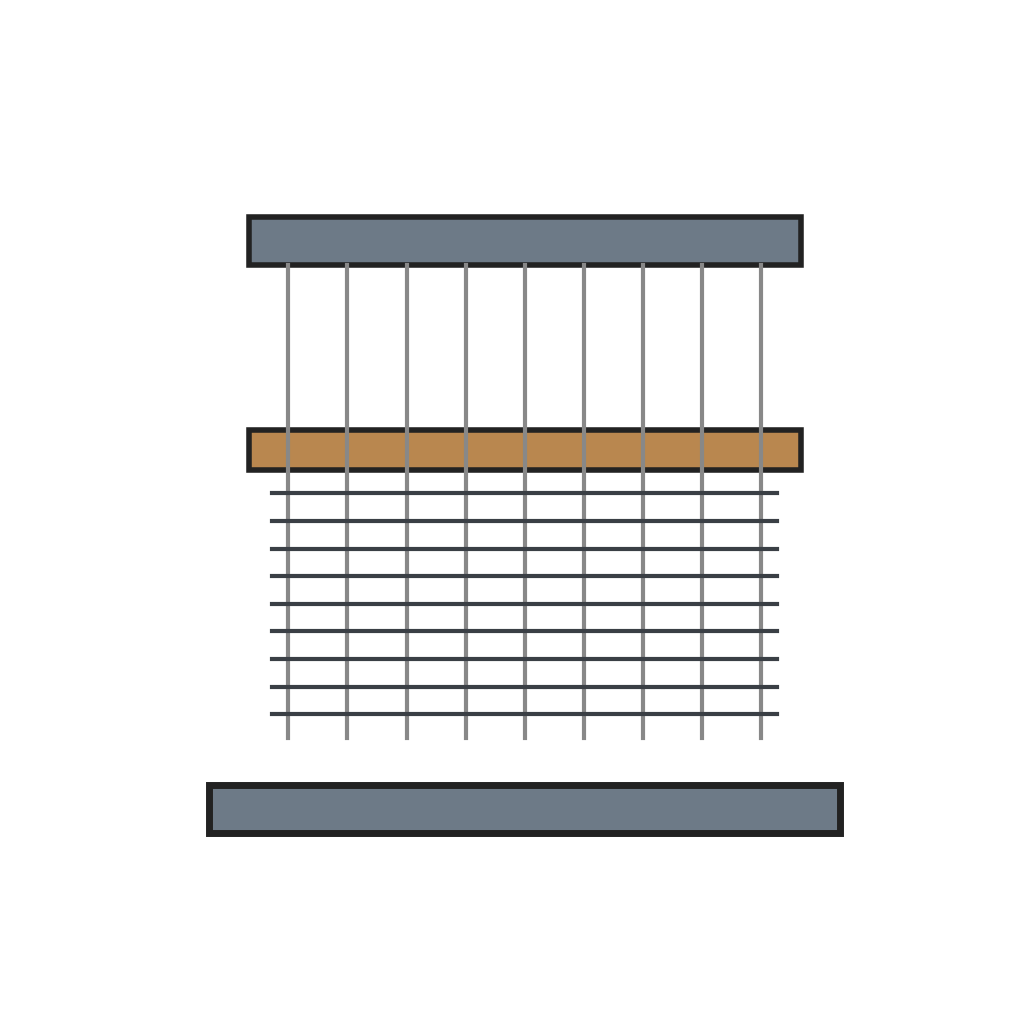 Mtambo wa kufuma wavu wa waya
3
3
Make the frame
Make the frame
Make a circular frame about 20 cm (8 in) across, with about 5 cm (2 in), or 2.5 cm (1 in), between its top and the cloth. Ours: brass strip. Not given: the frame metal.
Vifaa kwa hatua hii:
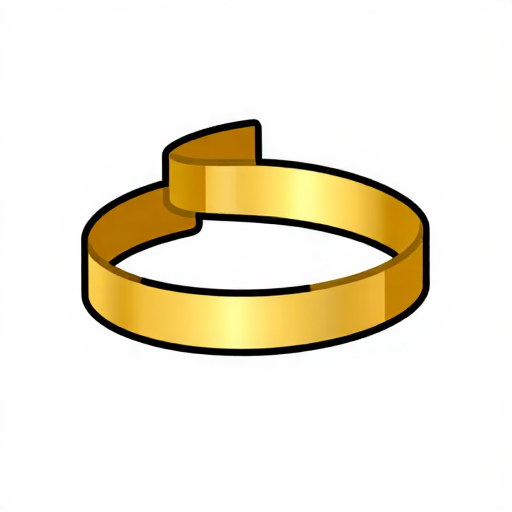 Utepe wa shaba-njano1 frame
Zana zinazohitajika:
 Mkasi wa bati
 Chuma cha kulehemia
4
4
Mount the cloth
Mount the cloth
Mount the cloth on the frame without distorting it. Fill the joint between cloth and frame smoothly with solder, so the material being sieved cannot catch in it.
Vifaa kwa hatua hii:
 Lehemu ya bati na risasi1 joint
 Fluksi1 joint
Zana zinazohitajika:
Chuma cha kulehemia5
5
Check it against the tolerances
Check it against the tolerances
Measure the warp and shoot wires separately. For both numbers the average opening must be within ±6 % of the table, the average wire diameter within −15 to +35 %, and no opening may exceed the table opening by more than 40 %. Reject a sieve with punctures, loose or wavy cloth, poor soldering, or too many large openings.
Zana zinazohitajika:
 Maikromita
 Kioo cha Kukuza
Vifaa
4- 1 warp and shoot wiresKishikilia Nafasi
- 1 frameKishikilia Nafasi
- 1 jointKishikilia Nafasi
- 1 jointKishikilia Nafasi
Zana Zinazohitajika
5- Kishikilia Nafasi
- Kishikilia Nafasi
- 2 vendors sell this, none ship to you yetKishikilia Nafasi
- Kishikilia Nafasi
- Kishikilia Nafasi
Vifaa vya Michoro Iliyounganishwa

Usambazaji 10%
120-Mesh Sieve: U.S. Standard Sieve No. 120 (Bureau of Standards, 1924)
na Tex
Fizikia
4
0
0
0
1
0
Usambazaji 10%
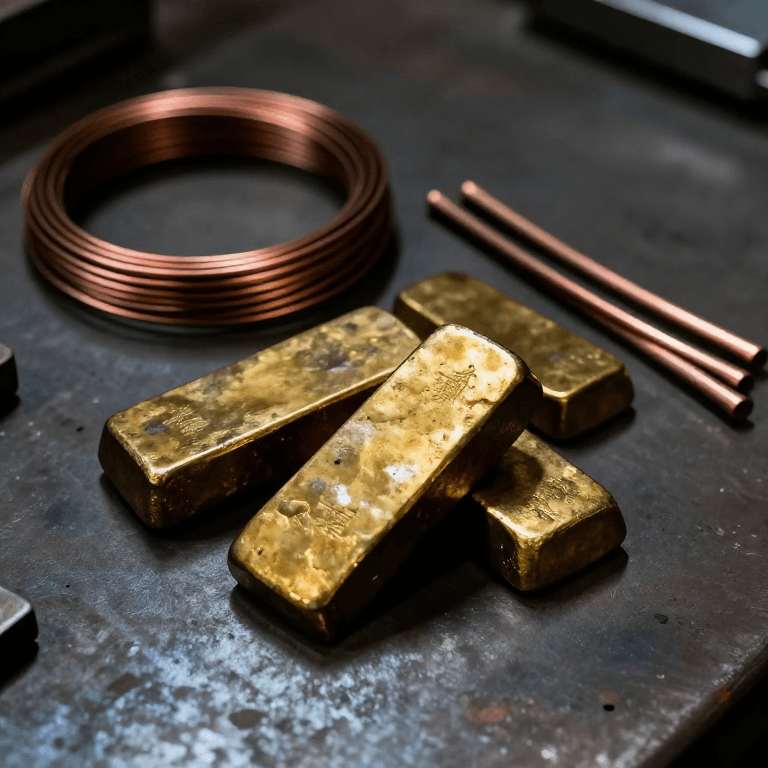
Tin Bronze Ingots, Wire and Rod
na Forge
Uchimbaji chuma
52
0
0
0
2
0
Usambazaji 10%
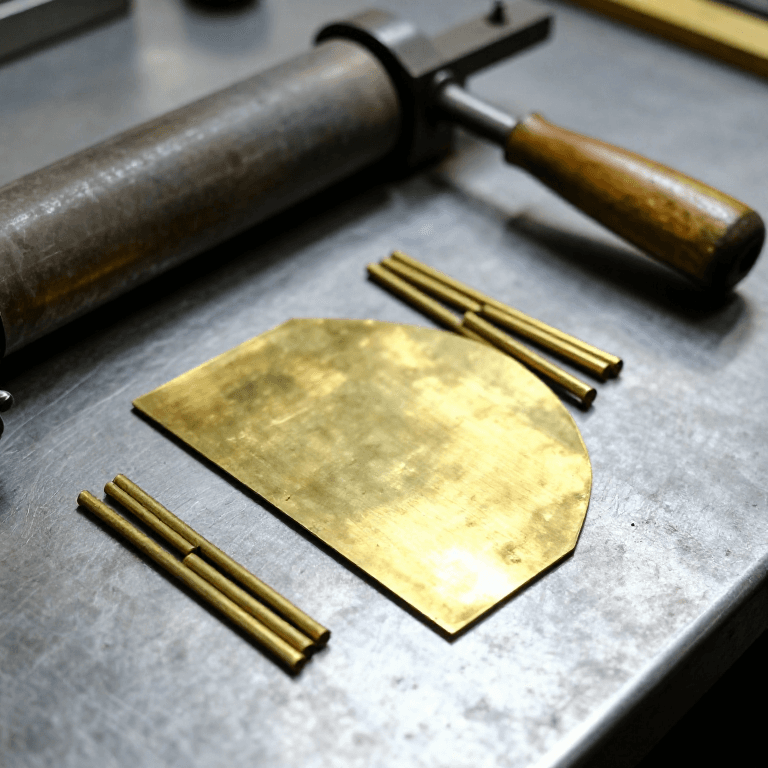
Brass Sheet, Strip and Rod from an Ingot
na Forge
Uchimbaji chuma
36
0
0
0
2
0
Hatari
Usambazaji 10%
Making Tin-Lead Solder — The Ancient Alloy That Joins Metals Without a Forge
na Peter
Uchimbaji chuma
58
0
0
0
3
0
Mchoro huu unatengeneza

CC0 Umma Wote
Mchoro huu umetolewa chini ya CC0. Uko huru kunakili, kubadilisha, kusambaza, na kutumia kazi hii kwa madhumuni yoyote, bila kuomba ruhusa.
Saidia Mtengenezaji kwa kununua bidhaa kupitia Mchoro wao ambapo wanapata Kamisheni ya Mtengenezaji iliyowekwa na Wachuuzi, au unda marudio mapya ya Mchoro huu na uiunganishe kama kiungo katika Mchoro wako kuchangia mapato.