
Anadolu'da Bakir Cevheri Toplama — Dogal Bakir ve Malakit Tanimlama
Maagizo
Bakir cevherini tanimak
Bakir cevherini tanimak
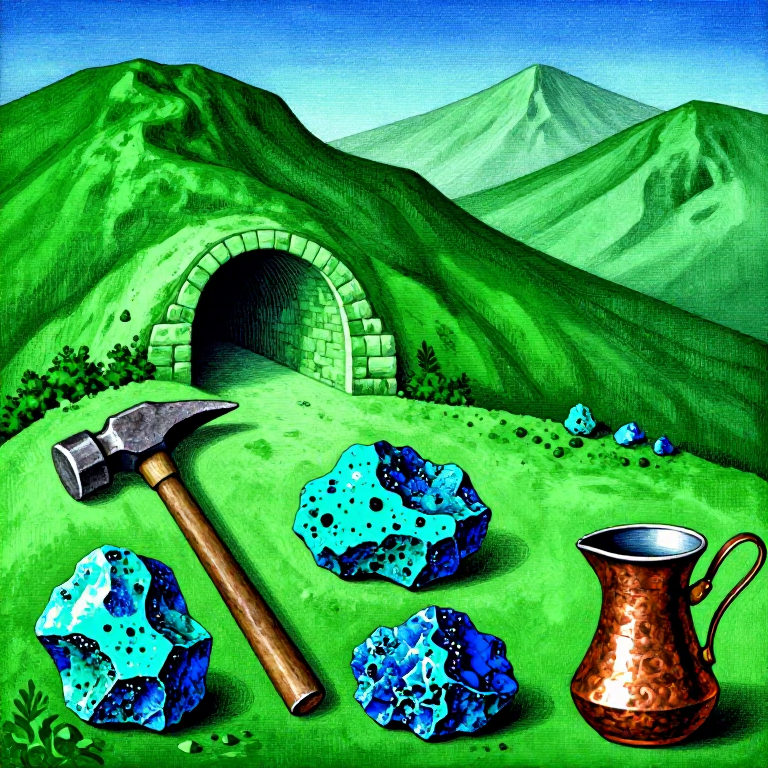
Bakir (Cu), atom numarasi 29 olan bir gecis metalidir. Dogada saf halde (dogal bakir) veya mineraller icinde bulunur. En yaygin bakir mineralleri malakit (Cu2(CO3)(OH)2, yesil), azurit (Cu3(CO3)2(OH)2, mavi), kalkopirit (CuFeS2, altin sarisi) ve kuprit (Cu2O, kirmizi) dir. Anadolu'da ozellikle malakit ve dogal bakir yaygindir.
Anadolu'daki bakir bolgelerini bilmek
Anadolu'daki bakir bolgelerini bilmek
Turkiye'nin baslica bakir yataklari Karadeniz Bolgesi (Murgul, Artvin; Kure, Kastamonu), Guneydogu Anadolu (Ergani, Diyarbakir) ve Orta Anadolu'da (Nigde, Aksaray cevreleri) bulunur. Tarih oncesi bakir isleme, Catalhoyuk (Konya) ve Cayonu (Diyarbakir) kazilariyla belgelenmistir. Bu bolgeler, yuzey cevher ornekleri bulmak icin iyi baslangic noktalardir.
Zana zinazohitajika:
 Ramani ya jiolojia
Arazi izinlerini kontrol etmek
Arazi izinlerini kontrol etmek
Turkiye'de maden haklari devlete aittir (Maden Kanunu, No. 3213). Bilimsel veya egitim amacli kucuk numune toplama genellikle tolere edilir, ancak ticari amacli kazi icin maden ruhsati gereklidir. Ozel arazilerde arazi sahibinden izin alin. Arkeolojik sit alanlari ve koruma bolgelerinden numune almak yasaktir.
Yesil ve mavi lekelenmeleri aramak
Yesil ve mavi lekelenmeleri aramak
Bakir mineralleri yuzey kayalarinda belirgin renklerle kendini gosterir. Malakit parlak yesil, azurit koyu mavi renktedir. Bu renkler, bakirin karbondioksit ve su ile reaksiyona girmesiyle olusur. Dere yataklari, kayalik yarilmalar ve eski maden girislerinin cevresindeki kayalarda bu lekelenmeleri arayin. Yesil lekeler bakir varliginin en guclu gostergesidir.
Zana zinazohitajika:
 Kioo cha kukuza cha mkono 10x
Dogal bakiri tanimak
Dogal bakiri tanimak
Dogal bakir, metalik parlakliga sahip kirmizimsi-turuncu bir metaldir. Genellikle bazalt veya kumtasi icinde kucuk parcalar, yapraklar veya dallanan sekiller halinde bulunur. Yeni kirilmis yuzeyi parlak bakir rengindedir, havayla temas eden yuzeyleri yesil-kahverengi patina ile kaplidir. Sertligi Mohs olceginde 2,5-3'tur — bir bakir sikke ile cizilebilir.
Zana zinazohitajika:
 Sarafu ya shaba
Gerekli ekipmani hazirlamak
Gerekli ekipmani hazirlamak
Arazi calismasina cikmadam once ekipmaninizi hazirlayin. Jeoloji cekici, koruma gozlugu, eldiven, numune poseti, etiket ve marker gereklidir. Gunes kremi, su ve ilk yardim cantasi da yaninizdaolmalidir. Arazide en az iki kisi olarak calisin.
Vifaa kwa hatua hii:
 Vibandiko vya Alama1 paketi
Zana zinazohitajika:
 Nyundo ya jiolojia
 Miwani ya usalama iliyofungwa
 Glavu za Kazi za Ngozi
 Daftari la Uwandani
 Kalamu ya Wino wa Kudumu
 Mifuko ya sampuli (yenye zipu)
Numune toplamak
Numune toplamak
Yesil veya mavi lekelenme gosteren kayalari jeoloji cekici ile dikkatli bir sekilde kirin. Her vurustan once koruma gozlugunuzu takin — kaya parcalari tehlikelidir. Numuneleri yumruk buyuklugunde parcalar halinde cikarin. Her numuneden en az 2-3 parca alin, boylece farkli noktalardan karsilastirma yapabilirsiniz.
Zana zinazohitajika:
 Nyundo ya jiolojia (ncha ya kuchokoa)Miwani ya usalama iliyofungwa
 Patasi ya chuma baridi
Cizik testi yapmak
Cizik testi yapmak
Her numuneyi glazursuz bir porselen plaka (cizik plakasi) uzerinde surterek cizik rengini kontrol edin. Malakit acik yesil cizik birakir. Azurit acik mavi cizik birakir. Kalkopirit yesil-siyah cizik birakir. Dogal bakir metalik bakir renginde parlak cizik birakir. Cizik rengi, mineralin tozunun gercek rengidir ve gozle tanimlamadan daha guvenilirdir.
Zana zinazohitajika:
 Bamba la mstari (kaure isiyong'arishwa)
Sertlik testi yapmak
Sertlik testi yapmak
Mohs sertlik olcegini kullanarak minerali taniyin. Malakit 3,5-4 sertligindedir — bir bakir sikke (3,5) ile hafifce cizilebilir. Kalkopirit 3,5-4 sertligindedir. Dogal bakir 2,5-3 sertligindedir — tirnakla (2,5) cizilemez ama bir celik bicak (5,5) kolayca cizer. Bu testler mineralin kimligini dogrulamaniza yardimci olur.
Zana zinazohitajika:
 Ubapa wa kisu cha chuma cha DamaskasiSarafu ya shaba
Numuneleri etiketlemek
Numuneleri etiketlemek
Her numuneyi ayri bir posete koyun ve etiketleyin. Etiket uzerinde toplama tarihi, konum (GPS koordinatlari veya yer tarifi), kaya tipi, renk, cizik rengi ve sertlik test sonuclarini yazin. Bu bilgiler sonraki analiz ve degerlemde kritik oneme sahiptir. Numuneleri numaralandiriniz ve deftere ayni numaralari kaydedin.
Zana zinazohitajika:
Kalamu ya Wino wa KudumuDaftari la Uwandani Mifuko yenye zipu
Numuneleri temizlemek
Numuneleri temizlemek
Eve donunce, numuneleri temiz su ile yikayarak toz ve toprak kalintilarini giderin. Sert bir dis fircasi ile mineral yuzeylerini nazikce firalayin. Asit veya kimyasal madde kullanmayin — bunlar mineral yuzeyini bozar. Temizlenmis numuneleri havlu uzerinde kurumaya birakin.
Vifaa kwa hatua hii:
 Maji yaliyosafishwa kwa mvuke5 lita
Zana zinazohitajika:
 Mswaki mgumu
 Taulo ya kukaushia
Numuneleri siniflandirmak
Numuneleri siniflandirmak
Temizlenmis numuneleri mineral turune gore gruplayin: malakit (yesil), azurit (mavi), kalkopirit (sari-metalik), dogal bakir (kirmizimsi-metalik) ve karsi kayac (bakir icerikli kayac). Her grup icin ortalama boyut, renk yogunlugu ve tahmini bakir icerigini not edin. Yuksek bakir icerikli numuneler daha agir hissedilir — bakirin yogunlugu 8,96 g/cm3'tur.
Zana zinazohitajika:
 Trei za kupanga
Numuneleri saklamak ve belgelemek
Numuneleri saklamak ve belgelemek
Siniflandirilmis numuneleri ayri kutularda veya posetlerde saklayin. Malakit ve azurit neme duyarlidir — silika jel paketleri ile birlikte muhafaza edin. Numune koleksiyonunuzu bir katalogtablo halinde kaydedin: numune no, mineral adi, konum, tarih, agirlik. Bu kayitlar gelecekteki bakir eritme veya mineral isleme calismalari icin referans olusturur.
Vifaa kwa hatua hii:
 Vifurushi vya silika jeli5 vipande
Zana zinazohitajika:
Daftari la Uwandani Masanduku ya kuhifadhia
Vifaa
3- 1 paketiKishikilia Nafasi
- Kishikilia Nafasi
- 5 vipandeKishikilia Nafasi
Zana Zinazohitajika
18- Kishikilia Nafasi
- Kishikilia Nafasi
- Kishikilia Nafasi
- Kishikilia Nafasi
- Kishikilia Nafasi
- Kishikilia Nafasi
- Kishikilia Nafasi
- Kishikilia Nafasi
- Kishikilia Nafasi
- Kishikilia Nafasi
- Kishikilia Nafasi
- Kishikilia Nafasi
- Kishikilia Nafasi
- Kishikilia Nafasi
- Kishikilia Nafasi
- Kishikilia Nafasi
- Kishikilia Nafasi
- Kishikilia Nafasi
Mchoro huu unatengeneza

CC0 Umma Wote
Mchoro huu umetolewa chini ya CC0. Uko huru kunakili, kubadilisha, kusambaza, na kutumia kazi hii kwa madhumuni yoyote, bila kuomba ruhusa.
Saidia Mtengenezaji kwa kununua bidhaa kupitia Mchoro wao ambapo wanapata Kamisheni ya Mtengenezaji iliyowekwa na Wachuuzi, au unda marudio mapya ya Mchoro huu na uiunganishe kama kiungo katika Mchoro wako kuchangia mapato.