

Smelting Copper from Malachite Ore — Extractive Metallurgy
Maagizo
Build the Furnace
Build the Furnace
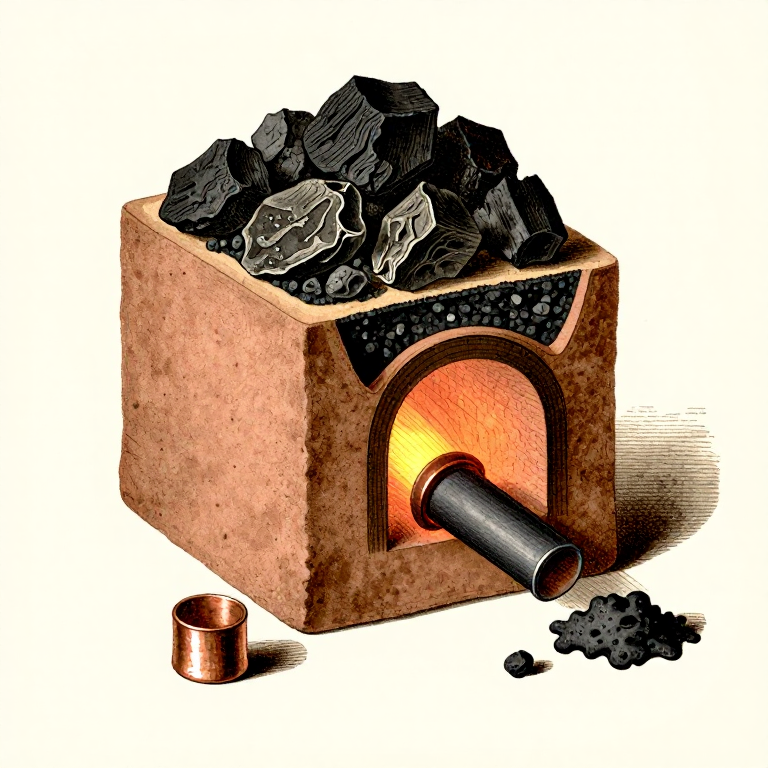
Construct a small shaft furnace from clay mixed with sand and chopped straw (the sand and straw improve thermal shock resistance). The furnace is a hollow cylinder approximately 30-40 cm in internal diameter and 50-70 cm tall. Leave an opening at the base for the tuyere — a clay pipe through which the bellows deliver forced air. The tuyere should enter the furnace at a slight upward angle, about 5-10 cm above the base. Leave a tap hole or removable plug at the base on the opposite side from the tuyere for draining slag. Allow the furnace to dry thoroughly before firing — wet clay will crack when heated.
Vifaa kwa hatua hii:
 Madini ya malakiti (Cu2CO3(OH)2)2-5 kg of crushed ore kg
 Mkaa Uliopondwa10-20 kg kg
 Udongo20-30 kg kg
 Mchanga laini5 kg kg
Prepare the Ore
Prepare the Ore
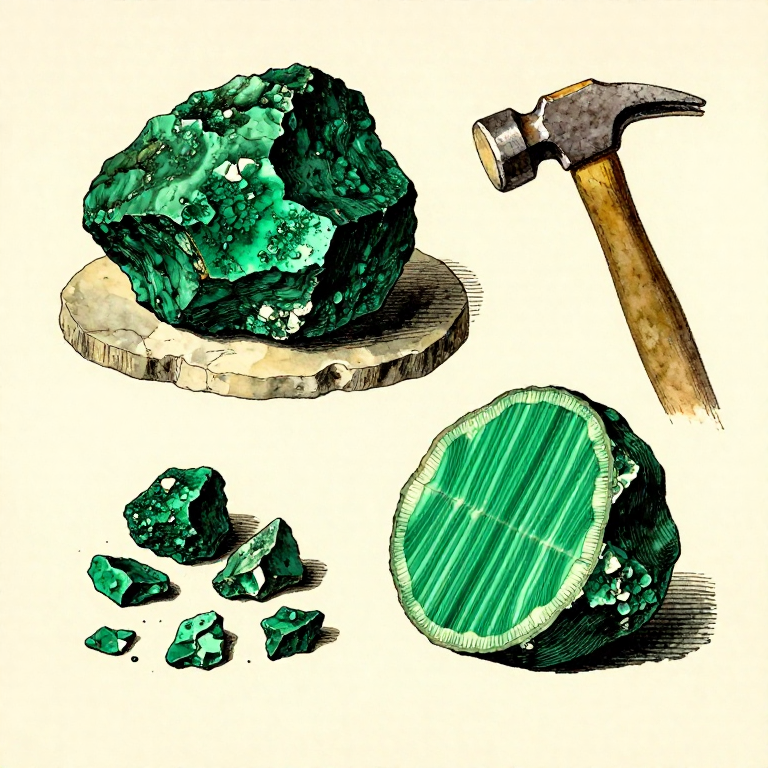
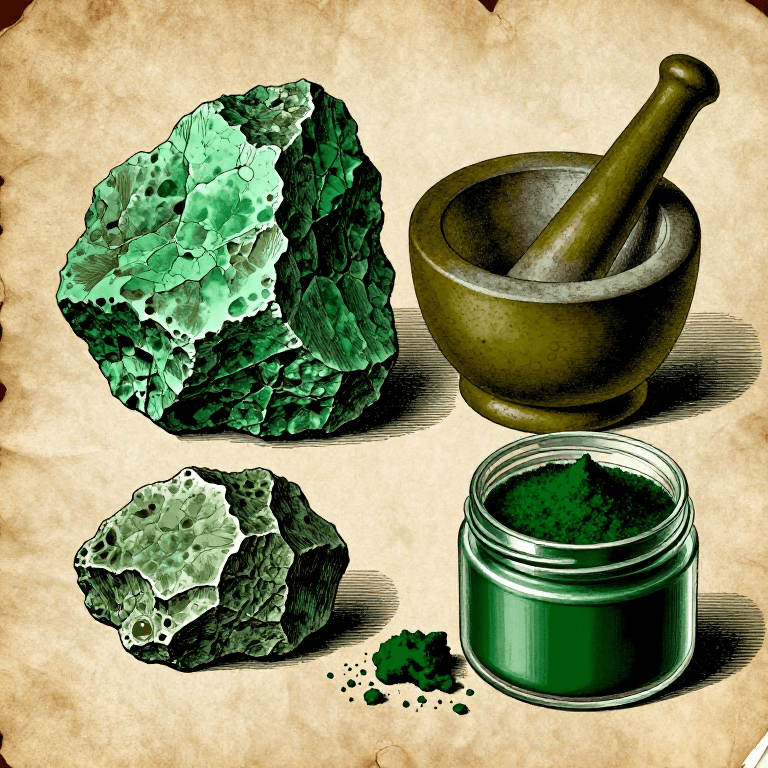
Crush the malachite ore to small pieces (roughly 1-2 cm) using a hammerstone on a flat stone anvil. Smaller pieces expose more surface area to the reducing gases, improving the efficiency of the smelt. Malachite (Cu2CO3(OH)2) is a green copper carbonate mineral that is relatively easy to reduce compared to copper sulphide ores — it requires only a carbon monoxide atmosphere at sufficient temperature. Sort out any obvious non-copper rock (gangue) to improve the copper content of your charge. Rich malachite ore contains approximately 57 percent copper by weight.
Charge and Light the Furnace
Charge and Light the Furnace
Fill the furnace with alternating layers of charcoal and crushed ore — a layer of charcoal 5-8 cm thick, then a layer of ore 2-3 cm thick, repeating until the furnace is full. Light the charcoal from the top and allow it to burn down slowly. Once the charcoal is well alight, begin pumping the bellows to force air through the tuyere. The forced air dramatically increases the combustion temperature. Charcoal burning in a forced-draft furnace reaches 1100-1200 degrees C — well above copper's melting point of 1085 degrees C. The carbon monoxide produced by the charcoal reacts with the copper oxide in the ore, reducing it to metallic copper.
Maintain the Smelt
Maintain the Smelt
Continue pumping the bellows steadily for 2-4 hours. As the charge descends in the furnace, add more charcoal and ore from the top to maintain the column. The chemical reaction proceeds as: CuO + CO -> Cu + CO2. The released copper collects as small prills (droplets) that sink through the slag to the bottom of the furnace. The slag — a glassy mixture of iron oxide, silica, and other impurities — floats on top of the denser copper. If the furnace has a tap hole, periodically drain the molten slag to prevent it from clogging the furnace. The smelt is complete when all the ore has been consumed.
Extract and Refine the Copper
Extract and Refine the Copper
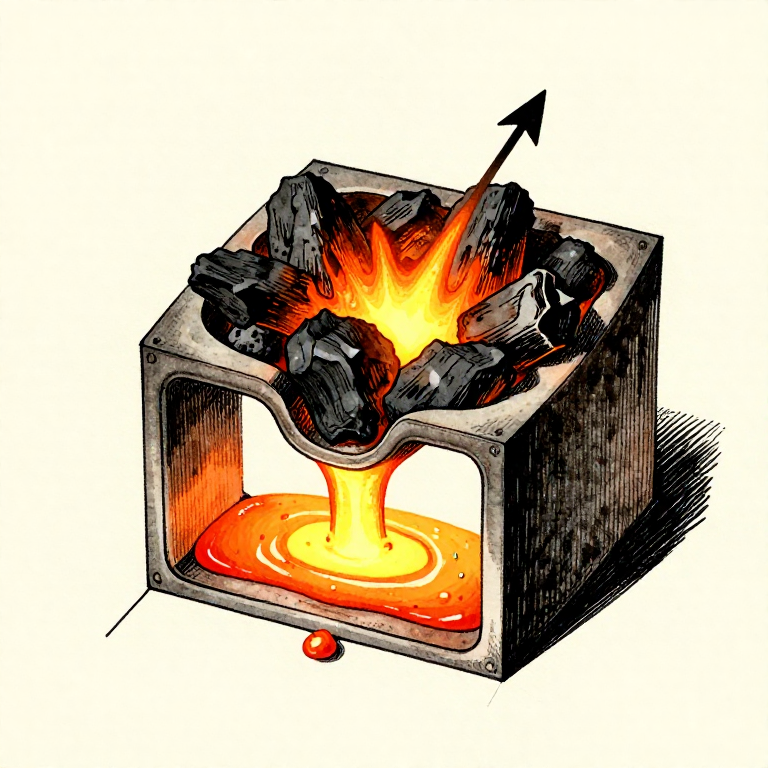
Allow the furnace to cool, then break it open to extract the copper. The copper typically forms a rough, spongy mass (called a bun or plano-convex ingot) at the base, with slag adhering to the top and sides. Separate the copper from the slag by hammering — slag is brittle and shatters, while copper is malleable and deforms. For purer copper, re-melt the crude bun in a clay crucible with fresh charcoal and skim the slag off the surface. The resulting copper is typically 95-98 percent pure and can be hammered, cast, or alloyed with tin to make bronze. A successful smelt from rich malachite yields approximately 200-400 g of copper per kilogram of ore.
Vifaa
4- 2-5 kg of crushed ore kgKishikilia Nafasi
- 10-20 kg kgKishikilia Nafasi
- 20-30 kg kgKishikilia Nafasi
- 5 kg kgKishikilia Nafasi
Zana Zinazohitajika
4- Kishikilia Nafasi
- Kishikilia Nafasi
- Kishikilia Nafasi
- Kishikilia Nafasi
Vifaa vya Michoro Iliyounganishwa
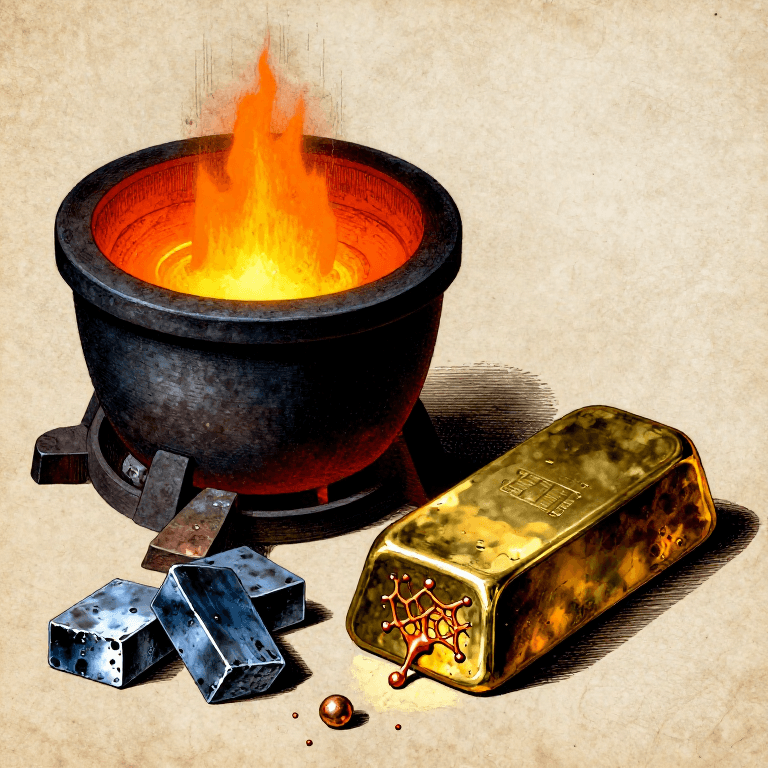



Mchoro huu unatengeneza


Blueprint zinazohusiana
Blueprint hizi zinashiriki maarifa — mbinu, vifaa au kanuni
CC0 Umma Wote
Mchoro huu umetolewa chini ya CC0. Uko huru kunakili, kubadilisha, kusambaza, na kutumia kazi hii kwa madhumuni yoyote, bila kuomba ruhusa.
Saidia Mtengenezaji kwa kununua bidhaa kupitia Mchoro wao ambapo wanapata Kamisheni ya Mtengenezaji iliyowekwa na Wachuuzi, au unda marudio mapya ya Mchoro huu na uiunganishe kama kiungo katika Mchoro wako kuchangia mapato.