Ushirikiano
SANAA
UREMBO NA USTAWI
UJANJA
UTAMADUNI NA HISTORIA
BURUDANI
MAZINGIRA
CHAKULA NA VINYWAJI
UHANDISI WA KINYUME
SAYANSI
MICHEZO
TEKNOLOJIA
VAZI
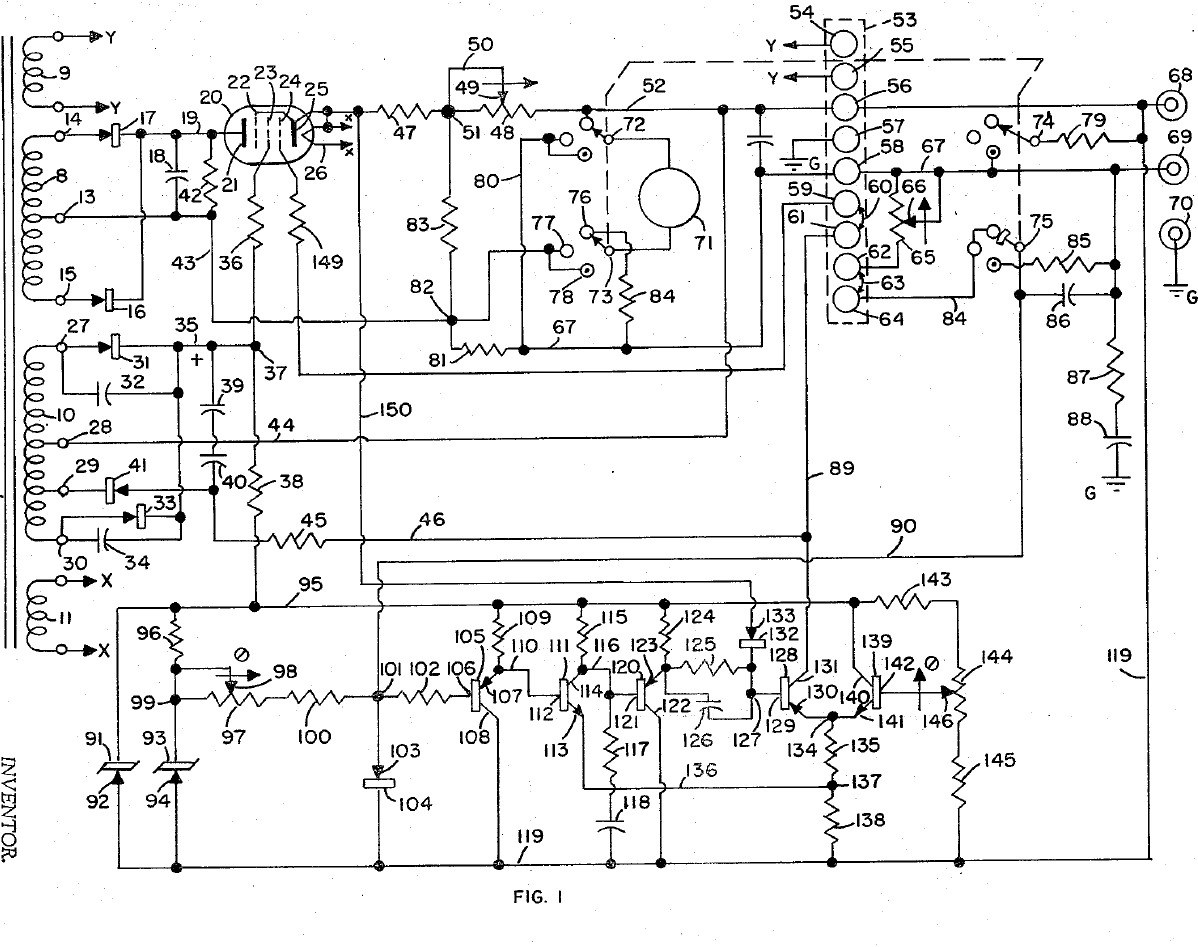


Bench Power Supply: Regulated, with Adjustable Current Limit and a Pentode Pass Tube (Gately, Forbro, US 3,243,690, 1966)
An adjustable bench supply that holds its output voltage steady and lets you set the most current it will deliver, so a circuit under test cannot be damaged. A pentode tube in series with the output is the regulator; a bridge with Zener references and a five-transistor amplifier keeps the output equal to the setting of one knob. A meter switch reads volts, amps, and the current limit, which can be set without disturbing the voltage.
Result: a regulated DC bench supply with adjustable current limiting.
Source: J. R. Gately (Forbro Design), US 3,243,690 (1966). Unknown: all component values and the output rating. Picture: the patent drawing.
Juu
Unknown
Maagizo
1
1
Wire the mains side
Wire the mains side
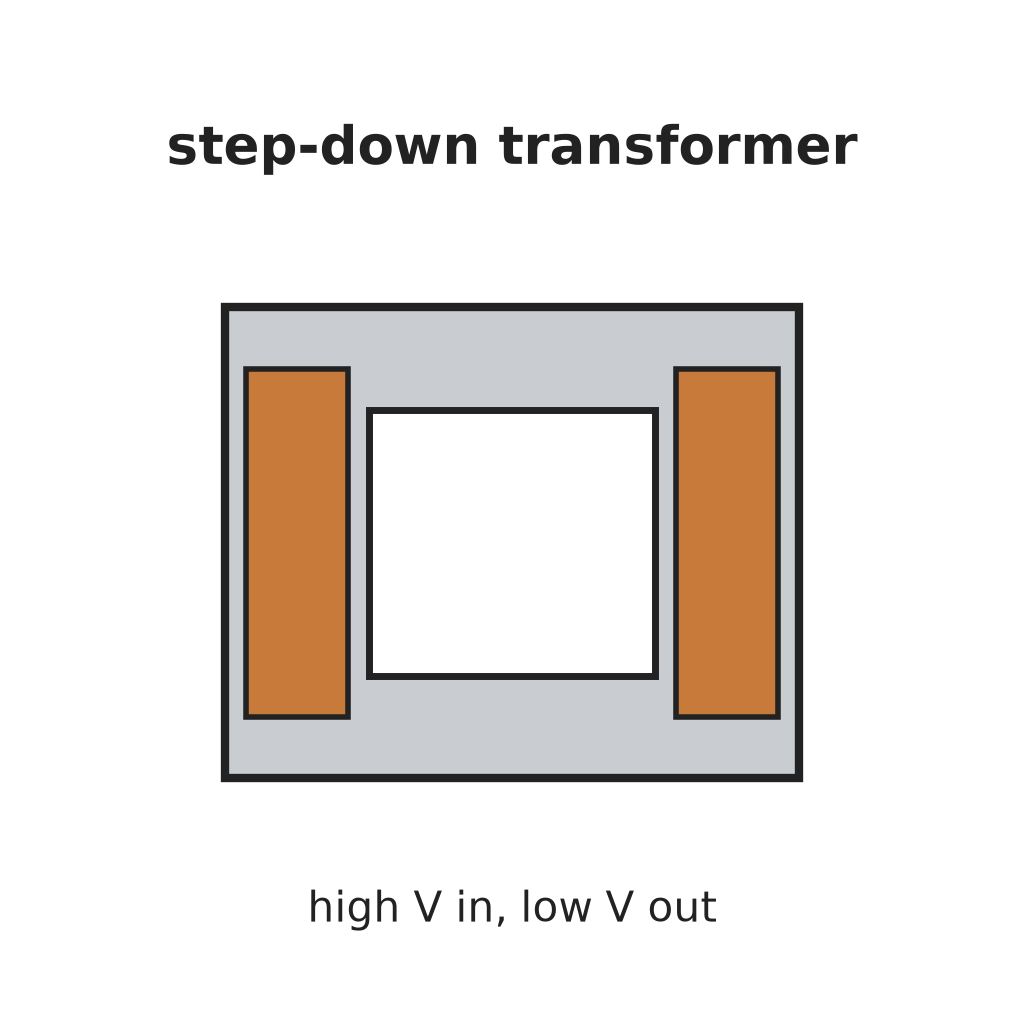
In a case, wire the power cord through a switch and a fuse to the primary of a transformer with four secondaries, and put a neon lamp across the primary to show the supply is on. One secondary (6.3 V) goes to two terminals for outside use, one heats the pentode, one is the main supply and one the bias supply. Ours: the case. Not given: the other winding voltages.
Vifaa kwa hatua hii:
 Sanduku la alumini1 case
 Waya laini yenye plagi1 kipande
 Swichi ya mpini1 kipande
 Fyuzi1 kipande
 Transfoma ya Kushusha Volteji1 four secondaries
 Taa ya kuashiria ya neoni1 kipande
 Nguzo ya kuunganisha2 6.3 V terminals
Zana zinazohitajika:
 Kekee cha mkono
 Seti ya bisibisi
2
2
Build the rectifiers
Build the rectifiers
Rectify the centre-tapped main winding with two rectifiers and smooth it with a capacitor. From the bias winding make two more supplies: one through two rectifiers with by-pass capacitors to a smoothing capacitor, for the pentode's screen and the reference circuit; the other through one rectifier and a capacitor, for the pentode's grid bias. Not given: the values.
Vifaa kwa hatua hii:
 Dayodi5 rectifiers
 Kapasita ya elektroliti3 smoothing
 Seti ya Kapasita1 by-pass
 Waya wa Lehemu1 as needed
Zana zinazohitajika:
 Chuma cha kulehemia
3
3
Fit the pass tube and reference
Fit the pass tube and reference
Put the pentode in series with the positive output: plate to the main supply, cathode through two current-sensing resistors (one fixed, one adjustable) to the + output terminal; suppressor tied to the cathode, screen fed through a resistor. Build the reference: a Zener fed through a resistor feeds a second Zener at constant current, giving a fixed voltage. Against it set two resistors and the voltage-control variable resistor: the output voltage is proportional to that resistor's setting. Not given: the tube type and values.
Vifaa kwa hatua hii:
 Vali ya pentodi1 series pass tube
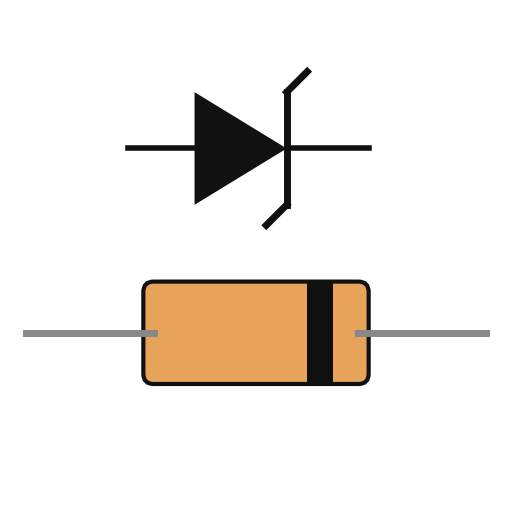 Diodi ya Zener2 vipande
 Ukinzani1 seti
 Reostati2 voltage control, current-limit rangeNguzo ya kuunganisha2 output + and -Waya wa Lehemu1 as needed
Zana zinazohitajika:
Chuma cha kulehemia4
4
Build the error amplifier and current limit
Build the error amplifier and current limit
Build a five-transistor amplifier that drives the pentode's grid to keep the bridge balanced: a PNP emitter follower, an NPN stage, a PNP emitter follower with a resistor-capacitor roll-off against oscillation, a PNP driver whose base resistor has a capacitor across it for quick response, and an NPN clamp whose base is set by a potentiometer. Feed the voltage across the current-sensing resistors to the driver's base through a diode: above the limit it takes over and turns the pentode down. Choose the fixed sensing resistor to limit at about 125 % of rated current, trim with the potentiometer, and use the adjustable one to set lower limits. Not given: the transistor types and values.
Vifaa kwa hatua hii:
 Transista ya PNP3 vipande
 Transista ya NPN2 vipandeDayodi1 kipande
 Potenshiomita1 kipandeSeti ya Kapasita1 roll-off, speed-upUkinzani1 setiWaya wa Lehemu1 as needed
Zana zinazohitajika:
Chuma cha kulehemia5
5
Fit the meter and use it
Fit the meter and use it
Fit a meter with a four-pole, three-position switch. Position 1 reads output volts through a multiplier resistor; position 2 reads current across a shunt in the negative line; position 3 (spring-return) puts a load resistor across the output and swaps a fixed resistor for the voltage control, so you can turn the limit control until the current limits at the value you want, without touching the voltage setting. Release the switch and use the supply.
Vifaa kwa hatua hii:
 Mita ya paneli yenye koili inayosogea1 kipande
 Swichi ya kuzungusha1 4-pole, 3-positionUkinzani1 multiplier, shunt, load resistors
 Nyenzo isiyojulikana1 terminal strip
Zana zinazohitajika:
Chuma cha kulehemiaSeti ya bisibisiVifaa
21- 1 caseKishikilia Nafasi
- 1 kipandeKishikilia Nafasi
- Kishikilia Nafasi
- 1 kipandeKishikilia Nafasi
- 1 four secondariesKishikilia Nafasi
- 1 kipandeKishikilia Nafasi
- Kishikilia Nafasi
- 1 kipandeKishikilia Nafasi
- 3 smoothingKishikilia Nafasi
- 1 roll-off, speed-upKishikilia Nafasi
- 3 as neededKishikilia Nafasi
- 1 series pass tubeKishikilia Nafasi
- 2 vipandeKishikilia Nafasi
- 1 multiplier, shunt, load resistorsKishikilia Nafasi
- 2 voltage control, current-limit rangeKishikilia Nafasi
- 3 vipandeKishikilia Nafasi
- 2 vipandeKishikilia Nafasi
- Kishikilia Nafasi
- Kishikilia Nafasi
- 1 4-pole, 3-positionKishikilia Nafasi
- 1 terminal stripKishikilia Nafasi
Mchoro huu unatengeneza

CC0 Umma Wote
Mchoro huu umetolewa chini ya CC0. Uko huru kunakili, kubadilisha, kusambaza, na kutumia kazi hii kwa madhumuni yoyote, bila kuomba ruhusa.
Saidia Mtengenezaji kwa kununua bidhaa kupitia Mchoro wao ambapo wanapata Kamisheni ya Mtengenezaji iliyowekwa na Wachuuzi, au unda marudio mapya ya Mchoro huu na uiunganishe kama kiungo katika Mchoro wako kuchangia mapato.