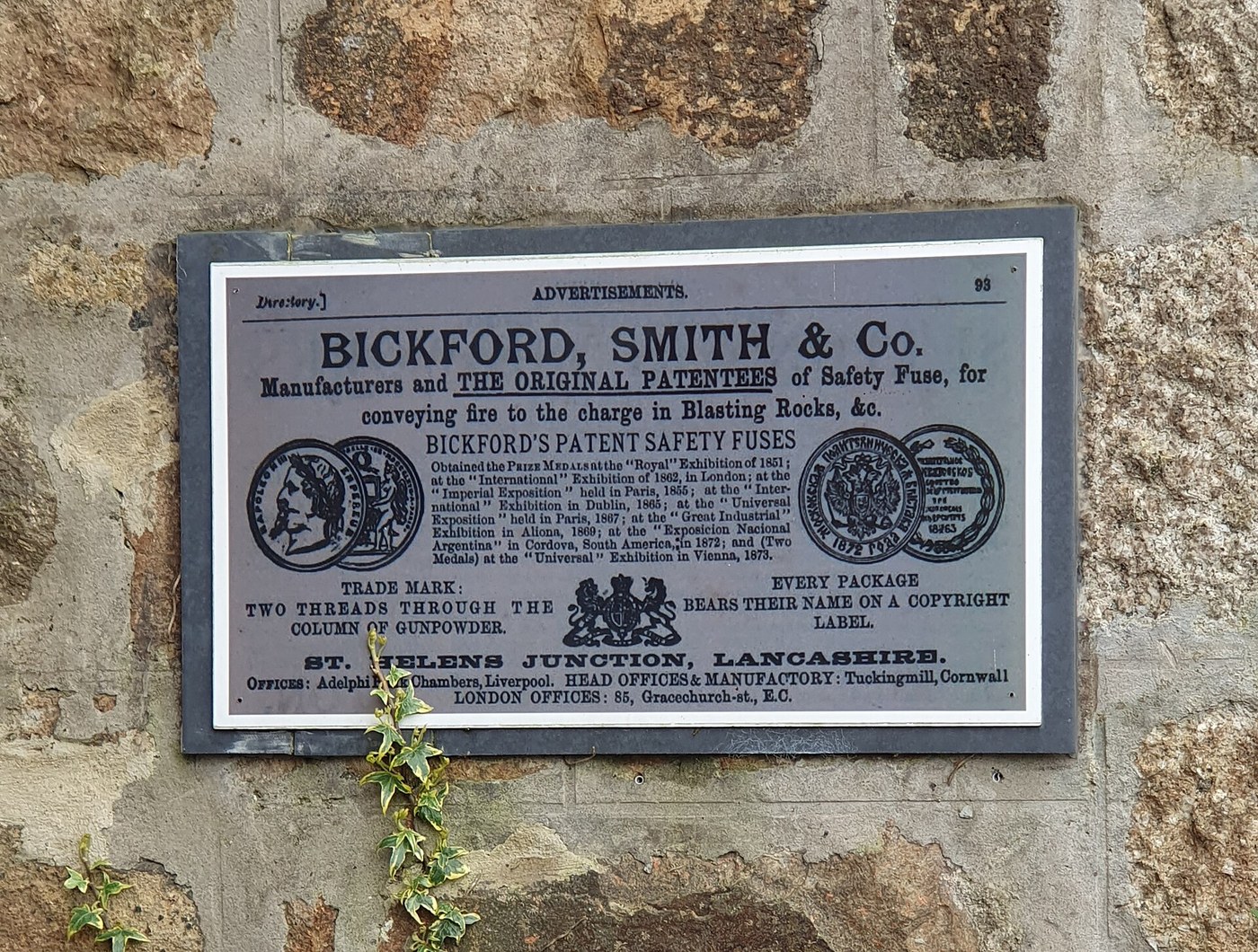


Bickford Safety Fuse
Maagizo
Measure how unreliable the old way was
Measure how unreliable the old way was
Demonstrate variable burn rate WITHOUT explosives, using a burning cord.
- Take three identical lengths of cotton cord.
- Leave one dry, dampen one, and pack one loosely in a paper tube.
- Light each and time the burn over a marked 100 mm.
Vifaa kwa hatua hii:
 Kamba ya Pamba1 rolii
Zana zinazohitajika:
 Rula
Rula Saa ya kupima muda
Understand the construction
Understand the construction
Four layers, each doing one job. Read this rather than build it.
- Core — a thin, even train of blackpowder.
- Inner yarns — jute spun around the core in one direction.
- Counter yarns — a second layer spun the opposite way.
- Varnish or tape — a waterproof outer coat.
Vifaa kwa hatua hii:
 Kamba ya juti1 length
Why a known rate is the safety feature
Why a known rate is the safety feature
The number matters more than the burning.
- Historic safety fuse burned at roughly 30 seconds per foot, about 1 second per centimetre.
- A miner cuts the length for the time needed to reach cover.
- The rate is printed and tested, so the length IS the delay.
Test the waterproofing claim
Test the waterproofing claim
Wet workings were the normal case in Cornwall, so test on the inert cord.
- Coat one length of cord in wax or varnish and leave another bare.
- Soak both briefly, then light them.
- Compare burn behaviour.
History and context
History and context
William Bickford (1774-1834) was a currier and leather merchant in Tuckingmill, Cornwall, in the heart of the tin and copper mining district. The traditional account is that he was moved by the constant blasting casualties, and that the idea of a spun fuse came to him watching a rope-maker at work. He patented it in 1831 and died three years later; the company his family founded made safety fuse in Cornwall for more than a century.
How bad the problem was: blasting had been used in Cornish mines since the seventeenth century, and premature detonation was a routine cause of death and blindness. The alternatives to a proper fuse were quills, reeds, straws and paper tubes filled with powder — all of which burned at a rate that depended on how tightly they were filled and how damp they were.
What it did not fix. Safety fuse gives a predictable delay; it does not make the delay long, and a miscut fuse is still fatal. The later answer was electrical firing, where the shot-firer holds the circuit and can be certain nothing happens until they close it, and modern practice uses electronic detonators with programmed delays measured in milliseconds. Safety fuse is still made and still used where its simplicity is an advantage.
Why this blueprint contains no explosive step. Making a powder-cored fuse means handling and packing blackpowder in exactly the conditions where friction ignites it, and the useful engineering — constant core, counter-spun yarns, waterproof coat, measured rate — is fully demonstrated on inert cord. The measurement is the lesson.
Vifaa
2- 1 roliiKishikilia Nafasi
- 1 lengthKishikilia Nafasi
Blueprint zinazohusiana
Blueprint hizi zinashiriki maarifa — mbinu, vifaa au kanuni
CC0 Umma Wote
Mchoro huu umetolewa chini ya CC0. Uko huru kunakili, kubadilisha, kusambaza, na kutumia kazi hii kwa madhumuni yoyote, bila kuomba ruhusa.
Saidia Mtengenezaji kwa kununua bidhaa kupitia Mchoro wao ambapo wanapata Kamisheni ya Mtengenezaji iliyowekwa na Wachuuzi, au unda marudio mapya ya Mchoro huu na uiunganishe kama kiungo katika Mchoro wako kuchangia mapato.