Ushirikiano
SANAA
UREMBO NA USTAWI
UJANJA
UTAMADUNI NA HISTORIA
BURUDANI
MAZINGIRA
CHAKULA NA VINYWAJI
UHANDISI WA KINYUME
SAYANSI
MICHEZO
TEKNOLOJIA
VAZI
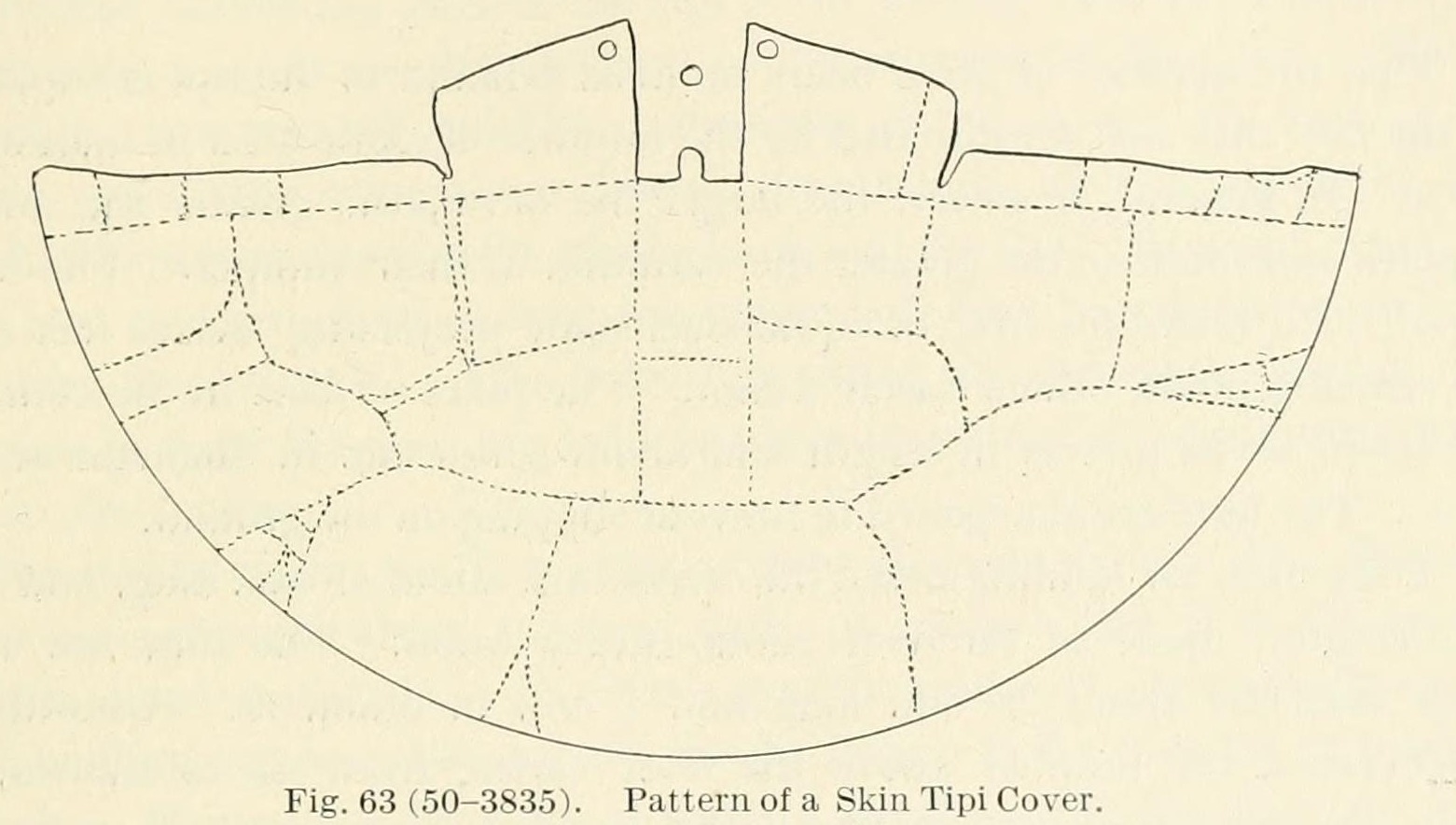


Blackfoot Tipi: Four Poles Locked in a Tie, Cover Raised on the Back Pole, Pinned over an East Door, Ears on Poles (Wissler, 1910)
The Blackfoot (Niitsitapi) tipi as Clark Wissler measured it: seasoned pine or spruce poles about 7 m long, four of them tied where they cross and locked by swapping two, the rest laid in by side, a half-circle cover of buffalo skins or canvas raised on the back pole and pinned shut over an east-facing door, stretched by moving the poles, and two smoke-flap 'ears' on their own poles. A woman pitched it in thirty minutes.
Kati
Days to make; thirty minutes to pitch
Maagizo
1
1
His measures
His measures
Inapakia daftari la Jupyter…
2
2
Read Wissler
Read Wissler
"This completes the process, a task which the average woman will perform in thirty minutes or less."
3
3
Cut and season the poles
Cut and season the poles
Cut long, slender, straight pine or spruce poles (his museum set: about 7 m long and 7 cm thick at the butt), peel them and sharpen the butts. Set them up as a frame and leave them to season. Wissler counted 13 to 23 poles a tipi.
Vifaa kwa hatua hii:
 Mti wa mbao1 kipande
Zana zinazohitajika:
 Shoka
 Kisu cha Kuvuta
4
4
Make the cover
Make the cover
Make a cover that is close to a half circle (his radii 4.2-5.7 m). Formerly twelve to fourteen buffalo skins, dressed soft without hair, fitted together and sewn with sinew; now canvas strips sewn to a vertical centre strip. Add the two 'ears' with holes in their tips, a flap with cords at the top, lap strips with paired pin holes, a long oval door about 1.2 m long, and loops or holes round the curved edge for the stakes.
Vifaa kwa hatua hii:
 Kitambaa cha kanvasi1 kipande
 Ngozi laini ya kulungu1 kipande
 Uzi wa Mshipa1 kipande
Zana zinazohitajika:
 Kisu
 Uma wa kutoboa (ushindilio)
 Sindano ya kushona
5
5
Cut stakes and pins
Cut stakes and pins
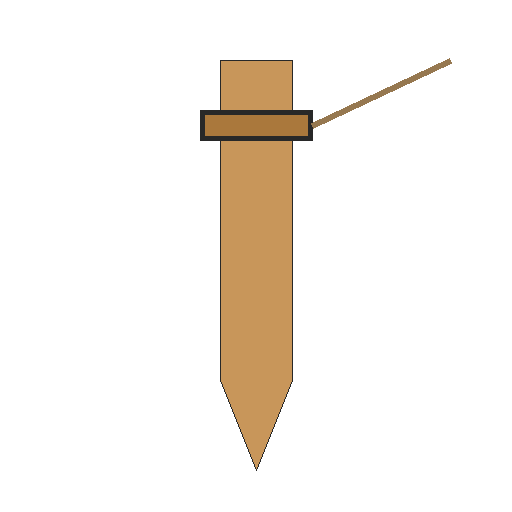
Make stakes about 42 x 2 cm and pins about 28 x 1 cm of birch or chokecherry: six to sixteen pins above the door and two to five below.
Vifaa kwa hatua hii:
 Kigingi cha hema1 kipande
Zana zinazohitajika:
Kisu6
6
Tie the four poles
Tie the four poles
Unroll the folded cover: its folded length is the distance from base to smoke hole. Lay two poles side by side on it, cross the other two over them at that distance from the butts, and tie the crossing with a thong about 4.5 m long and a simple knot. Raise them: a and b to the east, c and d to the west; swapping b and c locks the tie. The four feet stand at the corners of a rectangle, short side east. Then lay the other poles in on the north and south sides in about equal numbers, then the west side except its middle, and last the east side, the two door poles resting in a second crotch; keep three poles back.
Vifaa kwa hatua hii:
 Ukanda wa ngozi mbichi1 kipandeMti wa mbao1 kipande
Zana zinazohitajika:
Kisu7
7
Raise and pin the cover
Raise and pin the cover
Tie the cover's top cords to a pole so the bottom edge just touches the ground, stand it up in the middle of the west side through the crotch of the door poles, carry the cover round both ways and pin it above and below the door (door to the east; the right-hand edge, as you face it, on the outside; pins from right to left). A small ladder reaches the top pins.
Vifaa kwa hatua hii:
Ukanda wa ngozi mbichi1 kipandeZana zinazohitajika:
 Kamba
8
8
Stretch, ears and stakes
Stretch, ears and stakes
Go inside and move the poles out or in until the cover is tight and evenly conical, then finish from outside. Poke the small ends of the last two poles through the holes in the ears' tips; moving these poles opens, closes or turns the smoke hole away from the wind. Stake the edge down all round.
Vifaa kwa hatua hii:
Mti wa mbao1 kipandeZana zinazohitajika:
Kigingi cha hema Nyundo ya mbao
9
9
Troubleshooting
Troubleshooting
Tipi troubleshooting.
Flow
Loading...
10
10
History and honest limits
History and honest limits
From Clark Wissler, *Material Culture of the Blackfoot Indians*, **Anthropological Papers of the American Museum of Natural History** vol. V (1910), pp. 99-105 and Figs. 60-63 (checked on the archive.org scan materialcultureo00wiss; pp. 101-102 and 105 read from its text layer). The tipi was made and owned by the woman. The floor averaged about 4.3 m across, the fire a little toward the door. Wissler admits he was unsure how the cover's shape was laid out: he thought the skins were pieced roughly, trimmed against a pole and the bottom trimmed in place. Seam layout and canvas widths are ours.
Vifaa
6- 1 kipandeKishikilia Nafasi
- 1 kipandeKishikilia Nafasi
- 1 kipandeKishikilia Nafasi
- 1 kipandeKishikilia Nafasi
- 1 kipandeKishikilia Nafasi
- 1 kipandeKishikilia Nafasi
Mchoro huu unatengeneza
Blueprint zinazohusiana
Blueprint hizi zinashiriki maarifa — mbinu, vifaa au kanuni
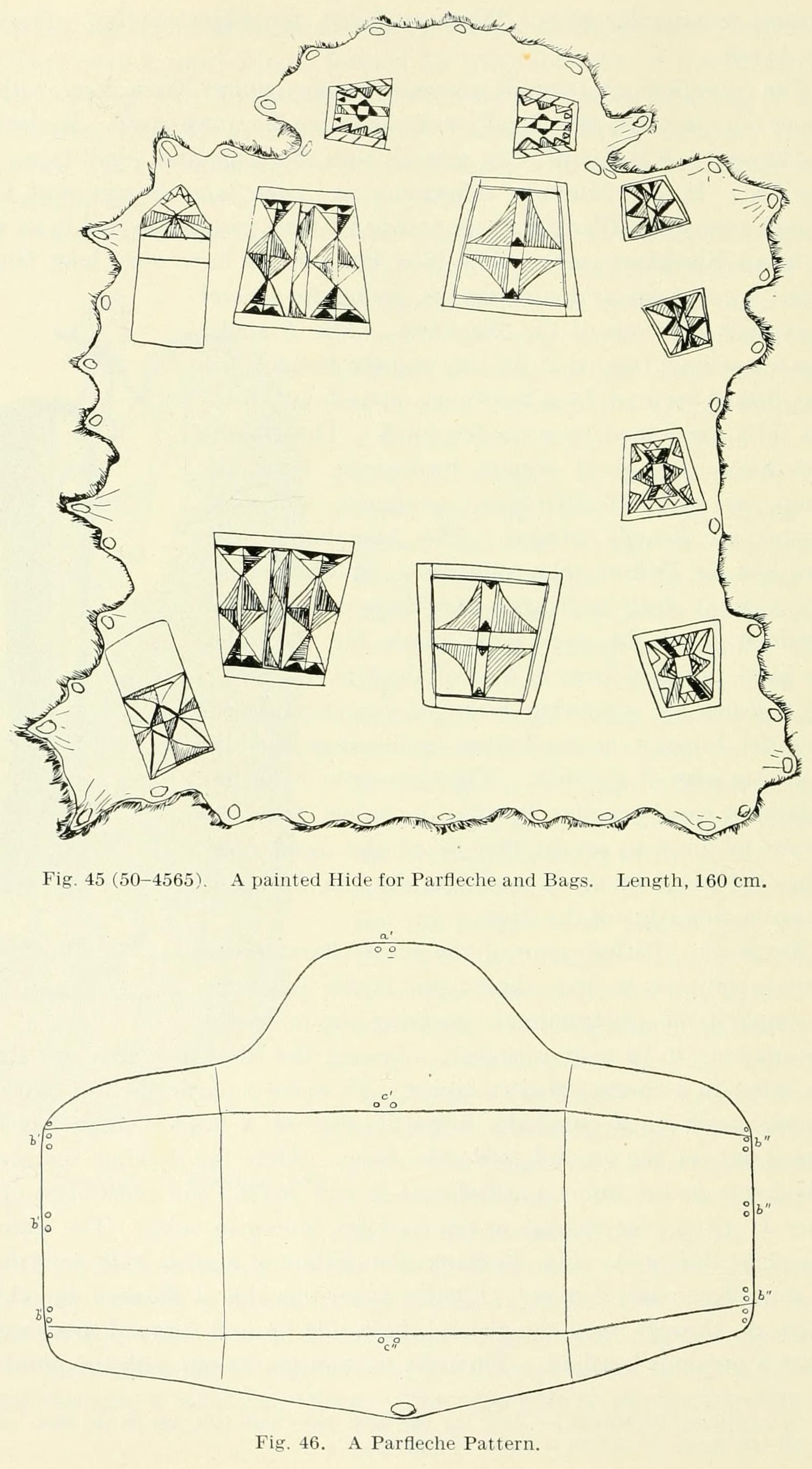
Blackfoot Parfleche: Rawhide Pegged Out, Fleshed, Painted While Staked, Scraped Even, Cut and Folded Like an Envelope (Wissler, 1910)
na Tex
Nguo na Ngozi
2
0
0
0
0
0
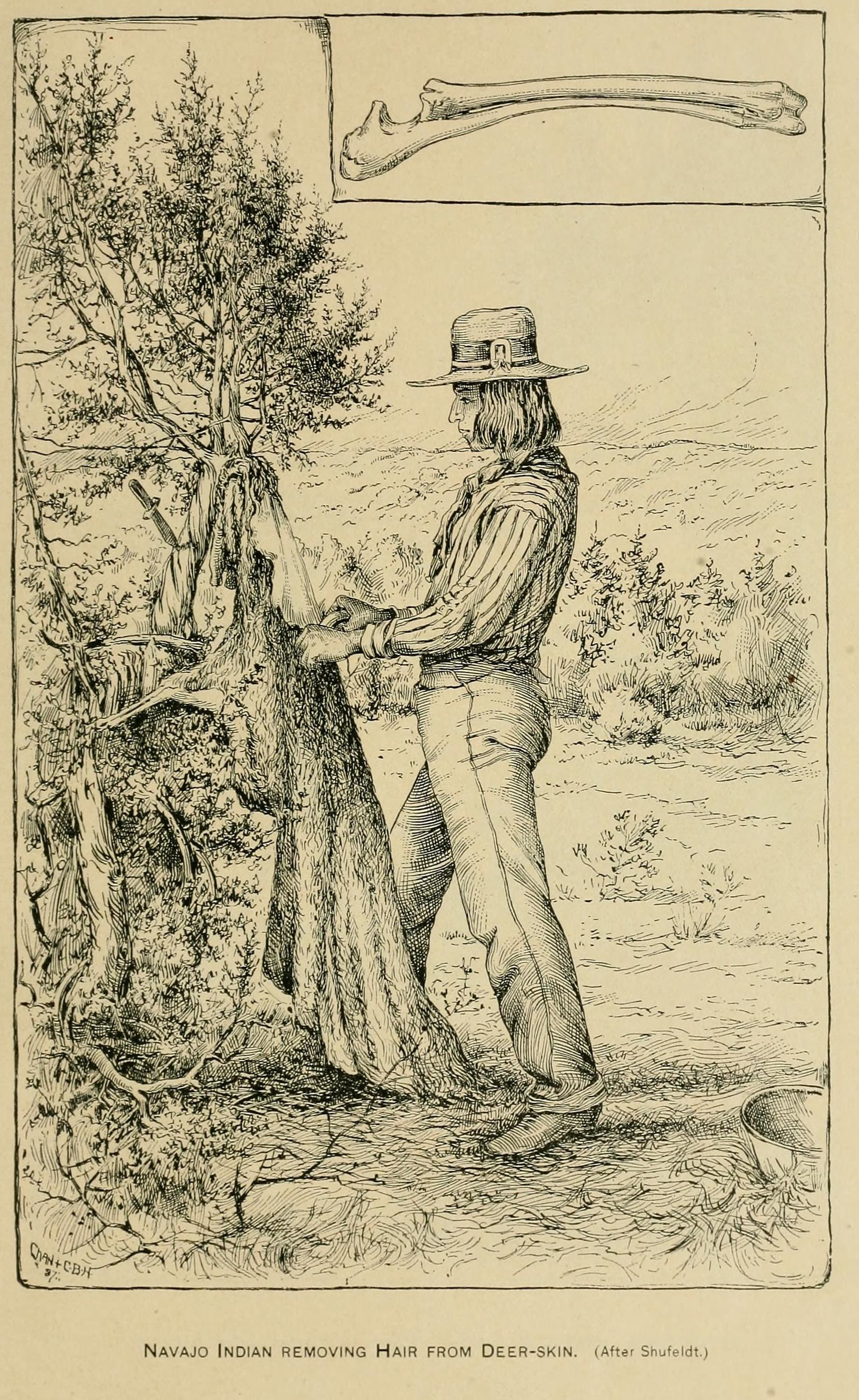
Navajo Buckskin: Hair Shaved with the Deer's Own Foreleg Bone, Brains Rubbed In, Wrung on a Tree, Worked Dry over the Feet (Shufeldt, 1888)
na Tex
Nguo na Ngozi
4
0
0
0
0
0
CC0 Umma Wote
Mchoro huu umetolewa chini ya CC0. Uko huru kunakili, kubadilisha, kusambaza, na kutumia kazi hii kwa madhumuni yoyote, bila kuomba ruhusa.
Saidia Mtengenezaji kwa kununua bidhaa kupitia Mchoro wao ambapo wanapata Kamisheni ya Mtengenezaji iliyowekwa na Wachuuzi, au unda marudio mapya ya Mchoro huu na uiunganishe kama kiungo katika Mchoro wako kuchangia mapato.