Ushirikiano
SANAA
UREMBO NA USTAWI
UJANJA
UTAMADUNI NA HISTORIA
BURUDANI
MAZINGIRA
CHAKULA NA VINYWAJI
UHANDISI WA KINYUME
SAYANSI
MICHEZO
TEKNOLOJIA
VAZI

Blackfoot Sinew Thread: Dried Leg and Neck Sinew Shredded, Softened and Rolled Between the Palms (Wissler, 1910)
Blackfoot (Niitsitapi) sewing thread as Clark Wissler recorded it: broad bands of sinew from an animal's legs and neck dried and stored, shreds pulled off as needed, softened in water and smoothed with the fingers, then twisted into thread by rolling between the palms, one end held fast; twisted threads braided together make heavy cord.
Mwanzo
A few days drying; minutes per thread
Maagizo
1
1
Read Wissler
Read Wissler
"Then placing one end in the mouth, the shreds are twisted by rolling between the palms."
2
2
Dry the sinew
Dry the sinew
Take the broad bands of sinew from the legs and neck, clean off any flesh, and dry and store them (ours: on a rack in dry air until hard).
Vifaa kwa hatua hii:
 Mishipa ya mguu wa mnyama1 kipande
Zana zinazohitajika:
 Kisu
 Kichanja cha Kukaushia
3
3
Shred, soften and roll
Shred, soften and roll
When thread is needed, pull shreds off the dried sinew (the Blackfoot used their teeth; ours: an awl point), soften them in water and smooth them out with the fingers. Hold one end fast (Wissler: in the mouth, or under the foot) and roll the shreds between the palms to twist them into thread. Twist or braid several threads together for heavy cord.
Vifaa kwa hatua hii:
 Maji1 kipande
Zana zinazohitajika:
 Uma wa Mfupa
4
4
Sew with it
Sew with it
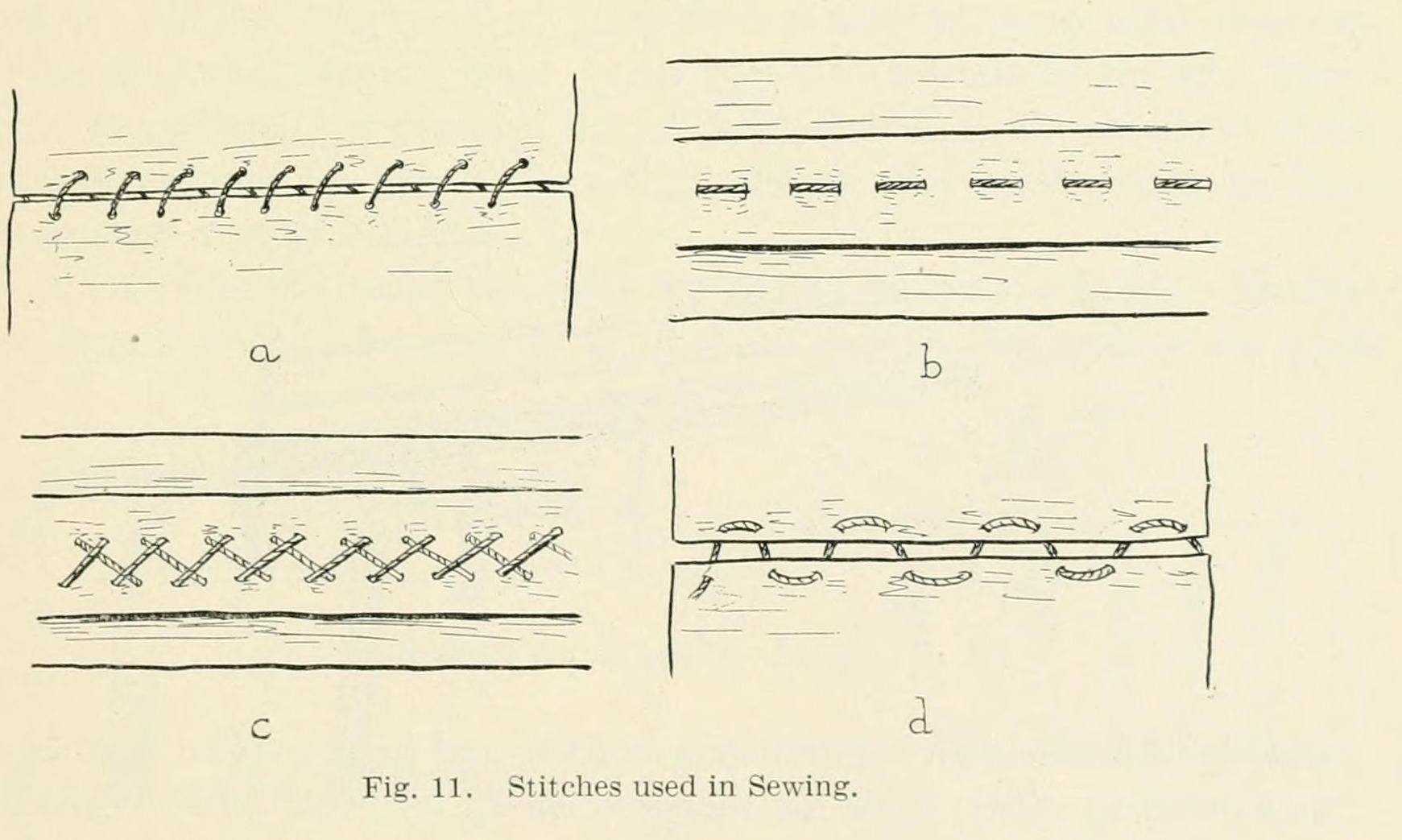
Sew with a bone or metal bodkin. The Blackfoot used an over-and-over stitch for seams and moccasin soles, a running stitch for borders, a mending stitch and an ornamental one (Fig. 11), always with a single thread.
Zana zinazohitajika:
Uma wa Mfupa5
5
Troubleshooting
Troubleshooting
Sinew thread troubleshooting.
Flow
Loading...
6
6
History and honest limits
History and honest limits
From Clark Wissler, *Material Culture of the Blackfoot Indians*, **Anthropological Papers of the American Museum of Natural History** vol. V (1910), pp. 53-54 and Fig. 11 (checked on the archive.org scan materialcultureo00wiss). In 1910 the sinew came from steers; buffalo before. Sewing with two threads, as in European shoemaking, was unknown to them. Drying details are ours.
Mchoro huu unatengeneza

Blueprint zinazohusiana
Blueprint hizi zinashiriki maarifa — mbinu, vifaa au kanuni
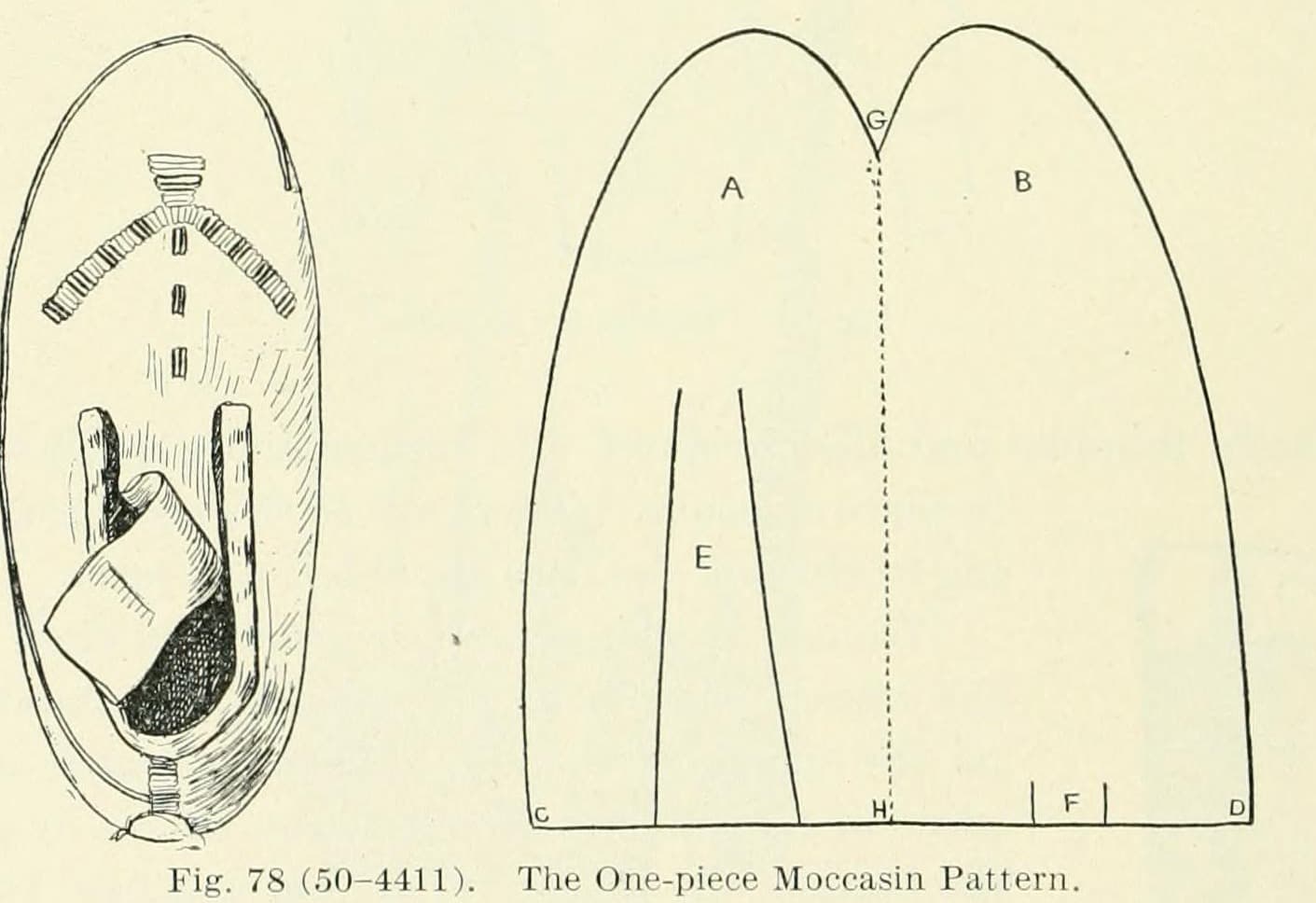
Blackfoot One-Piece Moccasin: One Skin Folded Lengthwise, Seamed Round the Toes, Heel Seam with Trailer, Ankle Flap (Wissler, 1910)
na Tex
Nguo na Ngozi
4
0
0
0
0
0
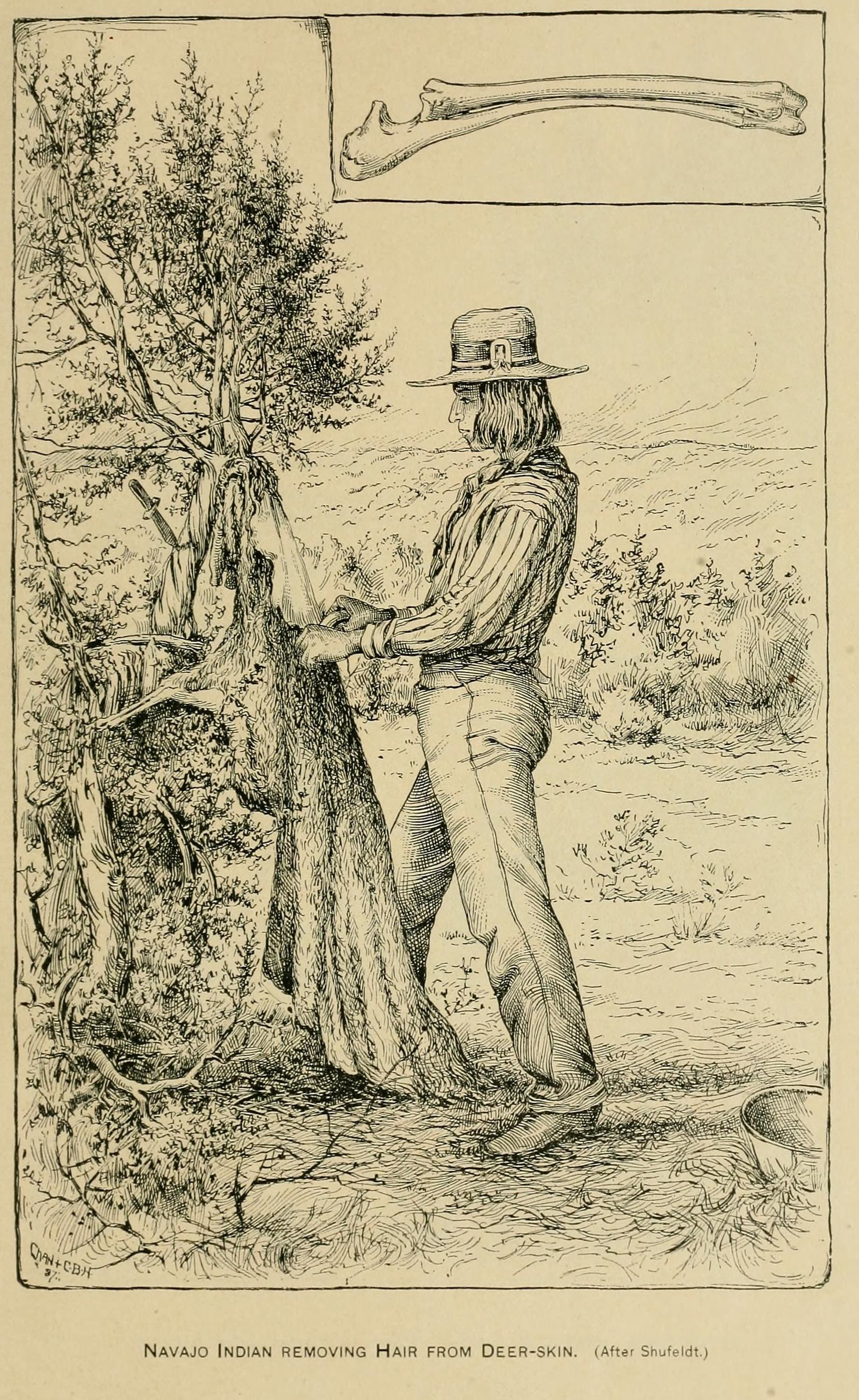
Navajo Buckskin: Hair Shaved with the Deer's Own Foreleg Bone, Brains Rubbed In, Wrung on a Tree, Worked Dry over the Feet (Shufeldt, 1888)
na Tex
Nguo na Ngozi
4
0
0
0
0
0
CC0 Umma Wote
Mchoro huu umetolewa chini ya CC0. Uko huru kunakili, kubadilisha, kusambaza, na kutumia kazi hii kwa madhumuni yoyote, bila kuomba ruhusa.
Saidia Mtengenezaji kwa kununua bidhaa kupitia Mchoro wao ambapo wanapata Kamisheni ya Mtengenezaji iliyowekwa na Wachuuzi, au unda marudio mapya ya Mchoro huu na uiunganishe kama kiungo katika Mchoro wako kuchangia mapato.