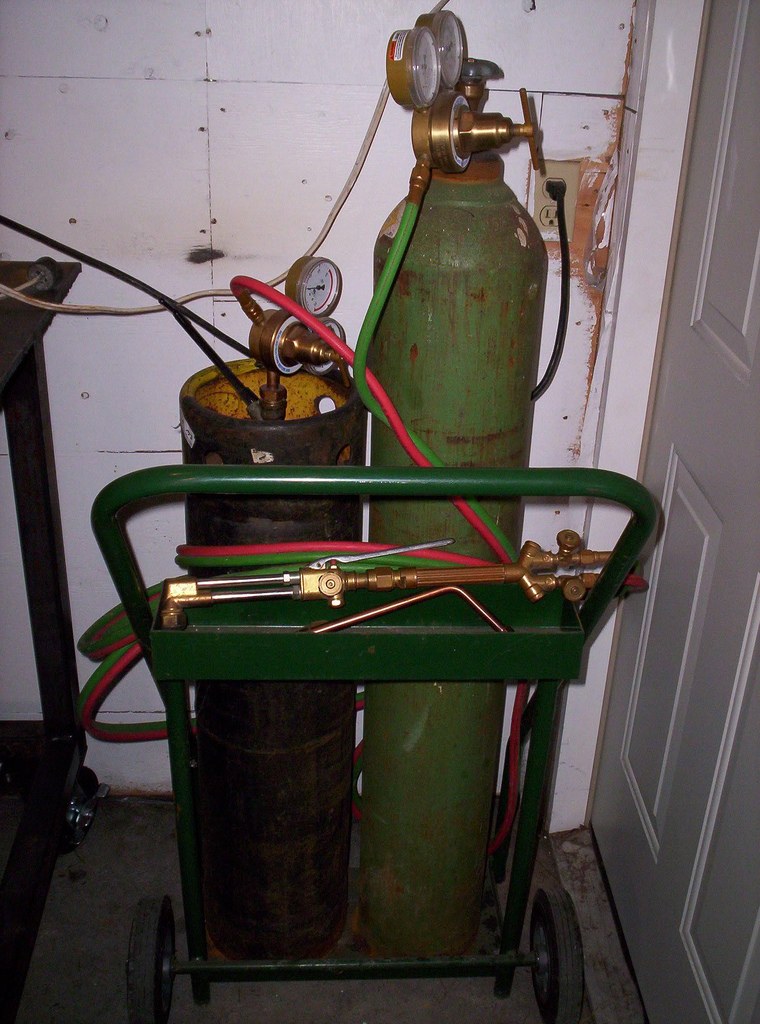


Chalumeau oxyacétylénique
L'arc électrique demande une machine et un câble. La flamme, elle, tient dans deux bouteilles que l'on porte sur une brouette — et pendant cinquante ans, c'est la flamme qui a soudé là où il n'y avait pas de courant.
Le secret tient dans un chiffre. L'acétylène brûlé dans l'oxygène pur donne environ 3 100 °C, plus chaud que n'importe quel autre gaz courant, et surtout plus chaud que les 1 538 °C nécessaires pour fondre l'acier. Aucun autre carburant simple n'y arrive.
Edmond Fouché dépose le brevet français FR 325 403, « Chalumeau à gaz », le 18 octobre 1902 ; il est délivré le 28 avril 1903. Le brevet résout le vrai problème du chalumeau : empêcher la flamme de remonter dans le tuyau. La solution est un injecteur qui fait circuler les gaz assez vite pour que le front de flamme ne puisse pas la remonter.
Et Charles Picard ? Presque toutes les histoires de la soudure créditent Fouché et Picard. Le document FR 325 403 ne porte que le nom de Fouché. Les deux versions sont données ici, sans trancher ce que le document ne tranche pas.
Maagizo
Écrire la question de départ
Écrire la question de départ
Notez la question : pourquoi l'acétylène et pas un autre gaz ? La réponse est un nombre, et vous allez le mesurer.
Relever la température à atteindre
Relever la température à atteindre
Notez le point de fusion de l'acier doux : environ 1 538 °C. Toute flamme en dessous ne soudera jamais l'acier.
Vifaa kwa hatua hii:
 Karatasi ya gridi1 karatasi
Installer le poste sur brique réfractaire
Installer le poste sur brique réfractaire
Posez deux briques réfractaires sur un plan dégagé. Rien d'inflammable à deux mètres. Lunettes et gants avant d'allumer.
Vifaa kwa hatua hii:
 Matofali yanayostahimili moto2 vipande
Zana zinazohitajika:
 Miwani ya usalama iliyo wazi
 Glavu za Ngozi
Allumer le chalumeau propane et régler une flamme neutre
Allumer le chalumeau propane et régler une flamme neutre
Allumez le chalumeau propane. Réglez jusqu'à obtenir un cône intérieur bleu net et bien délimité.
Zana zinazohitajika:
 Tochi ya PropaniMiwani ya usalama iliyo wazi
Mesurer la température dans le cône
Mesurer la température dans le cône
Placez le thermocouple juste à la pointe du cône bleu. Relevez la valeur maximale. C'est la zone la plus chaude de la flamme.
Zana zinazohitajika:
 Kipima joto cha aina K chenye moduli ya MAX6675
Mesurer à 10 mm plus loin
Mesurer à 10 mm plus loin
Éloignez le thermocouple de 10 mm et relevez de nouveau. La chute est brutale — d'où l'importance de la distance de travail.
Vifaa kwa hatua hii:
Karatasi ya gridi1 karatasiZana zinazohitajika:
Kipima joto cha aina K chenye moduli ya MAX6675 Rula
RulaTracer la température en fonction de la distance
Tracer la température en fonction de la distance
Portez les mesures sur papier millimétré. Comparez le maximum obtenu au point de fusion noté à l'étape 2.
Vifaa kwa hatua hii:
Karatasi ya gridi1 karatasiComparer avec le chiffre de l'oxyacétylénique
Comparer avec le chiffre de l'oxyacétylénique
Le propane-air plafonne vers 1 900 °C. L'oxyacétylénique atteint environ 3 100 °C. Notez l'écart : il explique tout.
Vifaa kwa hatua hii:
Karatasi ya gridi1 karatasiComprendre les trois réglages de flamme
Comprendre les trois réglages de flamme
Notez les trois réglages du soudeur : neutre (équilibrée), carburante (excès d'acétylène, panache blanc), oxydante (excès d'oxygène, cône court et sifflant).
Observer l'effet de la flamme carburante
Observer l'effet de la flamme carburante
Enrichissez légèrement en gaz. Chauffez une chute d'acier et observez : la surface reste plus claire, car l'excès de carburant consomme l'oxygène ambiant.
Vifaa kwa hatua hii:
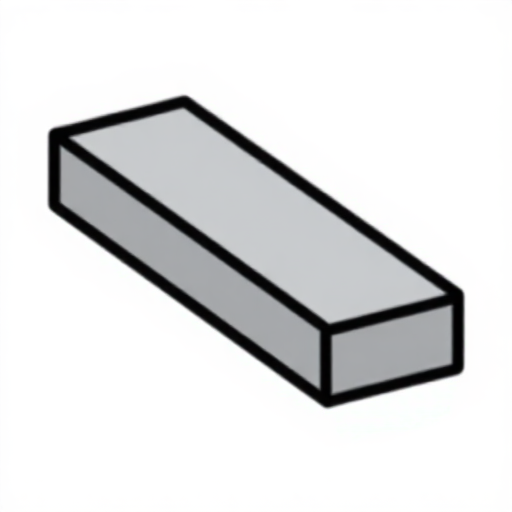 Pau Bapa la Chuma Laini1 kipande
Zana zinazohitajika:
Tochi ya PropaniGlavu za NgoziObserver l'effet de la flamme oxydante
Observer l'effet de la flamme oxydante
Appauvrissez en gaz. Chauffez une seconde chute et comparez : la calamine se forme beaucoup plus vite. C'est la protection chimique, ou son absence.
Vifaa kwa hatua hii:
Pau Bapa la Chuma Laini1 kipandeZana zinazohitajika:
Tochi ya PropaniGlavu za NgoziConsigner ce que la flamme protège
Consigner ce que la flamme protège
Notez la conclusion : le chalumeau ne fait pas que chauffer, il enveloppe le bain d'une zone réductrice. C'est le premier gaz de protection de l'histoire de la soudure.
Sécurité — ce qu'il faut savoir sur ces gaz
Sécurité — ce qu'il faut savoir sur ces gaz
L'acétylène est instable au-dessus d'environ 1,5 bar. C'est pourquoi les bouteilles ne sont pas de simples réservoirs : elles sont remplies d'une masse poreuse imbibée d'acétone dans laquelle le gaz est dissous. Une bouteille d'acétylène se stocke et s'utilise debout ; couchée, elle laisse passer l'acétone dans le détendeur.
L'oxygène pur n'est pas un gaz inoffensif. Il ne brûle pas mais il rend inflammable tout ce qui l'entoure. Jamais de graisse ni d'huile sur un raccord d'oxygène : le contact peut s'enflammer spontanément. Et l'on ne « dépoussière » jamais un vêtement à l'oxygène.
Le retour de flamme. Si la flamme remonte dans le tuyau, on entend un claquement sec puis un sifflement. Fermer immédiatement l'oxygène, puis le gaz. Les postes modernes portent des clapets anti-retour et des pare-flammes : c'est exactement le problème que résolvait l'injecteur de Fouché.
Les lunettes. La flamme émet peu d'ultraviolet mais beaucoup d'infrarouge et un éclat jaune intense : on utilise des verres teintés spécifiques, pas des lunettes de soleil.
Zana zinazohitajika:
Miwani ya usalama iliyo waziGlavu za NgoziHistoire & contexte
Histoire & contexte
FR 325 403, « Chalumeau à gaz », Edmond Fouché, déposé le 18 octobre 1902, délivré le 28 avril 1903. Le titre délivré ne dit ni « soudure » ni « oxyacétylénique » — encore un écart entre le nom populaire et le document.
Le problème n'était pas la chaleur, c'était le retour de flamme. On savait depuis les années 1890 que l'acétylène brûlait très chaud. Ce qu'on ne savait pas faire, c'est empêcher la flamme de remonter le tuyau jusqu'à la bouteille. L'injecteur de Fouché entraîne l'acétylène par la vitesse du jet d'oxygène : le mélange circule plus vite que le front de flamme ne peut le remonter.
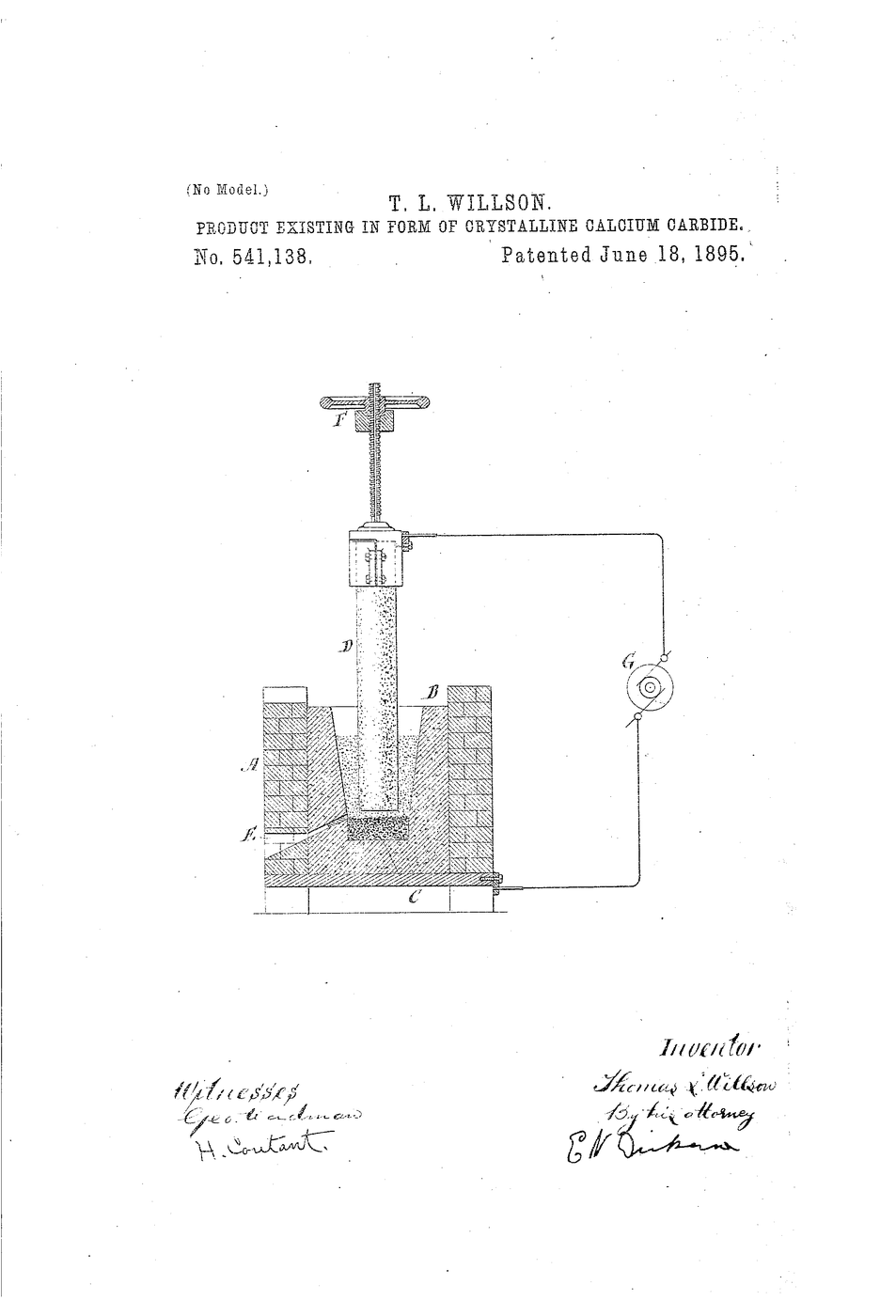
Pourquoi cela arrive en 1903 et pas avant. Il fallait de l'acétylène bon marché, et celui-ci vient du carbure de calcium, dont le procédé industriel date de 1892 — le brevet de Thomas Willson, déjà publié sur Youblob. Le chalumeau est un enfant direct du four électrique.
Ce que la flamme a gagné, puis perdu. Jusque dans les années 1950, l'oxyacétylénique soude les carrosseries, les tuyauteries et les fuselages : il est portable, il ne demande pas d'électricité, et le soudeur voit son bain de fusion. Les procédés à gaz inerte l'ont remplacé pour la soudure, parce qu'ils chauffent moins large et déforment moins. Mais l'oxycoupage, lui, n'a jamais été détrôné : chauffer l'acier au rouge puis lancer un jet d'oxygène pur qui le brûle littéralement reste la façon la moins chère de couper de la forte épaisseur.
Vifaa
3- 1 karatasiKishikilia Nafasi
- 2 vipandeKishikilia Nafasi
- 1 kipandeKishikilia Nafasi
Vifaa vya Michoro Iliyounganishwa
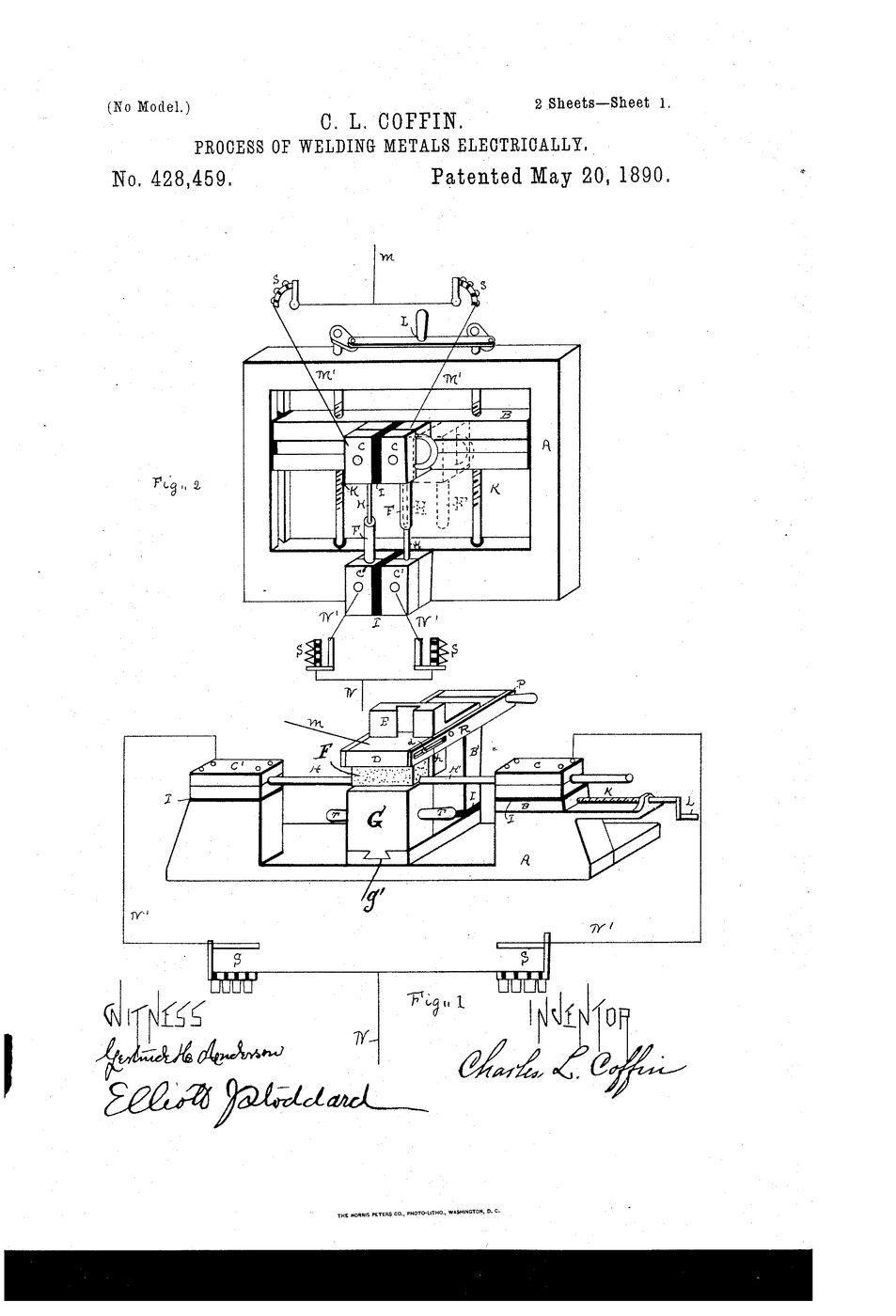

Blueprint zinazohusiana
Blueprint hizi zinashiriki maarifa — mbinu, vifaa au kanuni


CC0 Umma Wote
Mchoro huu umetolewa chini ya CC0. Uko huru kunakili, kubadilisha, kusambaza, na kutumia kazi hii kwa madhumuni yoyote, bila kuomba ruhusa.
Saidia Mtengenezaji kwa kununua bidhaa kupitia Mchoro wao ambapo wanapata Kamisheni ya Mtengenezaji iliyowekwa na Wachuuzi, au unda marudio mapya ya Mchoro huu na uiunganishe kama kiungo katika Mchoro wako kuchangia mapato.