SANAA
UREMBO NA USTAWI
UJANJA
UTAMADUNI NA HISTORIA
BURUDANI
MAZINGIRA
CHAKULA NA VINYWAJI
UHANDISI WA KINYUME
SAYANSI
MICHEZO
TEKNOLOJIA
VAZI
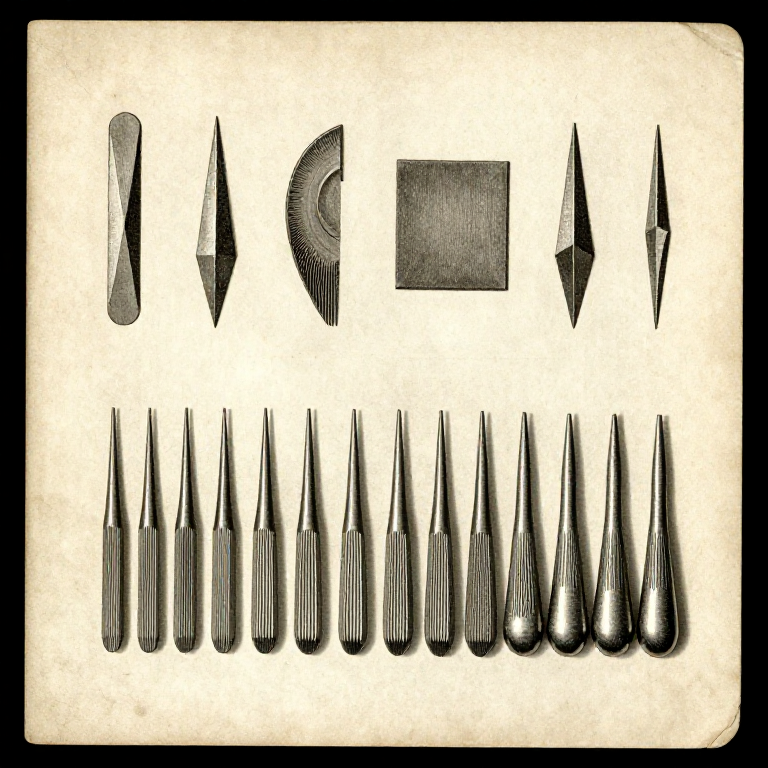


Curves, Corners and Safe Edges: Filing What Is Not Flat
Most of what actually needs filing is not a flat face. It is an inside corner that a flat file cannot reach, a curve that must be fair rather than lumpy, a slot that must stay parallel, or a hole that has to become a square.
The answer is shape. Files come round, half-round, square, triangular and knife-edged, and most carry a SAFE EDGE — a side with no teeth at all — so one surface can be cut while the one beside it is left untouched.
Understanding safe edges is what turns a box of odd-looking files from a mystery into the most precise hand tools in the workshop.
Kati
3 hours
Maagizo
1
1
The safe edge, and why it exists
The safe edge, and why it exists
Look at the narrow edges of a hand file: one is usually smooth and toothless. That is the safe edge, and it is there so the file can cut the bottom of a slot without also cutting the wall it is resting against.
Without it, filing into any inside corner widens BOTH surfaces at once and the corner never gets crisp. With it, you press the safe edge against the finished face and file confidently right up to it — which is how a square shoulder or the floor of a dovetail socket gets cleaned up.
A file can be given a safe edge by grinding the teeth off one side, and it is worth doing to a cheap file for a job that needs it. The opposite also matters: check which edge is safe before you start, because pressing the TOOTHED edge against a finished face ruins it in one stroke.
Zana zinazohitajika:
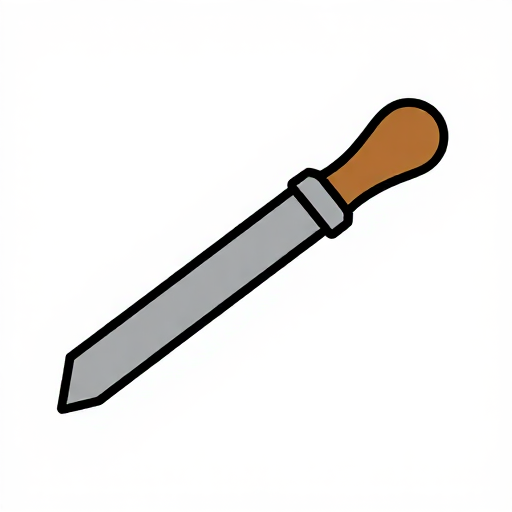 Tupa (Tupa ya Mkono)
 Lupu ya Kukuza
 Bamba la chuma laini
2
2
Match the section to the shape
Match the section to the shape
A ROUND or rat-tail file opens and trues a hole and files an inside curve. A HALF-ROUND does an inside curve on its round face and a flat on its other — the most generally useful shape in a set.
A SQUARE file cuts a rectangular slot or keyway. A TRIANGULAR file cuts an inside corner sharper than 90 degrees and is what sharpens a saw. A KNIFE file, wedge-shaped in section, reaches into narrow acute corners nothing else fits — the corners of a dovetail socket, for instance.
The rule for inside curves: the file's radius must be SMALLER than the curve you are making, or it will only touch at two points and cut flats. A round file too big for a hole cannot enlarge it evenly, however carefully it is used.
Zana zinazohitajika:
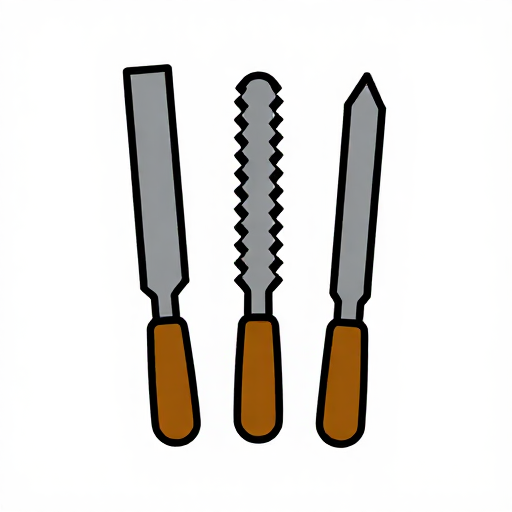 Seti ya tupa
 Seti ya tupa ndogoBamba la chuma laini
3
3
Filing a fair curve: move the contact, not the file
Filing a fair curve: move the contact, not the file
To file an outside curve, use a flat file and roll it across the work as you push — the contact point travels around the curve while the file itself stays straight.
Holding the file at one angle and stroking makes a flat. Making a curve out of a series of flats and then blending them works, and is in fact how most curves get filed, but the rolling stroke does it in one operation and leaves a fairer shape.
Judge a curve by eye against the light, not by measuring. A fair curve shows an unbroken smooth highlight running along it; a lumpy one breaks the highlight into patches. That test finds errors far smaller than anything a rule will show, and it is how a curve is judged in every trade that makes them.
Vifaa kwa hatua hii:
 Fito ya chuma laini1 kipande
Zana zinazohitajika:
Tupa (Tupa ya Mkono) Tupa laini
 Kibanio kizito cha meza ya kazi
4
4
Needle files: small work, and the pressure that breaks them
Needle files: small work, and the pressure that breaks them
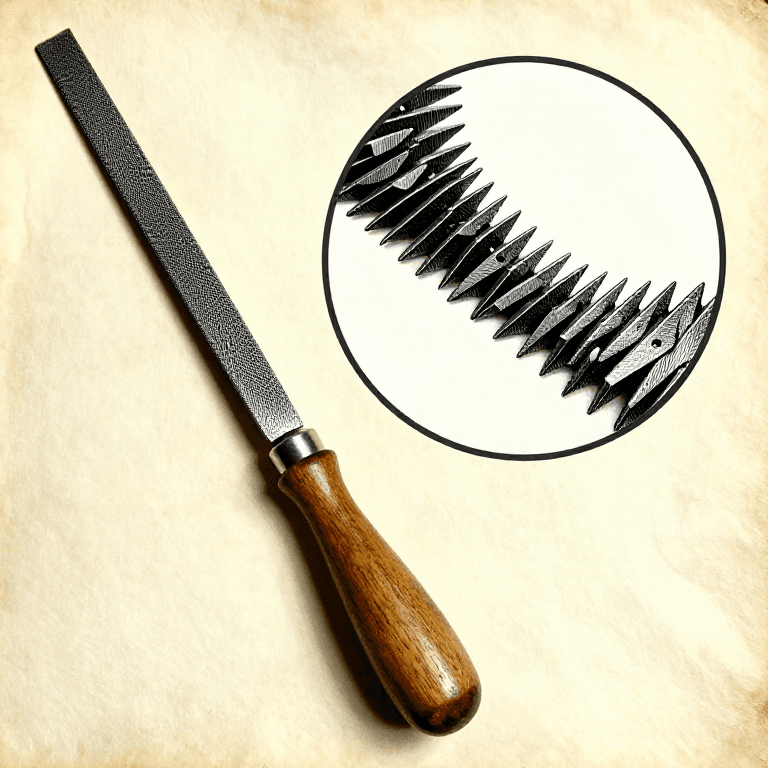
Needle files are miniature files with an integral round handle, made in the same sections, and they are for work a hand file cannot reach — jewellery, model parts, cleaning up a 3D print, adjusting a key.
They are held like a pencil and used with almost no pressure. They break easily because they are hardened right through and thin, and a broken needle file usually breaks under sideways pressure rather than in the cut. Let the teeth work; if it is slow, the file is too fine, not too lightly used.
They clog instantly on soft metal, so chalk and a file card matter more here than anywhere. And because the teeth are tiny, a single pin is proportionally enormous — one wedged chip on a needle file scratches a groove that, on a small part, may be a visible defect in the finished piece.
Vifaa kwa hatua hii:
 Bamba la Shaba ya Njano1 kipande
Zana zinazohitajika:
 Tupa za sindanoSeti ya tupa ndogo
 Brashi ya kusafisha tupaLupu ya Kukuza
Vifaa
2- 1 kipandeKishikilia Nafasi
- 1 kipandeKishikilia Nafasi
Zana Zinazohitajika
9- Kishikilia Nafasi
- Kishikilia Nafasi
- Kishikilia Nafasi
- Kishikilia Nafasi
- Kishikilia Nafasi
- Kishikilia Nafasi
- Kishikilia Nafasi
- Kishikilia Nafasi
- Kishikilia Nafasi
Blueprint zinazohusiana
Blueprint hizi zinashiriki maarifa — mbinu, vifaa au kanuni
CC0 Umma Wote
Mchoro huu umetolewa chini ya CC0. Uko huru kunakili, kubadilisha, kusambaza, na kutumia kazi hii kwa madhumuni yoyote, bila kuomba ruhusa.
Saidia Mtengenezaji kwa kununua bidhaa kupitia Mchoro wao ambapo wanapata Kamisheni ya Mtengenezaji iliyowekwa na Wachuuzi, au unda marudio mapya ya Mchoro huu na uiunganishe kama kiungo katika Mchoro wako kuchangia mapato.