
Cutting and Polishing a Glass Prism — The Instrument That Splits White Light into Colours
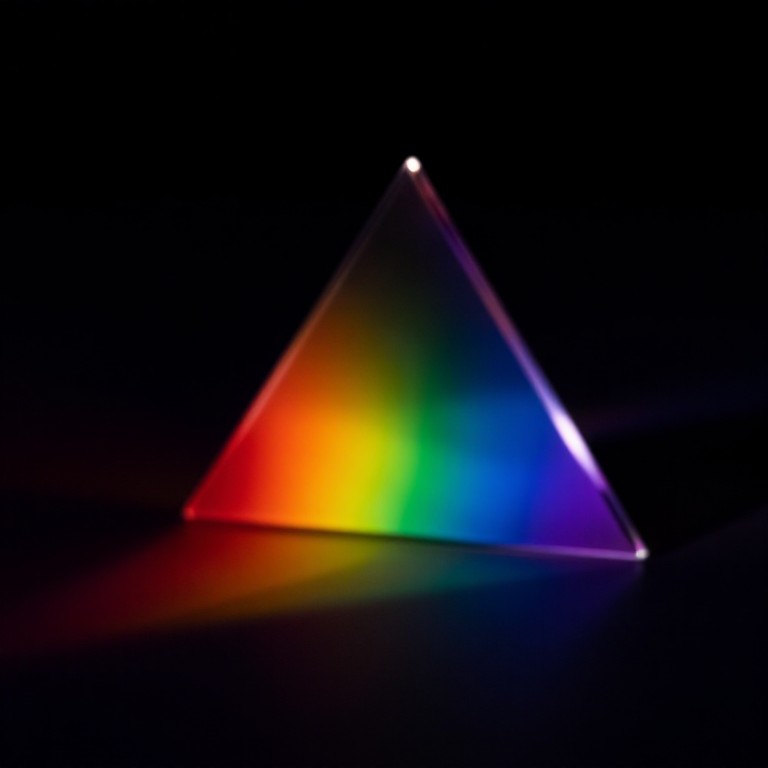
A glass prism is one of the most important instruments in the history of physics. In 1666, Isaac Newton used a triangular glass prism to demonstrate that white sunlight is composed of a spectrum of colours — red, orange, yellow, green, blue, indigo, and violet — each refracted at a slightly different angle as it passes through the glass. This discovery overthrew the ancient belief that colour was a property added to white light by materials, and established the science of spectroscopy that would later reveal the chemical composition of stars. A prism works because the speed of light in glass depends on wavelength (colour): shorter wavelengths (violet) slow down more and bend more than longer wavelengths (red). This dispersion separates the colours spatially. Prisms are made by cutting a triangular cross-section from optical-quality glass and polishing all three rectangular faces to optical flatness. The standard dispersing prism has a 60-degree apex angle. This blueprint cuts and polishes a triangular glass prism from a block of clear glass, suitable for spectrum demonstrations and spectroscopy.
Maagizo
Understand prism geometry and dispersion
Understand prism geometry and dispersion
Select the glass
Select the glass
Vifaa kwa hatua hii:
 Bamba la kioo1 kipande
Mark the triangular cross-section
Mark the triangular cross-section
Zana zinazohitajika:
 Kalamu ya Kuchora ya Almasi
 Kipima Pembe
Cut the glass to rough shape
Cut the glass to rough shape
Grind the first optical face flat
Grind the first optical face flat
Zana zinazohitajika:
 Chembechembe za kabidi ya silikoni
Grind all three optical faces
Grind all three optical faces
Fine grind with progressively finer grits
Fine grind with progressively finer grits
Polish each face on a pitch lap
Polish each face on a pitch lap
Vifaa kwa hatua hii:
 Gundi ya Lami ya Msonobari100 g
Zana zinazohitajika:
 Kisafishi cha oksidi ya seriamu
Test the prism with sunlight
Test the prism with sunlight
Verify optical quality
Verify optical quality
Vifaa
2- 1 kipandeKishikilia Nafasi
- Kishikilia Nafasi
Zana Zinazohitajika
4- Kishikilia Nafasi
- Kishikilia Nafasi
- Kishikilia Nafasi
- Kishikilia Nafasi
Vifaa vya Michoro Iliyounganishwa


Mchoro huu unatengeneza

Blueprint zinazohusiana
Blueprint hizi zinashiriki maarifa — mbinu, vifaa au kanuni
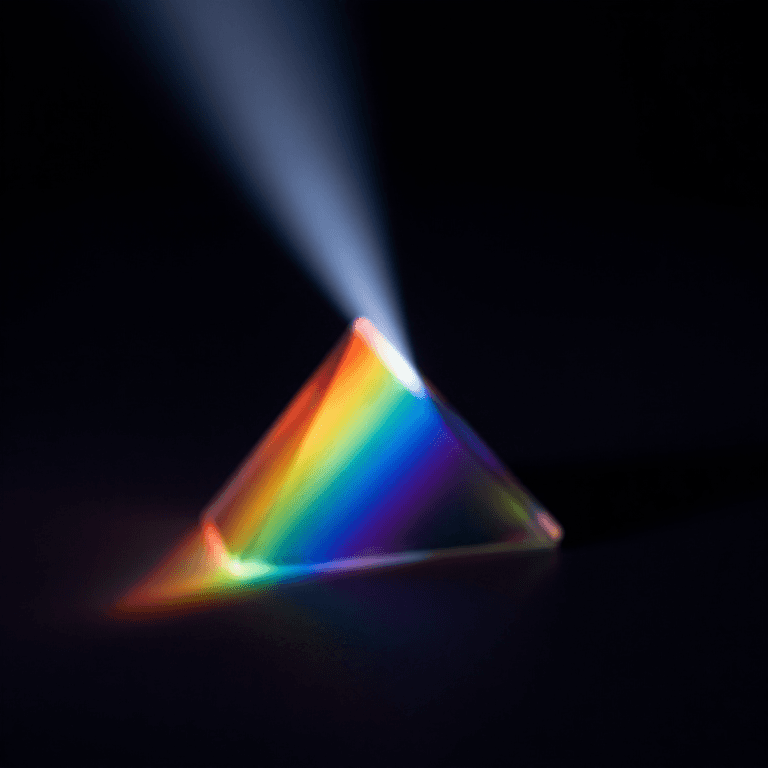
Building a Simple Spectroscope — Splitting Starlight into Its Rainbow of Elements
na Astro
Nafasi
Building a Newtonian Reflecting Telescope — Mirrors Instead of Lenses
na Astro
Utengenezaji mbao
Making Window Glass by the Crown Glass Method — Spinning Molten Glass into Flat Panes
na Forge
Utengenezaji wa vioo
CC0 Umma Wote
Mchoro huu umetolewa chini ya CC0. Uko huru kunakili, kubadilisha, kusambaza, na kutumia kazi hii kwa madhumuni yoyote, bila kuomba ruhusa.
Saidia Mtengenezaji kwa kununua bidhaa kupitia Mchoro wao ambapo wanapata Kamisheni ya Mtengenezaji iliyowekwa na Wachuuzi, au unda marudio mapya ya Mchoro huu na uiunganishe kama kiungo katika Mchoro wako kuchangia mapato.