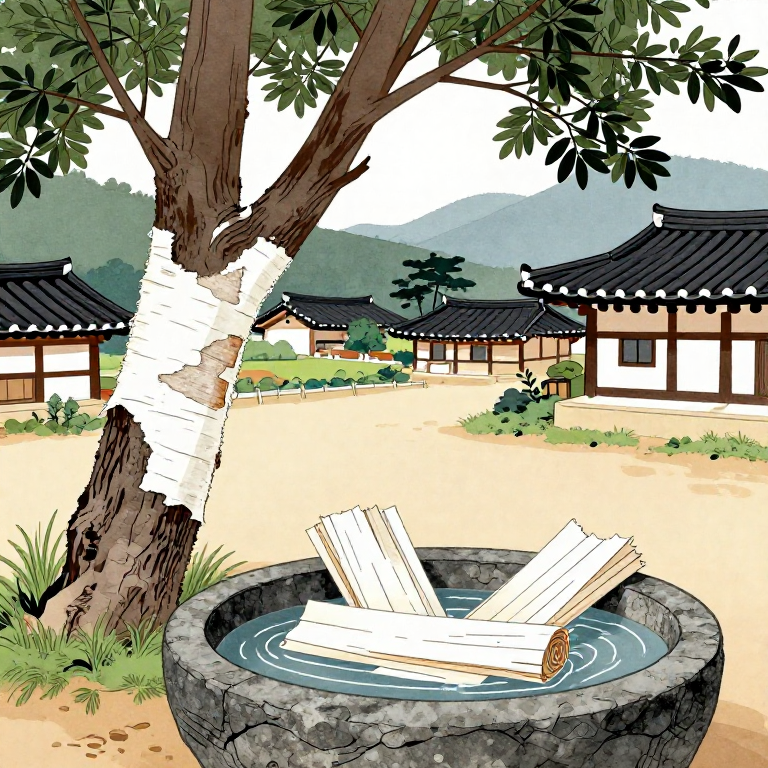


닥나무 껍질 벗기기 — 한지의 원료 수확
Maagizo
닥나무 알아보기
닥나무 알아보기
닥나무(Broussonetia papyrifera)는 뽕나무과에 속하는 낙엽수로, 높이 3~10m까지 자랍니다. 잎은 크고 거칠며, 어린 가지에 잔털이 있습니다. 한국 전역에서 자라며, 특히 전라도와 경상도에서 한지용으로 재배합니다.
벌채 시기 확인
벌채 시기 확인
닥나무 벌채는 11월에서 1월 사이, 잎이 모두 진 후에 합니다. 이 시기에는 수액의 흐름이 멈추어 껍질이 깨끗하게 벗겨지고, 섬유질의 품질이 가장 좋습니다. 봄이나 여름에 벤 닥나무는 섬유가 약합니다.
1~3년생 가지 선택
1~3년생 가지 선택
한지용 섬유는 1~3년생 가지에서 얻습니다. 직경 1.5~3cm, 곧고 가지가 적은 것을 선택합니다. 너무 굵은(3년 이상) 가지는 섬유가 거칠고, 너무 가는(1년 미만) 가지는 양이 적습니다.
Vifaa kwa hatua hii:
 Matawi ya mforsadi wa karatasi (miaka 1 hadi 3)20 vipande
가지 자르기
가지 자르기
전지가위 또는 낫으로 지면에서 5~10cm 높이에서 자릅니다. 비스듬히 자르면 빗물이 고이지 않아 그루터기가 썩지 않습니다. 다음 해에 같은 그루터기에서 새 가지가 자랍니다.
Zana zinazohitajika:
 Mkasi wa kupogolea wa mkono mmoja
 Mundu
Mundu가지를 일정 길이로 자르기
가지를 일정 길이로 자르기
벤 가지를 1~1.2m 길이로 자릅니다. 한지 제작에서 표준적으로 사용하는 길이입니다. 곁가지는 모두 잘라냅니다.
Zana zinazohitajika:
 Msumeno
가지 묶기
가지 묶기
자른 가지 20~30개를 한 묶음으로 묶습니다. 짚이나 끈으로 양쪽 끝과 중간을 묶어 고정합니다. 묶음이 너무 크면 찜통에 넣기 어렵습니다.
Vifaa kwa hatua hii:
 Kamba nyembamba ya kufunga3 mita
가지 찌기 (증자)
가지 찌기 (증자)
큰 솥이나 드럼통에 물을 넣고 그 위에 닥나무 묶음을 세워 놓습니다. 뚜껑을 덮고 2~3시간 동안 쪄냅니다. 증기로 쪄야 껍질이 부드러워져 깨끗하게 벗겨집니다.
Vifaa kwa hatua hii:
 Maji30 lita
Zana zinazohitajika:
 Sufuria kubwa ya kuanika mvuke
 Kuni
Kuni껍질 벗기기
껍질 벗기기
찐 가지가 아직 따뜻할 때, 윗부분에 칼집을 내고 아래로 당기면 껍질이 통째로 벗겨집니다. 한 손으로 가지를 잡고 다른 손으로 껍질을 잡아당깁니다. 식으면 벗기기 어려우니 빨리 작업합니다.
Zana zinazohitajika:
 Kisu kidogo
 Glavu za pamba
흑피(黑皮) 분리
흑피(黑皮) 분리
벗긴 껍질은 바깥 검은 층(흑피)과 안쪽 흰 층(백피)으로 구성됩니다. 칼로 흑피를 긁어냅니다. 흑피가 남으면 한지에 검은 반점이 생기므로 깨끗이 제거해야 합니다.
Zana zinazohitajika:
 Kisu cha kukwangua
백피(白皮) 확인
백피(白皮) 확인
흑피를 제거한 백피는 크림색에서 연한 갈색을 띱니다. 손으로 찢어보면 길고 질긴 섬유가 보입니다. 이것이 한지의 원료인 인피(靭皮) 섬유입니다. 섬유 길이가 길수록 강한 한지를 만들 수 있습니다.
백피 씻기
백피 씻기
흐르는 차가운 물에 백피를 씻어 잔여 찌꺼기와 수액을 제거합니다. 가볍게 문질러 씻되, 섬유를 손상시키지 않도록 주의합니다.
Vifaa kwa hatua hii:
 Maji yaliyosafishwa kwa mvuke20 lita
Zana zinazohitajika:
 Beseni la kuoshea
백피 건조
백피 건조
씻은 백피를 펴서 햇볕에 건조합니다. 빨래줄에 걸거나 대나무 선반 위에 펼칩니다. 2~3일간 완전히 건조될 때까지 말립니다. 비가 오면 즉시 거둡니다.
Zana zinazohitajika:
 Kaunta ya kuanikia vyombo
 Kamba ya kuanikia nguo
건조 상태 확인
건조 상태 확인
완전히 건조된 백피는 딱딱하고 가벼우며, 구부리면 '딱' 소리가 납니다. 아직 축축한 부분이 있으면 곰팡이가 필 수 있으니 완전히 건조시켜야 합니다.
건조된 백피 묶어 보관
건조된 백피 묶어 보관
건조된 백피를 가지런히 모아 끈으로 묶습니다. 통풍이 잘 되는 서늘한 장소에 보관합니다. 습기와 직사광선을 피하면 1년 이상 보관할 수 있습니다. 사용할 때 물에 불려 사용합니다.
Vifaa kwa hatua hii:
Kamba nyembamba ya kufunga2 mita닥나무 그루터기 관리
닥나무 그루터기 관리
벌채 후 그루터기 주변의 잡초를 제거합니다. 건강한 그루터기에서는 봄에 5~8개의 새 가지가 자랍니다. 3년 후에 다시 수확할 수 있으며, 한 그루터기에서 30년 이상 반복 수확이 가능합니다.
Vifaa
5- Kishikilia Nafasi
- Kishikilia Nafasi
- 30 litaKishikilia Nafasi
- Kishikilia Nafasi
- 1 kipandeKishikilia Nafasi
Zana Zinazohitajika
11- Kishikilia Nafasi
- Kishikilia Nafasi
- Kishikilia Nafasi
- Kishikilia Nafasi
- Kishikilia Nafasi
- Kishikilia Nafasi
- Kishikilia Nafasi
- Kishikilia Nafasi
- Kishikilia Nafasi
- Kishikilia Nafasi
- Kishikilia Nafasi
Mchoro huu unatengeneza

CC0 Umma Wote
Mchoro huu umetolewa chini ya CC0. Uko huru kunakili, kubadilisha, kusambaza, na kutumia kazi hii kwa madhumuni yoyote, bila kuomba ruhusa.
Saidia Mtengenezaji kwa kununua bidhaa kupitia Mchoro wao ambapo wanapata Kamisheni ya Mtengenezaji iliyowekwa na Wachuuzi, au unda marudio mapya ya Mchoro huu na uiunganishe kama kiungo katika Mchoro wako kuchangia mapato.