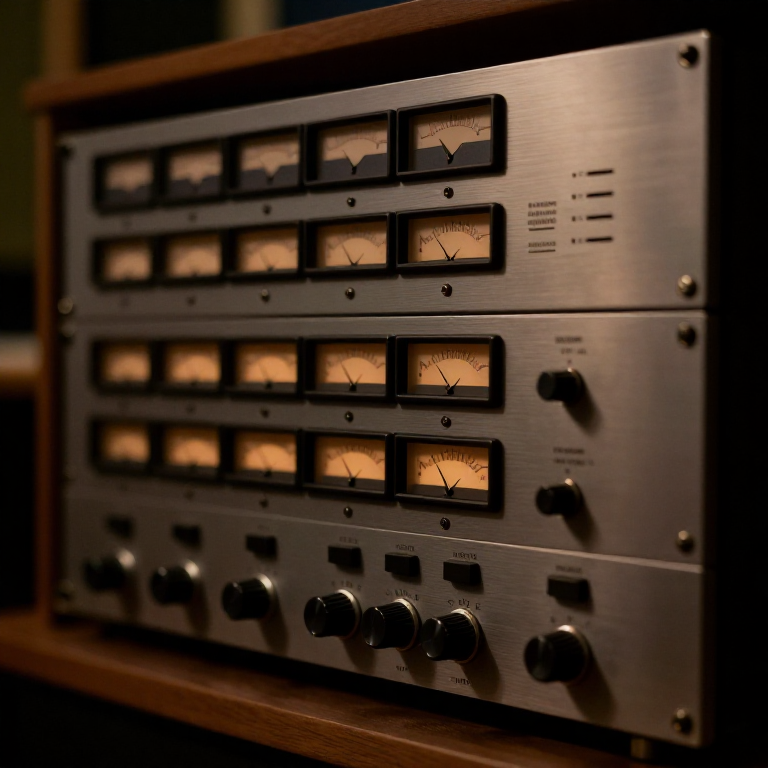


Dolby Noise Reduction
Maagizo
Measure the noise you are fighting
Measure the noise you are fighting
Characterise the hiss before designing against it.
- Record silence on tape and play it back at full gain.
- Measure the noise level and note its character across the frequency range.
- Now record a loud tone and measure the signal level.
- Compute the difference — that is your signal-to-noise ratio.
- Note at which frequencies the hiss is most audible.
Tape hiss is broadband but the ear notices it most in the upper-middle range. It is also constant, regardless of what is recorded — so a loud passage hides it completely and a quiet one leaves it exposed. That asymmetry is the opening Dolby exploits: the problem only exists during quiet passages, so only quiet passages need treatment.
Record the noise spectrum. Dolby A divided the signal into four bands and treated each separately, precisely because hiss and music are distributed differently across frequency.Vifaa kwa hatua hii:
 Karatasi ya gridi1 pad
Zana zinazohitajika:
 Osilosikopu ya dijitali
 Kitengeneza Ishara cha DDS
 Mita-nyingi ya dijitali ya maabara
Build a compressor that only acts on quiet signals
Build a compressor that only acts on quiet signals
The encoder: boost the quiet, leave the loud alone.
- Build a circuit whose gain depends on the signal level — high gain for small signals, unity for large ones.
- Use a rectifier and smoothing to derive a control voltage from the signal.
- Set the threshold so that loud passages pass through unchanged.
- Feed a tone that fades from loud to silent and plot input against output level.
The transfer curve must be exactly reproducible, because the decoder has to invert it precisely. Any mismatch between encoder and decoder appears as level pumping — the sound audibly breathing as the gain moves. This is why Dolby licensed the circuitry tightly and specified alignment tones on every tape: the two halves must agree to within a fraction of a decibel.
The attack and release times matter as much as the gain law. Too fast and you hear the gain moving on individual notes; too slow and a sudden loud transient punches through before the gain reduces.Vifaa kwa hatua hii:
 Kifurushi cha Vipinga vya 1/4 W1 kifaa
 Seti ya Kapasita za Kauri1 kifaa
 Seti ya kapasita za elektroliti1 kifaa
Zana zinazohitajika:
Osilosikopu ya dijitaliKitengeneza Ishara cha DDSMita-nyingi ya dijitali ya maabaraBuild the matching expander and test the pair
Build the matching expander and test the pair
The decoder must be the encoder's exact mirror image.
- Build a circuit with the inverse gain law — reducing gain for small signals, unity for large.
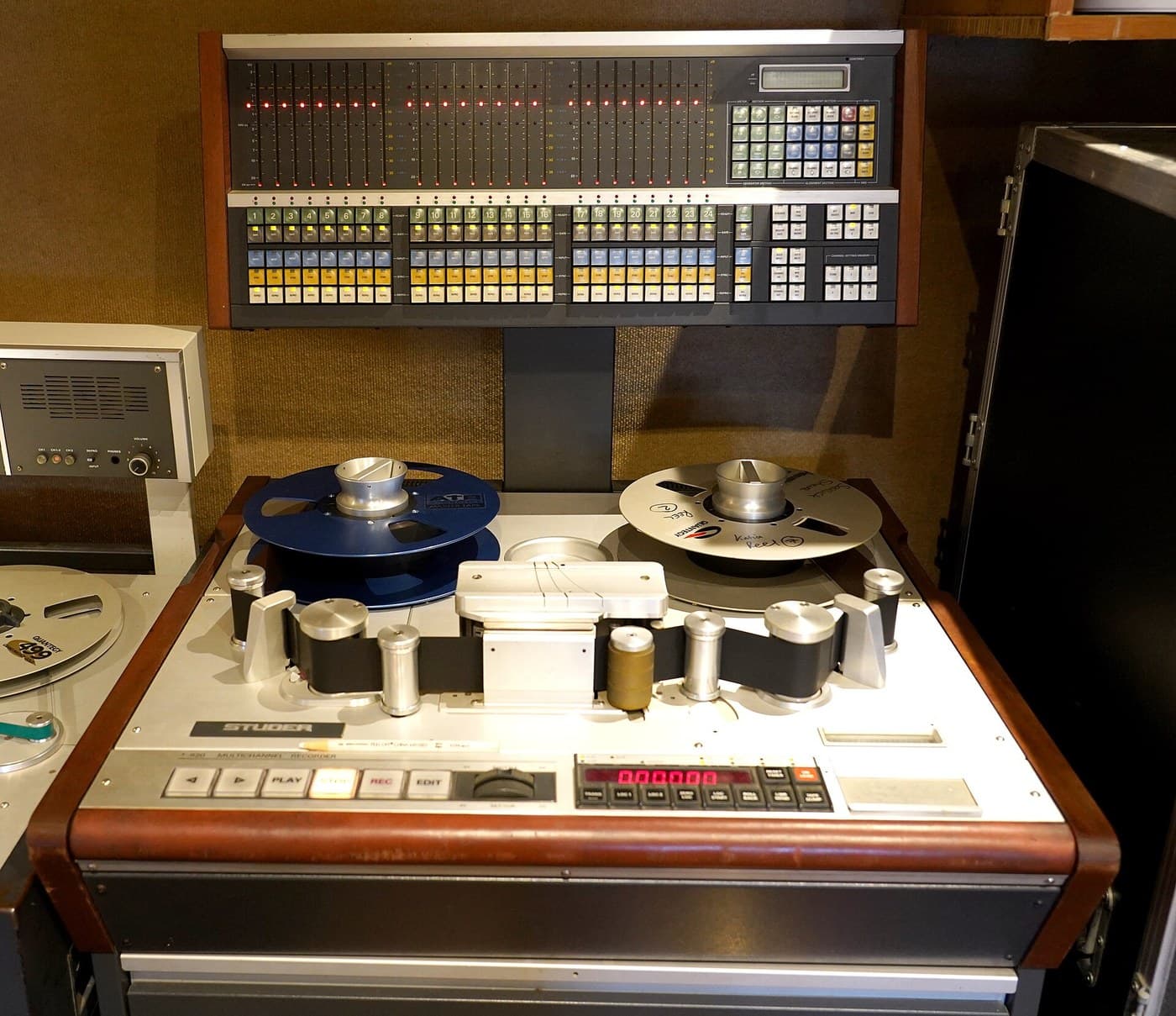
- Connect encoder directly to decoder with no tape in between.
- Sweep a tone from loud to silent and confirm the output matches the input at every level.
- Now insert the tape machine between them and repeat.
Vifaa kwa hatua hii:
Kifurushi cha Vipinga vya 1/4 W1 kifaa Kikuza sauti1 kifaa
Zana zinazohitajika:
Osilosikopu ya dijitaliKitengeneza Ishara cha DDSMita-nyingi ya dijitali ya maabara Kiolesura cha sauti (USB-C)
Play an encoded tape undecoded, and hear the mismatch
Play an encoded tape undecoded, and hear the mismatch
The system's dependence on both halves is worth experiencing.
- Record music with the encoder in circuit.
- Play it back with the decoder BYPASSED and listen.
- Now play it back correctly decoded.
- Also try playing an unencoded tape THROUGH the decoder.
Zana zinazohitajika:
Osilosikopu ya dijitaliKikuza sautiMita-nyingi ya dijitali ya maabaraPre-distorting on purpose, and history
Pre-distorting on purpose, and history
Ray Dolby founded Dolby Laboratories in London in 1965 and introduced Dolby A for professional studios, splitting the signal into four frequency bands and companding each separately. Dolby B followed in 1968 as a simpler single-band system for consumer cassettes, and it is the reason the compact cassette became a serious music format rather than a dictation medium.
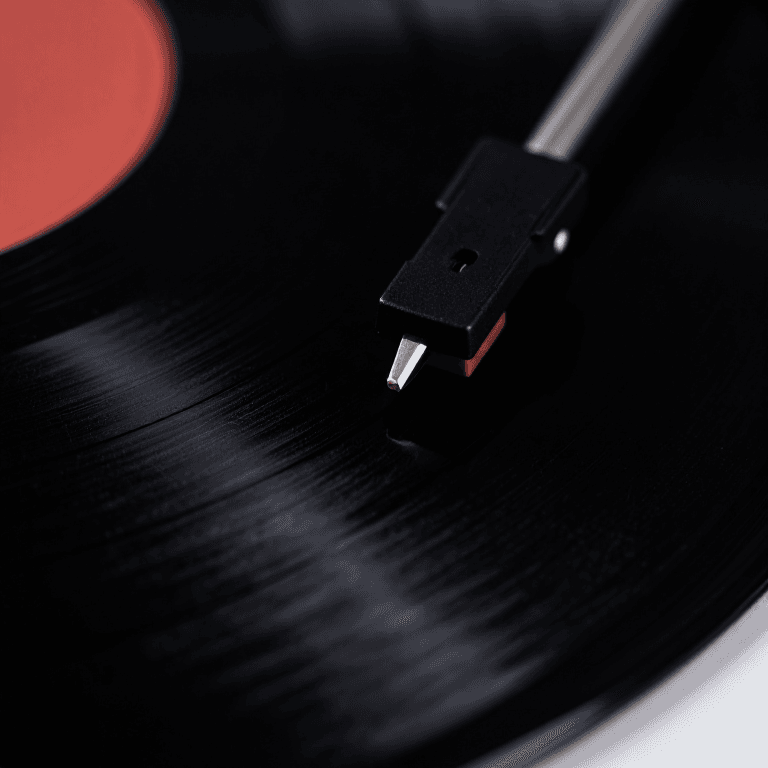
The underlying idea is deliberate pre-distortion, and it runs through this whole batch. The RIAA curve on an LP reduces bass and lifts treble before cutting, then undoes it on playback. AC bias adds an inaudible tone so the tape behaves linearly. Dolby boosts quiet passages before the noise is added and reduces them after. In every case the signal is intentionally made wrong in a known way, so that a matching inverse at the far end produces something better than the straight path could.
It is the same reasoning as Blumlein's sum-and-difference encoding earlier in this batch: transform the signal into a representation better suited to the channel, send it, and transform it back. That is the central idea of all signal processing, arrived at independently by engineers solving quite different practical problems.
Its honest limits: both halves must match precisely, so tape and machine alignment matter; mistracking produces audible pumping and breathing; the encoded tape is not listenable without the decoder; and it addresses hiss but not print-through, dropouts or wow. Digital recording eventually made the problem disappear rather than solving it — no analogue storage medium, no hiss to fight — which is how most of the difficulties in this batch were ultimately retired.
Vifaa
5- 1 padKishikilia Nafasi
- Kishikilia Nafasi
- 1 kifaaKishikilia Nafasi
- Kishikilia Nafasi
- Kishikilia Nafasi
Zana Zinazohitajika
5- 1 vendor sell this, none ship to you yetKishikilia Nafasi
- Kishikilia Nafasi
- Kishikilia Nafasi
- Kishikilia Nafasi
- 2 vendors sell this, none ship to you yetKishikilia Nafasi
Blueprint zinazohusiana
Blueprint hizi zinashiriki maarifa — mbinu, vifaa au kanuni


CC0 Umma Wote
Mchoro huu umetolewa chini ya CC0. Uko huru kunakili, kubadilisha, kusambaza, na kutumia kazi hii kwa madhumuni yoyote, bila kuomba ruhusa.
Saidia Mtengenezaji kwa kununua bidhaa kupitia Mchoro wao ambapo wanapata Kamisheni ya Mtengenezaji iliyowekwa na Wachuuzi, au unda marudio mapya ya Mchoro huu na uiunganishe kama kiungo katika Mchoro wako kuchangia mapato.