SANAA
UREMBO NA USTAWI
UJANJA
UTAMADUNI NA HISTORIA
BURUDANI
MAZINGIRA
CHAKULA NA VINYWAJI
UHANDISI WA KINYUME
SAYANSI
MICHEZO
TEKNOLOJIA
VAZI
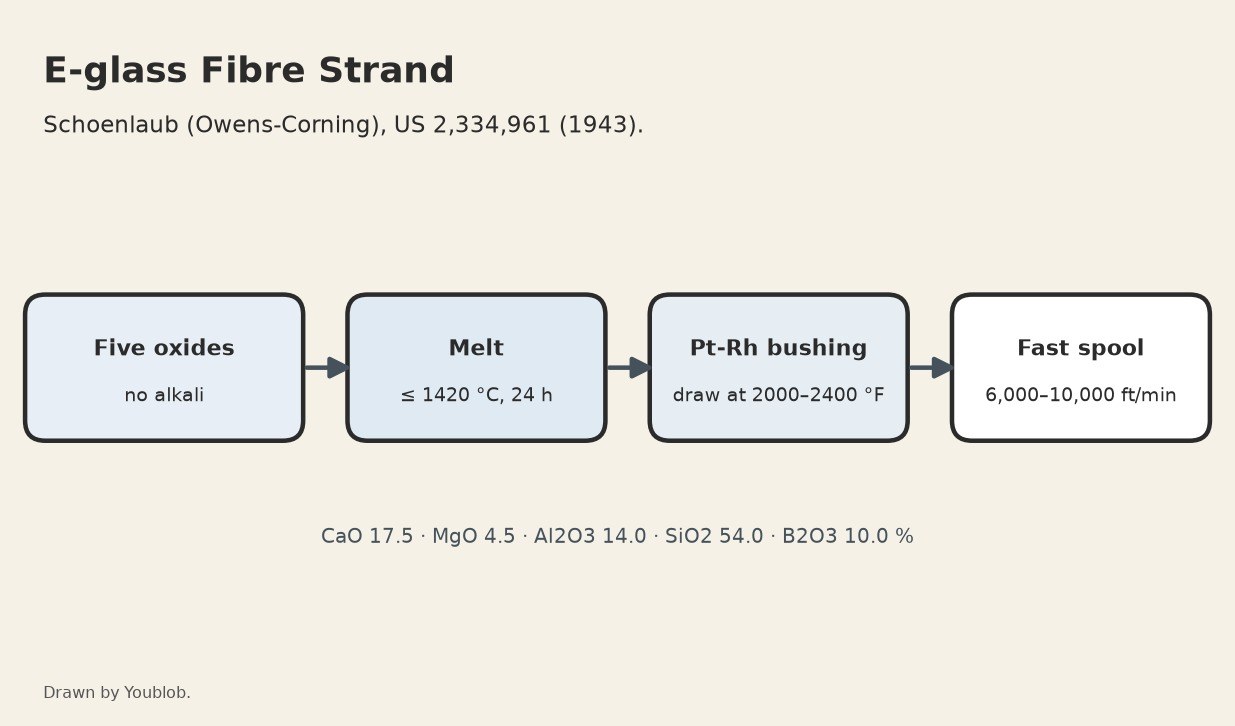


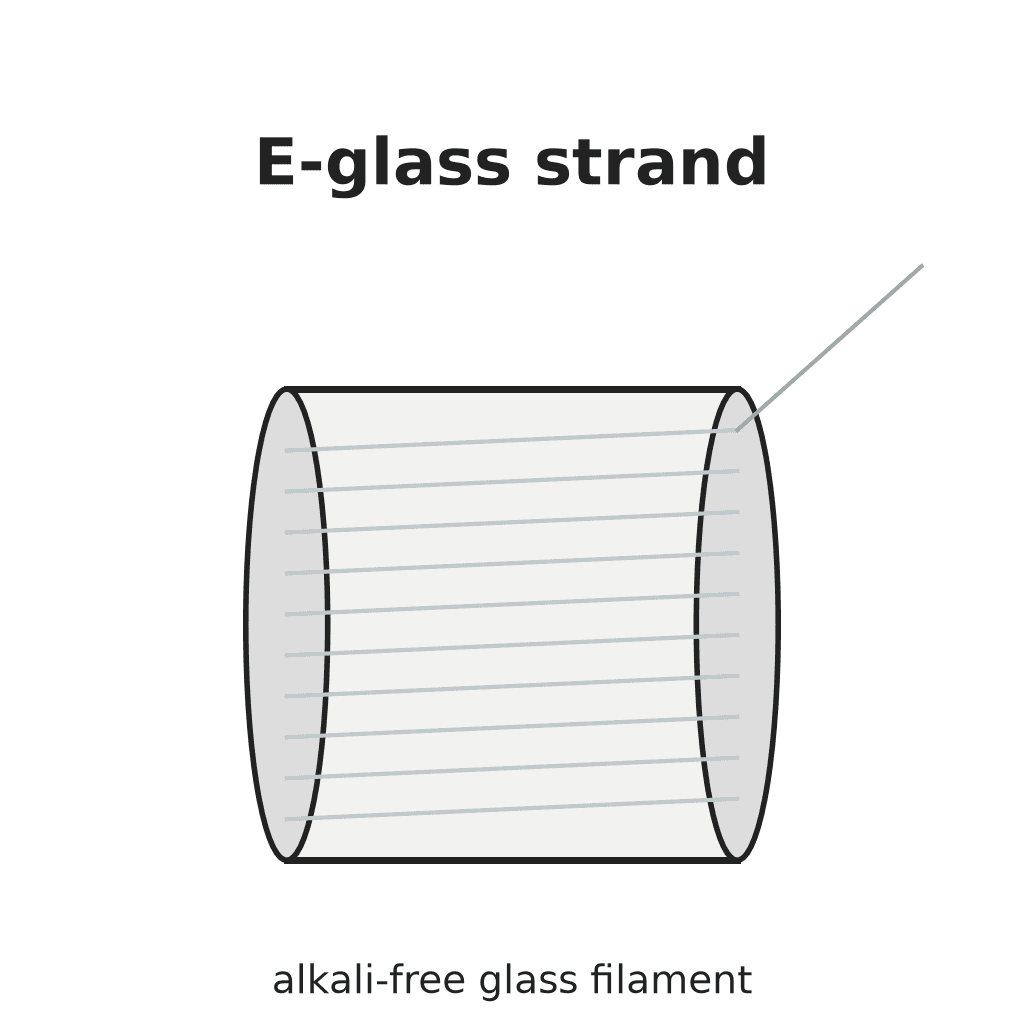
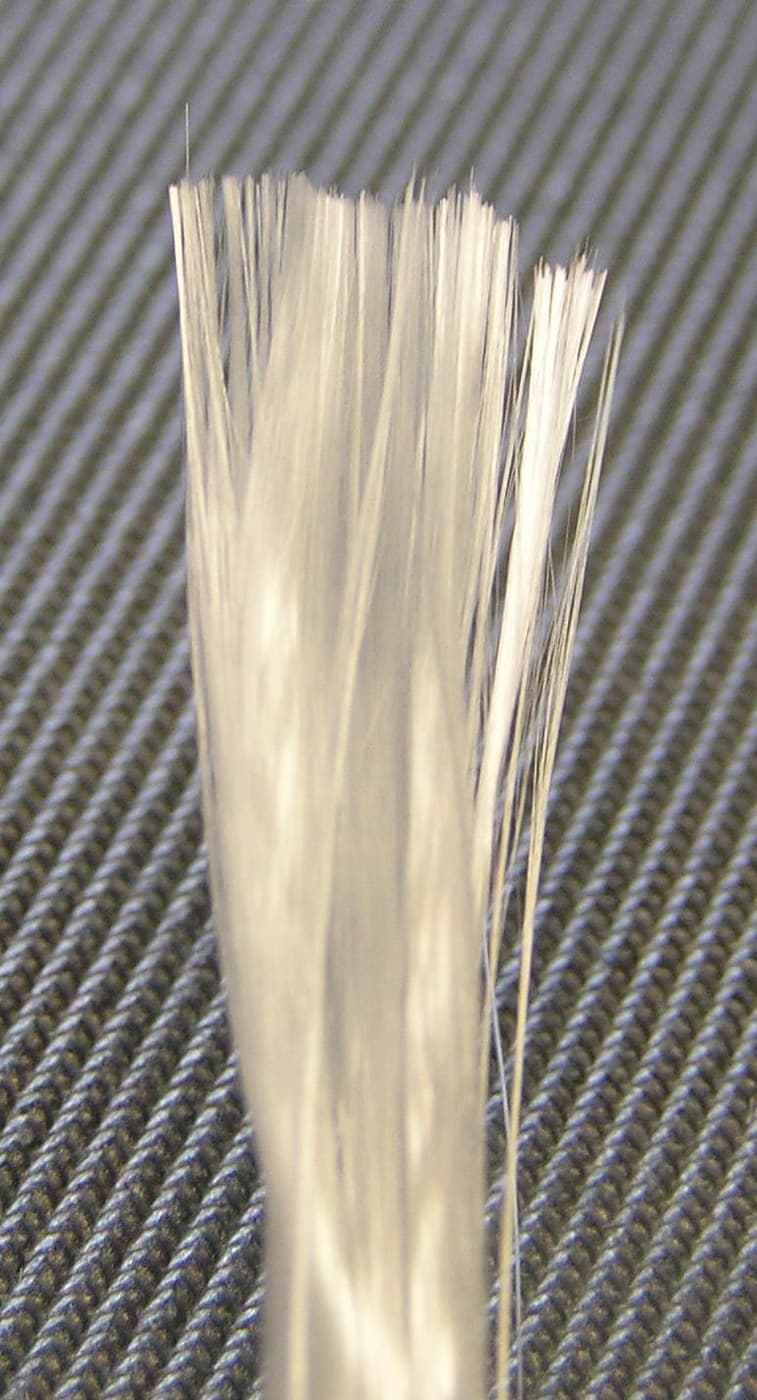
E-glass Fibre Strand: Alkali-Free Lime-Alumina-Borosilicate Glass Drawn to Filament
Fibre from ordinary glass carries alkali on its huge surface; it takes up water from the air and slowly destroys itself, and it conducts electricity. Schoenlaub's Owens-Corning glass (US 2,334,961, 1943) has no alkali at all: lime, magnesia, alumina and silica fluxed with boric oxide. It was made to be drawn into fibres for insulation and textiles. It is melted at up to 1420 °C and drawn into continuous filaments on a fast spool.
The picture: our diagram.
Juu
2 days
Maagizo
1
1
Weigh out the batch
Weigh out the batch
The patent's example glass: lime (CaO) 17.5 %, magnesia (MgO) 4.5 %, alumina 14.0 %, silica 54.0 %, boric oxide 10.0 %. Ours: weigh those five oxides in those proportions and mix them. Keep within the patent's limits; small changes make this glass devitrify.
Vifaa kwa hatua hii:
 Chokaa hai17.5 parts
 Oksidi ya magnesiamu4.5 parts
 Unga wa alumina (oksidi ya alumini)14 parts
 Mchanga wa Kwatzi54 parts
 Oksidi ya boroni10 parts
Zana zinazohitajika:
 Mizani ya mizani-mbili
 Miwani ya usalama
2
2
Melt at no more than 1420 °C
Melt at no more than 1420 °C
Melt the batch in a glass tank furnace without going above 1420 °C; the patent's day tanks ran on a 24-hour cycle.
Zana zinazohitajika:
 Tanuri ya kuyeyusha kioo
 Kipima joto kali
 Glavu Zinazostahimili JotoMiwani ya usalama
3
3
Feed the platinum bushing
Feed the platinum bushing
Draw from a platinum-rhodium bushing like Slayter and Thomas's, heated by an adjustable current. The drawing range of this glass is about 2000–2400 °F (1090–1320 °C). A blower below the nozzles sets each filament.
Zana zinazohitajika:
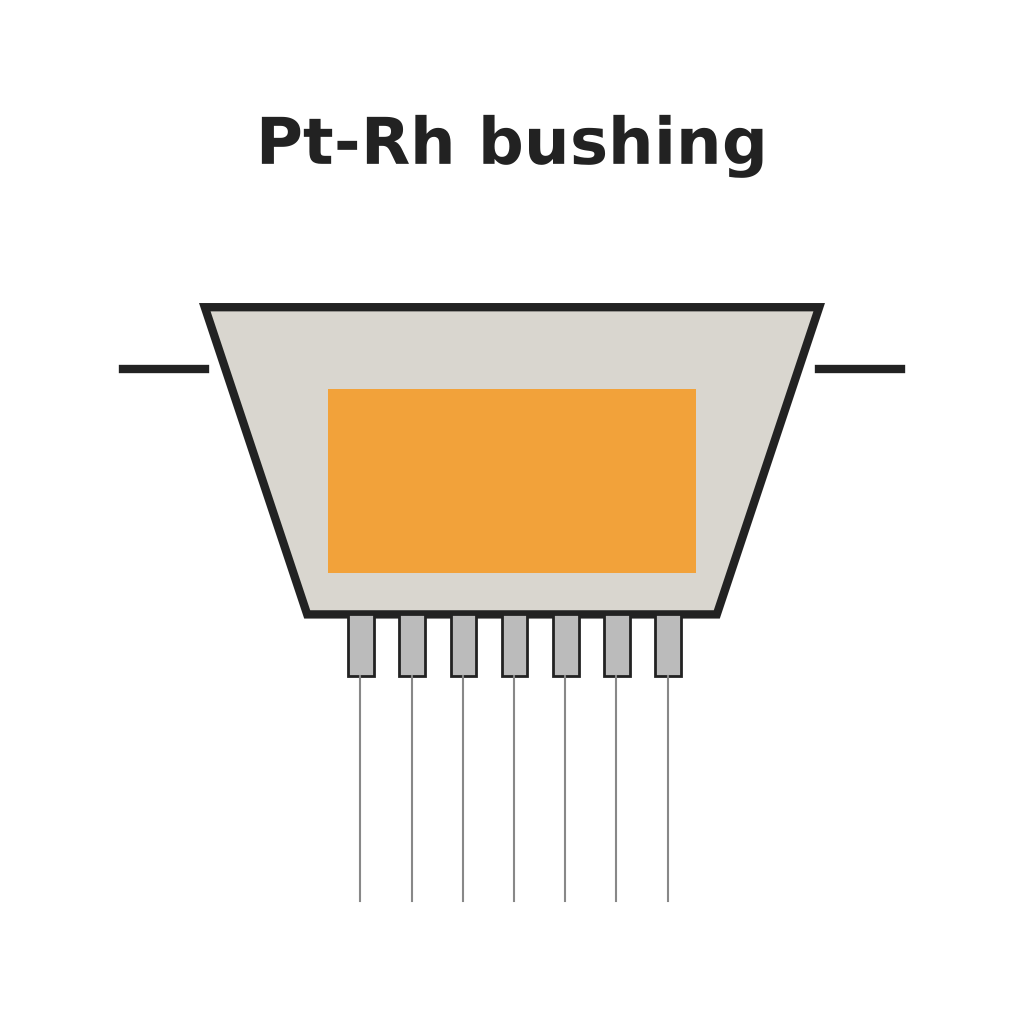 Kisanduku cha Platinamu-Rodi
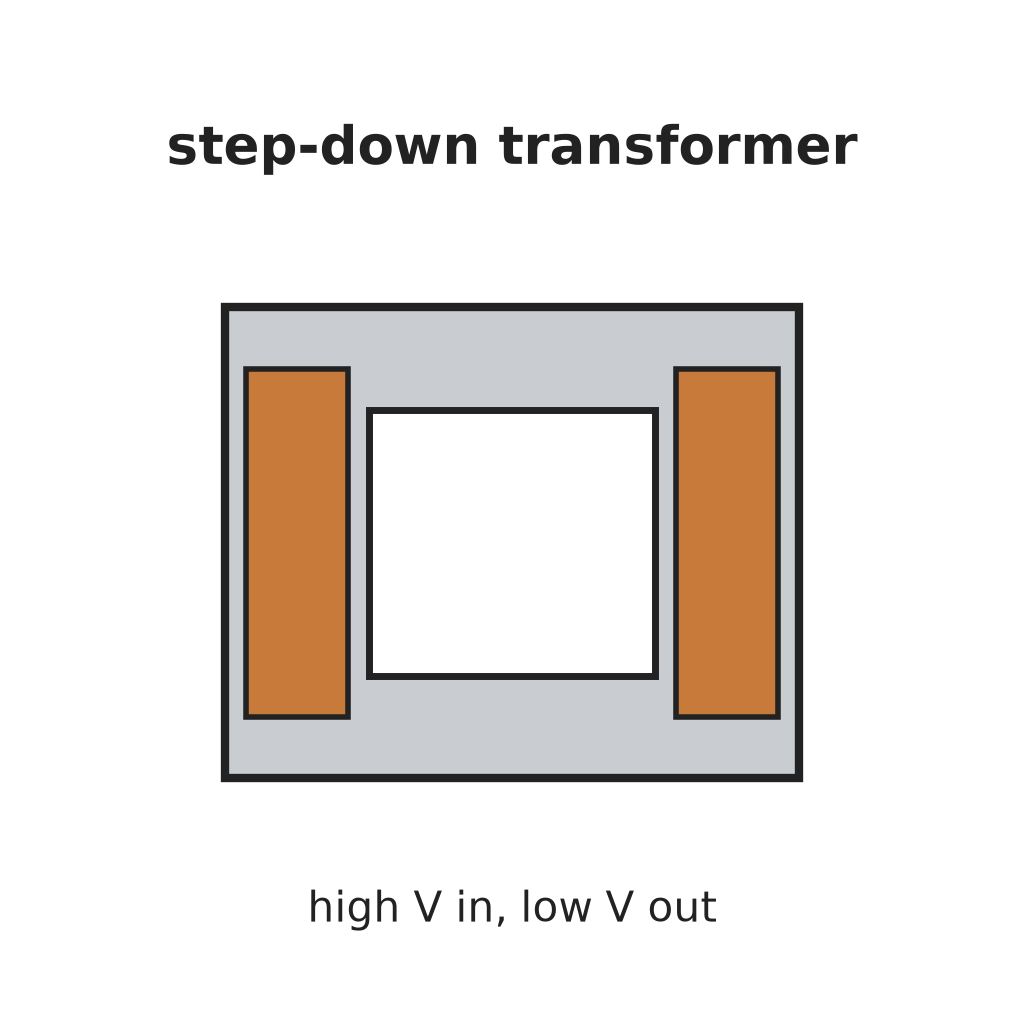 Transfoma ya Kushusha VoltejiKipima joto kali
 Kipuliza hewaGlavu Zinazostahimili Joto
4
4
Wind on a fast spool
Wind on a fast spool
Gather the filaments into a strand and wind it on a spool running as fast as 6,000–10,000 ft per minute (30–50 m/s). Filaments come out about .0001–.0003 in (2.5–7.6 µm) thick. The strand can then be twisted and plied into yarn.
Zana zinazohitajika:
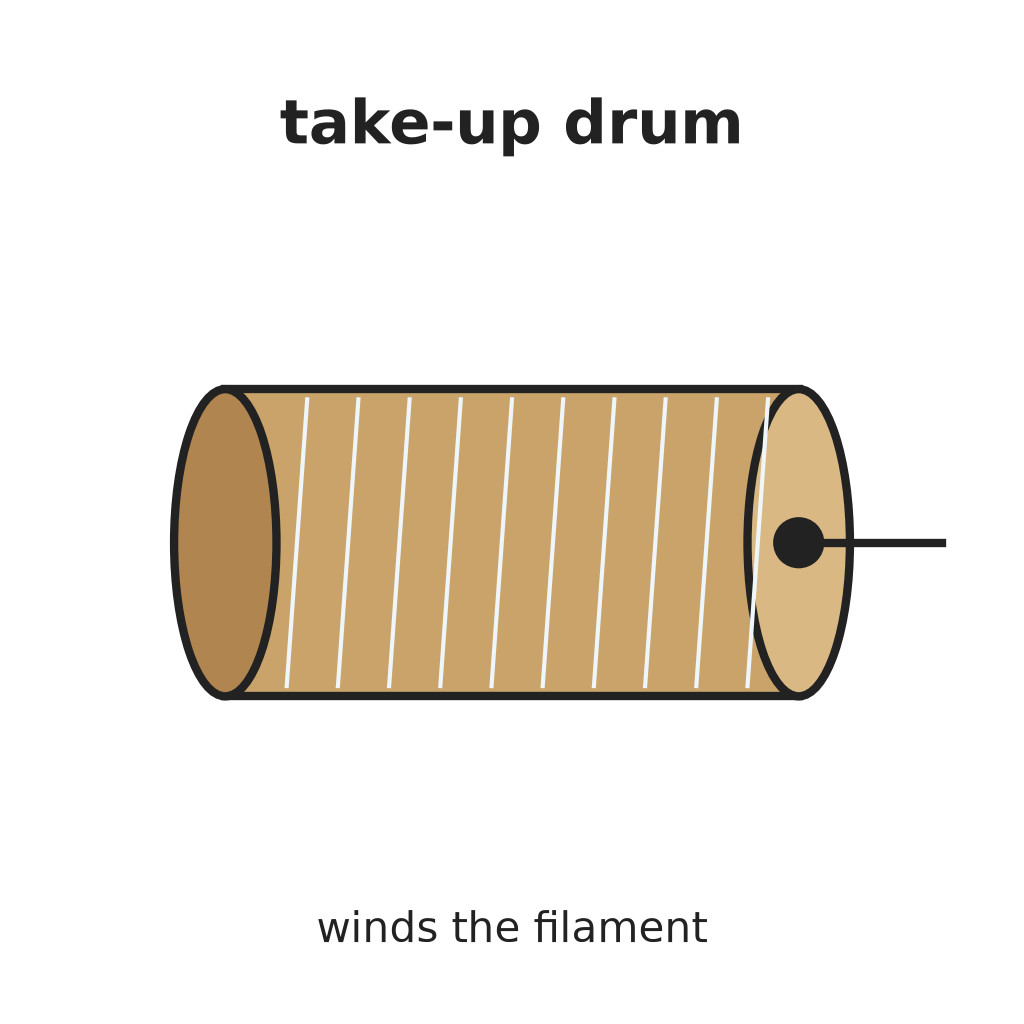 Ngoma ya Kukusanya
Vifaa
5- 17.5 partsKishikilia Nafasi
- 4.5 partsKishikilia Nafasi
- Kishikilia Nafasi
- 54 partsKishikilia Nafasi
- 10 partsKishikilia Nafasi
Zana Zinazohitajika
9- Kishikilia Nafasi
- Kishikilia Nafasi
- Kishikilia Nafasi
- Kishikilia Nafasi
- Kishikilia Nafasi
- Kishikilia Nafasi
- Kishikilia Nafasi
- Kishikilia Nafasi
- Kishikilia Nafasi
Mchoro huu unatengeneza
Blueprint zinazohusiana
Blueprint hizi zinashiriki maarifa — mbinu, vifaa au kanuni
CC0 Umma Wote
Mchoro huu umetolewa chini ya CC0. Uko huru kunakili, kubadilisha, kusambaza, na kutumia kazi hii kwa madhumuni yoyote, bila kuomba ruhusa.
Saidia Mtengenezaji kwa kununua bidhaa kupitia Mchoro wao ambapo wanapata Kamisheni ya Mtengenezaji iliyowekwa na Wachuuzi, au unda marudio mapya ya Mchoro huu na uiunganishe kama kiungo katika Mchoro wako kuchangia mapato.