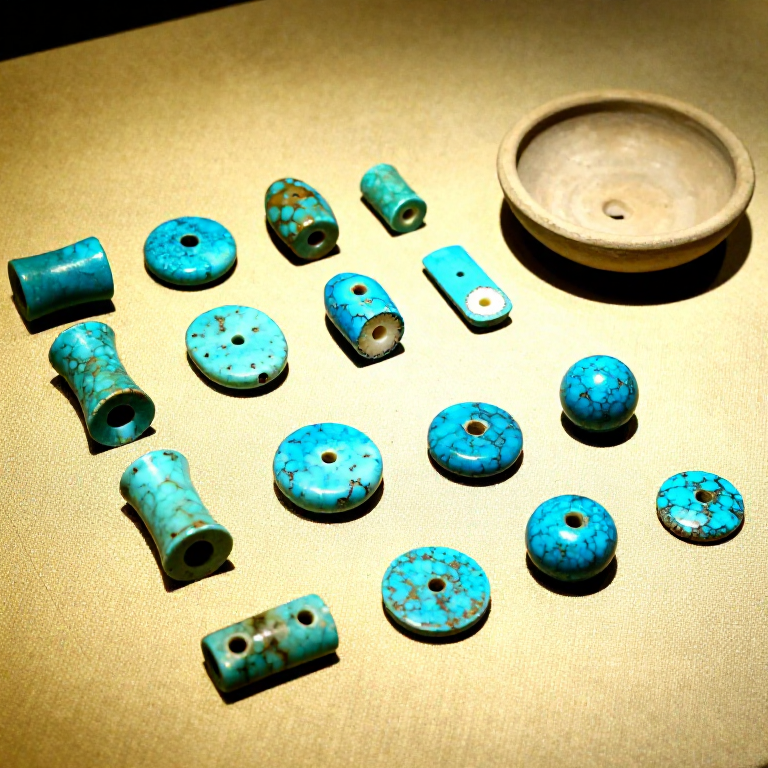


Egyptian Faience Beads — Firing Faience Beads with Quartz Paste Glaze
Maagizo
Prepare the Faience Paste
Prepare the Faience Paste
Grind the quartz sand to a fine powder using a mortar and pestle, then sieve it through fine mesh to remove any coarse particles. Mix the ground quartz (approximately 85-90% by weight) with sodium bicarbonate (10-12%) and calcium carbonate (2-5%). These proportions are based on analysis of ancient faience samples from Amarna and other Egyptian sites. The sodium acts as a flux, lowering the melting point of the silica so the body sinters (partially fuses) at kiln temperatures. Add copper carbonate at 2-5% for the characteristic Egyptian blue-turquoise color. Mix the dry ingredients thoroughly before adding just enough water to form a stiff, moldable paste — too much water makes the paste sticky and difficult to shape.
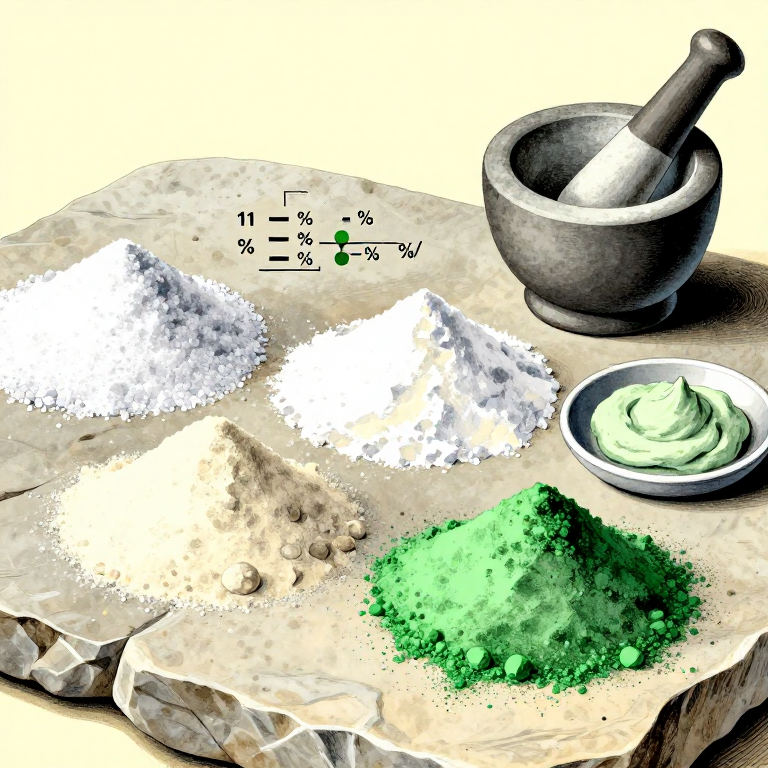
Vifaa kwa hatua hii:
 Mchanga laini200 g g
 Bikaboneti ya sodiamu (NaHCO3)30 g g
 Kabonati ya Kalsiamu - Chokaa Iliyopondwa10 g g
 Kabonati ya shaba5-10 g for blue-green color g
 Majismall amount for binding kipande
Zana zinazohitajika:
 Kinu na mchi
 Tanuru
 Waya wa Shaba
 Sinia la keramiki
 Kichujio Chembamba cha Chai
Form the Beads
Form the Beads
Pinch off small pieces of the faience paste and roll them into the desired bead shapes — spheres, tubes, discs, or barrel shapes were all common in ancient Egypt. While the paste is still damp, pierce each bead through the center using a thin copper wire, straw, or thorn to create the stringing hole. Rotate the piercing tool to ensure a clean, round hole. Ancient Egyptian faience beads ranged from 2 mm seed beads to large pendants over 3 cm across. Work efficiently because the paste begins to dry quickly once exposed to air, and dried paste crumbles rather than reshapes. Set formed beads aside on a clean, dry surface to air-dry for several hours before firing.
Allow Efflorescence to Develop
Allow Efflorescence to Develop
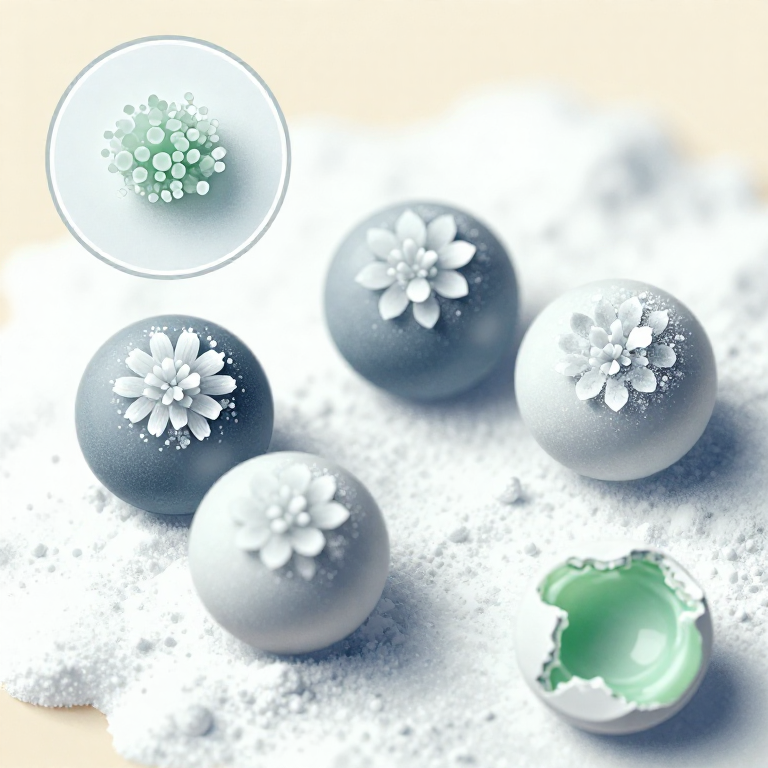
As the shaped beads dry, the soluble sodium salts within the paste migrate to the surface through capillary action and crystallize as a white powdery bloom — this is the efflorescence that will become the glaze. This process typically takes 12-24 hours in dry conditions. The beads will develop a visible white crystalline crust on their outer surface. Do not handle the beads excessively during this phase or brush off the efflorescence, as this removes the glaze-forming material. Place beads on a bed of loose quartz powder during drying to prevent the glaze material from migrating to the contact surface and bonding the beads to the support during firing.
Load and Fire the Beads in the Kiln
Load and Fire the Beads in the Kiln
Place the dried beads on a ceramic firing tray lined with a bed of loose quartz sand or powdered calcium carbonate to prevent them from sticking. Space them at least 5 mm apart so they do not fuse together. Load the tray into a kiln preheated to approximately 500 degrees Celsius. Gradually raise the temperature to 900-1000 degrees Celsius over 1-2 hours. At this temperature, the efflorescent sodium salts on the surface melt and react with the silica to form a thin sodium-calcium-silicate glass glaze. The copper colorant dissolves into this glass, producing the vivid blue to turquoise color. Hold the peak temperature for 15-30 minutes, then allow the kiln to cool slowly. Rapid cooling can cause thermal shock cracking in the glaze.
Remove and Inspect the Finished Beads
Remove and Inspect the Finished Beads
Once the kiln has cooled to room temperature, carefully remove the beads from the firing tray. Well-made faience beads will have a smooth, glossy surface with an even blue-turquoise color and a granular white quartz core visible at the bead holes. Tap each bead lightly — a good faience bead has a crystalline ring rather than a dull thud, indicating the body has sintered properly. If beads appear pale or unglazed in patches, the efflorescence was uneven or insufficient sodium was in the recipe. Ancient Egyptian faience workshops at Amarna and Qantir produced millions of beads, amulets, and small vessels using this technique across three millennia, from the Predynastic period through the Roman era.
Vifaa
8- 200 g gKishikilia Nafasi
- Kishikilia Nafasi
- Kishikilia Nafasi
- small amount for binding kipandeKishikilia Nafasi
- 200 g kipandeKishikilia Nafasi
- 10 g kipandeKishikilia Nafasi
- 5-10 g for blue-green color kipandeKishikilia Nafasi
- 7 gramKishikilia Nafasi
Zana Zinazohitajika
8- Kishikilia Nafasi
- Kishikilia Nafasi
- Kishikilia Nafasi
- Kishikilia Nafasi
- Kishikilia Nafasi
- Kishikilia Nafasi
- Kishikilia Nafasi
- Kishikilia Nafasi
Mchoro huu unatengeneza

CC0 Umma Wote
Mchoro huu umetolewa chini ya CC0. Uko huru kunakili, kubadilisha, kusambaza, na kutumia kazi hii kwa madhumuni yoyote, bila kuomba ruhusa.
Saidia Mtengenezaji kwa kununua bidhaa kupitia Mchoro wao ambapo wanapata Kamisheni ya Mtengenezaji iliyowekwa na Wachuuzi, au unda marudio mapya ya Mchoro huu na uiunganishe kama kiungo katika Mchoro wako kuchangia mapato.