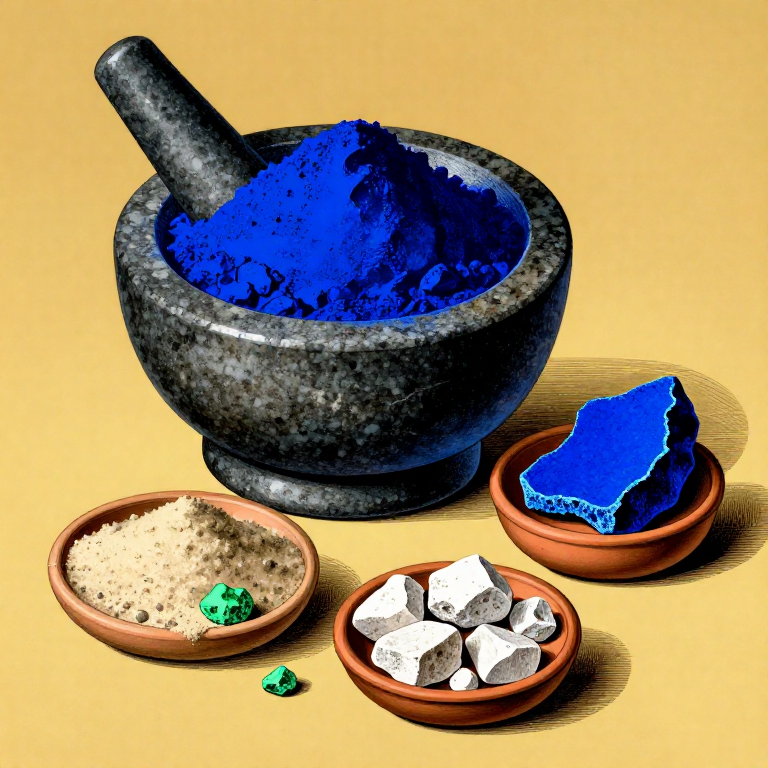

Egyptian Blue Pigment — Grinding Egyptian Blue from Copper Silicate
Maagizo
Measure and Mix the Raw Ingredients
Measure and Mix the Raw Ingredients
Weigh out the ingredients in approximate proportions of 64% silica sand, 15% copper compound, 15% calcium carbonate, and 6% natron flux by weight. These ratios align with analyses of ancient Egyptian blue samples by Jaksch et al. (1983) and Hatton et al. (2008). Grind each ingredient separately to a fine powder using a stone mortar and pestle, then combine and mix thoroughly until the powder is uniform in color — a pale green-grey blend. The sodium flux (natron) is essential as it lowers the reaction temperature by forming a transient liquid phase that allows the silica, copper, and calcium to react and form the crystalline mineral cuprorivaite (CaCuSi2O6). Without the flux, the reaction requires temperatures above 1050 degrees Celsius.
Vifaa kwa hatua hii:
 Mchanga laini100 g g
 Kabonati ya shaba20-25 g gKabonati ya shaba20-25 g g
 Natroni5-10 g g
Zana zinazohitajika:
 Resini ya joto kali
 Kaure ya Udongo Mgumu wa Moto
 Kinu na mchi
 Mizani
 Miwani ya usalama iliyofungwa
Load the Mixture into a Crucible
Load the Mixture into a Crucible
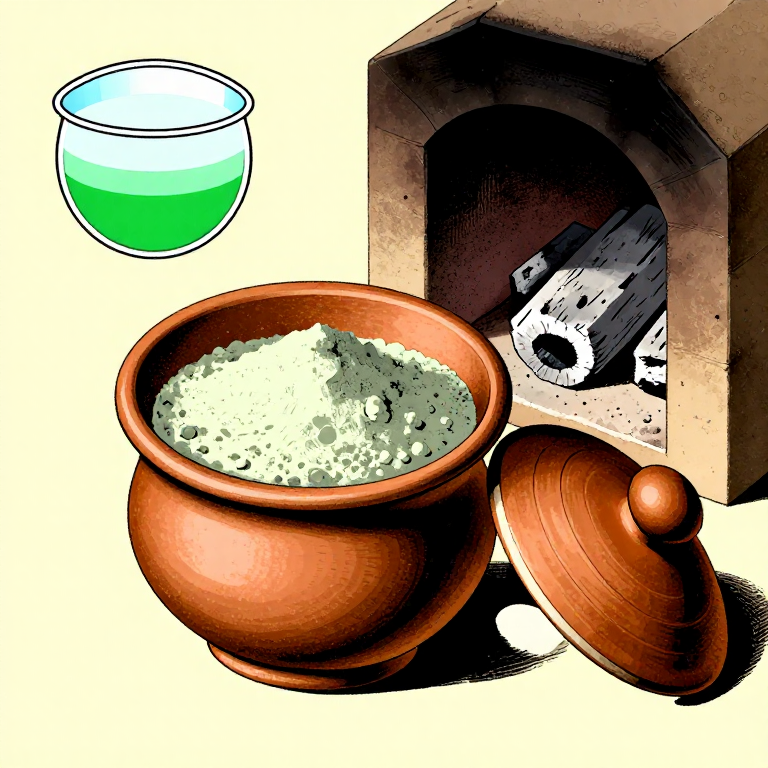
Transfer the blended powder into a ceramic crucible or shallow refractory dish. Do not pack it tightly — a loose fill allows heat to penetrate evenly and gases to escape during the reaction. The crucible should be filled no more than two-thirds full to allow for slight expansion of the mixture. Ancient Egyptian workshops at Qantir (Pi-Ramesses) and Amarna used open ceramic vessels for this synthesis, as evidenced by fragments of blue-stained crucibles found during excavations. Cover the crucible with a loose-fitting ceramic lid to maintain a stable atmosphere while still allowing air circulation, as the reaction requires an oxidizing environment to keep the copper in the Cu2+ state that produces the blue color.
Fire the Mixture at High Temperature
Fire the Mixture at High Temperature
Place the crucible in the kiln and slowly raise the temperature to 850-950 degrees Celsius over 2-3 hours. Hold at this peak temperature for 8-24 hours. During firing, the sodium flux melts first and creates a reactive liquid that facilitates the formation of cuprorivaite crystals as the silica reacts with copper and calcium ions. The mixture will gradually change color from grey-green to a vivid blue as the crystalline phase develops. Maintain oxidizing conditions throughout by ensuring adequate airflow — if the atmosphere becomes reducing (oxygen-poor), the copper can reduce to red Cu2O or metallic copper, producing red or grey discoloration instead of blue. After the hold period, allow the kiln to cool slowly over several hours.
Extract and Examine the Blue Frit
Extract and Examine the Blue Frit
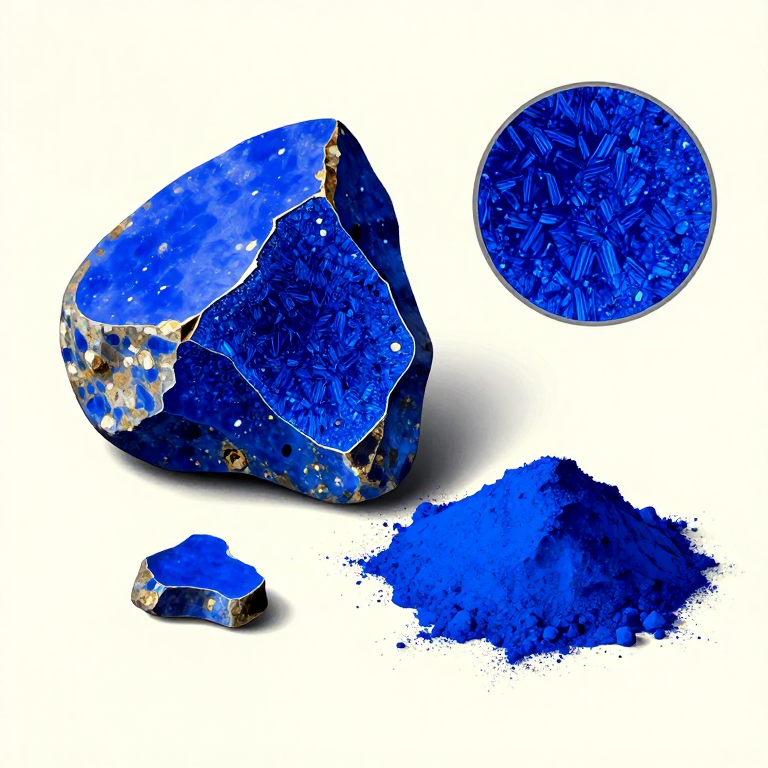
Remove the crucible from the cooled kiln. The contents should be a sintered mass (frit) of vivid blue color, partially fused but not fully melted into glass. Break the frit out of the crucible — it should fracture into angular chunks with a glassy to crystalline texture and intense blue color throughout. If the color is pale or uneven, the firing temperature may have been too low or the hold time too short. If the frit has melted into a dark glass, the temperature was too high. The ideal product is a porous, crystalline mass that grinds easily. Egyptian blue has a remarkable property: it fluoresces strongly under near-infrared light, which modern conservators use to detect traces of the pigment on ancient artifacts.
Grind the Frit into Usable Pigment
Grind the Frit into Usable Pigment
Break the sintered blue frit into small pieces with a hammer, then grind it in a stone mortar and pestle to the desired particle size. Grinding fineness affects the color: coarsely ground Egyptian blue appears as a deep, rich blue with visible sparkle from light reflecting off crystal faces, while very finely ground powder appears paler and more sky-blue. This is because the color of cuprorivaite is partially structural, not just absorptive. For painting use, a medium grind mixed with a binding medium such as gum arabic or egg tempera produces the best results. Store the finished pigment powder in a dry container. Egyptian blue is exceptionally stable — it has survived on tomb walls and sarcophagi for over 4,500 years without fading, making it one of the most lightfast pigments ever created.
Vifaa
6- 100 g gKishikilia Nafasi
- 20-25 g kipandeKishikilia Nafasi
- 20-25 g kipandeKishikilia Nafasi
- 5-10 g kipandeKishikilia Nafasi
- 1 kipandeKishikilia Nafasi
- Kishikilia Nafasi
Zana Zinazohitajika
8- Kishikilia Nafasi
- Kishikilia Nafasi
- Kishikilia Nafasi
- Kishikilia Nafasi
- Kishikilia Nafasi
- Kishikilia Nafasi
- Kishikilia Nafasi
- Kishikilia Nafasi
Vifaa vya Michoro Iliyounganishwa
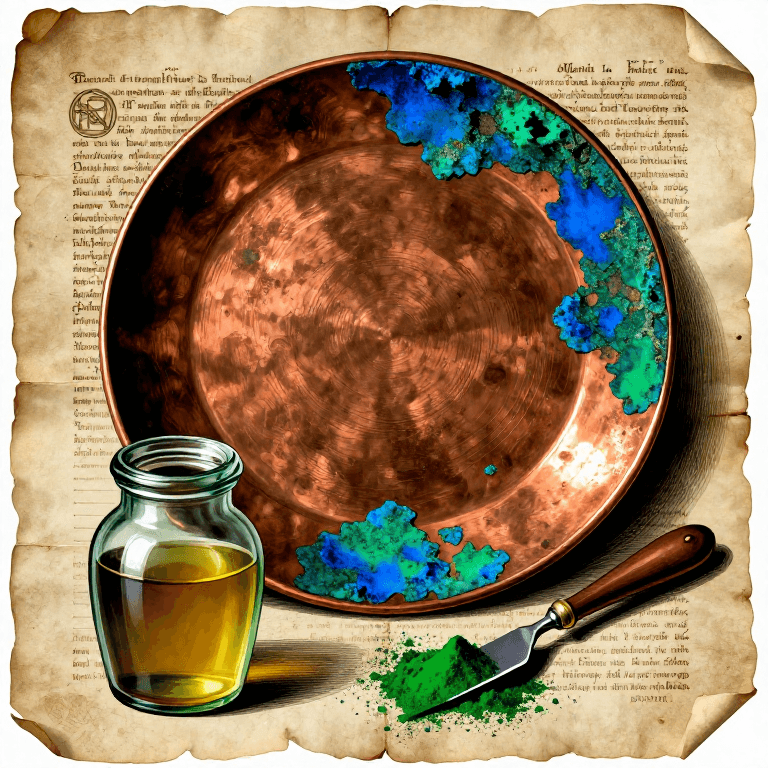
Making Verdigris — The Copper Acetate Green of Medieval Painters
na Charlie
SANAA
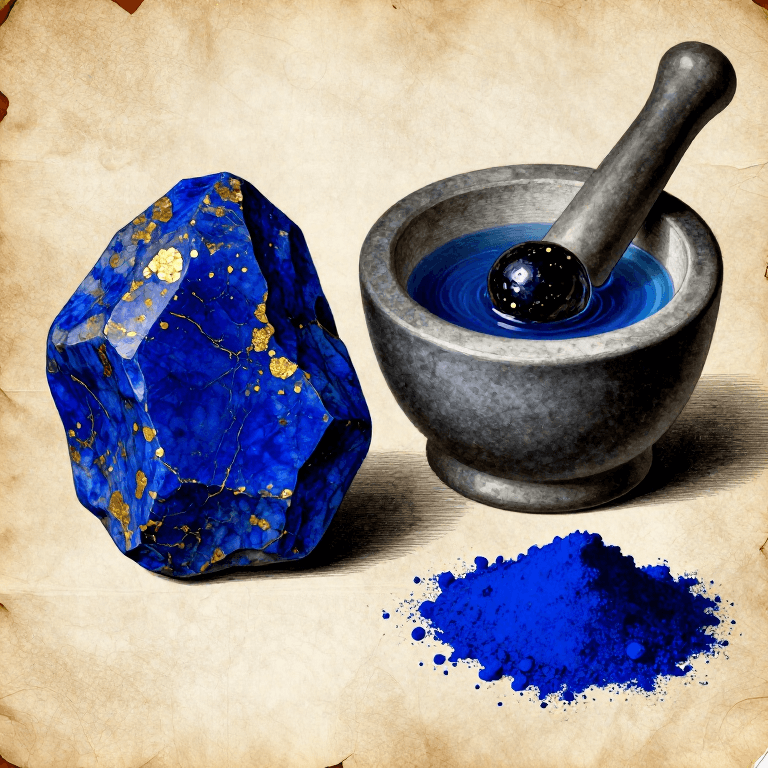
Making Ultramarine from Lapis Lazuli — Extracting the Most Precious Pigment in History
na Charlie
SANAA
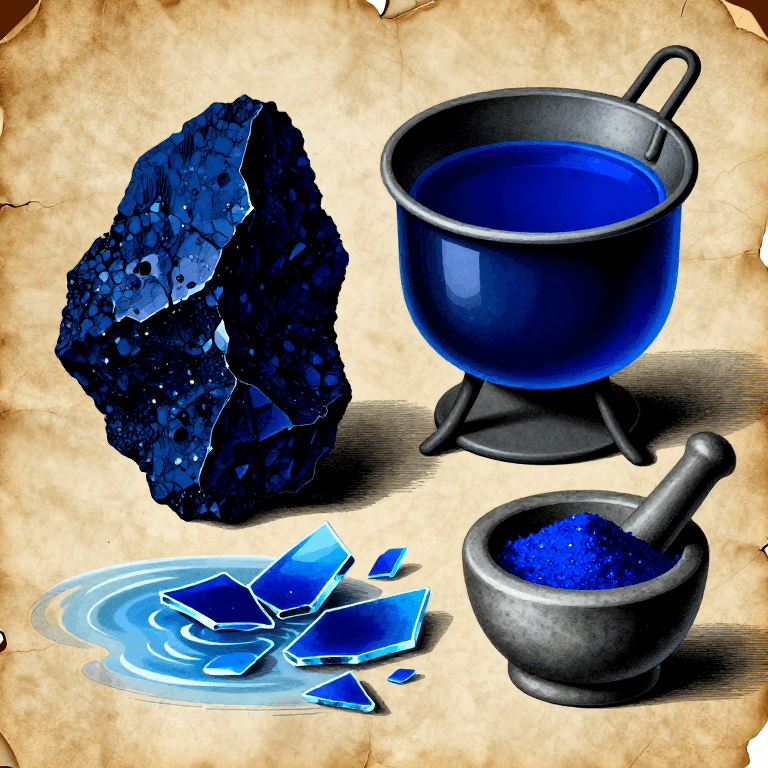
Making Smalt — Grinding Cobalt Blue Glass into the Renaissance Painter's Blue Pigment
na Charlie
SANAA
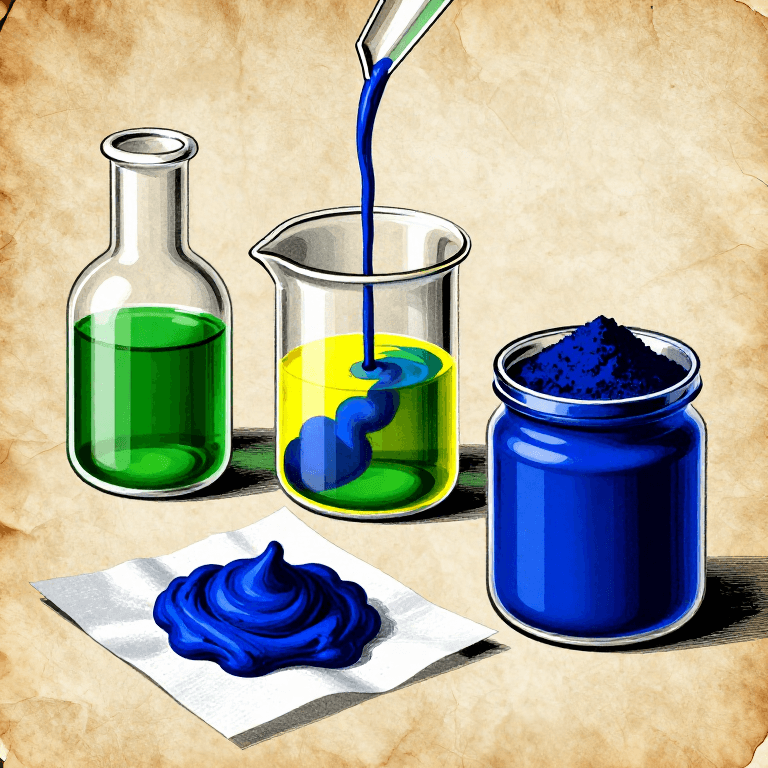
Making Prussian Blue — The First Modern Synthetic Pigment (Berlin, 1704)
na Charlie
SANAA
Mchoro huu unatengeneza

Blueprint zinazohusiana
Blueprint hizi zinashiriki maarifa — mbinu, vifaa au kanuni
CC0 Umma Wote
Mchoro huu umetolewa chini ya CC0. Uko huru kunakili, kubadilisha, kusambaza, na kutumia kazi hii kwa madhumuni yoyote, bila kuomba ruhusa.
Saidia Mtengenezaji kwa kununua bidhaa kupitia Mchoro wao ambapo wanapata Kamisheni ya Mtengenezaji iliyowekwa na Wachuuzi, au unda marudio mapya ya Mchoro huu na uiunganishe kama kiungo katika Mchoro wako kuchangia mapato.