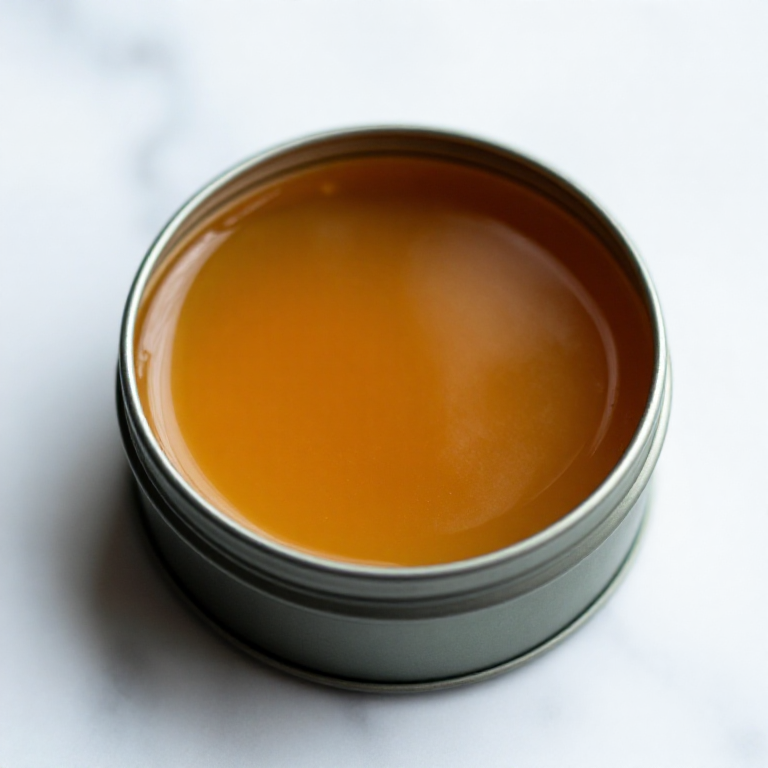


Hair Pomade
A pomade has one mechanical job: hold hair in a shape it would not otherwise keep, and let you change your mind later. That is a materials brief, and it comes down to a single balance.
Wax gives hold. Oil gives slip. A pomade that is mostly wax sets hard, holds all day and is a misery to comb or wash out. One that is mostly oil combs beautifully and holds nothing. Everything between those two is a formulation decision, and you can find yours with a kitchen scale in an afternoon.
The other axis is what happens in the shower. A traditional oil-based pomade is exactly that — waxes and oils, no water — so it does not wash out with water alone and needs a detergent or an oil to remove. A water-based pomade replaces some of that with a water-soluble film former, and rinses out easily at the cost of some hold and some staying power in humidity.
Both are simple to make. Neither needs anything exotic: beeswax as the structuring wax, a liquid oil, and a soft butter to keep it from setting like a candle.
Make three ratios, measure the hold, and keep the one you actually like.
Maagizo
Weigh three formulations before you melt anything
Weigh three formulations before you melt anything
Plan three batches at 25 g each, varying only the wax fraction: about 20 %, 30 % and 40 % beeswax, with the balance split between a soft butter and a liquid oil.
Write each recipe down as percentages, not spoonfuls.
Percentages scale and spoons do not — and the whole point of this blueprint is a comparison you can repeat.
Vifaa kwa hatua hii:
 Nta ya Nyuki25 g
 Siagi ya shea25 g
 Mafuta ya mbarika (yaliyokamuliwa baridi, bila heksani)25 ml
Zana zinazohitajika:
 Mizani ya dijitali
Melt gently, in the right order
Melt gently, in the right order
Melt the beeswax first over a water bath — it has the highest melting point — then stir in the butter, then the liquid oil off the heat.
Keep it below about 70 °C.
Overheating does not improve mixing; it degrades the oils and drives off whatever aroma the beeswax has. Melted is the target, hot is not.
Zana zinazohitajika:
 Sufuria yenye kuta ndefu
 Kipimajoto cha Kusoma Papo Hapo
Pour and cool at two different rates
Pour and cool at two different rates
Split each batch: pour half into a tin left at room temperature, and half into a tin put straight in the fridge.
Compare texture the next day.
Expect the fast-cooled half to be smoother and softer, and the slow-cooled half grainier.
Wax crystal size is set by cooling rate — the same reason chocolate is tempered and the same reason a slowly cooled candle looks mottled.
Measure hold instead of guessing it
Measure hold instead of guessing it
Take three equal locks of hair — a hair extension or a bundle of clean wool works. Apply the same weighed amount of each formulation, shape each over a curved former, and let it set.
Hang increasing weight from each until the shape gives.
Record the load.
Expect hold to rise with wax fraction, and to rise less than proportionally near the top of the range.
Zana zinazohitajika:
 Kipima-nguvu (mizani ya springi)
Measure the other half of the trade
Measure the other half of the trade
For the same three, record how many strokes a comb takes to pass cleanly through, and how the residue behaves after one plain-water rinse and after one wash with shampoo.
Expect the highest-hold sample to comb worst and wash out worst.
There is no formulation that wins both. Choosing a pomade is choosing a point on that line, and being told otherwise is marketing.
Compendium — the history and the honest limits
Compendium — the history and the honest limits
The name comes from apples. Pommade derives from pomme: early European hair and skin ointments were scented with mashed apples in a fat base, and the word for the preparation outlived the recipe. For most of history the fat was animal — lard, tallow, or bear grease, which was genuinely sold and genuinely used well into the nineteenth century.
Petrolatum changed the product completely. The mid-nineteenth-century availability of refined petroleum jelly and mineral oil gave formulators a fat that did not go rancid, had no smell, and cost very little. That is what the classic twentieth-century high-shine, heavy-hold pomades are built on, and it is why they are so persistent — petrolatum is not water-soluble and barely oxidises, so it neither washes out nor spoils. Water-based pomades, using water-soluble polymers, are a much later response to exactly that complaint.
What "hold" physically is. Hair is held in shape by two different mechanisms and pomade only uses one. A wax product holds by adhesion and stiffening — a viscous film sticks fibres to each other and resists them springing back. A hairspray or gel holds by drying to a hard polymer film, which gives stronger hold and is why it cracks and flakes when a wax product does not. Pomade stays workable precisely because it never dries, and that is a feature, not incompleteness.
Honest limits. Wax-based pomades are hard to remove, and a common route to removal — repeated aggressive shampooing — is worse for hair and scalp than the pomade is. Washing with an oil or a conditioner first dissolves the wax more gently. Heavy occlusive products can aggravate acne along the hairline and behind the ears; the term for it, pomade acne, exists because the association is well documented. Beeswax is an allergen for a small number of people, and essential oils are a much commoner one — patch-test any scented version on the inner forearm and wait 24 hours before putting it near a scalp.
Keeping it. Anhydrous products like this contain no water, so they do not support microbial growth and need no preservative — which is a real advantage of leaving water out. They can still go rancid: keep them cool and dark, use a clean finger or a spatula rather than dipping wet hands, and expect a shelf life set by the shortest-lived oil in the recipe.
Vifaa
3- 25 gKishikilia Nafasi
- 25 gKishikilia Nafasi
- Kishikilia Nafasi
Zana Zinazohitajika
4- Kishikilia Nafasi
- Kishikilia Nafasi
- Kishikilia Nafasi
- Kishikilia Nafasi
Vifaa vya Michoro Iliyounganishwa
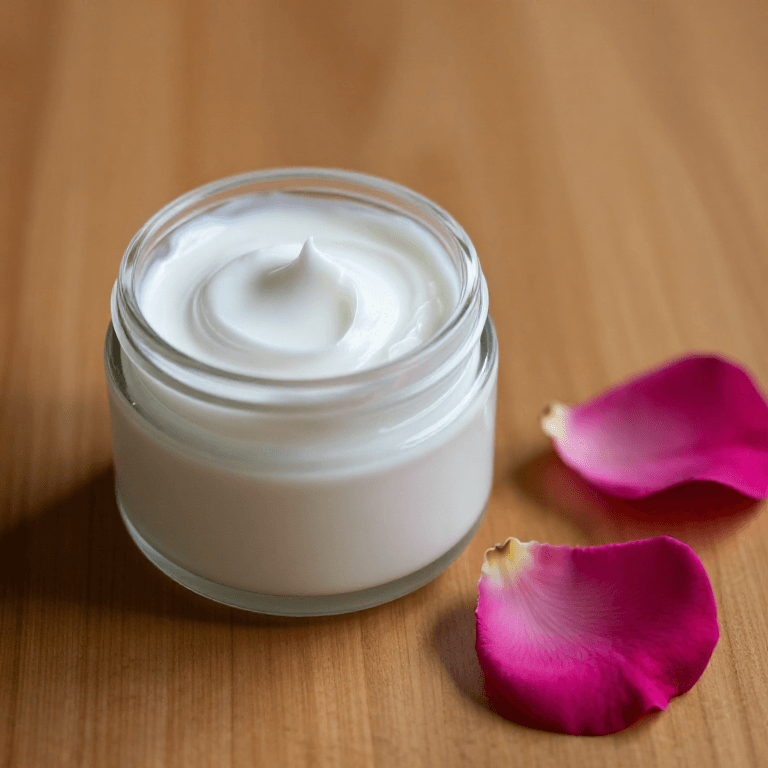
Mchoro huu unatengeneza

Blueprint zinazohusiana
Blueprint hizi zinashiriki maarifa — mbinu, vifaa au kanuni

CC0 Umma Wote
Mchoro huu umetolewa chini ya CC0. Uko huru kunakili, kubadilisha, kusambaza, na kutumia kazi hii kwa madhumuni yoyote, bila kuomba ruhusa.
Saidia Mtengenezaji kwa kununua bidhaa kupitia Mchoro wao ambapo wanapata Kamisheni ya Mtengenezaji iliyowekwa na Wachuuzi, au unda marudio mapya ya Mchoro huu na uiunganishe kama kiungo katika Mchoro wako kuchangia mapato.