Ushirikiano
SANAA
UREMBO NA USTAWI
UJANJA
UTAMADUNI NA HISTORIA
BURUDANI
MAZINGIRA
CHAKULA NA VINYWAJI
UHANDISI WA KINYUME
SAYANSI
MICHEZO
TEKNOLOJIA
VAZI
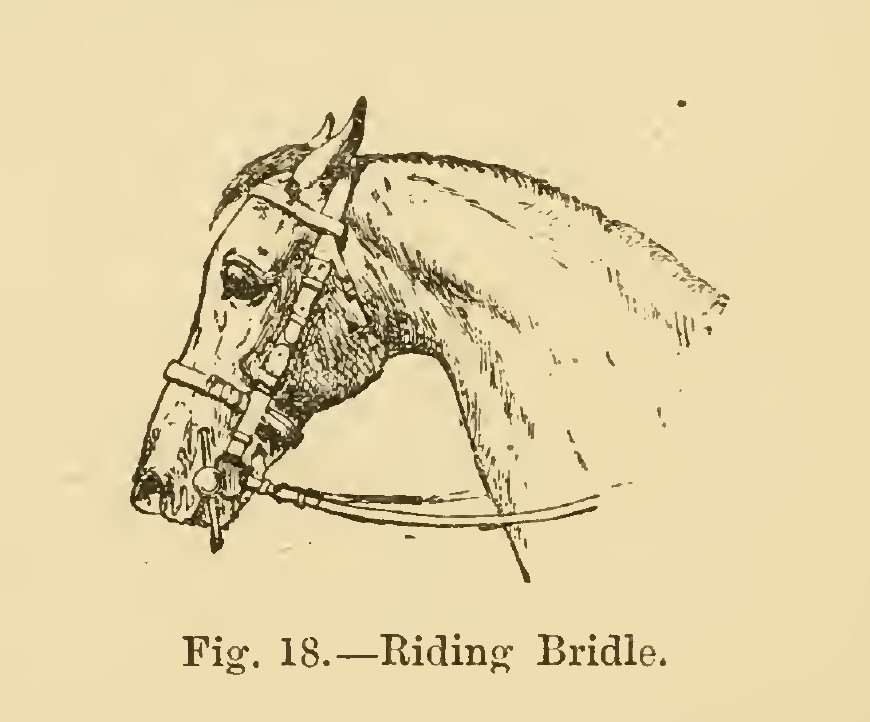


Snaffle Riding Bridle: Cheeks, Slit Head Strap, Front, Throat Lash and Reins (Hasluck, Saddlery, 1904)
The plain riding bridle, "a single head and rein bridle", from Paul N. Hasluck's Saddlery (1904): two cheeks buckled to a snaffle bit, a head strap slit at each end into cheek and throat-lash straps, a front (browband), a throat lash and a pair of buckled reins. Every size is his; the bit is bought.
It is the riding counterpart of the cart bridle.
Kati
About 1 day
Maagizo
1
1
Cutting list
Cutting list
Inapakia daftari la Jupyter…
2
2
Read Saddlery, ch. VI
Read Saddlery, ch. VI
"All the stitching must be done from behind, so that the best face of the stitches will be next the horse when the bridle is on."
3
3
Make the cheeks
Make the cheeks
Cut two cheeks about 7/8 in wide and 9 in long. Each has a buckle at each end: one on a chape turned down, the other on the flat end of the strap without turning, with the billet underneath. Leave room for a loop before the buckle and the point of the cheek, and set the billet far enough behind the buckle for two loops; put a runner loop on the cheek and stitch another in with the chape. Cut the billets 9 in long. Stitch them in single-handed and back-stitch with linen thread, all from behind. Make one hole in each billet.
Vifaa kwa hatua hii:
 Ngozi ya vifaa vya farasi1 kipande
 Bakoli ya shaba ya njano yenye ulimi4 vipande
 Uzi wa kitani1 kipande
Zana zinazohitajika:
 Kisu cha ngozi
 Kifaa cha kupunguza ukingo
 Kifaa cha kukunja
 Patasi ya mishono ya ngozi
 Uma wa kutoboa (ushindilio)
 Sindano mbili za kushonea ngozi
 Kibano cha mbao cha kushona ngozi
 Kijiti cha kuundia vitanzi
 Kitoboa ngozi
4
4
Make the head strap
Make the head strap
Cut the head strap 1-1/8 in by 1 ft 10 in and slit it 5 in at each end. For a 3/4 in cheek, slit 3/4 in on one side and 3/8 in for a 3/8 in throat lash, with the wide slits on the same side at both ends. Punch four holes in each wide slit and six, closer together, in each narrow one.
Vifaa kwa hatua hii:
Ngozi ya vifaa vya farasi1 kipandeZana zinazohitajika:
Kisu cha ngoziKitoboa ngozi Tepi ya kupimia
5
5
Make the front
Make the front
Cut the front 3/4 in by 1 ft 2-1/4 in from the end of one bend to the other, after bending. Turn it over the head strap and mark a line across close to it, so there is 1 ft 1 in between the cross lines. Stitch the ends down, with a row along each side.
Vifaa kwa hatua hii:
Ngozi ya vifaa vya farasi1 kipandeUzi wa kitani1 kipandeZana zinazohitajika:
Kisu cha ngoziPatasi ya mishono ya ngoziUma wa kutoboa (ushindilio)Sindano mbili za kushonea ngozi6
6
Make the throat lash
Make the throat lash
Make the throat lash 3/8 in by 1 ft 7 in after turning down for the buckles. Put two runner loops on it besides the loops at the buckles of each end.
Vifaa kwa hatua hii:
Ngozi ya vifaa vya farasi1 kipandeBakoli ya shaba ya njano yenye ulimi2 vipandeUzi wa kitani1 kipandeZana zinazohitajika:
Kisu cha ngoziUma wa kutoboa (ushindilio)Sindano mbili za kushonea ngoziKijiti cha kuundia vitanzi7
7
Make the reins
Make the reins
Cut the reins 1 in or 7/8 in by 4 ft. Prepare them for the bit buckles like the bottom of the cheeks, in the flat. Put a 3/4 in covered buckle on the other end of one rein, narrowing its chape to the buckle's width, and narrow the end of the other rein for buckling. Put in the billets, 10 in long, with one loop before the buckle and two behind, "and always put the strong end of the rein in the billet end".
Vifaa kwa hatua hii:
Ngozi ya vifaa vya farasi1 kipandeBakoli ya shaba ya njano yenye ulimi3 vipandeUzi wa kitani1 kipandeZana zinazohitajika:
Kisu cha ngoziUma wa kutoboa (ushindilio)Sindano mbili za kushonea ngoziKijiti cha kuundia vitanzi8
8
Put it together
Put it together
Buckle the cheeks to the head strap's wide slits and the throat lash to the narrow ones, run the front over the head strap, buckle the cheeks' lower ends and the reins to the snaffle bit's rings, and buckle the two reins together. Buckled billets let the bit be taken off, which he prefers to stitching the cheeks and reins fast to it.
Vifaa kwa hatua hii:
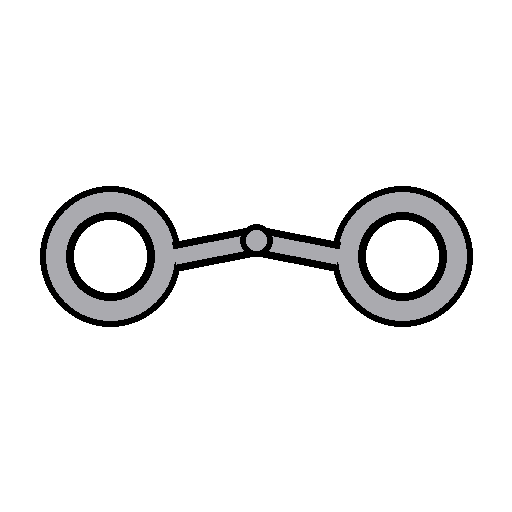 Lijamu ya snaffle1 kipande
9
9
Troubleshooting
Troubleshooting
Riding bridle troubleshooting.
Flow
Loading...
10
10
History and honest limits
History and honest limits
From **Saddlery**, edited by Paul N. Hasluck, David McKay, 1904 (archive.org saddlery00hasl), chapter VI, "Riding Bridles", the snaffle bridle; every fraction was read on the scan. Not made here: his Pelham, Weymouth, gag, exercising and stallion bridles. The bit is bought. The metric figures are ours.
Vifaa
4- 5 vipandeKishikilia Nafasi
- 4 vipandeKishikilia Nafasi
- 4 vipandeKishikilia Nafasi
- 1 kipandeKishikilia Nafasi
Zana Zinazohitajika
10- Kishikilia Nafasi
- Kishikilia Nafasi
- Kishikilia Nafasi
- Kishikilia Nafasi
- Kishikilia Nafasi
- Kishikilia Nafasi
- Kishikilia Nafasi
- Kishikilia Nafasi
- Kishikilia Nafasi
- 1 vendor sell this, none ship to you yetKishikilia Nafasi
Mchoro huu unatengeneza
Blueprint zinazohusiana
Blueprint hizi zinashiriki maarifa — mbinu, vifaa au kanuni
CC0 Umma Wote
Mchoro huu umetolewa chini ya CC0. Uko huru kunakili, kubadilisha, kusambaza, na kutumia kazi hii kwa madhumuni yoyote, bila kuomba ruhusa.
Saidia Mtengenezaji kwa kununua bidhaa kupitia Mchoro wao ambapo wanapata Kamisheni ya Mtengenezaji iliyowekwa na Wachuuzi, au unda marudio mapya ya Mchoro huu na uiunganishe kama kiungo katika Mchoro wako kuchangia mapato.