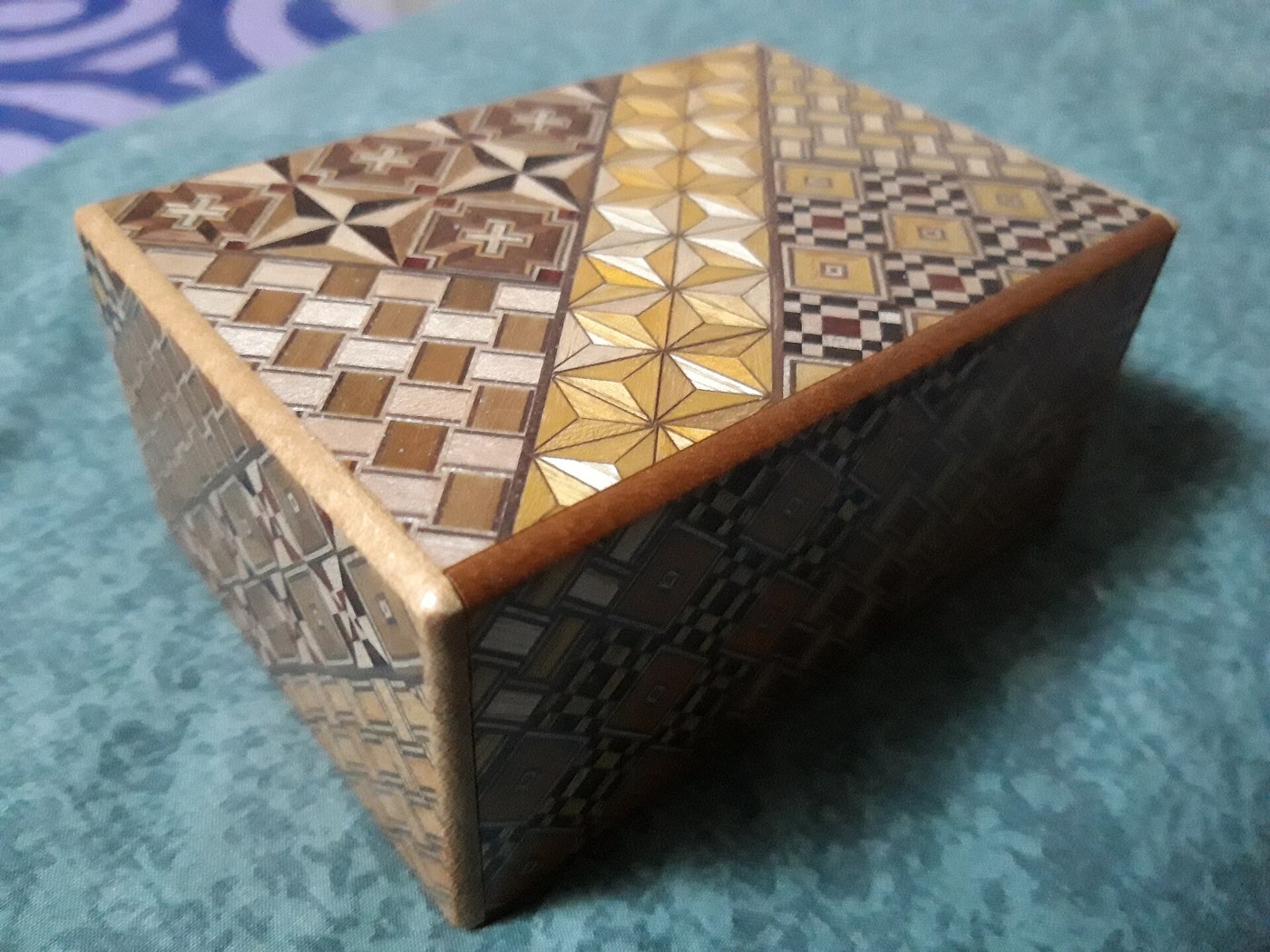


秘密箱
鍵のない箱です。錠前も、掛け金もありません。それでも、順番を知らない人には開きません。
仕掛けは単純です。箱の板の一枚がわずかに動く。それが動くと、隣の板の押さえが外れて、次の板が動くようになる。一枚一枚が、次の一枚の鍵になっている。四回で開くものから、七十回を超えるものまであります。
作るときに難しいのは彫刻ではなく、寸法です。板の遊びが〇・二ミリ足りなければ動かず、多すぎれば勝手に開く。箱根の職人が守ってきたのは、意匠よりもこの精度です。
Maagizo
四回で開く箱から始める
四回で開く箱から始める
最初は四回操作の箱にする。仕掛けの数を増やすのは、一枚の板を確実に動かせるようになってからでよい。
狂いの少ない木を選ぶ
狂いの少ない木を選ぶ
十分に乾いた桂や朴などの狂いにくい材を使う。秘密箱が開かなくなる原因のほとんどは木の伸縮で、材の選択がそのまま寿命になる。
Vifaa kwa hatua hii:
 Ubao wa Mti Mgumu1 kipande
板を四ミリに挽き揃える
板を四ミリに挽き揃える
すべての板を厚さ四ミリに削り、厚みを一枚ずつ確かめる。厚みが揃っていないと、あとの寸法がすべてずれる。
Zana zinazohitajika:
 Randa ya mkono
 Rula
Rula本体を組む
本体を組む
底と四方の枠を組んで、内箱を作る。ここは動かない部分で、あとの仕掛けはすべてこの箱に対して動く。
Vifaa kwa hatua hii:
 Gundi ya mbao ya PVA20 ml
側面に溝を突く
側面に溝を突く
動く板が走る溝を側面に突く。深さは一・五ミリ。溝の底が平らでないと、板が途中で引っかかる。
Zana zinazohitajika:
 Seti ya patasi za mti
一枚目の滑り板を作る
一枚目の滑り板を作る
溝に入る板を作り、手で軽く押して動く程度に合わせる。きつければ削り、緩ければ作り直す。ここで甘えると全部やり直しになる。
遊びを〇・二ミリに決める
遊びを〇・二ミリに決める
板と溝の隙間は〇・二ミリを目安にする。狭ければ湿気で動かなくなり、広ければ箱を振ると勝手に開く。この数字が秘密箱の精度そのもの。
一枚目に押さえを付ける
一枚目に押さえを付ける
一枚目の板の裏に小さな突起を付け、それが二枚目の板の動きを止めるようにする。これが仕掛けの本体で、あとはこの関係を繰り返すだけ。
二枚目を作って順序を作る
二枚目を作って順序を作る
二枚目の板を作り、一枚目が動いたときだけ動くように合わせる。順序が生まれた瞬間に、箱は「秘密箱」になる。
四枚まで増やす
四枚まで増やす
同じ要領で三枚目、四枚目を足す。一枚足すたびに、必ず最初から通して動かして確かめる。
最後の板を蓋にする
最後の板を蓋にする
最後に動く板を蓋にして、中身が取り出せるようにする。ここまで来て初めて、箱として使える。
百回動かして確かめる
百回動かして確かめる
開けて閉じてを百回繰り返す。摩耗で緩む場所、擦れて重くなる場所が出る。使う前に出しておくべき不具合。
寄木の化粧板を貼る
寄木の化粧板を貼る
薄く削った寄木の板を外側に貼る。幾何模様が板の合わせ目を隠すので、どこが動くのか見ただけでは分からなくなる。装飾であると同時に仕掛けの一部。
Vifaa kwa hatua hii:
 Karatasi ya ukoko wa mbao1 karatasi
蝋で仕上げる
蝋で仕上げる
表面と溝に蝋を薄く塗る。滑りがよくなり、湿気も入りにくい。油は木を膨らませるので使わない。
Vifaa kwa hatua hii:
 Vidonge vya nta ya nyuki20 g
手順を書いて別に保管する
手順を書いて別に保管する
開ける順序を紙に書き、箱とは別の場所に置く。忘れた秘密箱は、壊す以外に開ける方法がない。
歴史と背景
歴史と背景
箱根という土地。 箱根は木の種類が多く、宿場町として旅人が絶えなかった。土産物としての木工が育つ条件がそろっていて、寄木細工はおよそ一八三〇年代、江戸時代後期にさかのぼるとされます。
秘密箱の登場。 現在の形の秘密箱を考案したのは、箱根湯本の指物師・大川隆五郎で、一八九〇年代のことと伝えられます。寄木細工の化粧と、以前からあった仕掛け箱の機構を組み合わせたのが始まりでした。最初期のものは五寸(約10×15×6cm)と六寸(約13×19×9cm)で、開けるのに五十四回から六十六回の操作を要したと記録されています。
寄木は隠すためにある。 寄木細工は色の違う木を貼り合わせて幾何模様の塊を作り、それを〇・一ミリほどの薄さに削って化粧板とします。この模様が板の継ぎ目を視覚的に消してしまう。装飾に見えて、実は仕掛けを隠す機能を果たしている——秘密箱でいちばん巧妙なのはここです。
操作回数のこと。 四回で開くものから七十二回のものまであります。回数の多さは難しさの目安にはなりますが、質の指標ではありません。板の遊びが正確で、十年後も同じ手応えで動くか——職人が問われるのはそちらです。
正直に言えば。 秘密箱は防犯の道具ではありません。壊せば一分で開きます。守っているのは中身ではなく、順序を知っている人と知らない人の違いだけです。
Vifaa
4- 1 kipandeKishikilia Nafasi
- 20 mlKishikilia Nafasi
- 1 karatasiKishikilia Nafasi
- Kishikilia Nafasi
Zana Zinazohitajika
3- Kishikilia Nafasi
- Kishikilia Nafasi
- Kishikilia Nafasi
Mchoro huu unatengeneza
CC0 Umma Wote
Mchoro huu umetolewa chini ya CC0. Uko huru kunakili, kubadilisha, kusambaza, na kutumia kazi hii kwa madhumuni yoyote, bila kuomba ruhusa.
Saidia Mtengenezaji kwa kununua bidhaa kupitia Mchoro wao ambapo wanapata Kamisheni ya Mtengenezaji iliyowekwa na Wachuuzi, au unda marudio mapya ya Mchoro huu na uiunganishe kama kiungo katika Mchoro wako kuchangia mapato.