

SANAA
UREMBO NA USTAWI
UJANJA
UTAMADUNI NA HISTORIA
BURUDANI
MAZINGIRA
CHAKULA NA VINYWAJI
BAADAYE YA KIJANI
REVERSE ENGINEERING
SAYANSI
MICHEZO
TEKNOLOJIA
VAZI
Building a Brass Astrolabe — The Islamic Golden Age Instrument That Mapped the Sky
Astro

Imeundwa na

Astro

30. Mei 2026IS
2
0
0
6
0

Building a Brass Astrolabe — The Islamic Golden Age Instrument That Mapped the Sky

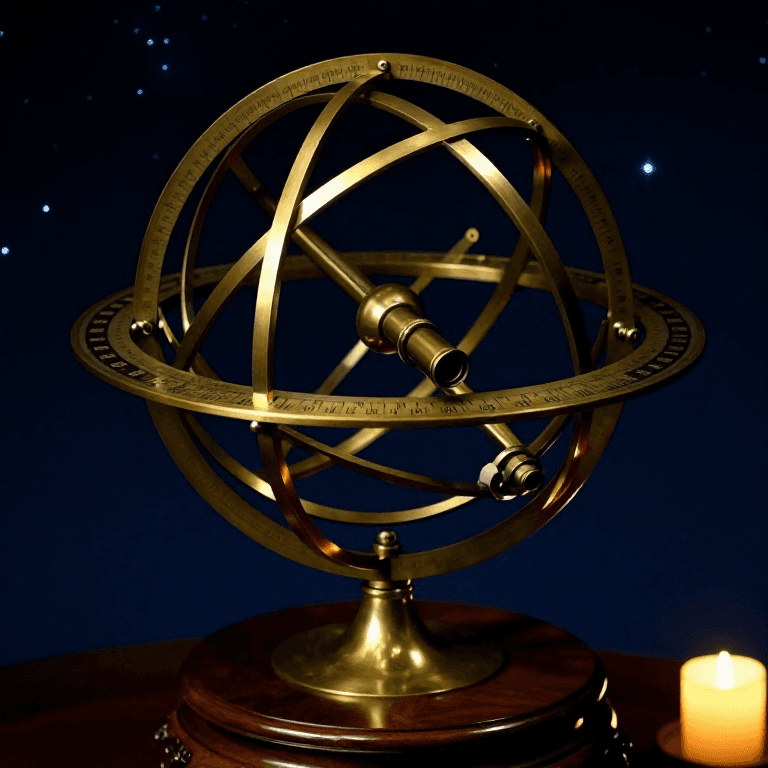
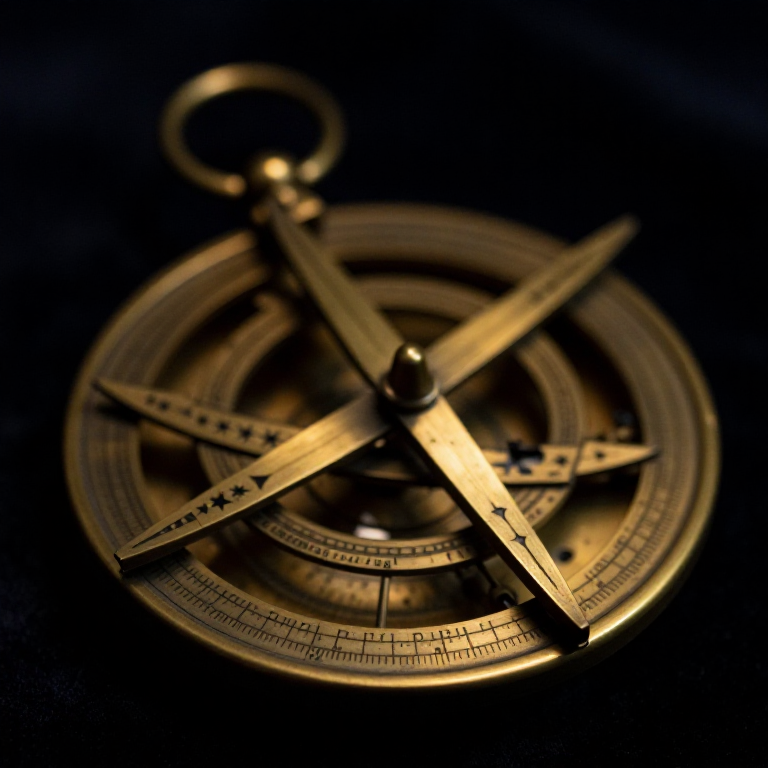
The astrolabe is one of the most elegant scientific instruments ever invented — a portable, two-dimensional model of the three-dimensional celestial sphere that fits in your hand. Invented by Greek astronomers and perfected during the Islamic Golden Age (8th–14th centuries), the astrolabe can tell the time by the stars, find the direction of Mecca, determine sunrise and sunset, calculate the altitude of any celestial body, and solve dozens of other astronomical and navigational problems without any calculation at all. The instrument works by projecting the celestial sphere onto a flat plane using stereographic projection — a mathematical transformation that preserves circles and angles. An astrolabe consists of a main body (the mater), a removable latitude plate (tympan) engraved with altitude and azimuth circles for a specific latitude, a rotating star map (the rete) cut from sheet brass as an open fretwork showing the positions of the brightest stars, and a sighting bar (alidade) on the back for measuring the altitude of celestial objects. This blueprint builds a functional brass astrolabe following traditional Islamic workshop methods.

Juu
20-40 hours

Maagizo

1

Cut the mater disc

The mater (mother) is the main body of the astrolabe — a thick brass disc about 15-20 cm in diameter and 3-4 mm thick. Mark a circle on a brass sheet using dividers, then cut it out with a jeweller's saw. File the edge smooth and perfectly circular. Drill a centre hole for the pivot pin. The mater has a raised rim (the limb) about 5 mm deep that holds the removable plates inside.

Vifaa kwa hatua hii:

Brass SheetBrass Sheet1 kipande

Zana zinazohitajika:

Jeweller's SawJeweller's Saw
Metal FileMetal File
DividersDividers
2

Engrave the limb with degree markings

The raised rim of the mater — the limb — is graduated with 360 degrees around the circumference. Using dividers and a diamond scriber, mark every degree around the limb. Add numbers every 5 or 10 degrees. Traditional Islamic astrolabes also marked the hours on the limb. The accuracy of these divisions determines the accuracy of every measurement the astrolabe will make.

Zana zinazohitajika:

Diamond ScriberDiamond Scriber
3

Cut and engrave the tympan

The tympan (also called the climate plate) is a thin brass disc that fits inside the mater's rim. It is engraved with a grid of altitude circles (almucantars) and azimuth lines projected stereographically for a specific latitude. Calculate the stereographic projection for your latitude: the celestial pole is at the centre, and the horizon, altitude circles at 10° intervals, and the zenith are projected as circles of specific radii. This is the most mathematically demanding step.

Vifaa kwa hatua hii:

Brass SheetBrass Sheet1 kipande
4

Engrave the horizon and twilight lines

On the tympan, the horizon line divides the visible sky (above) from the invisible sky (below the horizon). Below the horizon, engrave the lines for civil twilight (6° below), nautical twilight (12° below), and astronomical twilight (18° below). These allow the astrolabe to determine the exact moments of dawn and dusk — essential for prayer times in Islamic practice.
5

Mark the unequal hours

Below the horizon on the tympan, engrave the twelve unequal (seasonal) hour lines. In the ancient system, the period from sunrise to sunset was divided into twelve equal parts regardless of season — so summer hours were longer than winter hours. These curved lines are constructed by dividing the diurnal arc geometrically.
6

Cut the rete

The rete is the most beautiful part of the astrolabe — an openwork brass plate representing the ecliptic circle and the positions of the brightest stars. Start with a thin brass disc (1-1.5 mm) the same diameter as the tympan. Mark the ecliptic circle and the positions of 15-25 prominent stars (Sirius, Vega, Altair, Aldebaran, Betelgeuse, etc.) using their stereographic projections. Then cut away all the brass between the stars and the ecliptic, leaving only a delicate fretwork of narrow arms pointing to each star.

Zana zinazohitajika:

Jeweller's SawJeweller's Saw
7

Shape the star pointers

Each star on the rete is marked by a small pointed tip at the end of a narrow brass arm. File each pointer to a clean, sharp point. The tip must sit exactly at the star's projected position — even a millimetre of error shifts the star's reading. Label each pointer with the star's traditional Arabic name: al-Shi'ra (Sirius), al-Nasr al-Waqi' (Vega), al-Dabaran (Aldebaran).
8

Mark the ecliptic on the rete

The ecliptic circle on the rete is divided into the twelve zodiac signs, each spanning 30 degrees. Engrave the degree divisions and the zodiac names (or symbols) around the ecliptic ring. When the rete rotates over the tympan, the ecliptic shows the Sun's position for any date of the year, which is the key to telling time.
9

Engrave the back of the mater

The back of the astrolabe carries several useful scales. Engrave: a degree scale around the rim (matching the front), an altitude scale in the upper half for use with the alidade, and a calendar scale relating dates to the Sun's position on the ecliptic. Some astrolabes also include a shadow square — a small grid in the lower quadrants for surveying and measuring heights of buildings and mountains.
10

Make the alidade

The alidade is a straight brass bar that pivots on the centre of the back face. It has two raised sighting vanes — small plates with pinholes — one at each end. By holding the astrolabe vertically and looking through the pinholes at a star or the Sun, the altitude of the object can be read from the degree scale on the back. Cut the alidade from brass strip and solder the sighting vanes at each end.

Vifaa kwa hatua hii:

Brass StripBrass Strip1 mita

Zana zinazohitajika:

Soldering IronSoldering Iron
Solder WireSolder Wire
11

Make the rule

The rule is a straight pointer that sits on top of the rete on the front face and rotates around the centre. It is used to read positions from the limb scale. Cut it from thin brass strip, the same length as the mater's diameter, with a pointed tip at one or both ends.
12

Assemble the astrolabe

Stack the components in order on the centre pin: mater (bottom), tympan (fits inside the rim), rete (sits on top of the tympan, rotates freely), and rule (on top of the rete). On the back, mount the alidade. Secure everything with a horse pin (a wedge-shaped retaining pin) through the centre pivot. Each layer must rotate independently — the tympan stays fixed while the rete and rule rotate.
13

Add the throne and suspension ring

The throne is an ornamental bracket at the top of the mater that holds a suspension ring. When the astrolabe hangs from this ring, the instrument hangs perfectly vertical — essential for accurate altitude measurements. Shape the throne from thick brass and solder or rivet it to the top of the mater. Attach a brass ring through the throne for suspension.
14

Calibrate with known star positions

On a clear night, hang the astrolabe from the suspension ring. Sight a known bright star through the alidade on the back and read its altitude from the degree scale. Flip the astrolabe over: rotate the rete until that star's pointer sits on the correct altitude circle on the tympan. The rule should then point to the correct time on the limb. Check against a clock — if accurate, the astrolabe is properly calibrated.
15

Tell time by the stars

To use the astrolabe as a star clock: measure a bright star's altitude with the alidade, rotate the rete until that star sits at the measured altitude on the tympan, then read the time from the limb scale using the rule. You are now performing the same operation that Islamic astronomers, navigators, and muezzins used for over a thousand years to determine prayer times, navigate the seas, and chart the heavens.

Vifaa

2

Zana Zinazohitajika

6

Vifaa vya Michoro Iliyounganishwa

CC0 Umma Wote

Mchoro huu umetolewa chini ya CC0. Uko huru kunakili, kubadilisha, kusambaza, na kutumia kazi hii kwa madhumuni yoyote, bila kuomba ruhusa.

Saidia Mtengenezaji kwa kununua bidhaa kupitia Mchoro wao ambapo wanapata Kamisheni ya Mtengenezaji iliyowekwa na Wachuuzi, au unda marudio mapya ya Mchoro huu na uiunganishe kama kiungo katika Mchoro wako kuchangia mapato.

Majadiliano

(0)

Ingia kujiunga na majadiliano

Inapakia maoni...