SANAA
UREMBO NA USTAWI
UJANJA
UTAMADUNI NA HISTORIA
BURUDANI
MAZINGIRA
CHAKULA NA VINYWAJI
UHANDISI WA KINYUME
SAYANSI
MICHEZO
TEKNOLOJIA
VAZI
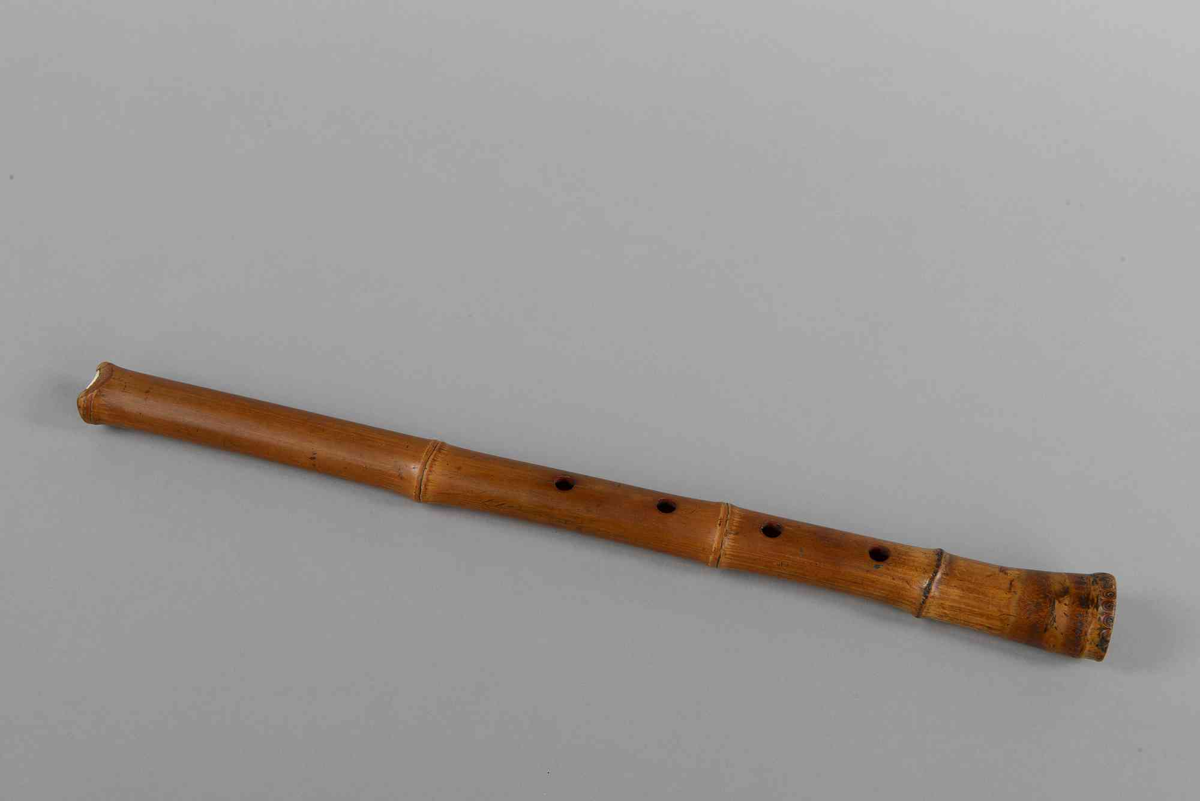
Yuzu696 · CC BY-SA 4.0


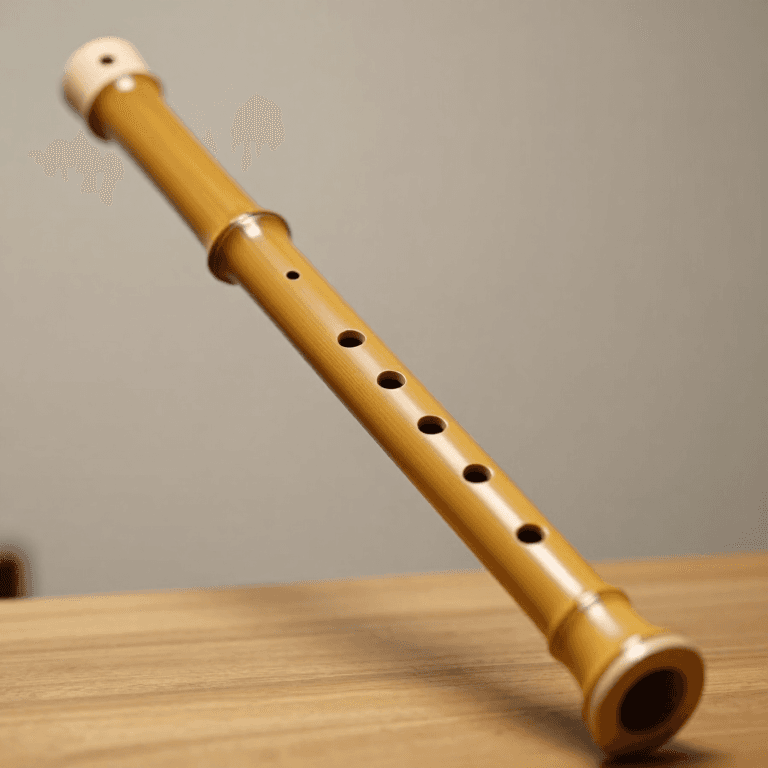
Making a Shakuhachi — The Japanese Zen Bamboo Flute
Build a shakuhachi: a thick end-blown bamboo flute sounded across a sharp notched edge (the utaguchi) and famous for bending notes with a tilt of the head. Cut the blowing edge and five finger holes, then learn meri and kari — the head tilts that slide the pitch. A buildable school project in the end-blown edge flute and expressive pitch control.
Mwanzo
45 minutes
Maagizo
1
1
The breath of Zen
The breath of Zen
The shakuhachi is a thick Japanese bamboo flute you blow across a sharp notched edge at the top. It is famous for its breathy, sighing voice and for bending notes with a tilt of the head.
2
2
Choose thick bamboo
Choose thick bamboo
Pick a thick, straight piece of bamboo about 55 cm long — the classic 1.8 shaku that gives the flute its name. The root end, if you have it, gives a fat, resonant bore.
Vifaa kwa hatua hii:
 Mianzi1 kipande
3
3
Clear the bore
Clear the bore
Push out all the inner nodes and pith so the tube is fully open from top to bottom, and smooth the bore for a clean tone.
Zana zinazohitajika:
 Uma wa kutoboa (ushindilio)
4
4
Cut the blowing edge (utaguchi)
Cut the blowing edge (utaguchi)
At the top rim, cut a shallow notch and bevel it OUTWARD to a sharp, clean angled edge. You blow across this edge — the utaguchi is the heart of the flute.
Zana zinazohitajika:
 Kisu cha kuchonga cha sloyd
5
5
Refine the edge
Refine the edge
File the blowing edge crisp and even. A sharp, clean edge splits your breath into a clear note; a rough or blunt one only hisses.
Zana zinazohitajika:
 Tupa ya chuma
6
6
Find the first note
Find the first note
Rest the edge on your lower lip and blow a thin, focused stream across it, as if over a bottle. The angle of your lips decides whether it sounds — this takes patience.
7
7
Cut four front holes
Cut four front holes
Cut four finger holes down the front of the tube, evenly spaced so your fingers reach them comfortably.
Zana zinazohitajika:
Uma wa kutoboa (ushindilio)8
8
Cut the thumb hole
Cut the thumb hole
Cut one hole on the back for your thumb — five holes in all, the whole set of the shakuhachi.
Zana zinazohitajika:
Kisu cha kuchonga cha sloyd9
9
Play the basic scale
Play the basic scale
Cover all five holes for the lowest note and lift them to climb. Just five holes give the core five-note (pentatonic) scale of Japanese music.
10
10
Bend notes with your head
Bend notes with your head
Tilt your head DOWN and the pitch drops (meri); tilt UP and it rises (kari). Half-covering a hole bends it further. This is how the shakuhachi slides and wails between notes.
11
11
Play a breathy tone
Play a breathy tone
Blow softly and let some air hiss around the note for the famous windy, breathing sound of Zen shakuhachi music — the sound is meant to carry the breath itself.
12
12
Compendium — the notched end-blown flute
Compendium — the notched end-blown flute
The shakuhachi is an end-blown flute sounded by an edge-tone: you blow a thin stream of breath across the sharp angled blowing edge (the utaguchi), and the stream flaps above and below that edge, setting the air column inside vibrating — the same edge-tone that sounds a panpipe or a bottle, except the edge is on the very rim you hold to your lips and YOU aim the breath, with no built-in windway like a recorder's. Because you steer the air stream yourself, the shakuhachi is extraordinarily expressive: tilting the head down (meri) or up (kari), rolling the flute, and half-covering the finger holes bend the pitch smoothly through microtones, so its five holes reach far more than five notes. Its name means '1.8 shaku', about 55 cm, the standard length; the modern five-hole flute was played by the komuso, the wandering Zen monks of the Edo period, as suizen or 'blowing meditation', which is why its breathy, sighing tone is valued as much as its clear notes. It is a cousin of the Chinese xiao and the Middle-Eastern ney — all end-blown edge flutes — and the opposite of a fipple recorder, which aims the breath for you and so can never bend a note the way a shakuhachi can.
Zana Zinazohitajika
3- Kishikilia Nafasi
- Kishikilia Nafasi
- Kishikilia Nafasi
Mchoro huu unatengeneza
Blueprint zinazohusiana
Blueprint hizi zinashiriki maarifa — mbinu, vifaa au kanuni
CC0 Umma Wote
Mchoro huu umetolewa chini ya CC0. Uko huru kunakili, kubadilisha, kusambaza, na kutumia kazi hii kwa madhumuni yoyote, bila kuomba ruhusa.
Saidia Mtengenezaji kwa kununua bidhaa kupitia Mchoro wao ambapo wanapata Kamisheni ya Mtengenezaji iliyowekwa na Wachuuzi, au unda marudio mapya ya Mchoro huu na uiunganishe kama kiungo katika Mchoro wako kuchangia mapato.