Ushirikiano
SANAA
UREMBO NA USTAWI
UJANJA
UTAMADUNI NA HISTORIA
BURUDANI
MAZINGIRA
CHAKULA NA VINYWAJI
UHANDISI WA KINYUME
SAYANSI
MICHEZO
TEKNOLOJIA
VAZI
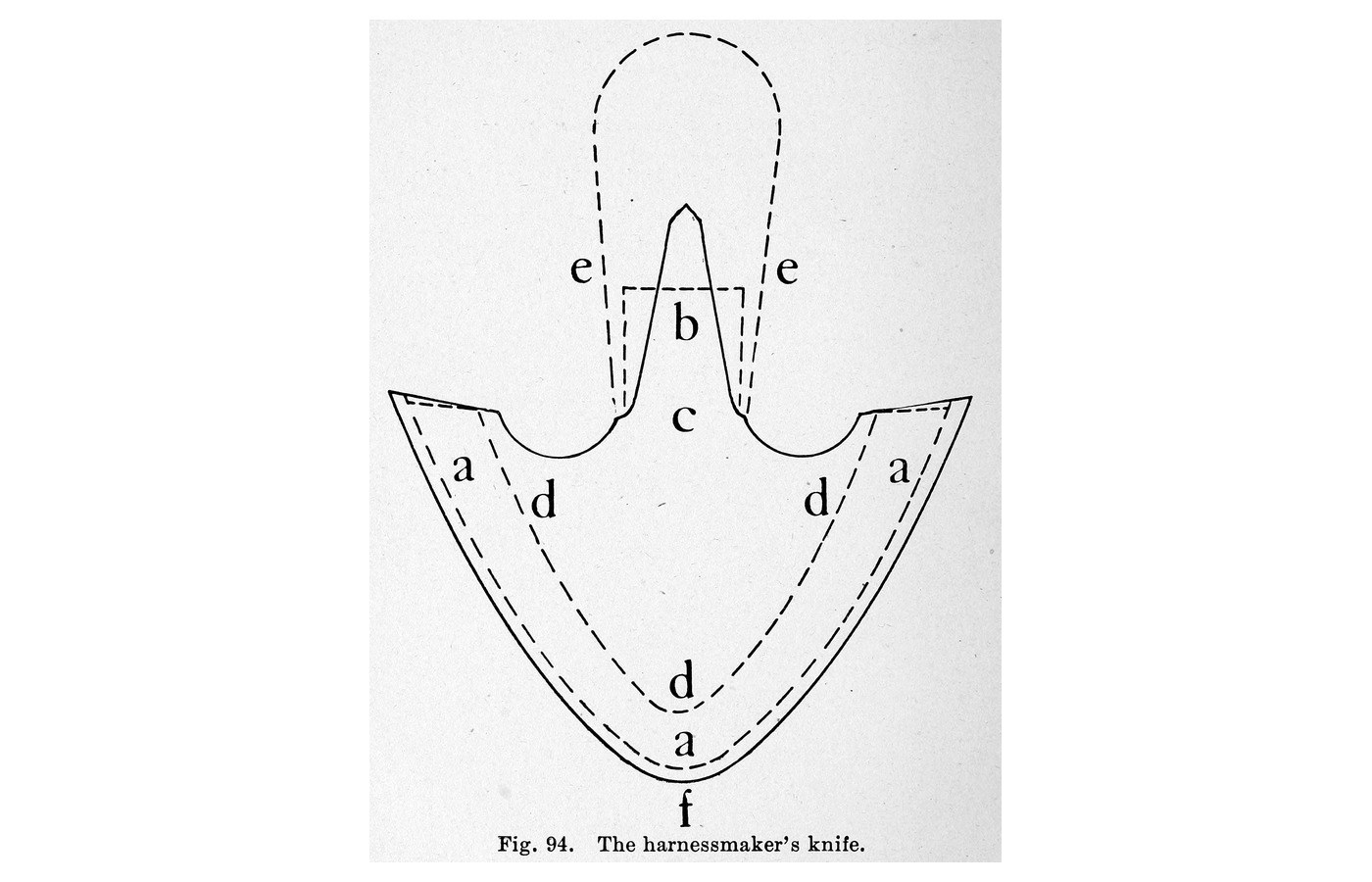


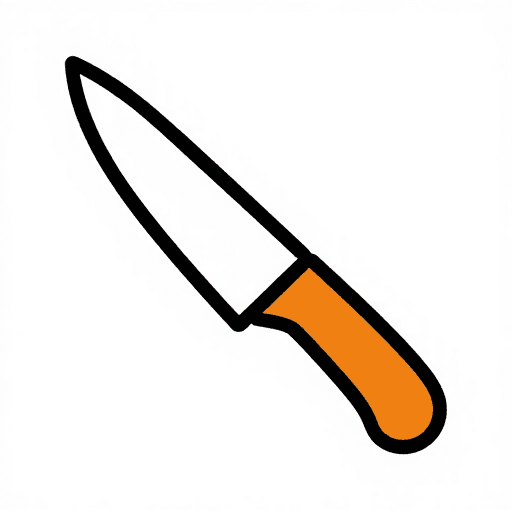
Leather Knife: the Harnessmaker's Knife, Forged from Cutlery Steel (Holford, 1907)
The harnessmaker's knife, the broad curved blade saddlers push through leather. Frederick Holford's 20th Century Toolsmith (1907) says it "will try the skill of the expert to its full extent". He cuts it from sheet cutlery steel of 0.75 % carbon, 3/32 inch thick, 4 to 6 inches wide; draws the cutting edge out at a deep cherry red; packs the steel with light blows at a dim red; anneals it in lime or ashes; hardens it from a low cherry red in the bath; and draws the temper to dark blue, the temper he gives for all leather-cutting tools.
He gives no handle wood and no outline sizes beyond the width; those are unknown here.
Source: F. J. Holford, The 20th Century Toolsmith and Steelworker (1907), pp. 163-166 and p. 21 (the hardening bath). Picture: his Fig. 94.
Juu
A day
Maagizo
1
1
Read Holford
Read Holford
"To make one, use sheet cutlery steel of 75 points carbon and 3-32 of an inch thick, but the size of the steel to be used will depend on the size of the knife to be made."
2
2
Mark and cut the blank
Mark and cut the blank
Draw the outline of the knife on the steel, 4 to 6 inches wide or smaller, to suit whoever will use it. Cut it out 3/16 inch smaller than the finished knife along the edge (line a in Fig. 94), because the cutting edge is still to be drawn out. If the steel is too short for the shank, cut it as at b and draw the shank out to shape. Other outline sizes are not given (unknown).
Vifaa kwa hatua hii:
 Bati la chuma cha visu1 karatasi
Zana zinazohitajika:
 Kichora Mistari
 Patasi ya chuma baridi
 Vipimo visivyojulikana
3
3
Draw out the edge
Draw out the edge
Take a deep cherry red heat and start hammering at the point f, hammering equally from both sides until the whole cutting edge is drawn out. It may take two or three heats.
Zana zinazohitajika:
 Jiko la Kufua
 Fuawe
 Nyundo ya mhunzi
 Koleo za mhunzi
4
4
Pack the steel and anneal
Pack the steel and anneal
Bring the knife to a very dim red and hammer evenly on both flat sides of the whole edge. Heat again to a very low heat and hammer again, this time a little back from the edge (line d), to take the strain out of the steel. Then heat the whole knife except the shank to an even blood red and pack it in lime or ashes until perfectly cold. File the edges smooth.
Zana zinazohitajika:
 Majivu ya Mti Mgumu
 Tupa ya chuma
5
5
Harden
Harden
Heat the knife to a low cherry red one inch back from the edge in the blaze of the fire, moving it in a circle so the whole edge heats evenly and never in streaks. Plunge the whole knife upright into the hardening bath: clean water free from grease, best made a brine with as much salt as it will dissolve, kept large and cold (Holford, p. 21). An evenly forged and heated knife comes out straight.
Zana zinazohitajika:
Jiko la KufuaKoleo za mhunzi Myeyusho wa chumvi uliojaa
 Glavu Zinazostahimili Joto
6
6
Temper and straighten
Temper and straighten
Polish one side as far back as it is hardened. Draw the temper very slowly over the fire, moving the knife in a circle, until the polished side shows a dark blue. Before cooling, take out any crook by straightening on the anvil with the hammer, then cool off. If it crooked so much that it cannot be straightened now, heat it again, straighten and anneal, and start the hardening again.
Zana zinazohitajika:
 Kitambaa cha emeriJiko la KufuaFuaweNyundo ya mhunzi
7
7
Grind and handle
Grind and handle
Grind the edge; what crook is left can be taken out in grinding. Feather the shank with a very sharp cold chisel so it stays firm, and drive it into a wooden handle (the dotted outline e). The handle wood is not given (unknown).
Vifaa kwa hatua hii:
 Mti Mgumu wa Kutengenezea Mipini1 handle
Zana zinazohitajika:
 Jiwe la kunoa la gurudumuPatasi ya chuma baridi
8
8
History and honest limits
History and honest limits
Holford wrote for blacksmiths and toolmakers who forged their own tools; he says a well-made knife "will hold a very keen edge on the hardest of leather". The same dark-blue temper, he says, applies to all leather-cutting tools.
The handle wood and the outline sizes beyond the width are not given; a hardwood handle stands for the handle, and a cold chisel is our tool for cutting out the blank.
Vifaa
2- 1 karatasiKishikilia Nafasi
- 1 handleKishikilia Nafasi
Zana Zinazohitajika
13- Kishikilia Nafasi
- Kishikilia Nafasi
- Kishikilia Nafasi
- Kishikilia Nafasi
- Kishikilia Nafasi
- Kishikilia Nafasi
- Kishikilia Nafasi
- Kishikilia Nafasi
- Kishikilia Nafasi
- Kishikilia Nafasi
- Kishikilia Nafasi
- Kishikilia Nafasi
- Kishikilia Nafasi
Mchoro huu unatengeneza
CC0 Umma Wote
Mchoro huu umetolewa chini ya CC0. Uko huru kunakili, kubadilisha, kusambaza, na kutumia kazi hii kwa madhumuni yoyote, bila kuomba ruhusa.
Saidia Mtengenezaji kwa kununua bidhaa kupitia Mchoro wao ambapo wanapata Kamisheni ya Mtengenezaji iliyowekwa na Wachuuzi, au unda marudio mapya ya Mchoro huu na uiunganishe kama kiungo katika Mchoro wako kuchangia mapato.