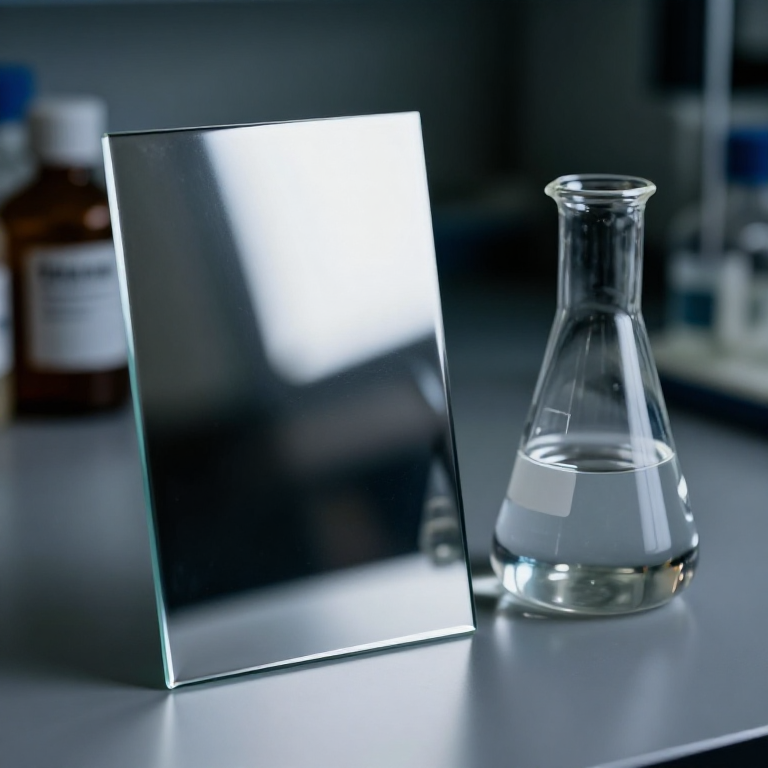


Making a Silver Mirror by the Liebig Process — Depositing Metallic Silver on Glass
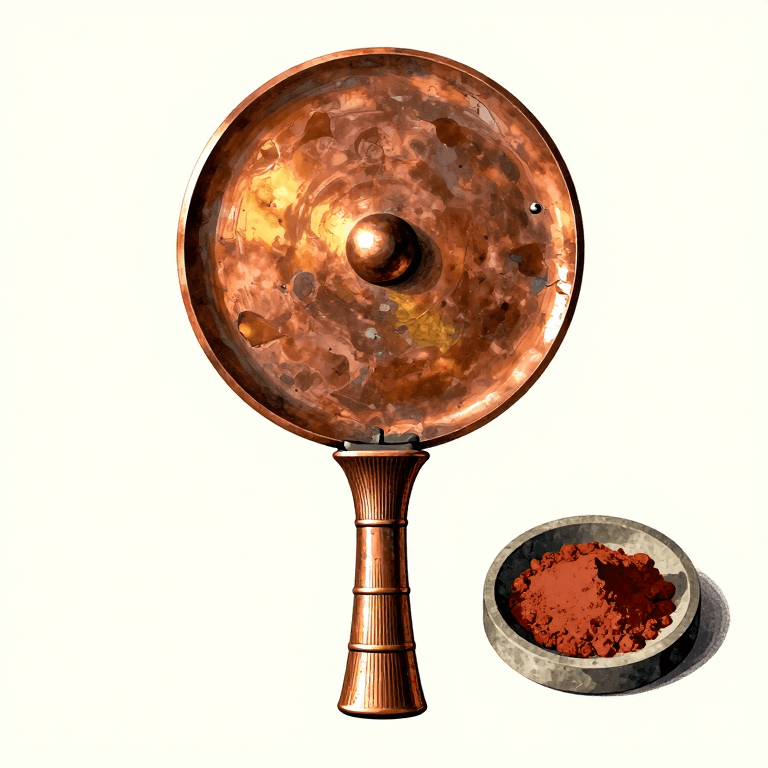
Before 1835, mirrors were made from polished metal — bronze, steel, or speculum alloy — which tarnished rapidly and reflected poorly compared to modern mirrors. The revolution came when Justus von Liebig developed a chemical process to deposit a thin, uniform layer of metallic silver directly onto a glass surface. The Liebig process uses the silver mirror reaction: silver nitrate is dissolved in ammonia to form diamminesilver(I) complex (Tollens' reagent), then a reducing sugar (glucose or formaldehyde) is added. The reducing agent donates electrons to the silver ions, which precipitate as metallic silver atoms that bond to the clean glass surface, building up an atomically smooth, highly reflective coating. The process works at room temperature and requires only simple chemicals. By the 1850s, Liebig's silvered glass mirrors had replaced speculum metal in telescopes — Léon Foucault used a silver-on-glass mirror in 1857 to build a reflecting telescope superior to anything made with speculum. Every household mirror, telescope mirror, and optical instrument mirror made between 1856 and the mid-20th century (when aluminium vacuum coating took over) used this process. This blueprint makes a silvered glass mirror using the Tollens' reagent method.
Maagizo
Understand the silver mirror reaction
Understand the silver mirror reaction
Clean the glass thoroughly
Clean the glass thoroughly
Vifaa kwa hatua hii:
 Bamba la kioo1 kipande
 Hidroksidi ya sodiamu, myeyusho wa asilimia 10200 ml
Sensitise the glass surface with tin chloride
Sensitise the glass surface with tin chloride
Prepare the silver nitrate solution
Prepare the silver nitrate solution
Vifaa kwa hatua hii:
 Myeyusho wa nitrati ya fedha500 ml
Add ammonia to form Tollens' reagent
Add ammonia to form Tollens' reagent
Vifaa kwa hatua hii:
 Myeyusho wa amonia - asilimia 25-2850 ml
Prepare the reducing solution
Prepare the reducing solution
Perform the silvering reaction
Perform the silvering reaction
Rinse and inspect the silver film
Rinse and inspect the silver film
Protect the silver coating
Protect the silver coating
Dispose of waste safely
Dispose of waste safely
Vifaa
4- 1 kipandeKishikilia Nafasi
- Kishikilia Nafasi
- Kishikilia Nafasi
- Kishikilia Nafasi
Vifaa vya Michoro Iliyounganishwa



Blueprint zinazohusiana
Blueprint hizi zinashiriki maarifa — mbinu, vifaa au kanuni


CC0 Umma Wote
Mchoro huu umetolewa chini ya CC0. Uko huru kunakili, kubadilisha, kusambaza, na kutumia kazi hii kwa madhumuni yoyote, bila kuomba ruhusa.
Saidia Mtengenezaji kwa kununua bidhaa kupitia Mchoro wao ambapo wanapata Kamisheni ya Mtengenezaji iliyowekwa na Wachuuzi, au unda marudio mapya ya Mchoro huu na uiunganishe kama kiungo katika Mchoro wako kuchangia mapato.