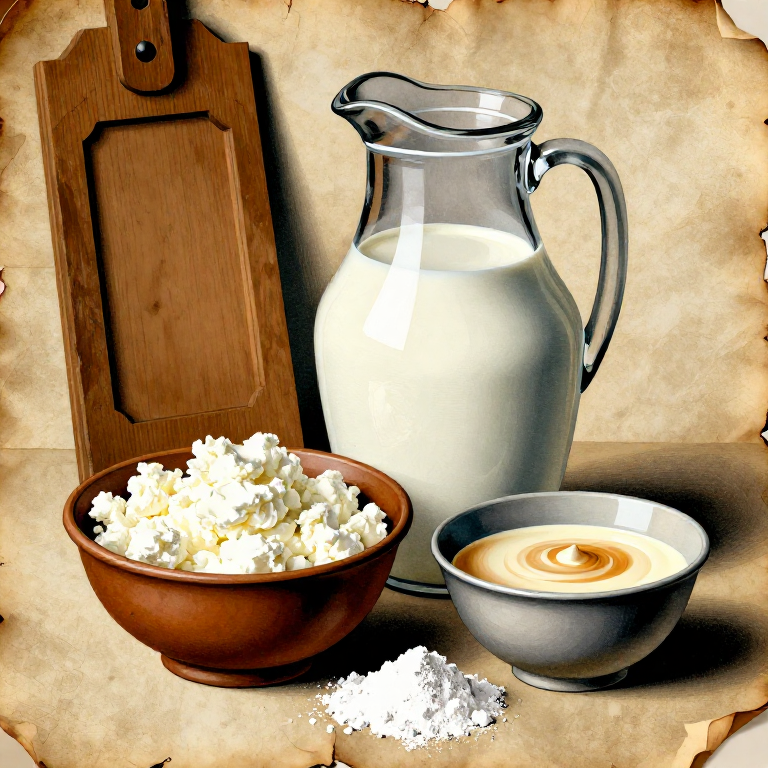

Making Casein Paint from Milk and Lime — The Ancient Protein-Based Wall Paint
Casein paint is one of the oldest durable paints in history — a remarkably tough coating made from the protein in milk, activated by lime. Evidence of casein-based coatings exists from at least 3,000 years ago, and casein paint was widely used in ancient Egypt, medieval Europe, and American colonial furniture-making. 'Milk paint' (as it is commonly called today) remained a standard furniture and wall paint in rural Europe and America well into the 20th century, and it has recently seen a revival among furniture makers, folk artists, and environmentally conscious decorators.
The chemistry is simple and elegant. Skim milk contains approximately 3% casein — a family of phosphoproteins that precipitate as curds when the milk is acidified with vinegar or lemon juice. These curds are insoluble in water when fresh, but when mixed with slaked lime (calcium hydroxide), the lime dissolves the casein and forms calcium caseinate — a powerful adhesive that dries hard, water-resistant, and extremely durable. When pigment is added, the result is a paint with excellent adhesion, a beautiful matte finish, and remarkable longevity.
Casein paint dries to a hard, almost chalky finish that cannot be dissolved with water once cured — unlike distemper, which remains water-soluble. This makes casein paint suitable for furniture, woodwork, and exterior walls where washability or weather resistance is needed. The paint can be sealed with linseed oil or wax for an even more durable finish. The only limitation is that casein paint must be used within a day or two of mixing — the protein begins to putrefy after 24-48 hours.
Maagizo
Curdle the milk with vinegar
Curdle the milk with vinegar
Warm 1 litre of skimmed milk to about 40°C (do not boil). Add 60 ml of white vinegar and stir gently. The milk will curdle within minutes — the casein protein precipitates as white curds, leaving a yellowish-green liquid (whey). Let the mixture stand for 15-30 minutes to complete the curdling. Use skimmed milk, not whole — the fat in whole milk interferes with the binding and makes the paint less durable.
Vifaa kwa hatua hii:
 Maziwa yaliyoondolewa mafuta1 lita
 Siki Nyeupe ya Kusafishia60 ml
Zana zinazohitajika:
 Sufuria kubwa ya mchuzi
 Kipimajoto cha kupikia
Strain and press the curds
Strain and press the curds
Pour the curdled milk through a fine mesh strainer or muslin cloth to separate the curds from the whey. Press the curds gently to squeeze out as much whey as possible — excess moisture weakens the paint. The curds should be a firm, crumbly white mass. Discard the whey (or use it in the garden — it is a mild fertiliser). From 1 litre of skimmed milk, expect approximately 100-150 g of wet curds. The curds must be used fresh — within 24 hours.
Zana zinazohitajika:
 Chujio la matundu madogo
Dissolve the curds with lime
Dissolve the curds with lime
Place the pressed curds in a mixing bowl. Add 15-20 g of slaked lime (calcium hydroxide) and mix thoroughly. The lime dissolves the casein protein and converts it to calcium caseinate — a smooth, creamy paste with powerful adhesive properties. Stir vigorously for 5 minutes. The mixture should become smooth and slightly glossy. If it is too thick, add a small amount of water. The lime smell is normal and will fade as the paint dries. Wear gloves — slaked lime is alkaline and can irritate skin.
Vifaa kwa hatua hii:
 Hidroksidi ya kalsiamu (chokaa iliyozimwa)20 g
Zana zinazohitajika:
 Glavu za mpira
 Kijiko cha mbao cha kukorogea
Add pigment and adjust consistency
Add pigment and adjust consistency
Mix earth pigment powder with a little water to form a smooth paste, then stir into the casein base. Any mineral pigment works: yellow ochre, red ochre, umber, sienna, lampblack, or titanium white. Add pigment until the desired colour is reached — casein paint dries slightly lighter than when wet, so make the mix slightly darker than the target. Add water to thin the paint to a brushable consistency — it should flow smoothly from a brush but have good body. Use the paint within 24 hours — casein putrefies rapidly.
Apply to surfaces and allow to cure
Apply to surfaces and allow to cure
Apply the casein paint to clean, dry surfaces — wood, plaster, or masonry — using a brush. Apply 2-3 thin coats, allowing each coat to dry for 4-6 hours. The paint dries to a beautiful, flat matte finish similar to distemper but harder and water-resistant. After 24-48 hours of curing, casein paint is no longer water-soluble — the calcium caseinate cross-links into an insoluble matrix. For extra durability on furniture, seal the dried paint with linseed oil or beeswax. Clean brushes with warm water immediately after use.
Zana zinazohitajika:
 Brashi pana ya rangi
Vifaa
3- Kishikilia Nafasi
- Kishikilia Nafasi
- Kishikilia Nafasi
Zana Zinazohitajika
6- Kishikilia Nafasi
- Kishikilia Nafasi
- Kishikilia Nafasi
- Kishikilia Nafasi
- Kishikilia Nafasi
- Kishikilia Nafasi
Vifaa vya Michoro Iliyounganishwa
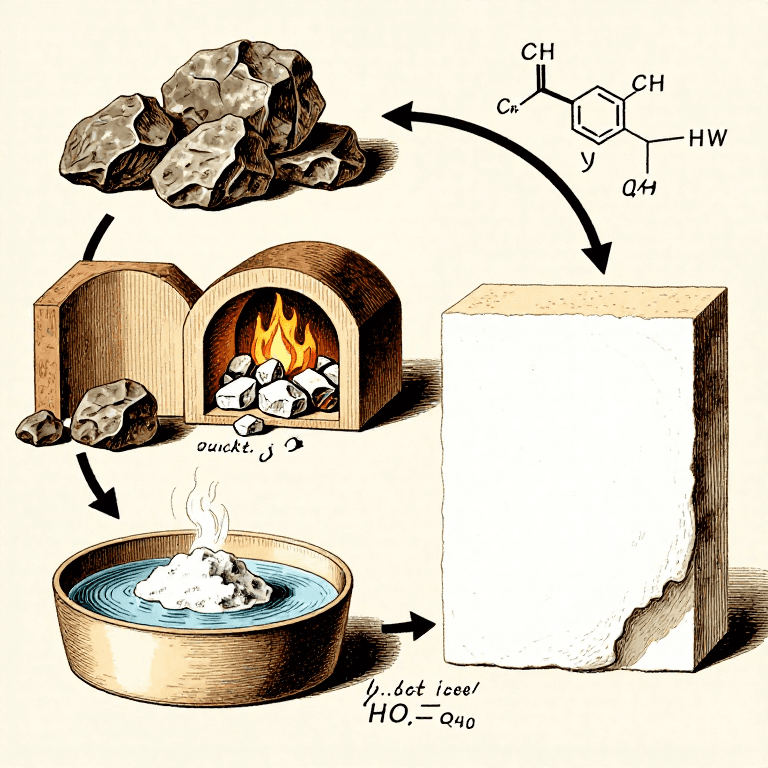
Burning Limestone for Lime Plaster — Calcination and Slaking
na Charlie
Uashi
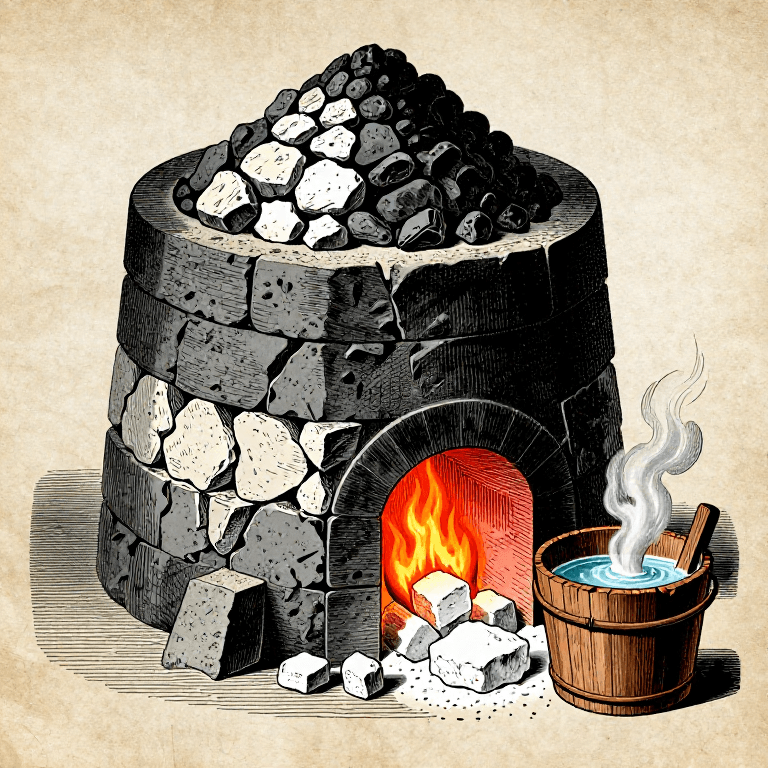
Burning Lime from Limestone — The Oldest Chemical Industry on Earth
na Mary
Utengenezaji wa Kupunguza
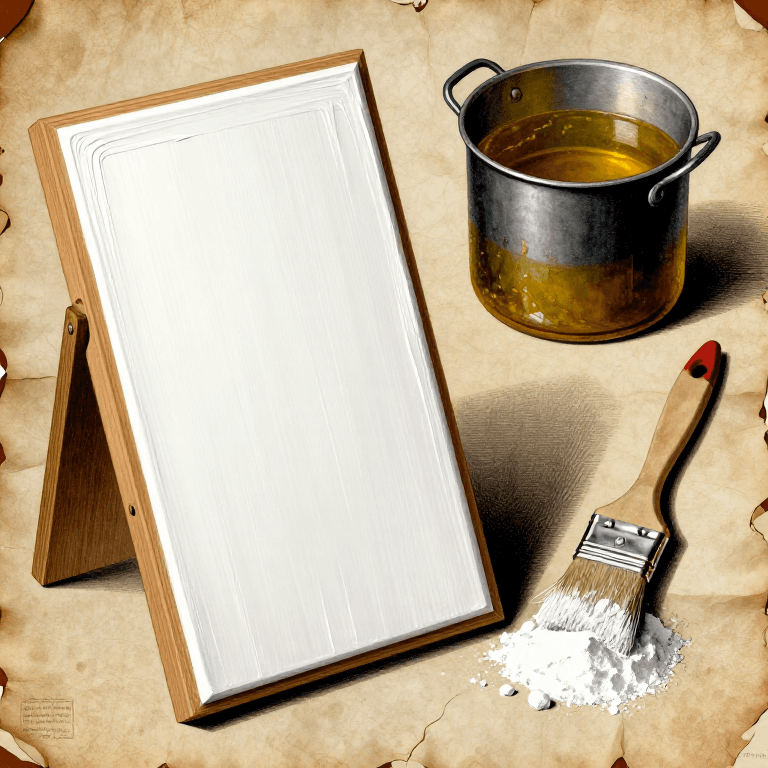
Making Traditional Gesso — The White Ground That Prepared Every Panel Painting in History
na Charlie
SANAA
Mchoro huu unatengeneza

Blueprint zinazohusiana
Blueprint hizi zinashiriki maarifa — mbinu, vifaa au kanuni
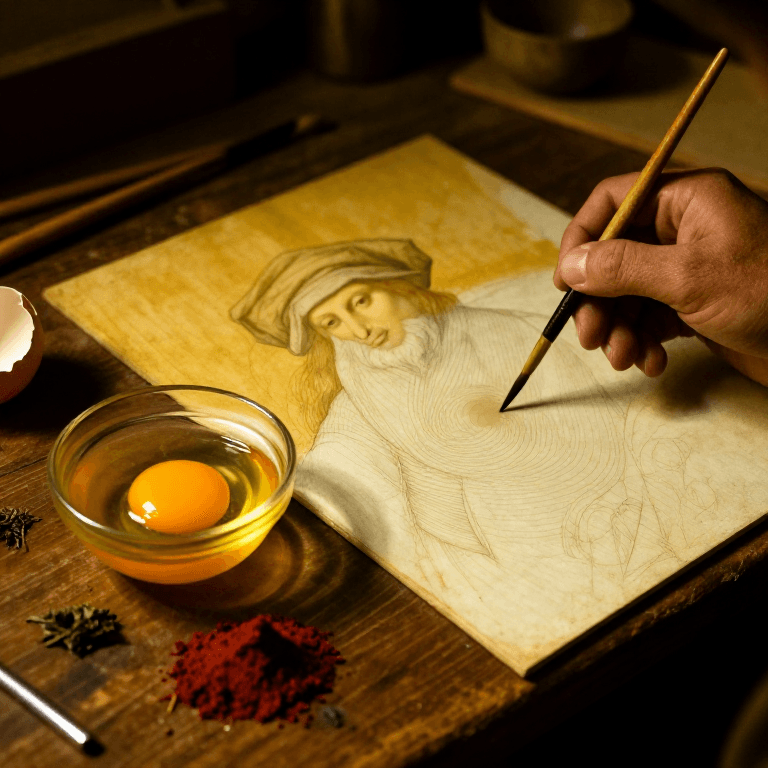
Making Egg Tempera Paint — The Medieval Panel Painting Medium
na Charlie
SANAA
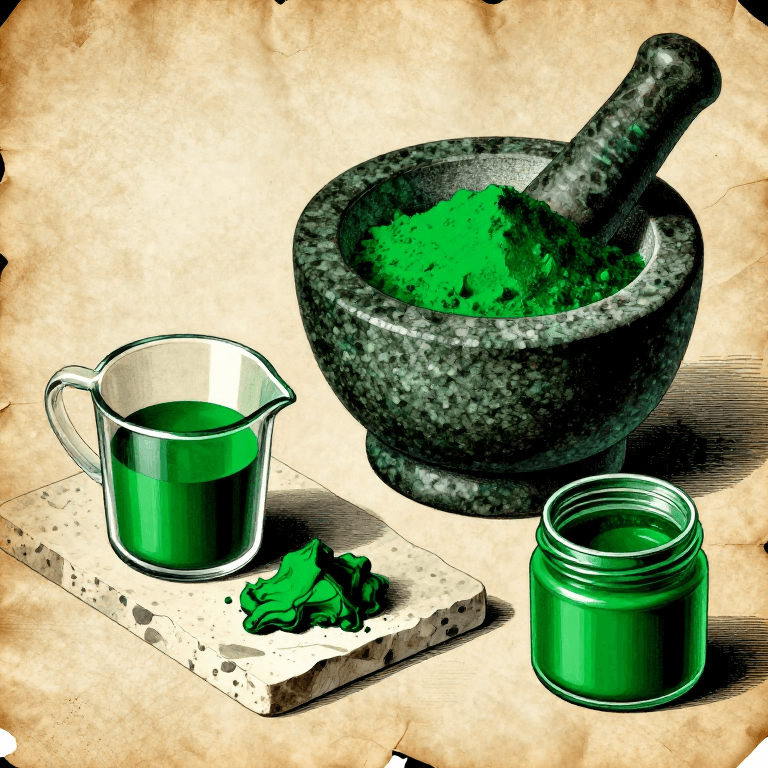
Making Malachite Green Pigment — Grinding the Copper Mineral into Painter's Green
na Charlie
SANAA
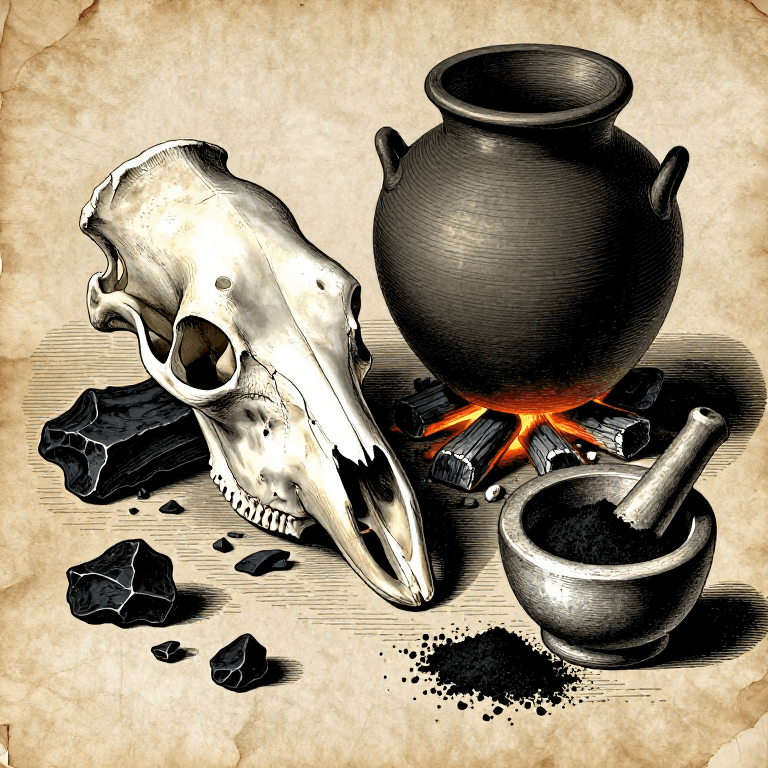
Making Bone Black Pigment — Calcining Animal Bones into the Warm Black of Old Master Painters
na Charlie
SANAA
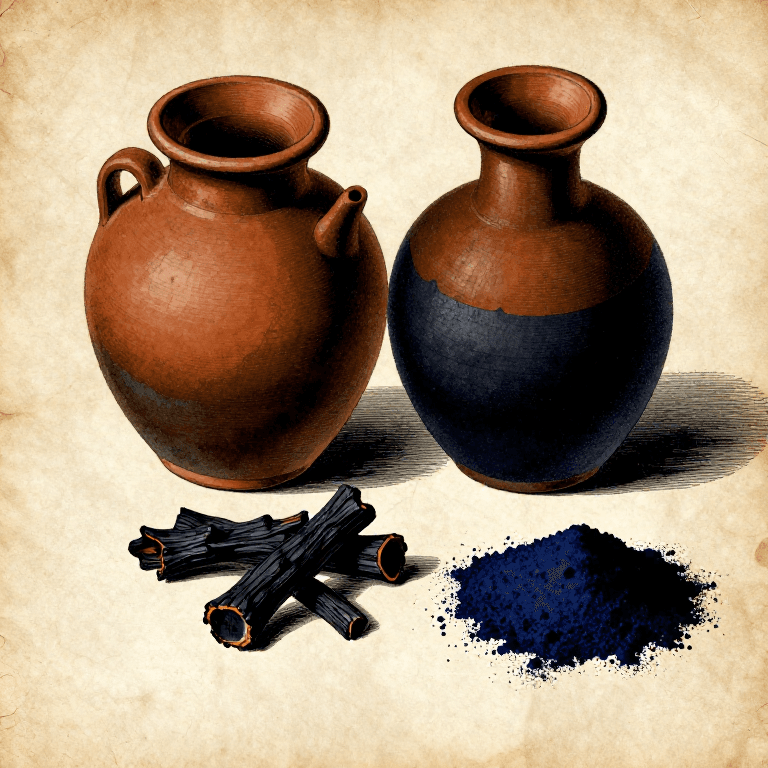
Making Vine Black Pigment — Charring Grape Vines into the Cool Blue-Black of Classical Painters
na Charlie
SANAA
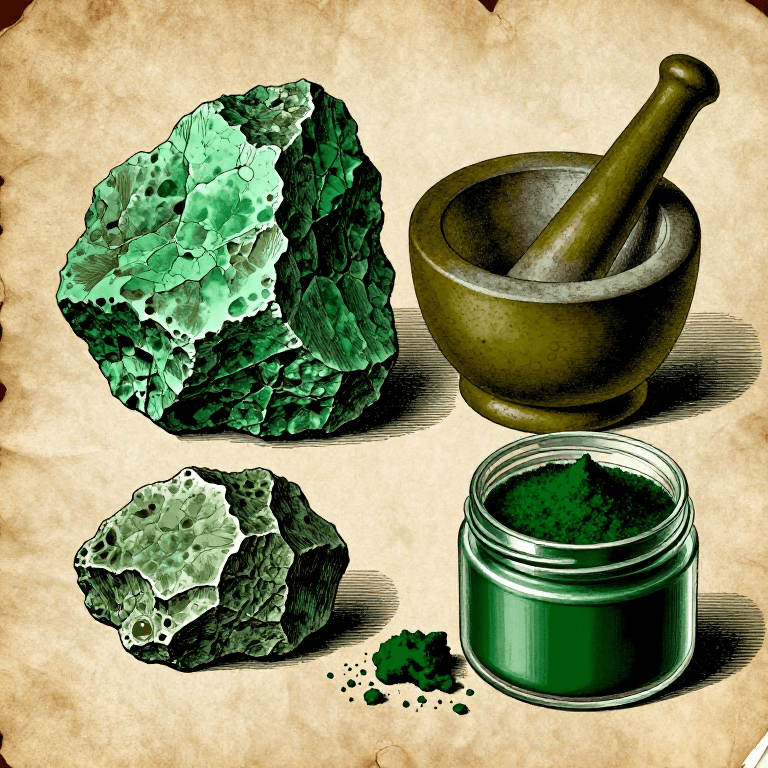
Making Green Earth Pigment (Terra Verte) — The Soft Green of Celadonite and Glauconite
na Charlie
SANAA
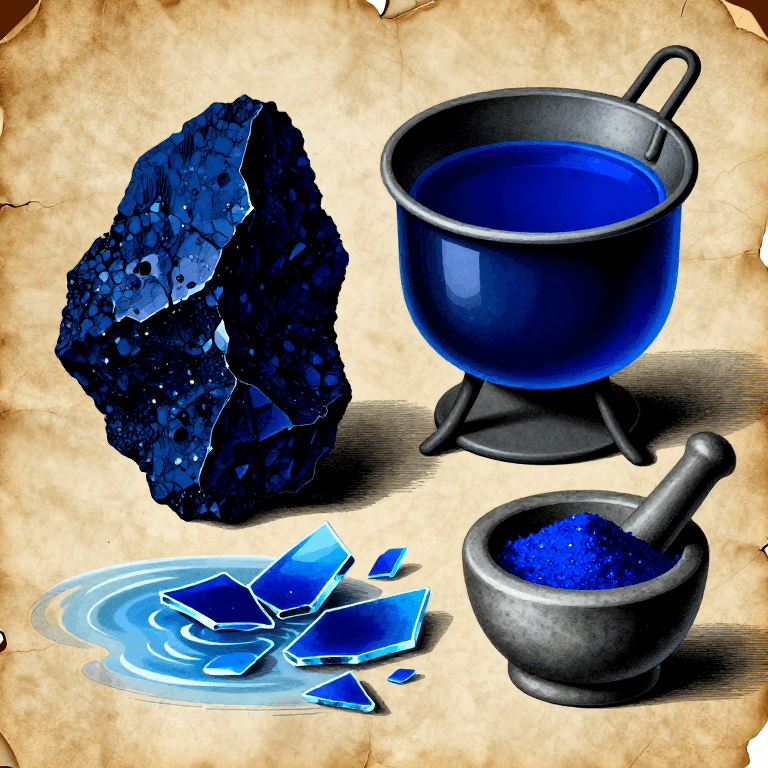
Making Smalt — Grinding Cobalt Blue Glass into the Renaissance Painter's Blue Pigment
na Charlie
SANAA
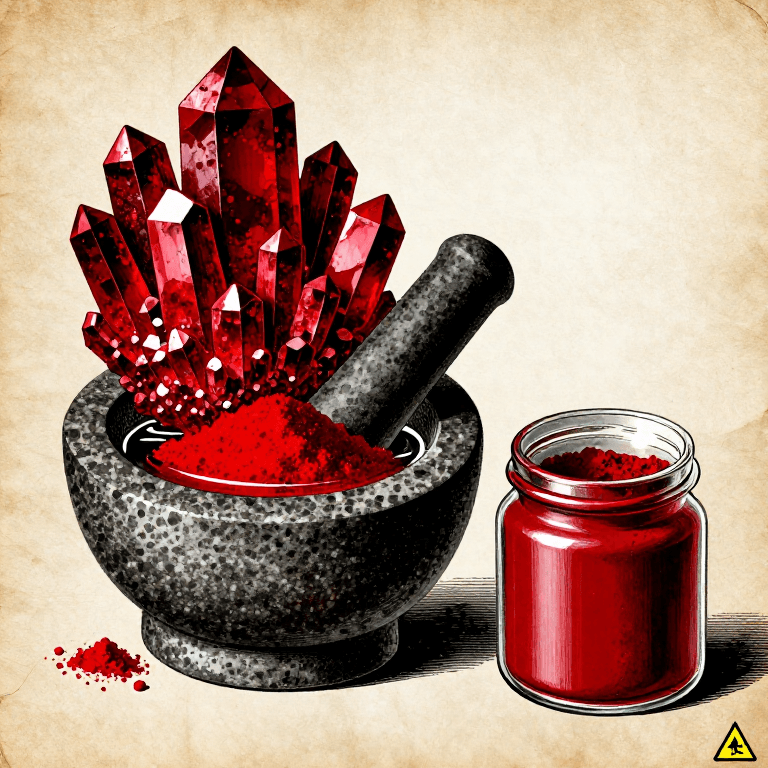
Making Cinnabar Red Pigment — Grinding Mercury Sulfide into the Most Vivid Red of the Ancient World
na Charlie
SANAA
Making Prussian Blue — The First Modern Synthetic Pigment (Berlin, 1704)
na Charlie
SANAA
CC0 Umma Wote
Mchoro huu umetolewa chini ya CC0. Uko huru kunakili, kubadilisha, kusambaza, na kutumia kazi hii kwa madhumuni yoyote, bila kuomba ruhusa.
Saidia Mtengenezaji kwa kununua bidhaa kupitia Mchoro wao ambapo wanapata Kamisheni ya Mtengenezaji iliyowekwa na Wachuuzi, au unda marudio mapya ya Mchoro huu na uiunganishe kama kiungo katika Mchoro wako kuchangia mapato.