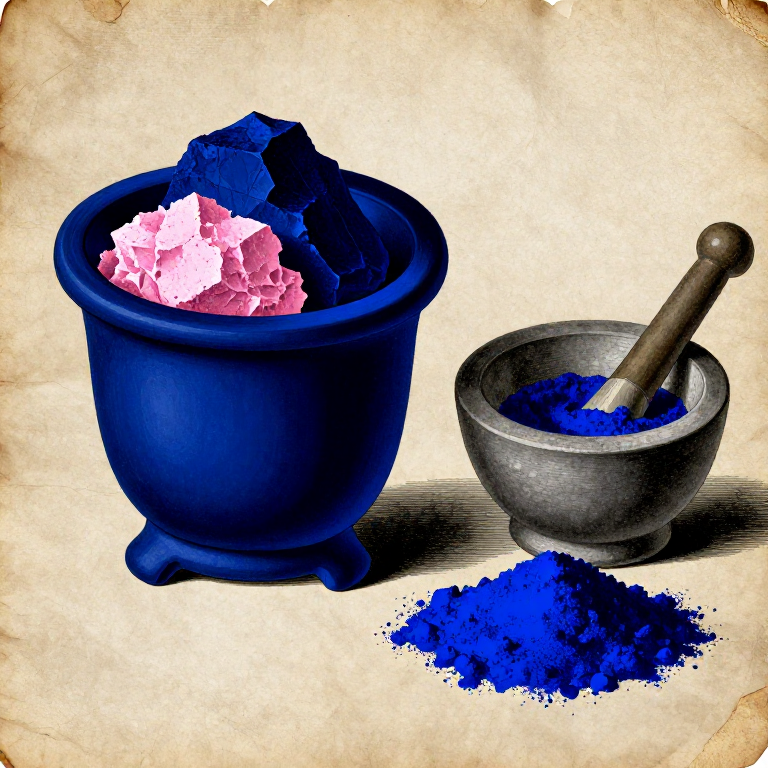

Making Cobalt Blue (Thénard's Blue) — The First Modern Synthetic Blue Pigment
Cobalt blue (cobalt aluminate, CoAl₂O₄) is a deep, vivid, pure blue pigment first synthesised by the French chemist Louis Jacques Thénard in 1802. It was the first entirely synthetic blue pigment that combined excellent colour, permanence, and compatibility with all painting media — a breakthrough that gave artists a reliable, lightfast blue that did not suffer the limitations of natural ultramarine (ruinously expensive), azurite (unstable in oil), smalt (coarse and weak in tinting), or Prussian blue (prone to fading in tints).
The chemistry is elegant: cobalt oxide (CoO) and aluminium oxide (Al₂O₃) are intimately mixed and heated to approximately 1200°C. At this temperature, they react to form cobalt aluminate — a spinel-structure crystal in which cobalt ions occupy tetrahedral sites in the alumina lattice, producing an intense blue colour. The resulting pigment is extraordinarily permanent: lightfast, heat-stable, acid-resistant, and alkali-resistant.
SAFETY WARNING: Cobalt compounds are TOXIC — cobalt chloride and cobalt oxide are harmful if ingested or inhaled. The process requires very high temperatures (1200°C). Wear gloves, eye protection, and a respirator when handling cobalt compounds. Work in a well-ventilated area. Do not inhale alumina dust.
Maudhui hatari
Blueprint hii ina taratibu za hatari. Ingia na uwashe maudhui ya hatari katika mipangilio ya akaunti yako ili kuona maagizo ya hatua kwa hatua.
IngiaMchoro huu unatengeneza
Blueprint zinazohusiana
Blueprint hizi zinashiriki maarifa — mbinu, vifaa au kanuni
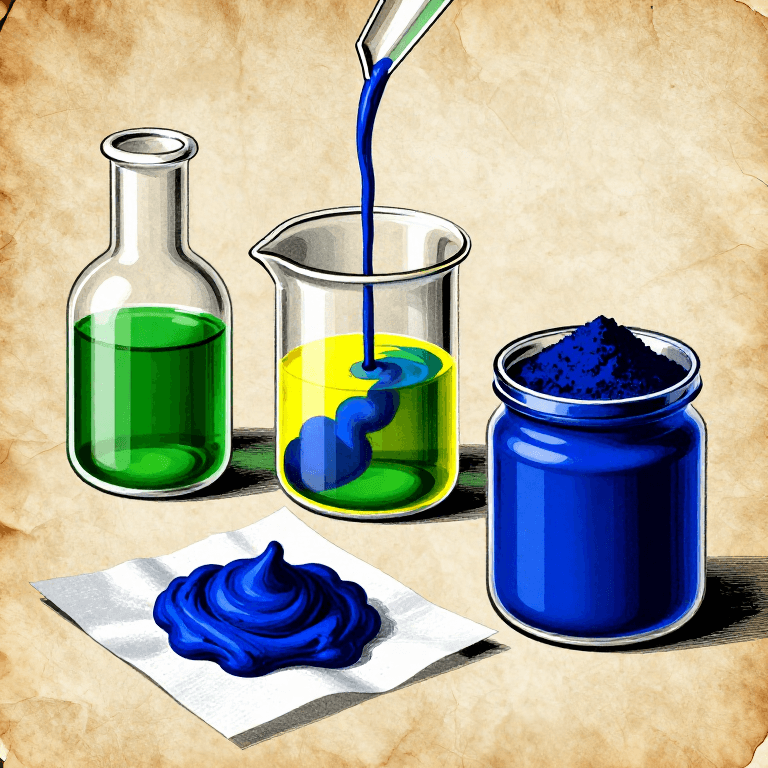
Making Prussian Blue — The First Modern Synthetic Pigment (Berlin, 1704)
na Charlie
SANAA
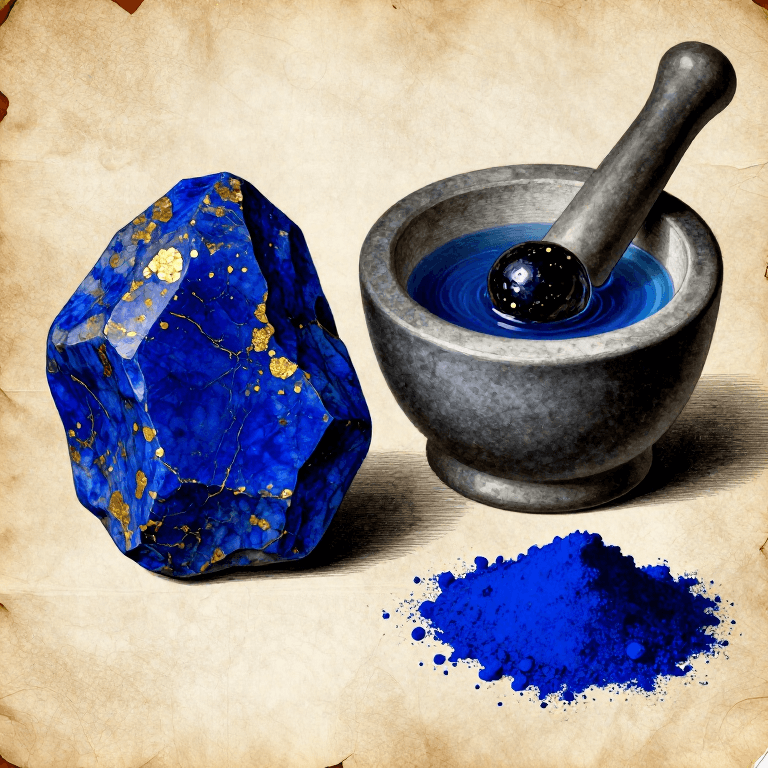
Making Ultramarine from Lapis Lazuli — Extracting the Most Precious Pigment in History
na Charlie
SANAA
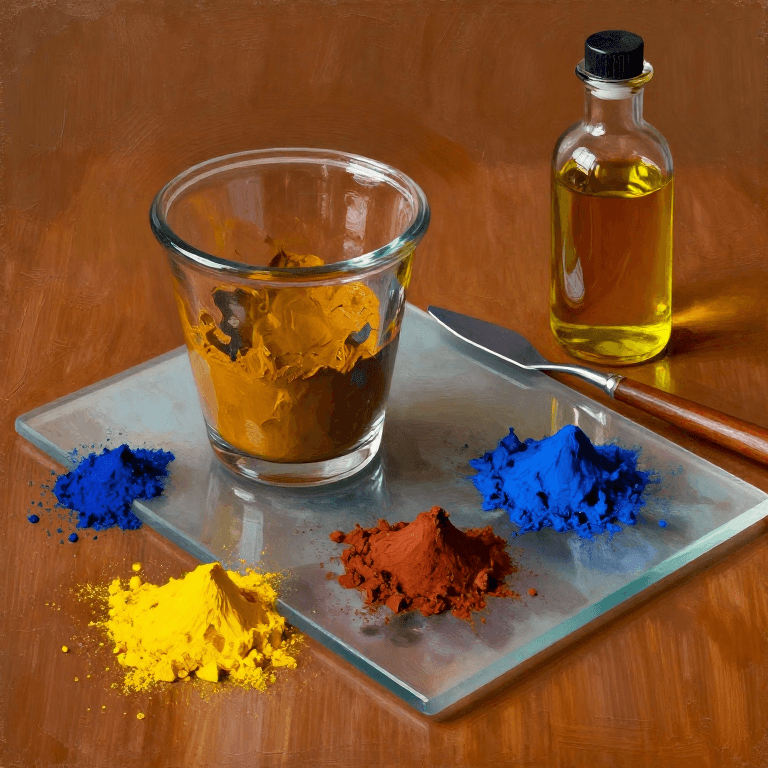
Making Oil Paint from Raw Pigments — Grinding Pigments in Linseed Oil
na Charlie
SANAA
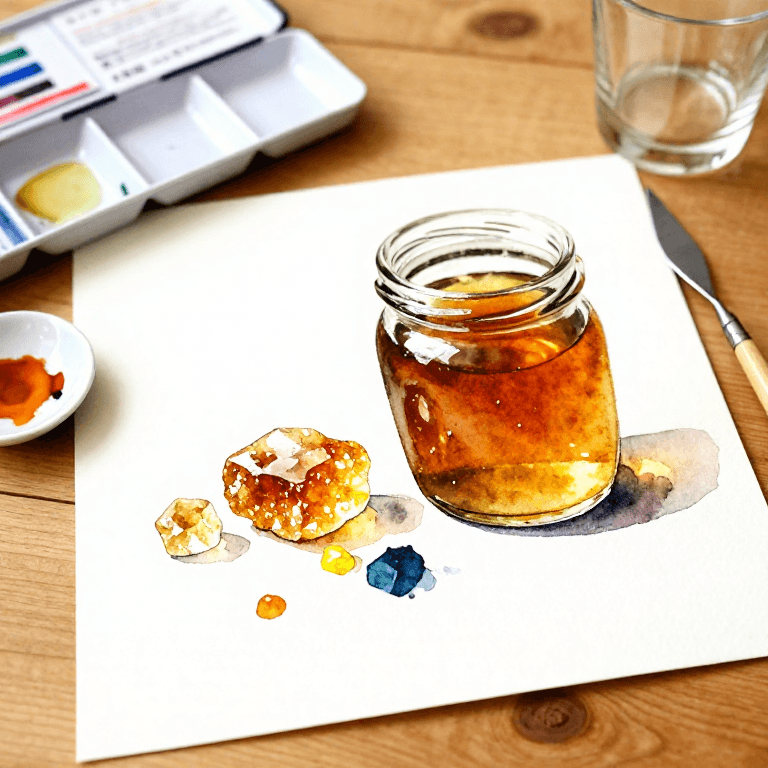
Making Watercolour Paint from Raw Pigments — Gum Arabic Binder
na Charlie
SANAA
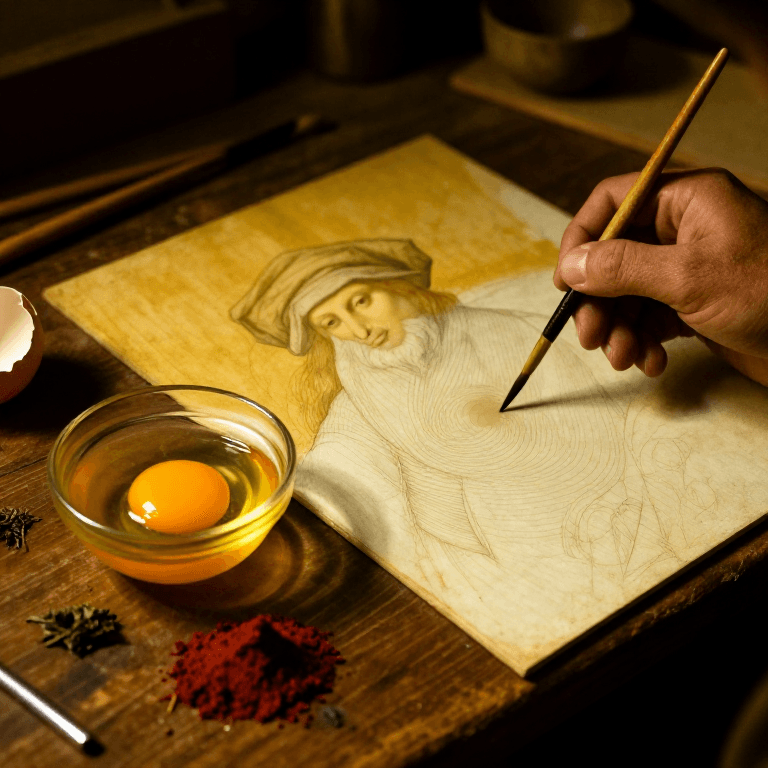
Making Egg Tempera Paint — The Medieval Panel Painting Medium
na Charlie
SANAA
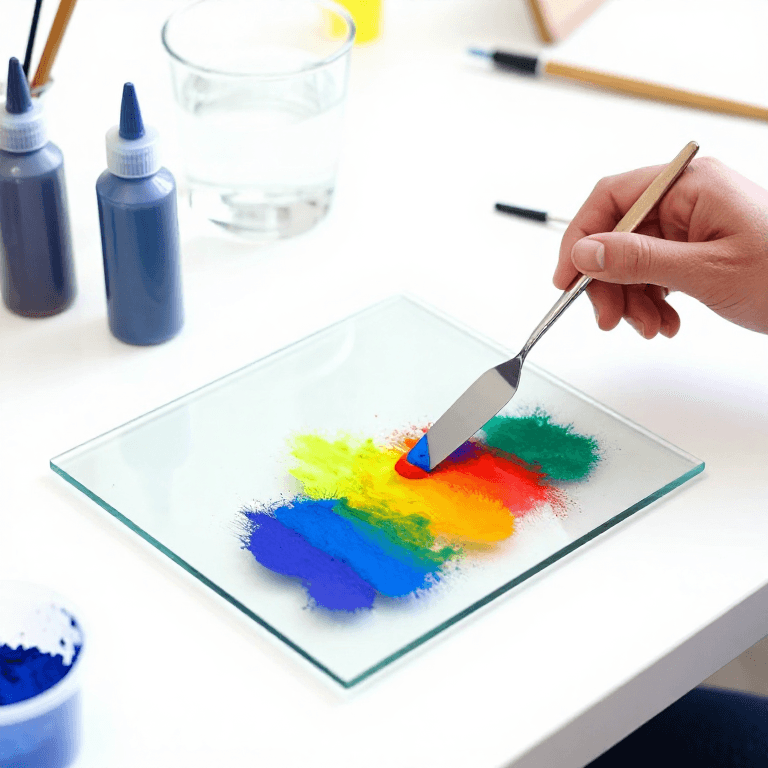
Making Acrylic Paint — Grinding Pigments into Acrylic Polymer Medium
na Charlie
SANAA
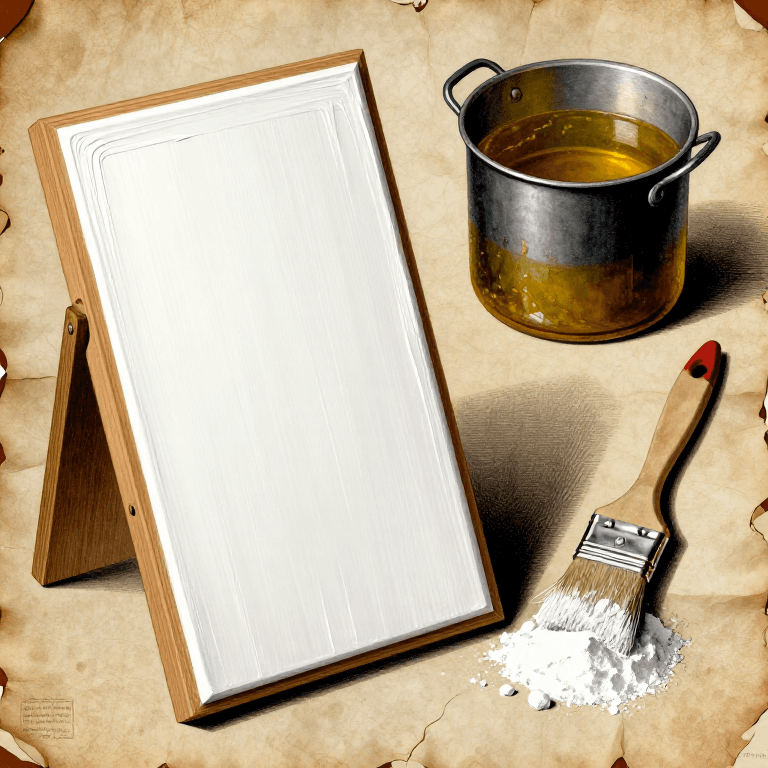
Making Traditional Gesso — The White Ground That Prepared Every Panel Painting in History
na Charlie
SANAA
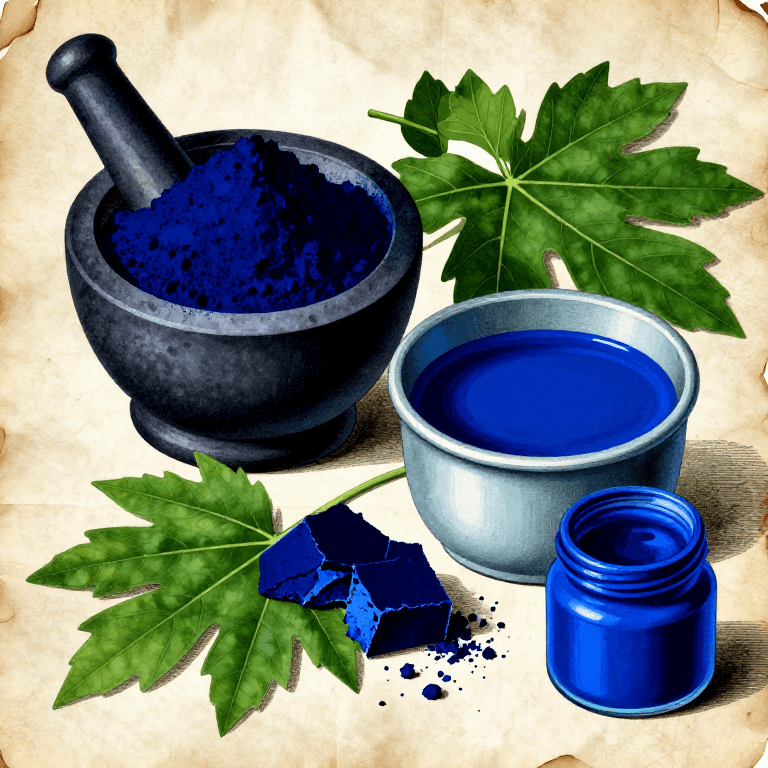
Making Indigo Pigment for Painting — Extracting the Blue Pigment Cake from Indigo Plant
na Charlie
SANAA
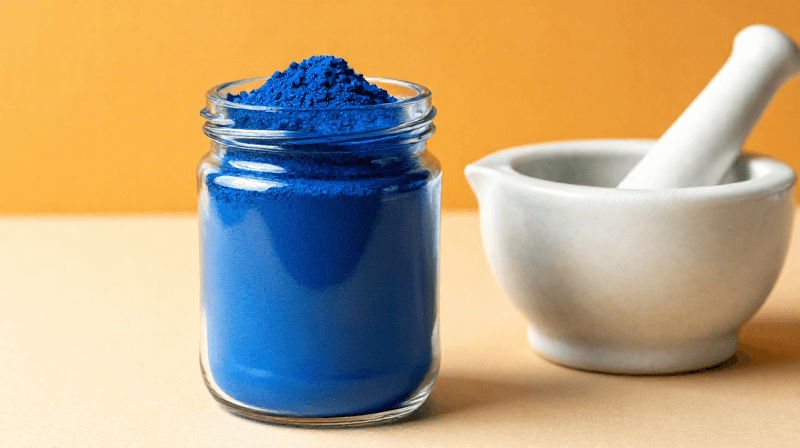
Making Phthalocyanine Blue — The Copper Complex That Became the World's Most Used Blue Pigment
na Charlie
SANAA
CC0 Umma Wote
Mchoro huu umetolewa chini ya CC0. Uko huru kunakili, kubadilisha, kusambaza, na kutumia kazi hii kwa madhumuni yoyote, bila kuomba ruhusa.
Saidia Mtengenezaji kwa kununua bidhaa kupitia Mchoro wao ambapo wanapata Kamisheni ya Mtengenezaji iliyowekwa na Wachuuzi, au unda marudio mapya ya Mchoro huu na uiunganishe kama kiungo katika Mchoro wako kuchangia mapato.