SANAA
UREMBO NA USTAWI
UJANJA
UTAMADUNI NA HISTORIA
BURUDANI
MAZINGIRA
CHAKULA NA VINYWAJI
UHANDISI WA KINYUME
SAYANSI
MICHEZO
TEKNOLOJIA
VAZI
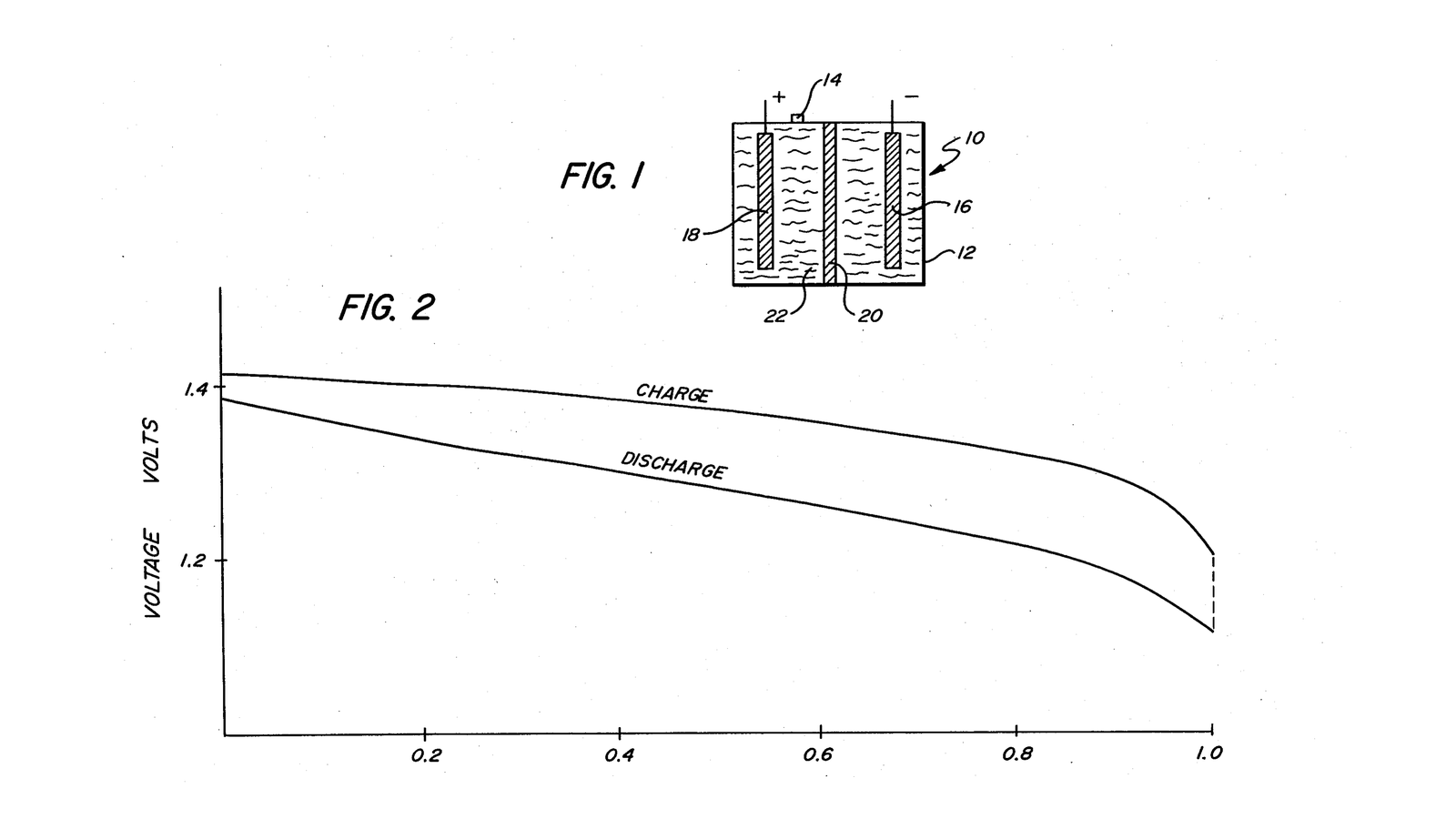


Nickel-Metal-Hydride Electrode
Jungner's cell, eighty-seven years later, with the cadmium taken out.
The positive electrode is unchanged - nickel oxyhydroxide, exactly as it was in 1899, exactly as it is in the NiCd blueprint earlier in this chain. The electrolyte is the same potassium hydroxide, still taking no part. What changed is the negative, and the change is a genuinely strange idea: instead of a metal that oxidises, use a metal that **absorbs hydrogen** and give it the hydrogen back on demand.
On discharge, MH + OH- gives M + H2O + e-. On charge it runs backwards. The hydrogen lives inside the metal lattice between charge and discharge, and the metal itself is not consumed - which is the same idea as the lithium cobalt oxide in the previous blueprint, arrived at from a completely different direction. Overall: Ni(OH)2 + MH gives NiOOH + M + H2O, and once again the hydroxide and the water cancel out.
**US 4,623,597**, Krishna Sapru, Benjamin Reichman, Arie Reger and Stanford R. Ovshinsky, assigned to Energy Conversion Devices, priority 28. April 1982, filed 25. November 1985, granted 18. November 1986. It claims "a hydrogen rechargeable anode of a disordered non-equilibrium multicomponent material".
**That word "disordered" is the invention.** Conventional materials science says make the crystal as perfect as you can. Ovshinsky spent a career arguing the opposite: a perfect crystal offers every hydrogen atom an identical site, so it works beautifully at one temperature and one pressure and poorly everywhere else. Spoil the order deliberately - many elements, no long-range structure - and you get a SPREAD of binding sites. Slightly worse at the optimum, far better across the range of conditions a real battery actually meets.
The result gives two to three times the capacity of a NiCd cell of the same size, contains no cadmium, and is what was in almost every rechargeable AA sold between the mid-1990s and the arrival of cheap lithium.
**What you build here.** A working cell, with the hydride electrode HARVESTED from a spent commercial cell rather than synthesised - AB5 alloys need arc melting under argon, and recovering a working electrode from something on its way to a recycling bin is both achievable and the more interesting exercise. The positive electrode you make yourself, by the same route as the Jungner blueprint.
Nickel compounds are toxic as dust and the electrolyte is severely caustic. Gated for the first.
Kati
4 hours, plus a week of self-discharge measurement
Maagizo
1
1
Harvest a hydride electrode from a spent cell
Harvest a hydride electrode from a spent cell
You need a dead NiMH AA - the older and cheaper the better, because modern low-self-discharge cells are more tightly built. Discharge it fully through a resistor first, to a genuine zero, and check it with a meter. A cell with charge in it will short spectacularly the moment you cut the can.
Work in the fume hood, wearing gloves and a face shield. Cut the crimp at the positive end with a rotary tool and unroll the jelly roll inside: you will find two long strips separated by a white nonwoven fabric, still damp with electrolyte. The **grey, slightly metallic strip is the hydride negative**; the other, greenish-black one is the nickel hydroxide positive.
Keep the grey strip WET at all times. Rinse it in a little electrolyte, never in water, and put it straight into a covered dish. A hydride surface that dries in air oxidises and passivates, and while several slow cycles will sometimes recover it, prevention is a great deal easier.
Cut a 40 x 30 mm piece with its tab, and keep the rest wet in a sealed jar. The white nonwoven is a polyolefin separator and is worth keeping too - it is exactly the material this cell needs.
Vifaa kwa hatua hii:
 Betri ya nikeli-hidridi ya chuma1 kipande
 Hidroksidi ya potasiamu10 g
 Maji yaliyosafishwa kwa mvuke30 ml
Zana zinazohitajika:
 Kifaa cha kuzunguka (aina ya Dremel)
 Koleo za mdomo mwembamba
 Kisu cha kazi za mikono
 Glavu za mpira wa naitrili
 Ngao ya Uso
 Kabati la kutoa mvuke (lenye bomba)
 Mita-nyingi ya dijitali ya maabara
2
2
Make the positive, exactly as Jungner would have
Make the positive, exactly as Jungner would have
The nickel side of this cell has not changed since 1899, so this step is the Jungner blueprint's step 2 at a smaller scale, and it is worth noticing that it needs no revision at all.
Dissolve 20 g of nickel sulfate hexahydrate in 100 ml of warm distilled water. Add potassium hydroxide solution slowly, stirring, until the pale green gel of Ni(OH)2 stops forming. Settle, decant and wash three times with distilled water until the rinse is neutral.
Blend in 20 per cent graphite powder by weight, for the same reason as always: nickel hydroxide barely conducts, and this is the fix Jungner patented in 1908.
Pack the damp mass into a folded, perforated nickel pocket, or paste it onto a piece of nickel foam if you have any. Either way press it firmly - the electrical path out of the active mass is contact, not chemistry.
You may also simply harvest the positive strip from the same spent cell. Making it yourself is more instructive; harvesting it gives a better cell.
Vifaa kwa hatua hii:
 Salfati ya nikeli yenye maji sita20 gHidroksidi ya potasiamu15 g
 Unga wa Grafiti4 gMaji yaliyosafishwa kwa mvuke300 ml
 Bati la nikeli1 karatasi
Zana zinazohitajika:
 Bikari ya Borosilikati
 Fimbo ya Kioo cha Borosilikati
 Mizani ya dijitali ya jikoniGlavu za mpira wa naitrili
 Miwani ya usalama iliyofungwaKabati la kutoa mvuke (lenye bomba)
3
3
Build the cell, and keep the separator honest
Build the cell, and keep the separator honest
Stack: positive, separator, negative, with the separator overlapping the electrodes by 5 mm on every edge. Use the polyolefin nonwoven from the donor cell if you kept it, or polypropylene felt. Not paper, not cotton - 30 per cent potassium hydroxide destroys cellulose over weeks and you will spend a long time blaming the chemistry.
Clamp the sandwich between two acrylic plates with firm hand pressure and stand it in a jar with enough 30 per cent KOH to cover it. Take the two tabs out over the rim.
Check continuity between the tabs before charging. Anything under a few ohms means the electrodes are touching somewhere and the separator has to be redone.
Open-circuit it will read something low and unhelpful until it has been charged. That is expected: the harvested electrode arrives discharged and the nickel hydroxide you made has never been charged at all.
Vifaa kwa hatua hii:
 Nguo nene ya polipropilini2 karatasiHidroksidi ya potasiamu60 gMaji yaliyosafishwa kwa mvuke150 ml
 Bamba la Akriliki2 vipande
 Chupa ya Kioo1 kipande
Zana zinazohitajika:
 Kibanio cha springiMita-nyingi ya dijitali ya maabaraGlavu za mpira wa naitriliNgao ya UsoMiwani ya usalama iliyofungwa
4
4
Charge it, and learn why NiMH chargers are complicated
Charge it, and learn why NiMH chargers are complicated
Charge at a low rate - 50 mA is plenty for an electrode this size - and watch both the voltage and the cell's temperature.
A healthy charge climbs slowly toward about 1.4 V and stays cool. As the cell approaches full, two things happen together: the voltage reaches a peak and then **falls slightly**, and the cell begins to warm because the energy you are putting in has nowhere left to go but heat.
Those two signals are how every NiMH charger decides to stop. There is no graceful overcharge in this chemistry: keep pushing and you cook the alloy and lose capacity permanently. **Stop on the voltage drop, or on a clear temperature rise, or on a timer - never on "it is probably done".**
Expect the first three or four cycles to give increasing capacity. That is formation, not a fault: the harvested electrode is recovering its surface and your home-made positive is wetting through.
Zana zinazohitajika:
 Chanzo cha Umeme cha Meza KinachorekebishwaMita-nyingi ya dijitali ya maabara
 Kipimajoto cha infrared
 Saa ya kupima muda
 Nyaya za Majaribio Zenye Vibano vya Mamba
5
5
Measure the weakness: a week of standing still
Measure the weakness: a week of standing still
Every cell in this batch has been measured for what it gives. This one is worth measuring for what it loses.
Charge fully, rest an hour, then measure the capacity by discharging through a fixed resistor to 1.0 V, logging voltage and time. That is your baseline.
Recharge fully, then simply leave the cell alone for a week - disconnected, at room temperature, doing nothing. Measure the capacity again the same way.
You should find a substantial fraction gone. Ordinary NiMH loses something like 5 to 20 per cent on the first day and then a few per cent a day after that, which is why a charged pack left in a drawer for a month is disappointing and why the low-self-discharge cells that arrived later - the ones that keep 70 to 85 per cent of their capacity after a YEAR - were such a commercially significant change to a chemistry that was otherwise finished.
Plot both discharge curves. The shape will be nearly identical; only the length changes. That tells you the loss is charge leaking away, not the electrode being damaged - a distinction you can only make by measuring twice.
Zana zinazohitajika:
Mita-nyingi ya dijitali ya maabaraSaa ya kupima muda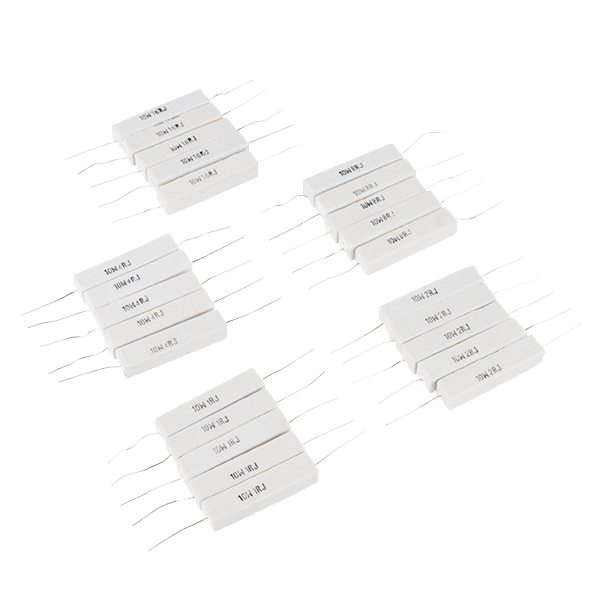 Power Resistor Kit - 10W (25 pack)Nyaya za Majaribio Zenye Vibano vya Mamba
6
6
Hydrogen by weight, disorder, and the whole chain
Hydrogen by weight, disorder, and the whole chain
Inapakia daftari la Jupyter…
7
7
When it will not hold a charge
When it will not hold a charge
Two of these are about the charger rather than the cell, which is characteristic of this chemistry.
Flow
Loading...
Zana zinazohitajika:
Mita-nyingi ya dijitali ya maabaraKipimajoto cha infrared8
8
Compendium: disorder, rare earths, and where this still wins
Compendium: disorder, rare earths, and where this still wins
**What the alloys actually are.** Two families. **AB5**, where A is a mixture of rare earths - lanthanum, cerium, neodymium, praseodymium - and B is nickel with cobalt, manganese or aluminium. And **AB2**, where A is titanium or vanadium and B is zirconium or nickel, modified with chromium, cobalt, iron or manganese. Read those element lists again: that is what "multicomponent" means in the patent title, and none of it is accidental.
**Ovshinsky's larger argument.** He made the same case in three fields - amorphous semiconductors, phase-change memory and this - that engineered disorder gives materials properties that ordered crystals cannot reach. It was unfashionable for decades. Phase-change memory in rewritable optical discs and the hydride electrode in a billion AA cells are the same idea, applied twice.
**Why there is no real memory effect.** NiCd's reputation for "memory" was always overstated, and in NiMH the voltage depression from repeated shallow discharge is reversible with a few full cycles. If a pack seems to have lost capacity permanently, suspect the charger's termination before you suspect the chemistry.
**Where NiMH is still the right answer.** It survives deep discharge, tolerates abuse that would vent a lithium cell, does not need protection electronics, and does not burn. That is why it stayed in hybrid vehicles long after lithium was available, and why it remains the sensible choice for anything that will be left in a cupboard and expected to work - torches, remotes, tools handled by people who will not be careful.
**And where the chain goes next.** Both of the last two blueprints in this batch store charge by moving a small guest through a host that stays put - lithium through an oxide, hydrogen through an alloy. That is where the whole hundred and forty-seven years of this chain has been heading, and it is still where the research is: sodium through the same oxides, and solid electrolytes that would let the guest move without a liquid at all.
Vifaa
9- 1 kipandeKishikilia Nafasi
- Kishikilia Nafasi
- Kishikilia Nafasi
- Kishikilia Nafasi
- Kishikilia Nafasi
- 1 karatasiKishikilia Nafasi
- 2 karatasiKishikilia Nafasi
- 2 vipandeKishikilia Nafasi
- 1 kipandeKishikilia Nafasi
Zana Zinazohitajika
17- Kishikilia Nafasi
- Kishikilia Nafasi
- Kishikilia Nafasi
- Kishikilia Nafasi
- Kishikilia Nafasi
- Kishikilia Nafasi
- Kishikilia Nafasi
- Kishikilia Nafasi
- Kishikilia Nafasi
- Kishikilia Nafasi
- Kishikilia Nafasi
- Kishikilia Nafasi
- Kishikilia Nafasi
- Kishikilia Nafasi
- Kishikilia Nafasi
- Kishikilia Nafasi
- Power Resistor Kit - 10W (25 pack)Kamisheni 10%$5.74
Blueprint zinazohusiana
Blueprint hizi zinashiriki maarifa — mbinu, vifaa au kanuni

CC0 Umma Wote
Mchoro huu umetolewa chini ya CC0. Uko huru kunakili, kubadilisha, kusambaza, na kutumia kazi hii kwa madhumuni yoyote, bila kuomba ruhusa.
Saidia Mtengenezaji kwa kununua bidhaa kupitia Mchoro wao ambapo wanapata Kamisheni ya Mtengenezaji iliyowekwa na Wachuuzi, au unda marudio mapya ya Mchoro huu na uiunganishe kama kiungo katika Mchoro wako kuchangia mapato.