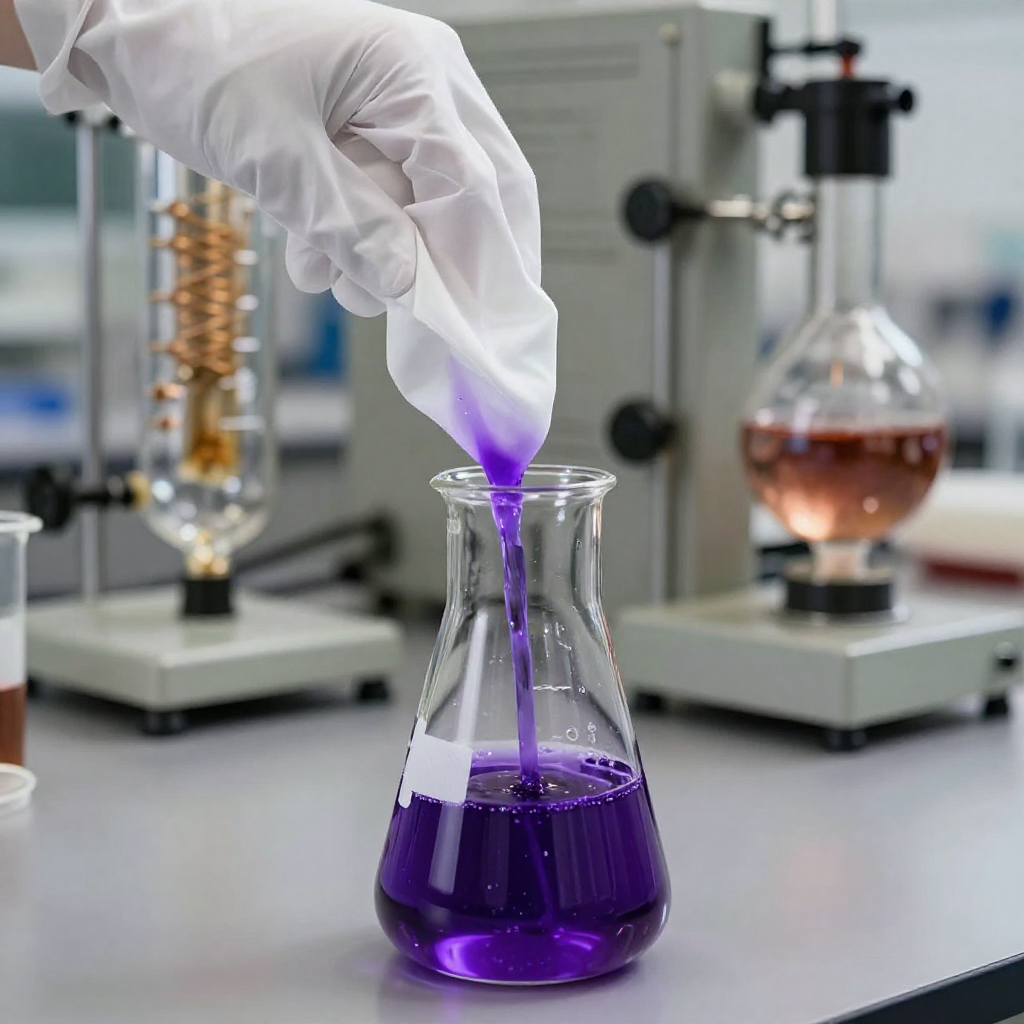


Perkin's Mauveine — The First Synthetic Aniline Dye from Coal Tar
In 1856, eighteen-year-old William Henry Perkin, a chemistry student at the Royal College of Chemistry in London, accidentally synthesized the first synthetic dye while attempting to make quinine from coal tar derivatives. His experiment failed to produce quinine, but the reddish-brown residue in his flask dissolved in alcohol to produce a vivid purple solution that dyed silk beautifully and resisted washing and sunlight. He called it 'mauveine' — the color mauve.
Perkin immediately recognized the commercial potential. Natural purple dyes were among the most expensive in the world: Tyrian purple from murex shells cost more than gold by weight, and orchil lichen dye faded rapidly. Perkin's mauveine was cheap, consistent, and permanent. At age nineteen, he patented the process, built a factory in Greenford, and began mass-producing synthetic dye. By 1859, mauveine was fashionable across Europe — Queen Victoria wore a mauveine-dyed silk gown to her daughter's wedding in 1858.
Perkin's discovery launched the synthetic dye industry and, with it, the entire field of organic chemistry. Within twenty years, German chemists had synthesized dozens of new colors — fuchsine, alizarin, methyl violet, Congo red, indigo — each cheaper and more permanent than its natural counterpart. The natural dye trade collapsed. India's indigo plantations, Turkey's madder fields, and Mexico's cochineal farms lost their markets to factories in Germany and England. By 1900, over 90% of the world's dyes were synthetic, all descended from Perkin's accidental purple.
Maudhui hatari
Blueprint hii ina taratibu za hatari. Ingia na uwashe maudhui ya hatari katika mipangilio ya akaunti yako ili kuona maagizo ya hatua kwa hatua.
IngiaMchoro huu unatengeneza
Blueprint zinazohusiana
Blueprint hizi zinashiriki maarifa — mbinu, vifaa au kanuni

CC0 Umma Wote
Mchoro huu umetolewa chini ya CC0. Uko huru kunakili, kubadilisha, kusambaza, na kutumia kazi hii kwa madhumuni yoyote, bila kuomba ruhusa.
Saidia Mtengenezaji kwa kununua bidhaa kupitia Mchoro wao ambapo wanapata Kamisheni ya Mtengenezaji iliyowekwa na Wachuuzi, au unda marudio mapya ya Mchoro huu na uiunganishe kama kiungo katika Mchoro wako kuchangia mapato.