SANAA
UREMBO NA USTAWI
UJANJA
UTAMADUNI NA HISTORIA
BURUDANI
MAZINGIRA
CHAKULA NA VINYWAJI
UHANDISI WA KINYUME
SAYANSI
MICHEZO
TEKNOLOJIA
VAZI
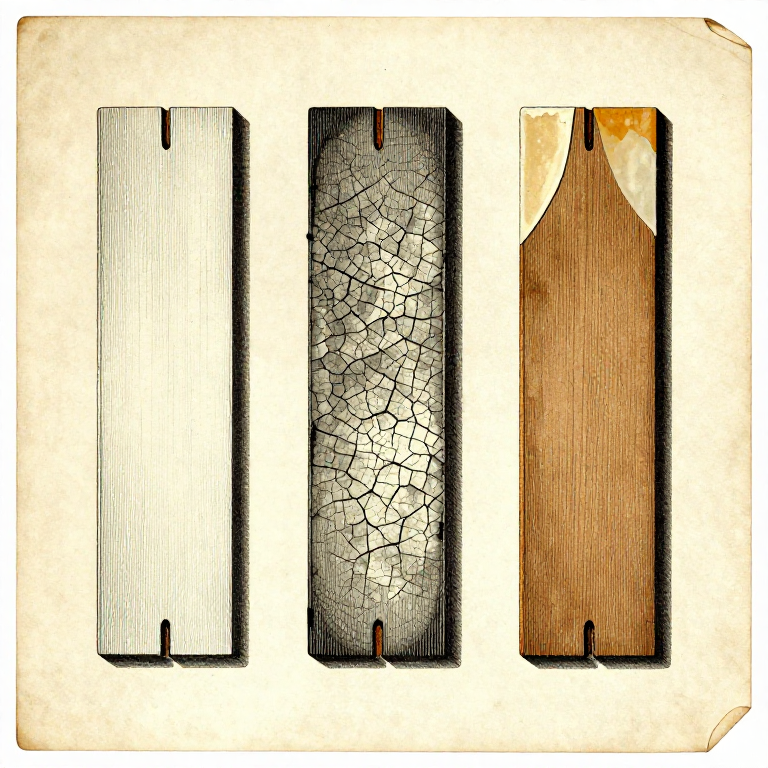


Squeeze-Out, Starvation and Reading a Joint That Failed
A broken joint is evidence. The two faces record exactly what went wrong, and reading them takes a minute and tells you what to change.
Most makers throw the pieces away and try again with more glue and more pressure — which is the wrong response to three of the four common failures, and makes one of them considerably worse.
This rung is the diagnostic table. It pairs with the fault-finding approach used elsewhere on Youblob: look at what the failure actually shows before deciding what to do about it.
Kati
2 hours
Maagizo
1
1
Bare wood on both faces: it never bonded
Bare wood on both faces: it never bonded
Two clean surfaces, little or no glue visible, and the parts separated with much less force than they should have needed.
This is an ADHESION failure and the cause is almost always contamination or a sealed surface: oil, old finish, silicone polish, release agent, or an oily timber like teak that was not wiped with solvent. Occasionally it is an adhesive that simply does not bond that material — PVA on metal or on most plastics will do exactly this.
The fix is in the preparation rung, not in the glue bottle. Clean, abrade, and check that the adhesive is rated for both materials.
Vifaa kwa hatua hii:
 Ubao wa Mti Laini Uliokauka2 vipande
Zana zinazohitajika:
 Lupu ya Kukuza
 Kileo kilichoharibiwa
2
2
A thick brittle line: too much glue, or it cured wrong
A thick brittle line: too much glue, or it cured wrong
A visible glue line, glue on both faces, and the break running through the adhesive itself. That is a COHESIVE failure.
For PVA it usually means the film was too thick — it shrank as it dried and cracked internally — or it cured too cold and chalked instead of forming a proper film. Chalky white crumbs along the line are the signature of cold curing, and no amount of extra time fixes it.
For epoxy it means the mix was wrong. Two-part epoxy needs its stated ratio measured, not estimated, and thorough mixing including the sides of the pot. An under-mixed epoxy stays tacky or rubbery and never reaches strength.
Vifaa kwa hatua hii:
 Epoksi ya Sehemu Mbili1 kipande
 Gundi ya mbao ya PVA1 kipande
Zana zinazohitajika:
Lupu ya Kukuza3
3
Dry patches in a glued area: starvation
Dry patches in a glued area: starvation
Glue around the edges of the joint and dry, unglued wood in the middle. The joint was STARVED — squeezed so hard that the adhesive was driven out before it cured.
This is the failure that punishes the instinct to clamp harder. It also happens with too little glue, with a joint left unclamped so long that the glue skinned before contact, and on end grain that drank the glue away — which the first rung covers.
The fix is more glue and LESS pressure, which is counter-intuitive enough that people rarely try it. A continuous fine bead of squeeze-out along the whole joint is the target; streams of it running down the work mean you have gone past.
Vifaa kwa hatua hii:
Gundi ya mbao ya PVA1 kipande Ubao wa Mti Mgumu2 vipande
Zana zinazohitajika:
 Brashi ya gundi
 Klampu ya umbo la CLupu ya Kukuza
4
4
Cleaning squeeze-out: wet, leathery, or cured
Cleaning squeeze-out: wet, leathery, or cured
There are three moments to deal with squeeze-out and they call for three different methods.
WET: wipe with a barely damp cloth. Tempting, and the trap is that water spreads thinned glue into the surrounding grain where it seals the wood invisibly — and shows up as a pale patch under the finish. Use as little water as possible, or skip this stage.
LEATHERY, after twenty minutes or so: the best moment. The bead has set enough to lift off in one rubbery piece with a chisel or a scraper, and it takes nothing with it. CURED: it has to be pared or scraped off, and you risk digging into the surface. Masking tape applied before assembly avoids the whole question.
Zana zinazohitajika:
 Kitambaa cha PambaLupu ya Kukuza
 Mkusanyo wa sandarusi
 Utepe wa kufunika
Vifaa
4- 2 vipandeKishikilia Nafasi
- 1 kipandeKishikilia Nafasi
- 2 vipandeKishikilia Nafasi
- 2 vipandeKishikilia Nafasi
Zana Zinazohitajika
7- Kishikilia Nafasi
- Kishikilia Nafasi
- Kishikilia Nafasi
- Kishikilia Nafasi
- Kishikilia Nafasi
- Kishikilia Nafasi
- Kishikilia Nafasi
Blueprint zinazohusiana
Blueprint hizi zinashiriki maarifa — mbinu, vifaa au kanuni



CC0 Umma Wote
Mchoro huu umetolewa chini ya CC0. Uko huru kunakili, kubadilisha, kusambaza, na kutumia kazi hii kwa madhumuni yoyote, bila kuomba ruhusa.
Saidia Mtengenezaji kwa kununua bidhaa kupitia Mchoro wao ambapo wanapata Kamisheni ya Mtengenezaji iliyowekwa na Wachuuzi, au unda marudio mapya ya Mchoro huu na uiunganishe kama kiungo katika Mchoro wako kuchangia mapato.