

Rumford Fireplace
Maagizo
Model the old deep firebox
Model the old deep firebox
Build the thing being replaced so the comparison is yours.
- Make a deep, square-sided model firebox from firebrick or board.
- Put a small heat source at the back.
- Measure the temperature a fixed distance out in front.
Vifaa kwa hatua hii:
 Matofali yanayostahimili moto4 vipande
Zana zinazohitajika:
 Kipimajoto cha Kusoma Papo Hapo
Make it shallow and splay the sides
Make it shallow and splay the sides
Two changes, both about line of sight.
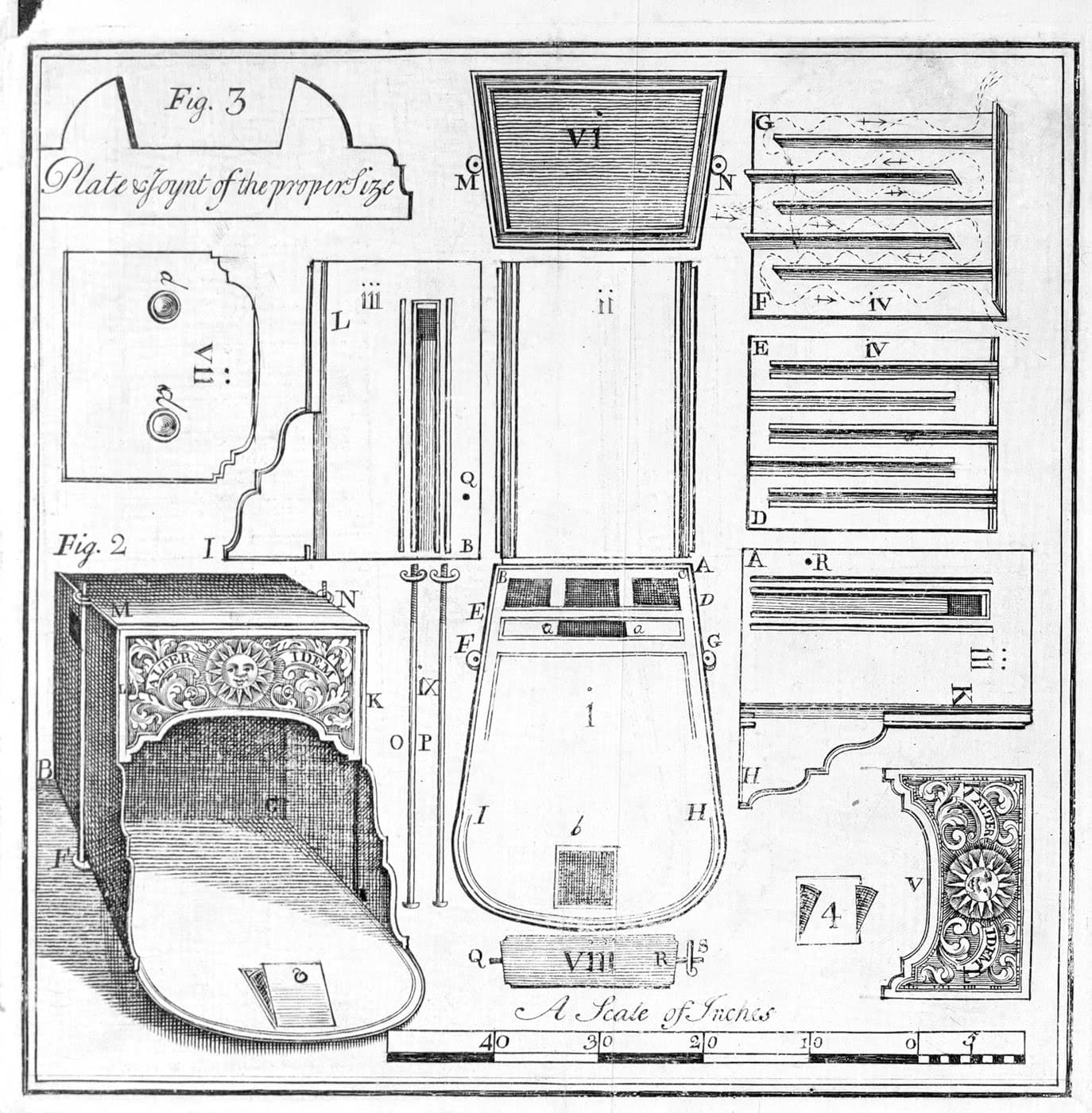
- Rebuild the box shallow, with the fire near the opening.
- Angle the two side walls outward — roughly 45 degrees from the back wall.
- Measure at the same distance and compare with step 1.
Narrow the throat
Narrow the throat
Now fix the smoking, which is a separate problem.
- Restrict the opening above the fire to a narrow slot.
- Add a horizontal shelf immediately behind that slot.
- Watch smoke behaviour before and after.
Test with smoke, not fire
Test with smoke, not fire
Visualise the flow safely.
- Use a smoke source — an incense stick or smoke pencil — at the firebox.
- Observe the path with a wide throat, then with the narrowed throat and shelf.
- Fan air down the flue to simulate a downdraught and watch what happens.
History and context
History and context
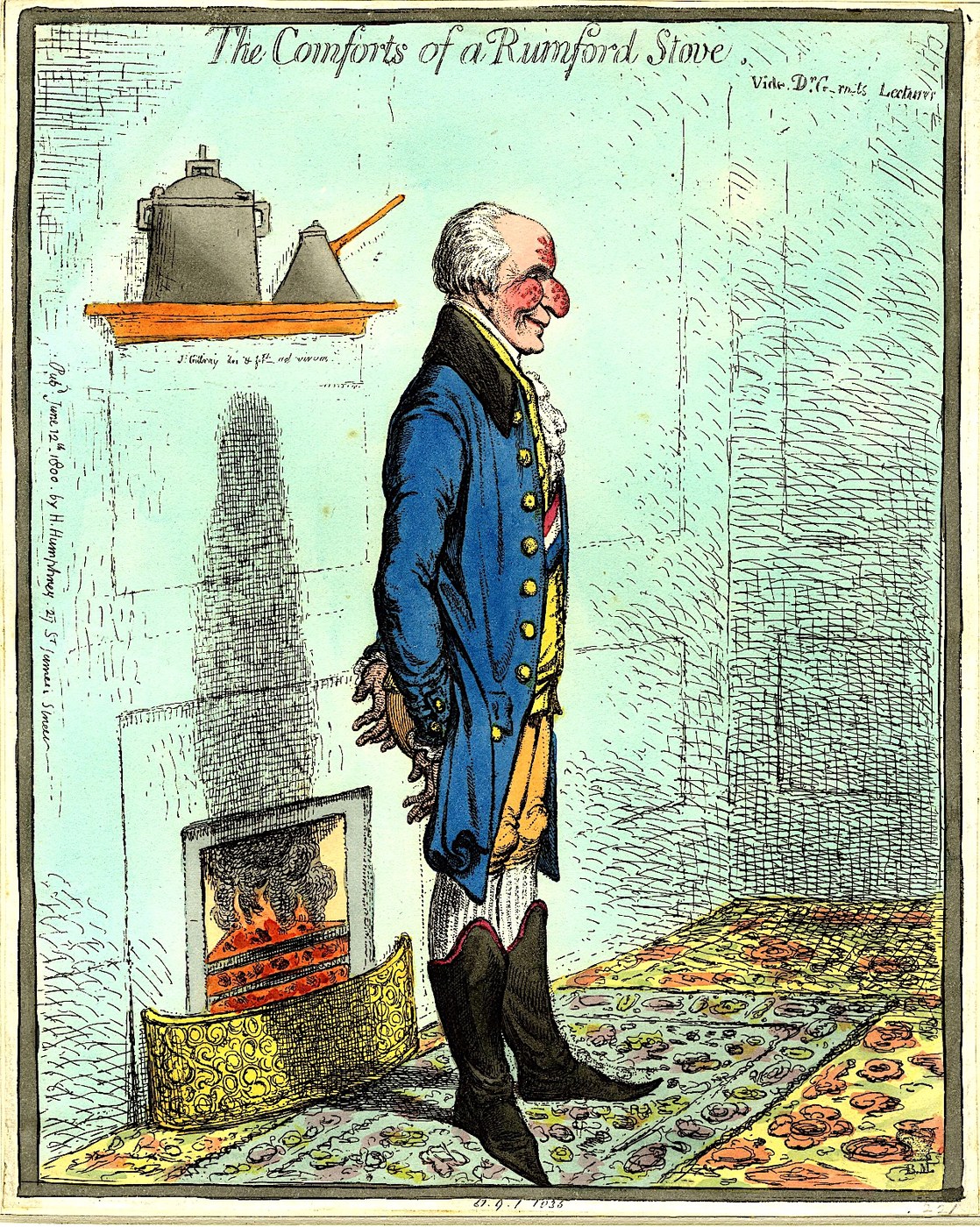
Benjamin Thompson, Count Rumford (1753-1814), was born in Massachusetts, sided with the Crown in the American Revolution, left for Europe, reorganised the Bavarian army and its poor relief, and was made a count of the Holy Roman Empire. He published his fireplace essays in the 1790s and personally supervised the alteration of hundreds of London fireplaces.
His bigger contribution was to physics. Boring cannon in Munich, he noticed that the heat generated seemed inexhaustible as long as the boring continued — which is impossible if heat is a fluid substance, caloric, stored in the metal in finite quantity. He argued instead that heat is motion. That observation is one of the foundations of thermodynamics, and it came from watching a workshop process closely.
He also worked on: the drip coffee percolator, the double boiler, thermal underwear, nutrition for the poor and the design of kitchen ranges. He was, in a real sense, an early scientist of domestic life — a subject most of his contemporaries thought beneath them.
Why the design persists. Modern masonry-heater and fireplace codes still specify shallow fireboxes, splayed sides, a restricted throat and a smoke shelf. An open fire is thermally poor whatever you do — a stove or an insert beats it comfortably — but if the requirement is an open fire, Rumford's proportions are still the right ones after two hundred years.
Vifaa
1- 4 vipandeKishikilia Nafasi
Zana Zinazohitajika
1- Kishikilia Nafasi
Blueprint zinazohusiana
Blueprint hizi zinashiriki maarifa — mbinu, vifaa au kanuni

CC0 Umma Wote
Mchoro huu umetolewa chini ya CC0. Uko huru kunakili, kubadilisha, kusambaza, na kutumia kazi hii kwa madhumuni yoyote, bila kuomba ruhusa.
Saidia Mtengenezaji kwa kununua bidhaa kupitia Mchoro wao ambapo wanapata Kamisheni ya Mtengenezaji iliyowekwa na Wachuuzi, au unda marudio mapya ya Mchoro huu na uiunganishe kama kiungo katika Mchoro wako kuchangia mapato.