SANAA
UREMBO NA USTAWI
UJANJA
UTAMADUNI NA HISTORIA
BURUDANI
MAZINGIRA
CHAKULA NA VINYWAJI
UHANDISI WA KINYUME
SAYANSI
MICHEZO
TEKNOLOJIA
VAZI
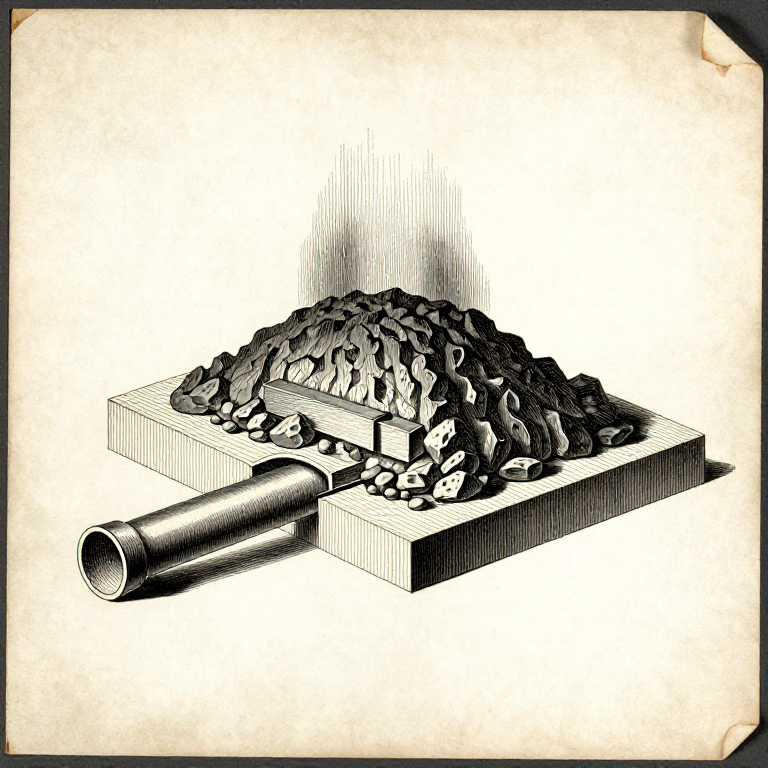


Running the Fire: The Bed, the Air, and the Sweet Spot
A solid-fuel fire is not a uniform hot box. It has a small region — the sweet spot — a little above the air blast, where the fuel is burning hard and the atmosphere is right, and everywhere else is either cooler or actively damaging.
Getting work into that region and keeping it there is most of what running a forge fire means. A fire that looks impressive but has a shallow bed will not get steel to welding heat however hard you blow, and it will oxidise the work badly while failing.
Three things control it: the depth of the fuel bed, the amount of air, and where the work sits relative to both.
Kati
4 hours
Maagizo
1
1
Build a deep bed — depth is what makes heat
Build a deep bed — depth is what makes heat
The fuel above the air inlet has to be deep enough that the incoming air is fully consumed before it reaches the work. A shallow fire lets cold air and free oxygen reach the steel directly.
For a coal or charcoal forge, aim for a good hand's depth of burning fuel above the tuyere. That is far more than most beginners build, and building it is usually the difference between a fire that reaches welding heat and one that stalls at orange.
Keep the fire mounded rather than spread. A wide thin fire burns a lot of fuel and heats nothing; a compact deep one concentrates the heat where the work goes and uses less fuel doing it.
Vifaa kwa hatua hii:
 Mkaa2 vipande
Zana zinazohitajika:
 Fua ya mhunzi
 Meko (Moto wa Kufua)
 Tofali la moto
2
2
Air: enough to burn the fuel, not enough to blow through it
Air: enough to burn the fuel, not enough to blow through it
More air makes a hotter fire only up to the point where the fuel can consume it. Past that the excess air cools the fire and carries oxygen to the work.
Listen and look. A correct blast gives a steady roar and a fire that is bright but not throwing sparks and fuel out of the top. Too much blast blows a hole through the bed, throws burning fuel about and wastes it fast.
Match the blast to the job: a gentle blast for a long soak on a thick piece, more for driving a small piece up quickly. A hand bellows or a controllable blower is genuinely better than a fixed fan for this reason, because the rate is something you want to change constantly.
Vifaa kwa hatua hii:
Mkaa2 vipandeZana zinazohitajika:
 MivuoFua ya mhunzi
 Miwani myeusi ya tanuru
3
3
Where to put the work, and where not to
Where to put the work, and where not to
Bury the work IN the fuel, in the hottest region a little above the air inlet — not resting on top of the fire where the flames lick over it.
Sitting on top looks like it should work and does not: that region has excess air and unburnt gas, so the work oxidises heavily while heating slowly. Steel left there scales badly and, in a coal fire, can pick up sulphur.
Directly at the air inlet is the other mistake — that is where the oxygen arrives and it will burn the steel. The target is the zone just above it, where the oxygen has been consumed and the carbon monoxide is hot. Feel for it: move the piece around in the fire and you will find where it comes up fastest.
Vifaa kwa hatua hii:
 Fito ya chuma laini1 kipandeMkaa2 vipande
Zana zinazohitajika:
 Koleo za mhunziFua ya mhunzi
 Glavu ndefu za ngoziMiwani myeusi ya tanuru
4
4
Keep it fed, keep it clean, and bank it when you stop
Keep it fed, keep it clean, and bank it when you stop
Add fuel around the edges and let it coke or char there before raking it into the centre. Green fuel dropped straight onto the fire cools it and releases smoke and volatiles right where the work is.
Clinker — the fused ash that forms at the bottom of a coal fire — blocks the air inlet and kills the fire from underneath. Rake it out periodically; it comes away as a hard glassy lump and its presence explains a fire that has become inexplicably sluggish.
To pause, bank the fire: heap fuel over it and cut the air right down. It will hold for a long time and come straight back with a few strokes of the bellows, which is much faster and cheaper than relighting.
Vifaa kwa hatua hii:
Mkaa2 vipandeZana zinazohitajika:
Fua ya mhunziMivuoMeko (Moto wa Kufua)Blueprint zinazohusiana
Blueprint hizi zinashiriki maarifa — mbinu, vifaa au kanuni
CC0 Umma Wote
Mchoro huu umetolewa chini ya CC0. Uko huru kunakili, kubadilisha, kusambaza, na kutumia kazi hii kwa madhumuni yoyote, bila kuomba ruhusa.
Saidia Mtengenezaji kwa kununua bidhaa kupitia Mchoro wao ambapo wanapata Kamisheni ya Mtengenezaji iliyowekwa na Wachuuzi, au unda marudio mapya ya Mchoro huu na uiunganishe kama kiungo katika Mchoro wako kuchangia mapato.