SANAA
UREMBO NA USTAWI
UJANJA
UTAMADUNI NA HISTORIA
BURUDANI
MAZINGIRA
CHAKULA NA VINYWAJI
UHANDISI WA KINYUME
SAYANSI
MICHEZO
TEKNOLOJIA
VAZI
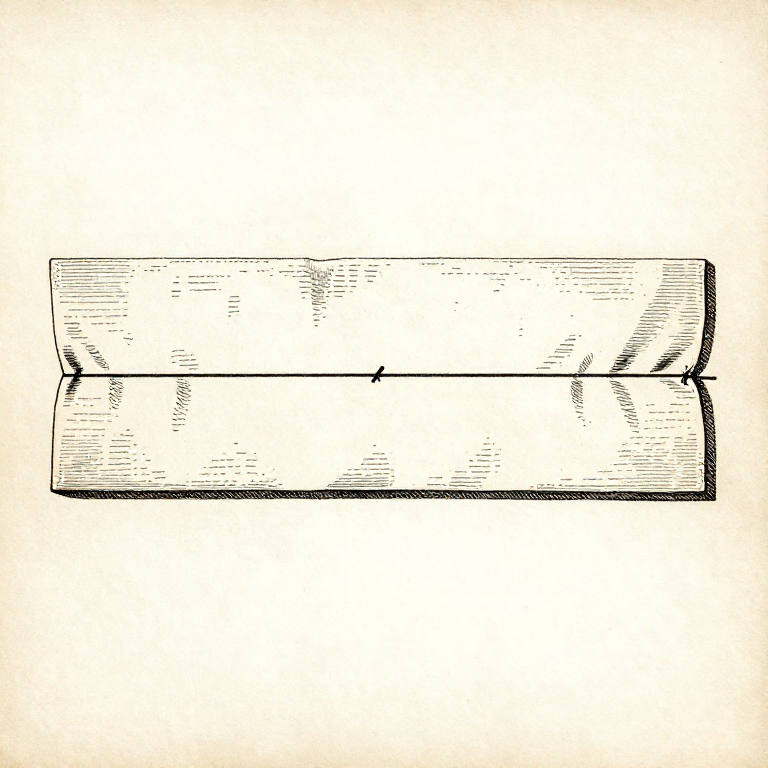


Seam Allowance: One Number, Everywhere, or Nothing Fits
The seam allowance is the strip of cloth between the cut edge and the line of stitching. It is not decoration and it is not spare: it is the difference between the size you cut and the size you get.
Every seam removes twice the allowance from the finished width, because there is an allowance on each of the two pieces. Sew a 15 mm allowance instead of a 10 mm one on a garment with eight seams and you have removed 80 mm from its circumference — a whole size.
Which is why the number has to be the SAME everywhere, and why it has to be the number the pattern was drafted with. A consistent wrong allowance produces a garment of the wrong size; an inconsistent one produces a garment that does not go together at all.
Mwanzo
2 hours
Maagizo
1
1
Know which number the pattern uses
Know which number the pattern uses
Commercial patterns usually include the allowance in the printed piece — often 15 mm, sometimes 10 mm — and say so on the instruction sheet. Many drafted and downloaded patterns do NOT include it, and expect you to add it yourself.
Find out before cutting. A pattern drafted to the finished line, cut as though it included allowance, produces a garment two allowances too small on every seam — and it is discovered at the fitting.
Write the number on the pattern piece, large. In six months, or halfway through a project that was interrupted, it is the first thing you will not remember and the hardest to work out from the pieces.
Vifaa kwa hatua hii:
 Karatasi1 kipande
Zana zinazohitajika:
 Rula
Rula2
2
Sew to the allowance, not to the edge
Sew to the allowance, not to the edge
The stitching line is a fixed distance from the cut edge, so the guide is the EDGE, not the seam. Use the marked plate on a machine, a piece of tape stuck to it, or a chalk line, and keep the cut edge running against the guide.
That is why an uneven cut edge matters so much: the stitching follows it, so a wobble in the cutting becomes a wobble in the seam and a bulge in the finished garment.
Different allowances have different jobs. A 15 mm allowance gives room to let out and to finish the edge; a 6 mm allowance is right for curved seams and small work, where a wide allowance cannot lie flat round the curve. Choosing per seam is fine — writing it down is what makes it work.
Vifaa kwa hatua hii:
 Kitambaa cha Pamba1 kipande
 Uzi wa Pamba1 kipande
Zana zinazohitajika:
 Cherehani
 Chaki ya mshonajiRula
3
3
What it costs to get it wrong
What it costs to get it wrong
Inapakia daftari la Jupyter…
Vifaa kwa hatua hii:
Kitambaa cha Pamba1 kipandeUzi wa Pamba1 kipandeZana zinazohitajika:
 Kompyuta ya mezaniRula
 Kikokotoo
4
4
Notches and marks are how the pieces find each other
Notches and marks are how the pieces find each other
A notch is a small mark cut or snipped into the allowance to show where two pieces line up. Matching the notches is what makes a curved seam of two different-looking edges come out right.
Cut notches OUTWARD as little triangles, or snip inward no more than 3 mm. A deep snip into a 6 mm allowance leaves almost nothing holding the seam, and it will eventually tear from that point.
Transfer every mark before the pattern comes off — notches, dots, dart points, the grainline if you may need it again. Once the paper is removed those positions cannot be recovered, and finding out mid-assembly is the commonest reason a piece gets cut a second time.
Vifaa kwa hatua hii:
Kitambaa cha Pamba1 kipandeKaratasi1 kipandeZana zinazohitajika:
 MkasiChaki ya mshonaji
 Pini za kushonea
Vifaa
3- 2 vipandeKishikilia Nafasi
- 3 vipandeKishikilia Nafasi
- 2 vipandeKishikilia Nafasi
Blueprint zinazohusiana
Blueprint hizi zinashiriki maarifa — mbinu, vifaa au kanuni

CC0 Umma Wote
Mchoro huu umetolewa chini ya CC0. Uko huru kunakili, kubadilisha, kusambaza, na kutumia kazi hii kwa madhumuni yoyote, bila kuomba ruhusa.
Saidia Mtengenezaji kwa kununua bidhaa kupitia Mchoro wao ambapo wanapata Kamisheni ya Mtengenezaji iliyowekwa na Wachuuzi, au unda marudio mapya ya Mchoro huu na uiunganishe kama kiungo katika Mchoro wako kuchangia mapato.