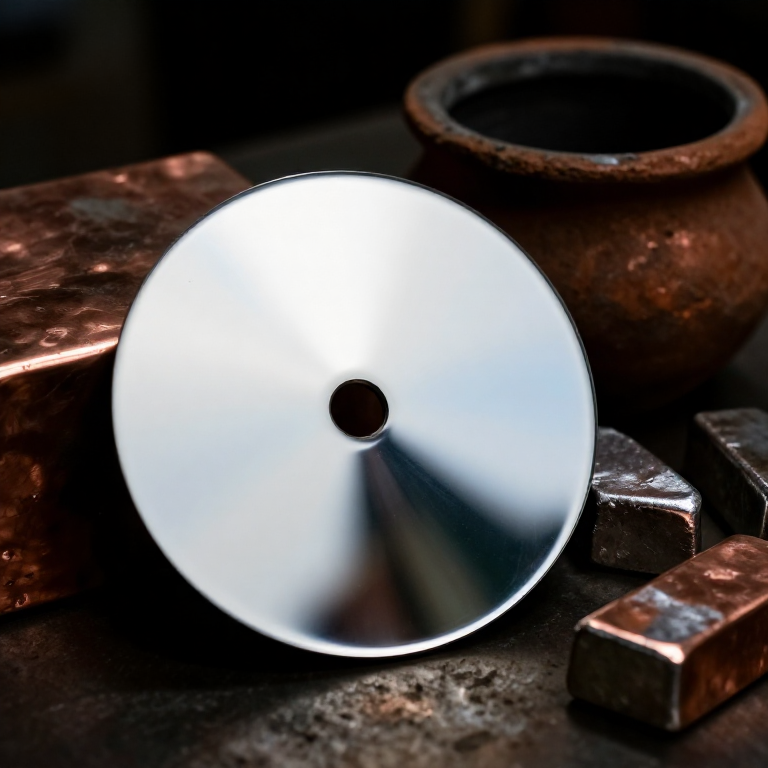


Casting and Grinding a Speculum Metal Telescope Mirror — Newton's Reflecting Alloy
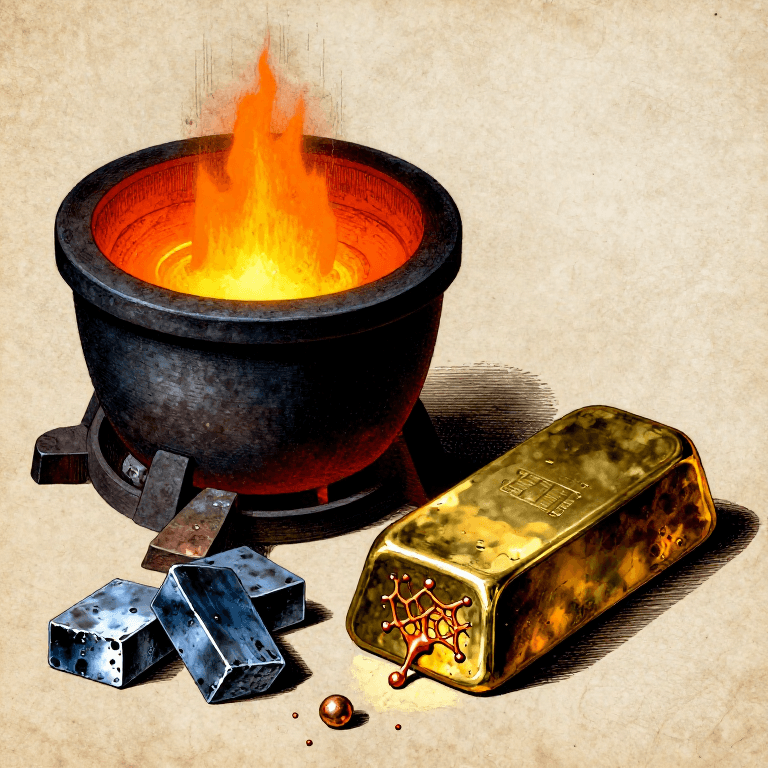
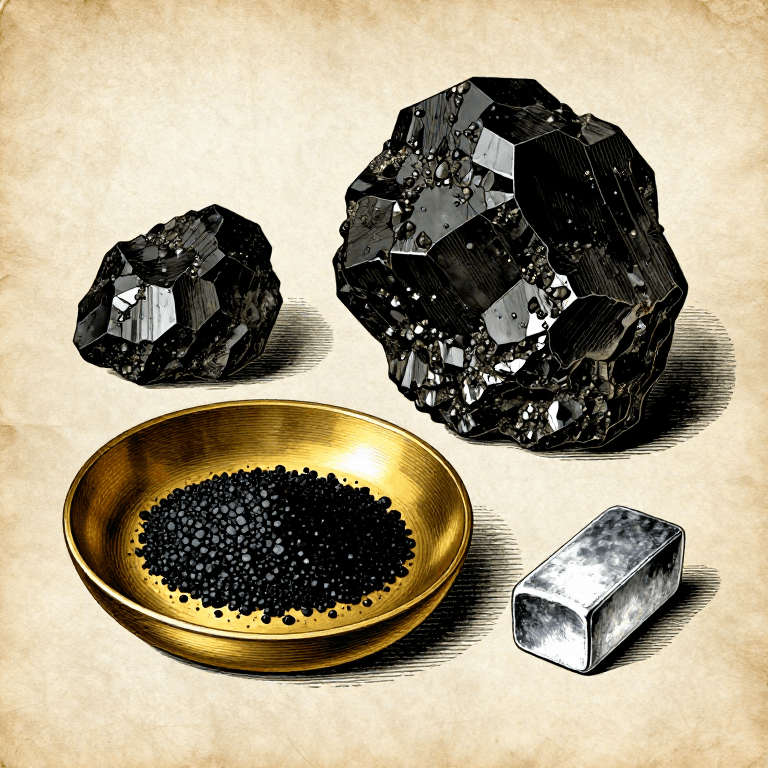
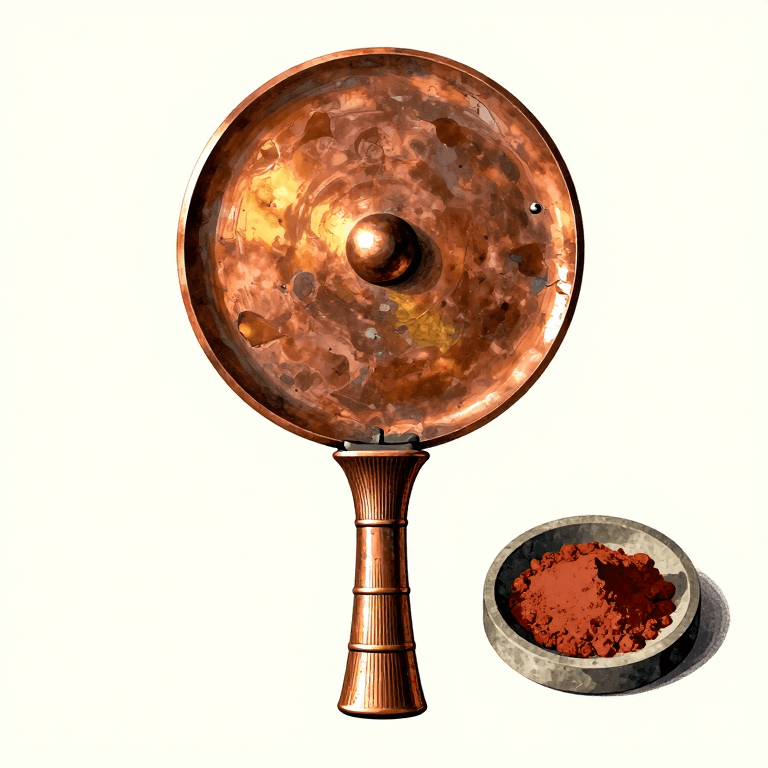
When Isaac Newton built his reflecting telescope in 1668, he needed a concave mirror to focus light — but silvered glass mirrors did not yet exist. Instead, he cast his mirror from speculum metal, a bronze alloy of approximately 68% copper and 32% tin that can be polished to a brilliant, highly reflective surface. Speculum metal had been known since antiquity — the Romans used it for hand mirrors (speculum is Latin for mirror) — but Newton was the first to grind it into a precise concave paraboloid for astronomical use. The alloy is hard, brittle, and takes a superb polish, but it tarnishes in air and must be periodically repolished. Every reflecting telescope before the 1850s used speculum metal mirrors, including William Herschel's great telescopes that discovered Uranus and mapped the Milky Way. This blueprint casts a speculum metal disc from copper and tin ingots, then grinds and polishes it into a concave mirror suitable for a Newtonian reflecting telescope.
Maagizo
Understand speculum metal
Understand speculum metal
Weigh the copper and tin
Weigh the copper and tin
Vifaa kwa hatua hii:
 Kitofali cha shaba safi asilimia 99.9 cha gramu 450340 g
 Kipande cha bati (tin)160 g
Prepare the crucible and mould
Prepare the crucible and mould
Vifaa kwa hatua hii:
 Kaure ya Udongo Yenye Kina1 kipande
 Mkaa wa vipande3 kg
Zana zinazohitajika:
 Koleo la kaure ya kuyeyushia
Melt the copper
Melt the copper
Add the tin and pour
Add the tin and pour
Zana zinazohitajika:
Koleo la kaure ya kuyeyushiaAnneal the casting
Anneal the casting
Flatten one face on a lap
Flatten one face on a lap
Vifaa kwa hatua hii:
 Chembechembe za kabidi ya silikoni100 g
Rough grind the concave curve
Rough grind the concave curve
Vifaa kwa hatua hii:
Chembechembe za kabidi ya silikoni200 g Bamba la kioo1 kipande
Fine grind with progressively finer grits
Fine grind with progressively finer grits
Polish on a pitch lap
Polish on a pitch lap
Vifaa kwa hatua hii:
 Gundi ya Lami ya Msonobari100 g
 Oksidi ya bati (oksidi ya stani)50 g
 Dawa ya kung'arisha50 g
Test the mirror with a pinhole
Test the mirror with a pinhole
Protect the polished surface
Protect the polished surface
Vifaa
9- Kishikilia Nafasi
- Kishikilia Nafasi
- 1 kipandeKishikilia Nafasi
- 3 kgKishikilia Nafasi
- Kishikilia Nafasi
- 1 kipandeKishikilia Nafasi
- Kishikilia Nafasi
- Kishikilia Nafasi
- Kishikilia Nafasi
Zana Zinazohitajika
2- Kishikilia Nafasi
- Kishikilia Nafasi
Vifaa vya Michoro Iliyounganishwa


Blueprint zinazohusiana
Blueprint hizi zinashiriki maarifa — mbinu, vifaa au kanuni

CC0 Umma Wote
Mchoro huu umetolewa chini ya CC0. Uko huru kunakili, kubadilisha, kusambaza, na kutumia kazi hii kwa madhumuni yoyote, bila kuomba ruhusa.
Saidia Mtengenezaji kwa kununua bidhaa kupitia Mchoro wao ambapo wanapata Kamisheni ya Mtengenezaji iliyowekwa na Wachuuzi, au unda marudio mapya ya Mchoro huu na uiunganishe kama kiungo katika Mchoro wako kuchangia mapato.