SANAA
UREMBO NA USTAWI
UJANJA
UTAMADUNI NA HISTORIA
BURUDANI
MAZINGIRA
CHAKULA NA VINYWAJI
UHANDISI WA KINYUME
SAYANSI
MICHEZO
TEKNOLOJIA
VAZI
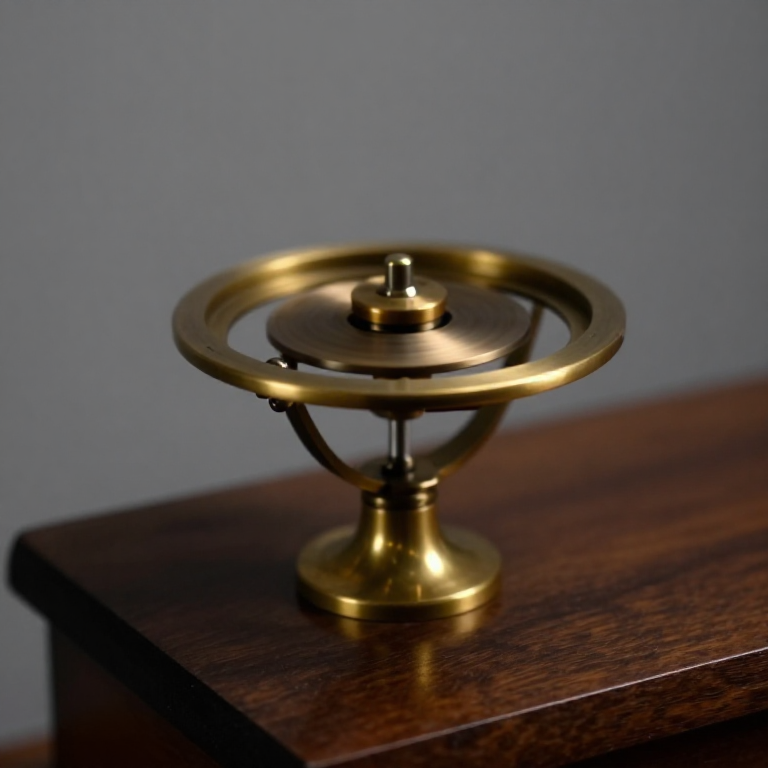


The Sperry Gyro Autopilot
A gyrocompass tells a ship where north is and then stops. Elmer Sperry's question from about 1910 was what happens if the gyro does not merely report the attitude but ACTS on it - if the instrument is wired to the controls, so the machine flies itself.
His son Lawrence demonstrated the answer at the aircraft safety competition at Bezons, near Paris, on 18 June 1914: he flew a Curtiss flying boat past the judges with both hands in the air while his mechanic walked out along the wing, and the gyroscopic stabiliser held it level. It won the prize and it is the first machine that flew itself.
The control lesson is the one that recurs in every blueprint after it. Feed the roll ANGLE back to the ailerons and you have not built a stabiliser, you have built a torsion spring: push the aircraft off level and it comes back, overshoots, comes back again. An early aeroplane's aerodynamic damping is worth a damping ratio of only about 0.3, so the machine wallows for half a minute after every gust. Nothing in that loop takes energy out.
The fix is to feed back the RATE of roll as well - how fast it is getting worse, not just how bad it is - and the beauty of it is that a spinning gyro in gimbals gives you both from one instrument. The angle comes from the gyro staying put while the aircraft moves around it; the rate comes from the torque it takes to precess it. The second term costs no extra sensor, only the wit to use what the first one already produced.
There is a limit that no amount of gain gets past. A stiff loop asks for more aileron than the surface has, and a control surface hard against its stop is not in a feedback loop at all.
Juu
4 hours
Maagizo
1
1
A plank on a bearing
A plank on a bearing
Pivot a 400 mm plywood beam on a single ball bearing so it rolls freely about its long axis, and screw the IMU flat at the centre.
Mount the servo to the frame and link its horn to one end of the beam with a stiff wire, so the servo can tilt the beam a few degrees either way. Balance it until it sits level with the servo centred - an unbalanced rig hides everything you are about to measure.
Vifaa kwa hatua hii:
 Bati la mbao za kubandika1 karatasi
 Fani ya Mipira1 kipande
 Waya wa piano200 mm
 Nati ya pembe sita8 vipande
Zana zinazohitajika:
 Kekee cha Betri
 Rula
Rula Kipima-unene cha dijitali cha inchi 6
 Seti ya bisibisi
2
2
The stabiliser sketch
The stabiliser sketch
One hundred loops a second: read the angle, read the rate, command the servo. The two gains at the top are the whole experiment.
Leave `KD` at zero first - that is a 1912 attitude-only stabiliser, and it will wallow. Then raise it and watch the wallow die.
gyro_stabiliser.inocpp
Vifaa kwa hatua hii:
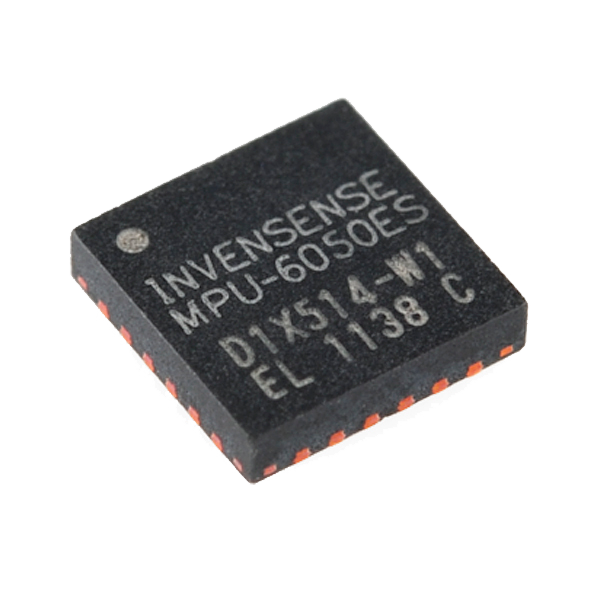 3-Axis Gyro/Accelerometer IC - MPU-60501 kipande
 Pakiti ya servo motors za Arduino1 paketi
 Seti ya nyaya za Dupont (dume-jike)1 seti
Zana zinazohitajika:
 Arduino Uno R3
 Bao la Majaribio
 Kompyuta ya mezani
 Chanzo cha umeme cha meza
3
3
Spring, stabiliser, and four ways to stay level
Spring, stabiliser, and four ways to stay level
Inapakia daftari la Jupyter…
Zana zinazohitajika:
Kompyuta ya mezani4
4
Compendium: what the gyro cannot tell you
Compendium: what the gyro cannot tell you
A gyroscope holds a direction in space, not relative to the earth, so over an hour it drifts - a few degrees at best on 1914 bearings. Left alone the autopilot would fly a steadily banking turn while insisting the wings were level. Sperry's erection system fixes it with pendulous weights or air jets that slowly torque the gyro back towards the local vertical, a second and much slower feedback loop wrapped around the first. The sketch here does the same thing digitally: the complementary filter trusts the gyro over one second and the accelerometer over a minute, because one is smooth and drifts while the other is noisy and does not.
That second loop has a failure mode built into it. An accelerometer cannot distinguish gravity from acceleration, so in a steady coordinated turn the apparent vertical tilts with the aircraft and the erection system patiently teaches the gyro that the banked attitude is level. Real autopilots cut the erection out whenever a turn is detected. It is worth recognising because the same trap catches every balancing robot ever built for the same reason: the reference the slow loop trusts is only trustworthy while the vehicle is not doing anything interesting.
Vifaa
7- 1 karatasiKishikilia Nafasi
- Kishikilia Nafasi
- 200 mmKishikilia Nafasi
- 8 vipandeKishikilia Nafasi
- 3-Axis Gyro/Accelerometer IC - MPU-6050Kamisheni 10%1 kipande$12.50
- Kishikilia Nafasi
- Kishikilia Nafasi
Zana Zinazohitajika
8- 1 vendor sell this, none ship to you yetKishikilia Nafasi
- Kishikilia Nafasi
- Kishikilia Nafasi
- Kishikilia Nafasi
- 1 vendor sell this, none ship to you yetKishikilia Nafasi
- 1 vendor sell this, none ship to you yetKishikilia Nafasi
- Kishikilia Nafasi
- Kishikilia Nafasi
Jumla inayokadiriwa
Kile mtengenezaji alinunua. Malighafi zisizo na bei hupatikana pale unaponunua.
Blueprint zinazohusiana
Blueprint hizi zinashiriki maarifa — mbinu, vifaa au kanuni



CC0 Umma Wote
Mchoro huu umetolewa chini ya CC0. Uko huru kunakili, kubadilisha, kusambaza, na kutumia kazi hii kwa madhumuni yoyote, bila kuomba ruhusa.
Saidia Mtengenezaji kwa kununua bidhaa kupitia Mchoro wao ambapo wanapata Kamisheni ya Mtengenezaji iliyowekwa na Wachuuzi, au unda marudio mapya ya Mchoro huu na uiunganishe kama kiungo katika Mchoro wako kuchangia mapato.