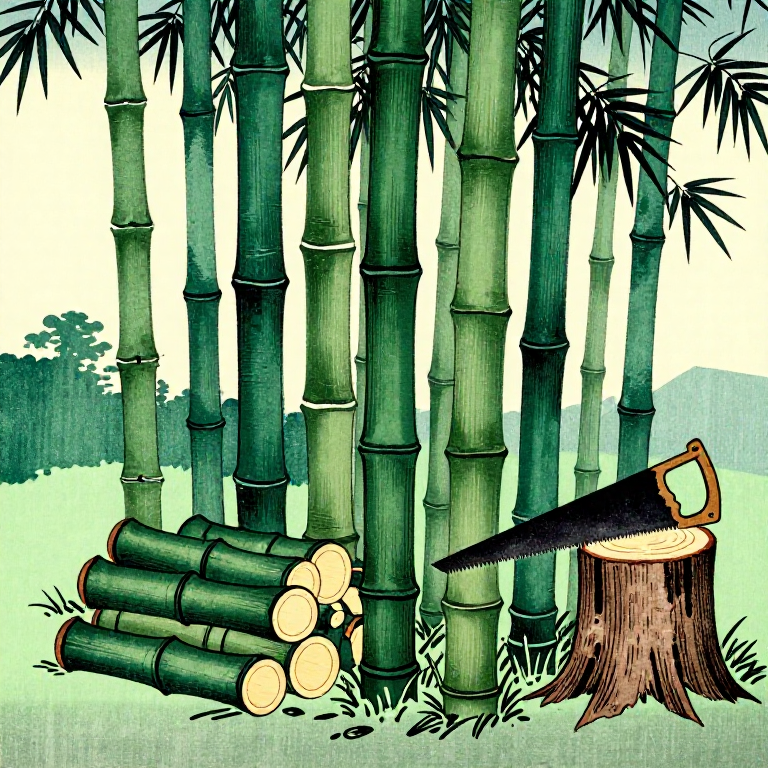
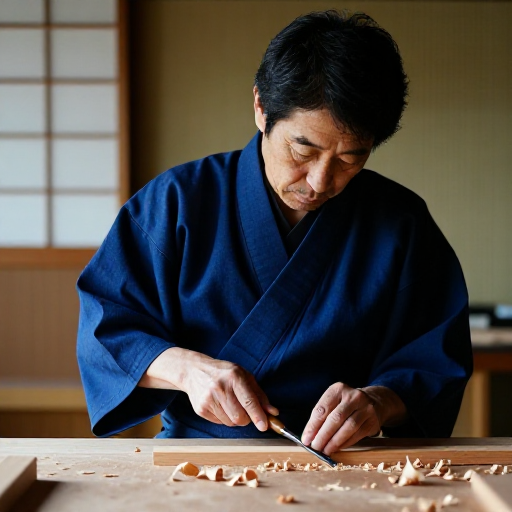

竹の伐採と選別 — 真竹の収穫から油抜きまで
Maagizo
成熟した竹を見分ける
成熟した竹を見分ける
竹林の中で3〜5年生の竹を選びます。成熟した竹は深い緑色で、節が硬く、幹を叩くと澄んだ音がします。1〜2年生の竹は明るい緑色で柔らかすぎ、6年以上の竹は劣化が始まっています。
伐採時期を確認する
伐採時期を確認する
竹の伐採は秋から冬(10月〜2月)に行います。この時期は樹液の流れが少なく、含水率が低いため、乾燥後の割れやカビを防げます。春〜夏に伐った竹は水分が多く、虫害やカビの原因になります。
雨天の伐採を避ける
雨天の伐採を避ける
雨の日や雨上がりの伐採は避けてください。湿った竹は乾燥ムラが生じやすく、カビの発生リスクが高まります。晴天が2日以上続いた後が理想的です。
真っ直ぐで節間の揃った竹を選ぶ
真っ直ぐで節間の揃った竹を選ぶ
曲がりの少ない竹を選びます。節の間隔が均一で、直径が根元から先端まで徐々に細くなっているものが良質です。直径8〜12cmの真竹が一般的な工芸用途に適しています。
Vifaa kwa hatua hii:
 Mwanzi uliokomaa (miaka 3-5)1 kipande
選んだ竹に目印を付ける
選んだ竹に目印を付ける
伐採する竹の目の高さに布リボンや紐を結びます。竹林内では似た竹が密集しているため、選定した竹を見失わないようにします。
Vifaa kwa hatua hii:
 Utepe wa kitambaa wa kuweka alama3 vipande
根元周りを片付ける
根元周りを片付ける
伐採する竹の根元周辺の落ち葉、枯れ枝、筍の残骸を取り除きます。作業スペースを確保し、鋸を正確に当てられるようにします。
Zana zinazohitajika:
 Reki ya bustani
切り口の位置を決める
切り口の位置を決める
地面から10〜15cmの高さ、最初の節のすぐ上で切ります。節の上で切ることで、切り株に雨水が溜まって腐るのを防ぎます。
竹挽き鋸で伐る
竹挽き鋸で伐る
竹専用の鋸(竹挽き鋸)を使い、やや斜めに切り込みます。斜め切りにすると雨水が切り株から流れ落ちます。一定のリズムで引き、押し付けすぎないこと。竹は割れやすいので、最後の2cmは特にゆっくり切ります。
Zana zinazohitajika:
 Msumeno wa mianzi
倒れる竹を支える
倒れる竹を支える
切り離される直前に、隣の竹に寄りかかるように手で誘導します。竹は軽いですが長いため、自由落下させると先端が折れたり周囲の竹を傷つけます。
Zana zinazohitajika:
 Glavu ndefu za ngozi
枝を打つ
枝を打つ
鉈(なた)を使い、各節から出ている枝を幹に沿って切り落とします。枝の付け根から幹に向かって上から下へ打ち下ろすと、きれいに落ちます。幹を傷つけないよう注意。
Zana zinazohitajika:
 Shoka dogo
用途に合わせた長さに切る
用途に合わせた長さに切る
用途に応じて竹を切り分けます。一般的な工芸用は3〜4mの区間。茶道具用は節の位置を考慮して短く切ります。必ず節の位置を確認し、必要な節数を含むように切断位置を決めます。
Zana zinazohitajika:
 Tepi ya kupimia
虫害を検査する
虫害を検査する
切り出した竹の表面を注意深く観察します。直径1〜2mmの小さな穴があれば、竹喰い虫(チクトウムシ)の食害痕です。穴の周りに細かい粉(虫糞)があれば現在も虫がいます。被害のひどい部分は切り捨てます。
変色や腐りを確認する
変色や腐りを確認する
黒ずんだ斑点や灰色の変色がある部分は内部腐朽の兆候です。指で押して柔らかく感じる部分は使えません。健全な竹は硬く、叩くと「コンコン」と乾いた音がします。
立てかけて初期乾燥する
立てかけて初期乾燥する
切り出した竹を垂直に立てかけて乾燥させます。壁や専用の竹干し台に根元を上にして立てかけると、残った樹液が重力で下に流れます。風通しの良い屋根付きの場所が最適です。
Zana zinazohitajika:
 Chanja ya mianzi ya kukaushia
2〜4週間の自然乾燥
2〜4週間の自然乾燥
屋根付きの風通しの良い場所で2〜4週間乾燥させます。直射日光は急速な乾燥による割れを引き起こすため避けます。乾燥が進むと竹の色が緑から薄黄色に変わります。
乾燥度を確認する
乾燥度を確認する
乾燥した竹を叩くと空洞の「カンカン」という高い音がします。湿った竹は「ボコッ」という鈍い音です。重さも軽くなっているはずです。含水率が15%以下になれば工芸用に使えます。
油抜き(あぶらぬき)を行う
油抜き(あぶらぬき)を行う
炭火やガスバーナーの炎の上で竹をゆっくり回転させます。竹の表面から油分と水分が染み出し、布で拭き取ります。油抜きにより竹の耐久性が増し、美しい飴色の光沢が出ます。温度は200〜250℃程度。焦がさないよう常に動かし続けます。
Zana zinazohitajika:
 Kichomea cha gesi
 Kitambaa cha Pamba
横置きで保管する
横置きで保管する
油抜きが終わった竹は、地面から離れた棚の上に横置きで保管します。竹同士が重ならないように並べ、風通しを確保します。湿気の少ない場所で保管すれば、数年間品質を維持できます。
Zana zinazohitajika:
 Rafu ya kuhifadhia
Vifaa
3- 1 kipandeKishikilia Nafasi
- 3 vipandeKishikilia Nafasi
- 1 kipandeKishikilia Nafasi
Zana Zinazohitajika
9- Kishikilia Nafasi
- Kishikilia Nafasi
- Kishikilia Nafasi
- Kishikilia Nafasi
- 1 vendor sell this, none ship to you yetKishikilia Nafasi
- Kishikilia Nafasi
- Kishikilia Nafasi
- Kishikilia Nafasi
- Kishikilia Nafasi
Mchoro huu unatengeneza

CC0 Umma Wote
Mchoro huu umetolewa chini ya CC0. Uko huru kunakili, kubadilisha, kusambaza, na kutumia kazi hii kwa madhumuni yoyote, bila kuomba ruhusa.
Saidia Mtengenezaji kwa kununua bidhaa kupitia Mchoro wao ambapo wanapata Kamisheni ya Mtengenezaji iliyowekwa na Wachuuzi, au unda marudio mapya ya Mchoro huu na uiunganishe kama kiungo katika Mchoro wako kuchangia mapato.