SANAA
UREMBO NA USTAWI
UJANJA
UTAMADUNI NA HISTORIA
BURUDANI
MAZINGIRA
CHAKULA NA VINYWAJI
UHANDISI WA KINYUME
SAYANSI
MICHEZO
TEKNOLOJIA
VAZI
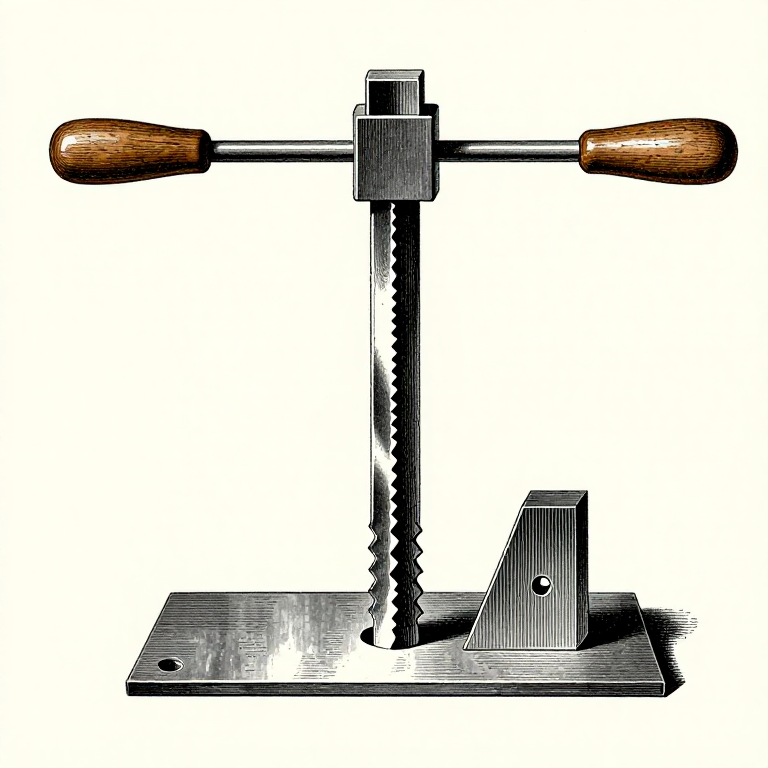


Tapping a Hole by Hand: The Drill Size Decides Everything
A tap cuts a thread into a hole you have already drilled, and the single thing that decides whether it works is the size of that hole.
Too small and the tap has to remove more metal than it can, binds, and snaps off inside the work — which is about the worst outcome in hand metalwork. Too large and the thread is shallow and strips under load. The correct drill is not the thread's diameter and not anything you can eyeball.
The rest is a short, unglamorous routine: start square, turn half a turn, back off a quarter, repeat. Doing that faithfully is the whole technique.
Kati
3 hours
Maagizo
1
1
The tapping drill: subtract the pitch
The tapping drill: subtract the pitch
For an ISO metric coarse thread the tapping drill is the nominal diameter minus the pitch. M6 has a 1.0 mm pitch, so it takes a 5.0 mm drill. M8 at 1.25 takes 6.75, rounded to the 6.8 mm drill that is sold for it.
That rule gives about 75 % thread engagement, which is the standard compromise: nearly all the strength of a full thread for a fraction of the cutting effort. Going to 100 % engagement adds only a few per cent of strength and roughly doubles the torque needed — which is how taps get broken.
Write the rule where you tap, or keep a chart. Almost every tapping failure traces back to the drill, and a 6.0 mm drill in place of a 6.8 for an M8 hole will break the tap rather than cut a better thread.
Vifaa kwa hatua hii:
 Bamba la chuma laini1 kipande
Zana zinazohitajika:
 Seti ya vichimbuzi
 Kalipa ya Vernier
 Kigwe cha Katikati
2
2
Taper, second, plug — a set of three, used in order
Taper, second, plug — a set of three, used in order
A TAPER tap has a long lead of eight or ten tapering threads, so it enters easily and aligns itself. A SECOND (or intermediate) tap has a shorter lead. A PLUG (or bottoming) tap is threaded almost to its tip.
Through a hole that goes right through, the taper tap alone will do the whole job. In a BLIND hole all three are needed in order, because only the plug tap can cut threads close to the bottom — and starting with the plug tap in a fresh hole is very difficult to get square.
Drill a blind hole deeper than the thread needs to be, by three or four thread pitches. The chips have to go somewhere, and a hole drilled exactly to depth packs solid and jams the tap at the bottom.
Zana zinazohitajika:
 Seti ya kukata nyuzi za skrubu
 Mpini wa kukata nyuzi za ndaniSeti ya vichimbuzi
3
3
Start it square — this is the step that decides the result
Start it square — this is the step that decides the result
Put the tap in the tap wrench, stand it in the hole, and press down while turning gently. After two turns, stop and check it against a square from two directions ninety degrees apart.
A tap started crooked cuts a crooked thread, and there is no recovering it — the bolt will go in at an angle and the part is scrap. Checking twice at two turns costs ten seconds; the alternative costs the workpiece. If it is leaning, back it out completely and start again rather than trying to lever it straight, which snaps taps.
Use a tap wrench, not a spanner or pliers on the square. A tap wrench applies balanced torque to both sides; anything one-sided pushes the tap off square at the exact moment squareness is being established.
Zana zinazohitajika:
Mpini wa kukata nyuzi za ndaniSeti ya kukata nyuzi za skrubu Rangi ya buluu ya kuweka alama
 Kibanio kizito cha meza ya kazi
4
4
Half a turn in, a quarter turn back — and oil
Half a turn in, a quarter turn back — and oil
Turn the tap half a turn forward, then a quarter turn back, then forward again. The reverse snaps the chip off and lets it fall clear.
Without it, the chip grows into a long spiral that jams between the tap and the thread it has just cut. Pressure builds with no warning, and the tap breaks. That back-quarter-turn is the single most important habit in this batch, and it is the one beginners leave out because it feels like it is undoing progress.
Use cutting oil on steel — it reduces torque substantially and gives a far cleaner thread. Aluminium wants paraffin or a proper aluminium cutting fluid; brass and cast iron are usually tapped dry, because oil turns their powdery chips into a packing paste.
Zana zinazohitajika:
Mpini wa kukata nyuzi za ndaniSeti ya kukata nyuzi za skrubu Kitambaa cha Pamba
 Miwani ya usalama iliyo wazi
 Mafuta ya kukatia
Vifaa
1- 1 kipandeKishikilia Nafasi
Zana Zinazohitajika
10- Kishikilia Nafasi
- Kishikilia Nafasi
- Kishikilia Nafasi
- Kishikilia Nafasi
- Kishikilia Nafasi
- Kishikilia Nafasi
- Kishikilia Nafasi
- Kishikilia Nafasi
- Kishikilia Nafasi
- Kishikilia Nafasi
Blueprint zinazohusiana
Blueprint hizi zinashiriki maarifa — mbinu, vifaa au kanuni

CC0 Umma Wote
Mchoro huu umetolewa chini ya CC0. Uko huru kunakili, kubadilisha, kusambaza, na kutumia kazi hii kwa madhumuni yoyote, bila kuomba ruhusa.
Saidia Mtengenezaji kwa kununua bidhaa kupitia Mchoro wao ambapo wanapata Kamisheni ya Mtengenezaji iliyowekwa na Wachuuzi, au unda marudio mapya ya Mchoro huu na uiunganishe kama kiungo katika Mchoro wako kuchangia mapato.