SANAA
UREMBO NA USTAWI
UJANJA
UTAMADUNI NA HISTORIA
BURUDANI
MAZINGIRA
CHAKULA NA VINYWAJI
UHANDISI WA KINYUME
SAYANSI
MICHEZO
TEKNOLOJIA
VAZI
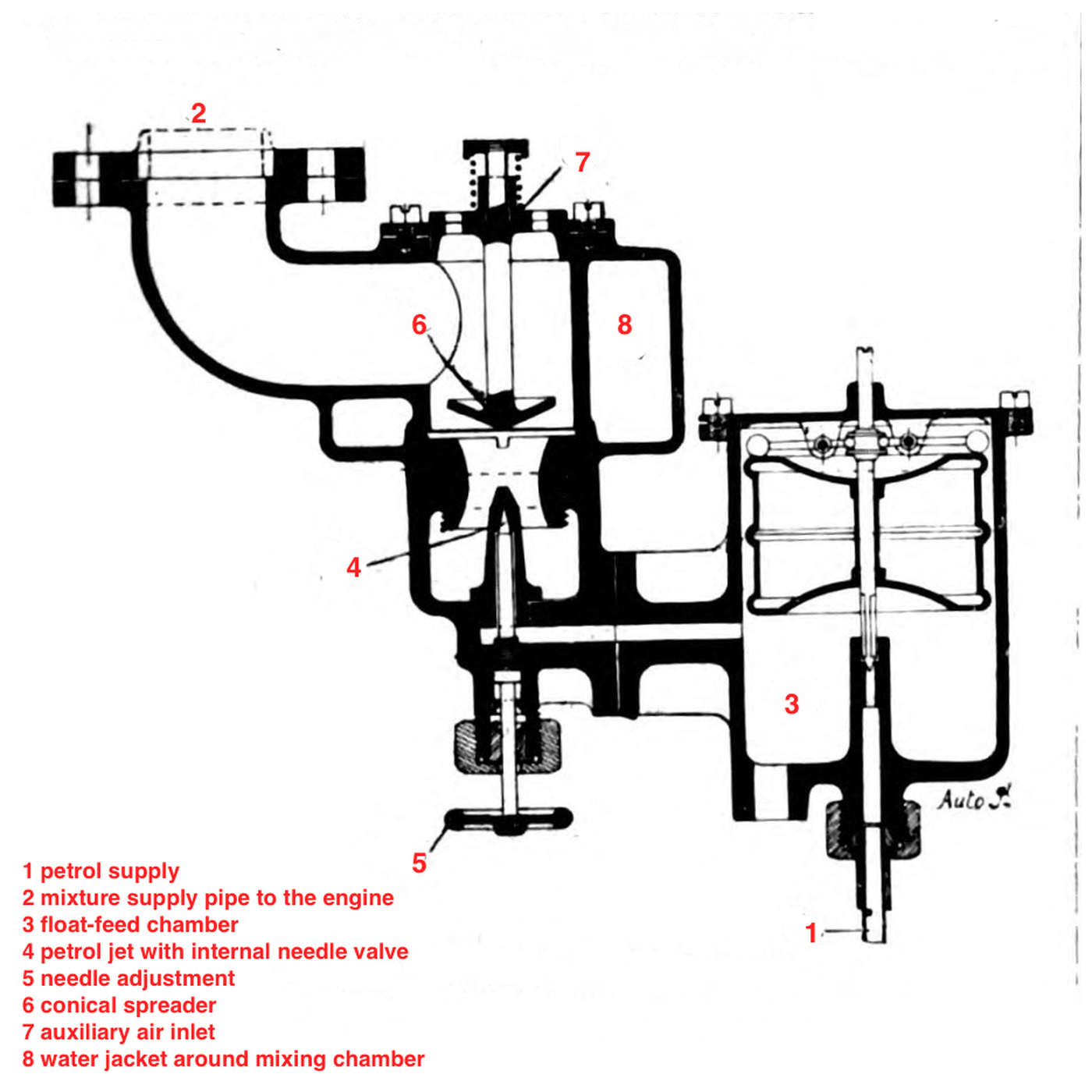


The Carburettor: A Venturi, a Jet and a Float
A petrol engine needs its fuel mixed with air in a nearly fixed ratio, at every speed. Wilhelm Maybach's spray-nozzle carburettor of 1893, for Daimler, did it with three parts and no moving control at all: a **venturi** that speeds the air and lowers its pressure, a **jet** opening into the throat that the low pressure draws fuel through, and a **float bowl** that holds the fuel at a constant level just below the jet.
Because the air flow and the fuel flow both go with the air's speed, the mixture stays right as the engine speeds up and slows down.
This rung works out why, and builds a water-and-air venturi atomiser to see the jet draw and spray — no petrol involved.
Kati
About 3 hours
Maagizo
1
1
Why the mixture stays right
Why the mixture stays right
Inapakia daftari la Jupyter…
2
2
Build a venturi atomiser — with water
Build a venturi atomiser — with water
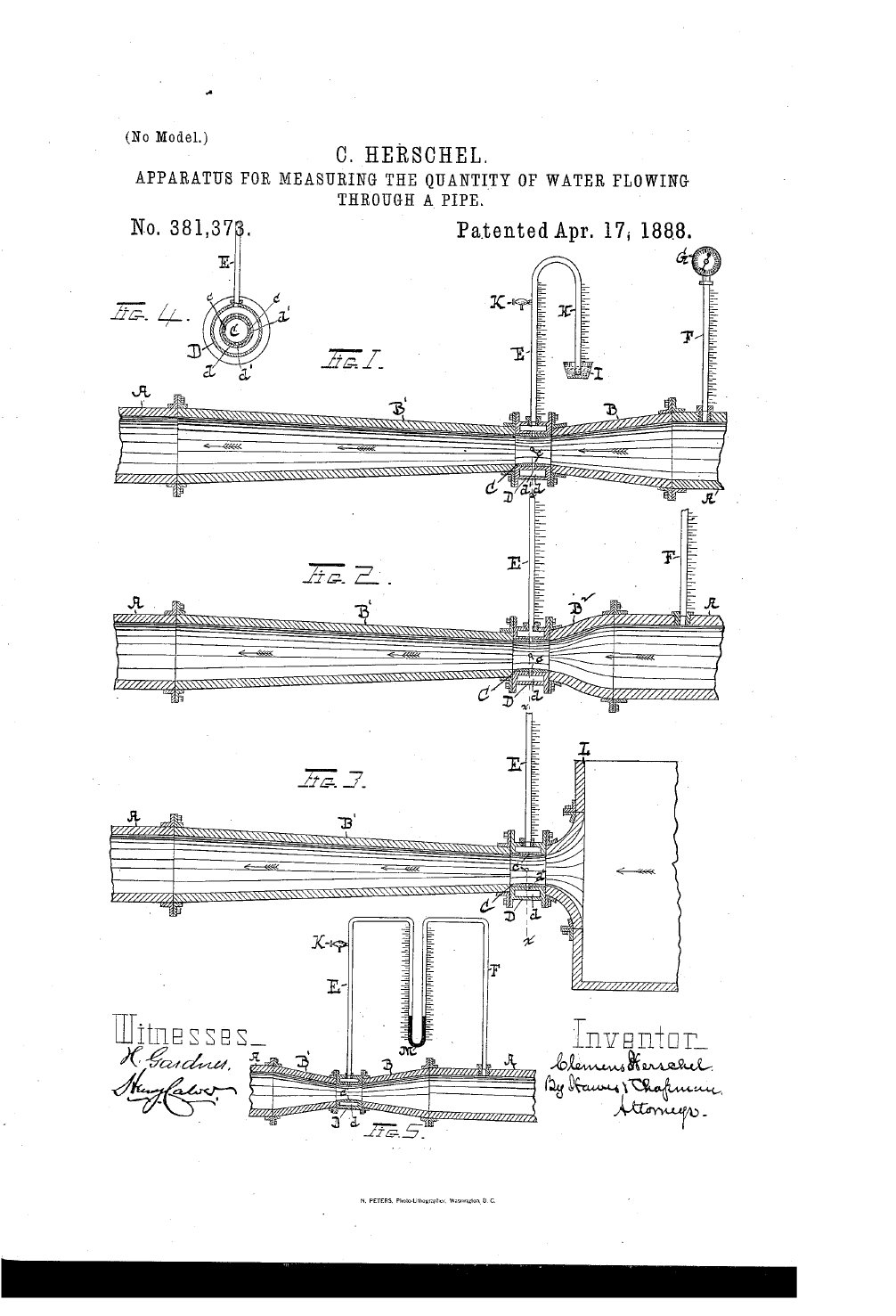
Print a venturi tube: 12 mm bore narrowing smoothly to a 6 mm throat and opening gently back out, with a 2 mm side hole at the throat into which a fine tube is sealed. Lead that tube down into a cup of coloured water 30 mm below the throat — the cup is your float bowl, and the height is the level the float holds.
Blow air through with the air compressor through the regulator, starting very low. At some air speed the water climbs the tube and is torn into a spray at the throat. Raise the cup and it starts at lower air speed; lower it and it needs more. That is why a carburettor needs a float: the fuel level must not change.
**Water only.** Never demonstrate this with petrol: an atomised fuel spray is an explosive mixture.
Vifaa kwa hatua hii:
 Uzi wa PETG30 g
 Mrija wa vinili angavu1 mita
 Rangi ya chakula (rangi ya kuonyesha mtiririko)1 tone
 Maji1 lita
Zana zinazohitajika:
 Printa ya 3D ya nyuzi (FDM)
 Kibana hewa
 Kidhibiti cha kupunguza shinikizo
 Rula
 Miwani ya usalama iliyo wazi
3
3
History and context
History and context
**Wilhelm Maybach, 1893** — the spray-nozzle carburettor with a float chamber, developed for Daimler engines, the pattern for carburettors for most of the next century. No patent number is asserted here. Earlier 'surface' and 'wick' carburettors had simply let air pass over or through petrol, and their mixture wandered with temperature and fuel level.
Fuel injection replaced the carburettor in cars from the 1980s, for precise mixture control and emissions; carburettors survive on small engines.
**Honest limits.** The simple venturi law fails at very low airflow (idle) and during sudden throttle opening, so real carburettors carry extra circuits. The mixture shifts with altitude, because air density falls. And petrol vapour is dangerous: carburettors are worked on outdoors, away from flame.
Vifaa
4- 30 gKishikilia Nafasi
- 1 mitaKishikilia Nafasi
- Kishikilia Nafasi
- 1 litaKishikilia Nafasi
Zana Zinazohitajika
5- Kishikilia Nafasi
- 1 vendor sell this, none ship to you yetKishikilia Nafasi
- Kishikilia Nafasi
- Kishikilia Nafasi
- Kishikilia Nafasi
Blueprint zinazohusiana
Blueprint hizi zinashiriki maarifa — mbinu, vifaa au kanuni


CC0 Umma Wote
Mchoro huu umetolewa chini ya CC0. Uko huru kunakili, kubadilisha, kusambaza, na kutumia kazi hii kwa madhumuni yoyote, bila kuomba ruhusa.
Saidia Mtengenezaji kwa kununua bidhaa kupitia Mchoro wao ambapo wanapata Kamisheni ya Mtengenezaji iliyowekwa na Wachuuzi, au unda marudio mapya ya Mchoro huu na uiunganishe kama kiungo katika Mchoro wako kuchangia mapato.