SANAA
UREMBO NA USTAWI
UJANJA
UTAMADUNI NA HISTORIA
BURUDANI
MAZINGIRA
CHAKULA NA VINYWAJI
UHANDISI WA KINYUME
SAYANSI
MICHEZO
TEKNOLOJIA
VAZI
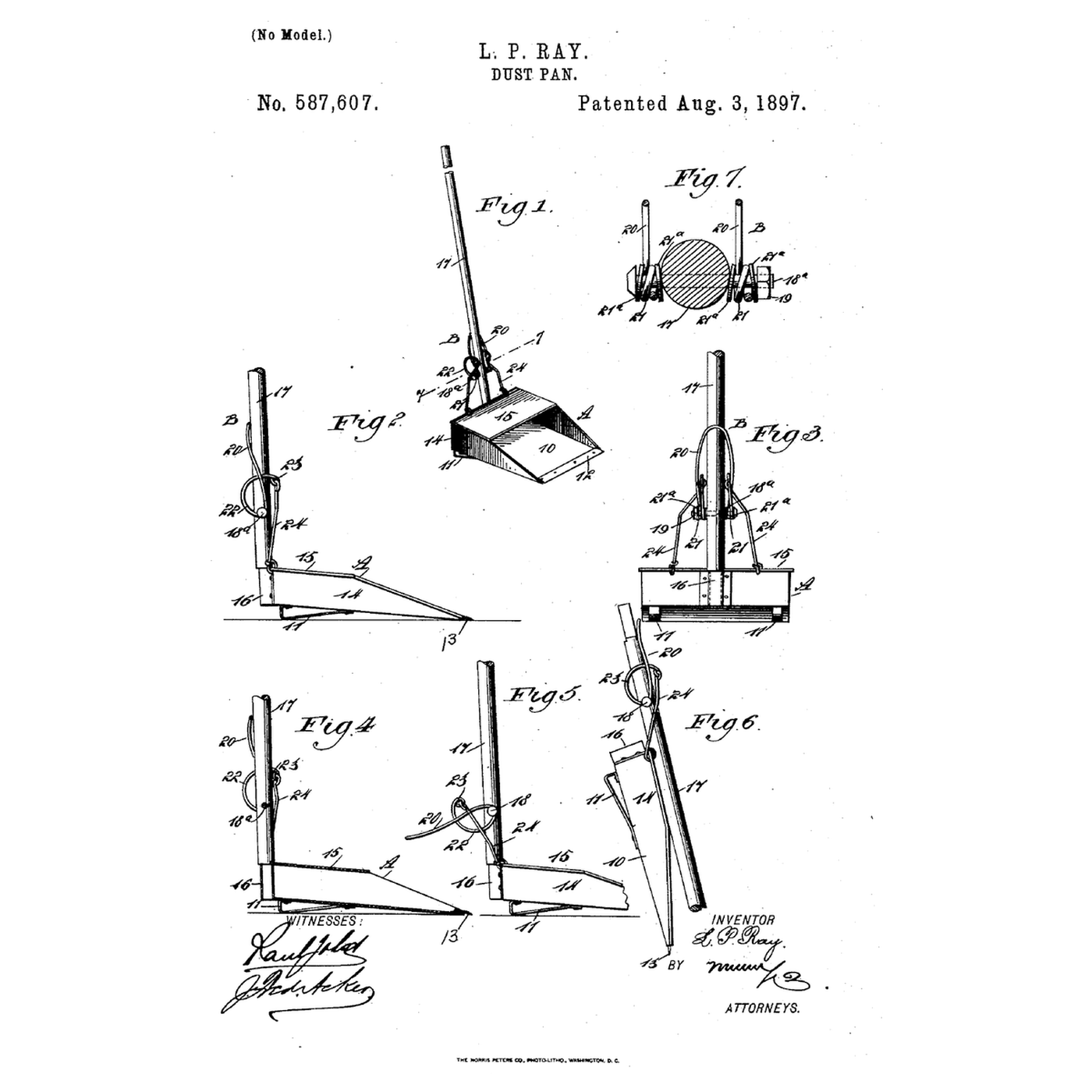


The Low-Lipped Dustpan: A Hard Thin Edge Pressed to the Floor
Every dustpan leaves a line of dust in front of it: the grains too small to climb its edge. The thinner the edge and the closer it lies to the floor, the less is left.
Lloyd P. Ray of Seattle, Washington, received US 587,607, dated 3 August 1897 (filed 25 March 1897), for a dust-pan "so constructed as to lie close to the floor or surface from which the dust is to be taken up and wherein the receiving edge of the pan will be of a stronger material than the body portion", with a removable handle held at an angle by a spring fastening.
This rung computes how much dust a lip of a given height leaves behind, then weighs what a real dustpan picks up as its lip is raised.
Mwanzo
About 1 hour
Maagizo
1
1
What the lip leaves behind
What the lip leaves behind
Inapakia daftari la Jupyter…
2
2
The broom that pushes the dust
The broom that pushes the dust
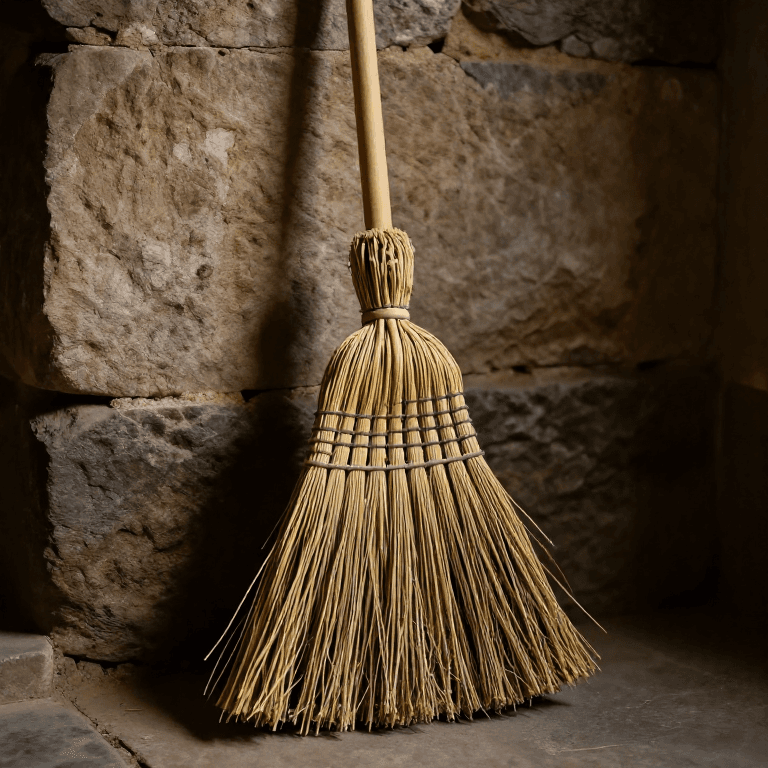
The embedded blueprint binds a birch besom; the dustpan is what the broom sweeps into.
3
3
Read US 587,607
Read US 587,607
"The object of my invention is to provide a dust-pan which will be so constructed as to lie close to the floor or surface from which the dust is to be taken up and wherein the receiving edge of the pan will be of a stronger material than the body portion."
The pan has "feet 11, which give a forward tip or inclination to the bottom of said pan", and at the front "a plate 12 is secured, made of steel or like material or a material which is harder than that from which the body of the pan is constructed. The plate 12 is made to taper from its back in direction of its forward edge, which is quite thin and bent downward to form a curved surface 13, capable of being brought in close engagement with the surface from which the sweepings are to be removed."
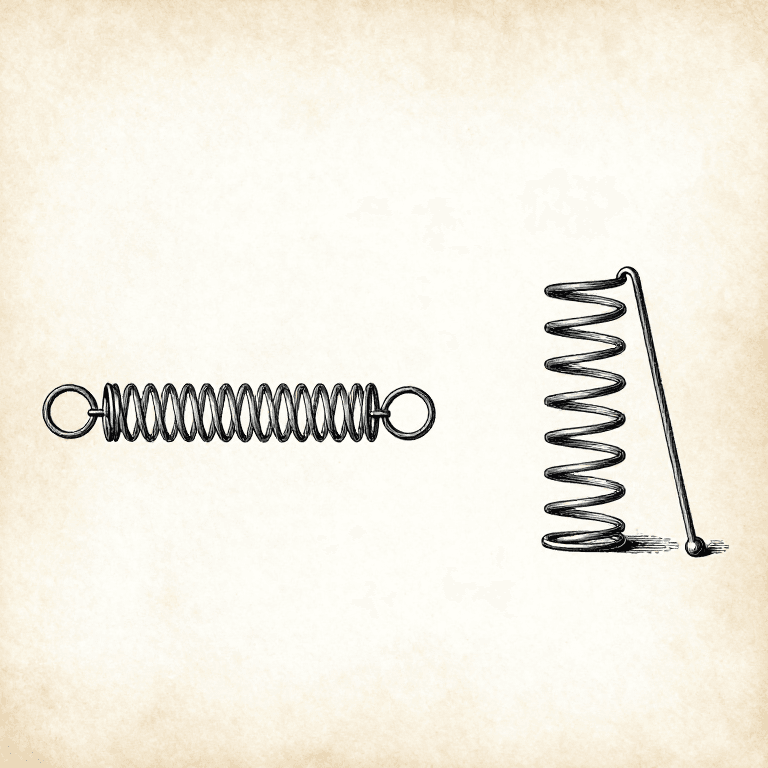
A spring-wire fastening holds the handle upright in use; folded down over the pan, the same loop serves "as a means for hanging the handle and the pan from any convenient support."
4
4
Weigh what the pan picks up
Weigh what the pan picks up
Weigh out 50 g of fine sand and spread it evenly over a square about 30 cm across on a smooth, hard floor. Sweep it into the dustpan with five strokes of the broom, then weigh what is in the pan.
Stick one layer of masking tape along the underside of the dustpan's front edge so the lip stands higher, measure the height with the caliper, and repeat with fresh sand. Add a second and a third layer. Plot sand collected against lip height and compare the trend with the notebook.
Vifaa kwa hatua hii:
 Mchanga laini200 g
Zana zinazohitajika:
 Jarafa
 Ufagio
 Mizani ya dijitali ya jikoni
 Kipima-unene cha dijitali cha inchi 6
 Rula
Rula Utepe wa kufunika
5
5
A dustpan that leaves a line or spills
A dustpan that leaves a line or spills
Dustpan troubleshooting.
Flow
Loading...
6
6
History and honest limits
History and honest limits
**Lloyd P. Ray** of Seattle, Washington, filed US 587,607 on 25 March 1897; it is dated 3 August 1897. His claims cover the spring fastening that holds the handle.
**Honest limits.** The notebook treats every grain as a sphere that climbs only a step lower than its radius; real grains are angular and broom bristles lift some of them. The size mix and lip heights are examples. The sand you weigh is the measurement.
Vifaa
1- 200 gKishikilia Nafasi
Mchoro huu unatengeneza
Blueprint zinazohusiana
Blueprint hizi zinashiriki maarifa — mbinu, vifaa au kanuni

CC0 Umma Wote
Mchoro huu umetolewa chini ya CC0. Uko huru kunakili, kubadilisha, kusambaza, na kutumia kazi hii kwa madhumuni yoyote, bila kuomba ruhusa.
Saidia Mtengenezaji kwa kununua bidhaa kupitia Mchoro wao ambapo wanapata Kamisheni ya Mtengenezaji iliyowekwa na Wachuuzi, au unda marudio mapya ya Mchoro huu na uiunganishe kama kiungo katika Mchoro wako kuchangia mapato.