SANAA
UREMBO NA USTAWI
UJANJA
UTAMADUNI NA HISTORIA
BURUDANI
MAZINGIRA
CHAKULA NA VINYWAJI
UHANDISI WA KINYUME
SAYANSI
MICHEZO
TEKNOLOJIA
VAZI
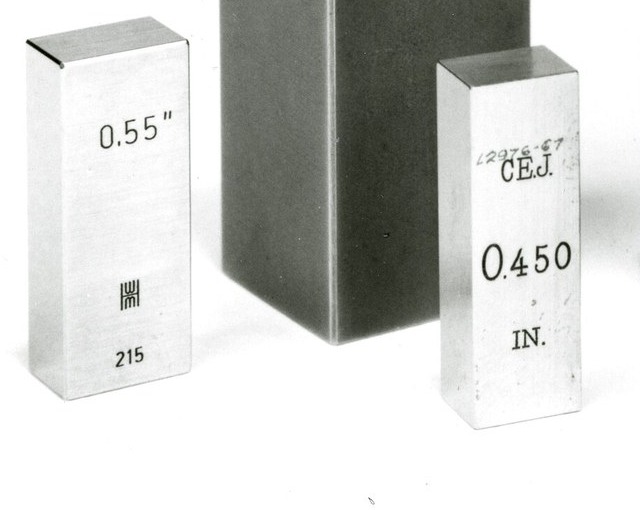


The Metre Defined by Light
For most of the nineteenth century the metre was a bar of metal in a vault outside Paris. Every other metre in the world was a copy of it, and every copy had to be carried back periodically and compared. If the bar had been destroyed the unit would have gone with it.
Michelson saw the way out almost as soon as he had built his interferometer. In 1892 and 1893 he measured the prototype metre against the red line of cadmium and found it to be 1,553,163.5 wavelengths — the first time a fundamental unit had been expressed in terms of a property of an atom rather than an object. It took another sixty-seven years for the definition to follow the measurement, but in 1960 the metre officially became 1,650,763.73 wavelengths of a krypton-86 transition. Nothing to store, nothing to lose, and any competent laboratory could now build the standard from scratch.
In 1983 it changed again and more radically. The metre is now the distance light travels in one 299,792,458th of a second, which makes the speed of light EXACT by definition and hands the realisation of length to the second — the most accurately realised unit there is. Measuring c more precisely is no longer possible in principle; a better measurement now refines the metre instead.
Every step of that is the instrument from blueprint 4. Lock a laser to an atomic transition, divide the exact c by its frequency to get an exact wavelength, and count fringes. The batch began by comparing a lens to a wave and ends with the metre itself defined that way.
Kati
3 hours
Maagizo
1
1
Measure a gauge block against light
Measure a gauge block against light
Mount a gauge block or a machined spacer so that moving your Michelson's mirror from one end to the other is a single continuous travel. Count the fringes across it.
Length equals fringes times half a wavelength. Then measure the same block with the micrometer and compare. Do not assume which one is wrong — that judgement is the next step.
Zana zinazohitajika:
 Maikromita ya skrubu
 Seti ya Meza ya Macho
 Kielekezi cha Leza
 Miwani ya Usalama ya Leza
 Seti ya vitalu vya kupima vya kauri
2
2
Find out which instrument is lying
Find out which instrument is lying
Warm the block in your hand for a minute and re-measure both ways. Steel expands about 11 parts per million per degree, so a 25 mm block grows about 0.3 micrometres per degree — one fringe of Michelson travel, and invisible on the micrometer.
That is the answer. The optical measurement is not more accurate in some abstract sense; it is sensitive enough to see that the QUESTION was underspecified, because a length without a temperature is not a length. Every gauge block is specified at exactly twenty degrees for this reason.
Zana zinazohitajika:
Maikromita ya skrubu Kipimajoto cha maabaraSeti ya Meza ya Macho
3
3
Four definitions, and the weak link
Four definitions, and the weak link
Inapakia daftari la Jupyter…
Zana zinazohitajika:
 Kompyuta ya mezani
4
4
Compendium: why the kilogram took until 2019
Compendium: why the kilogram took until 2019
THE PATTERN, AND THE ONE THAT RESISTED IT. Every base unit has moved the same way: from an artefact somebody owns, to a reproducible physical phenomenon, to a defined constant of nature. The metre made the last step in 1983. The kilogram held out until 2019, and the reason is that there is no convenient natural phenomenon with a mass — you cannot count wavelengths of mass. It took the Kibble balance, which weighs the artefact against electrical power measured through quantum effects, to fix the Planck constant and let the last physical prototype in the world be retired.
WHAT MICHELSON WAS ACTUALLY DOING IN 1892. Comparing a metre bar to a wavelength means counting about 1.5 million fringes without losing your place, so he built a chain: measure a short etalon against the cadmium line, then measure a longer one against the short one, and step up nine times. Every step is a comparison of two nearly equal lengths, which is the only kind of measurement that stays accurate. Modern length metrology does exactly the same thing, and calls it a step-gauge chain.
Zana Zinazohitajika
7- Kishikilia Nafasi
- Kishikilia Nafasi
- Kishikilia Nafasi
- Kishikilia Nafasi
- Kishikilia Nafasi
- Kishikilia Nafasi
- Kishikilia Nafasi
Blueprint zinazohusiana
Blueprint hizi zinashiriki maarifa — mbinu, vifaa au kanuni

CC0 Umma Wote
Mchoro huu umetolewa chini ya CC0. Uko huru kunakili, kubadilisha, kusambaza, na kutumia kazi hii kwa madhumuni yoyote, bila kuomba ruhusa.
Saidia Mtengenezaji kwa kununua bidhaa kupitia Mchoro wao ambapo wanapata Kamisheni ya Mtengenezaji iliyowekwa na Wachuuzi, au unda marudio mapya ya Mchoro huu na uiunganishe kama kiungo katika Mchoro wako kuchangia mapato.