SANAA
UREMBO NA USTAWI
UJANJA
UTAMADUNI NA HISTORIA
BURUDANI
MAZINGIRA
CHAKULA NA VINYWAJI
UHANDISI WA KINYUME
SAYANSI
MICHEZO
TEKNOLOJIA
VAZI
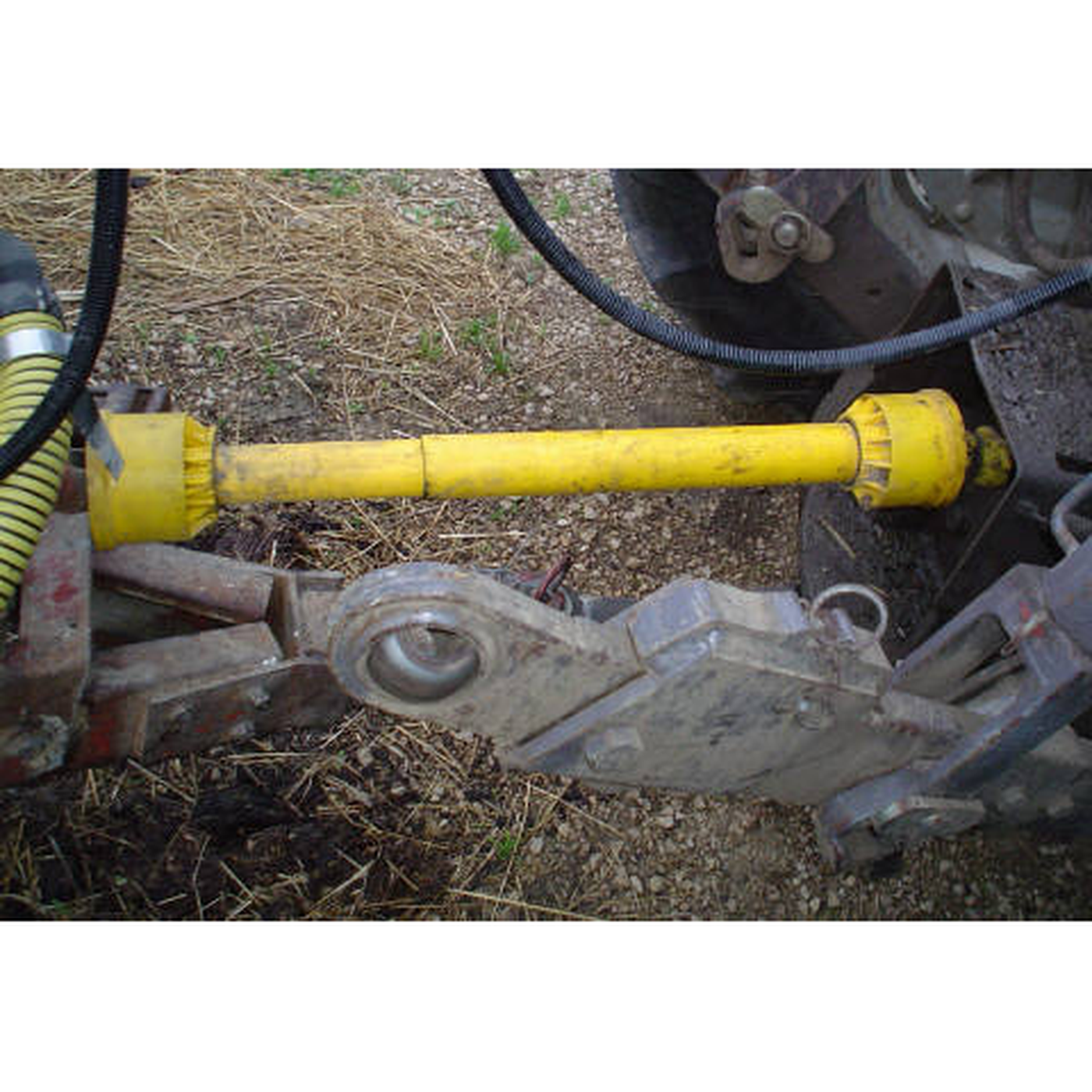


The Power Take-Off: Sending the Tractor's Engine Back Down a Shaft
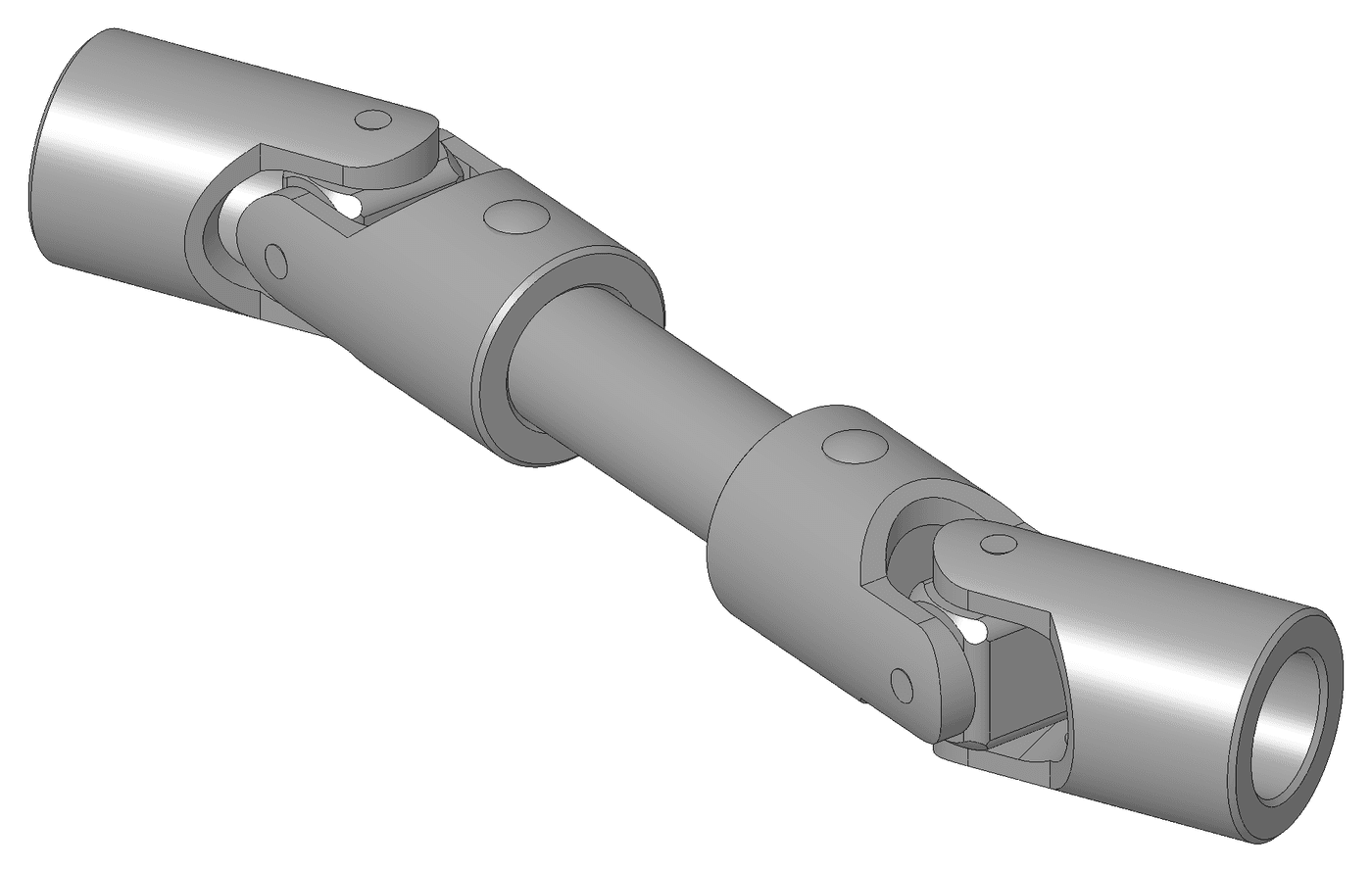
Early tractors pulled implements whose working parts were driven by their own ground wheels, which skidded in wet crops, or by a belt from a stationary flywheel. The power take-off (PTO) is a splined shaft at the back of the tractor, driven from the engine, that sends power down a telescoping shaft with a universal joint at each end to the implement behind.
International Harvester sold the first production tractor with one, the 8-16, in 1918; its engineer Edward A. Johnston had seen a home-made PTO in France about a decade before. In 1927 the American Society of Agricultural Engineers standardised it at about 540 rpm on a six-spline shaft, so any implement fitted any tractor.
This rung works out why the two universal joints must be phased, what the shaft carries, and how fast it can take a sleeve — then checks the phasing on the bench.
Kati
About 3 hours
Maagizo
1
1
Cardan joint speed, phasing, torque and entanglement
Cardan joint speed, phasing, torque and entanglement
Inapakia daftari la Jupyter…
2
2
Build the joint first
Build the joint first
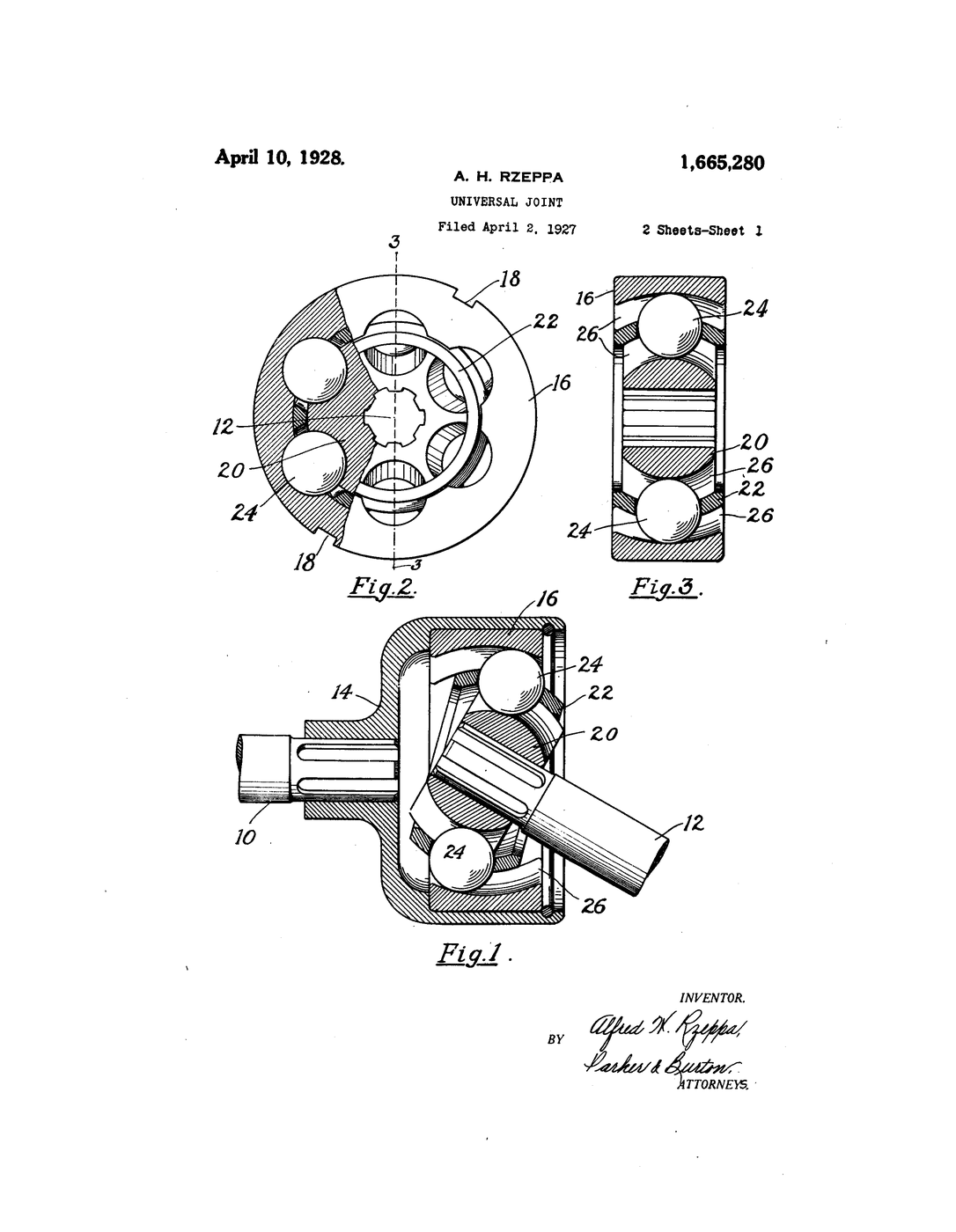
Each end of a PTO shaft is a Cardan joint. The embedded blueprint builds one and shows how its cross and yokes carry torque round a bend.
3
3
Measure the phasing error by hand
Measure the phasing error by hand
Clamp two bearings in line on a board and fit an input shaft with a paper protractor disc. Join it through two universal joints and a short intermediate shaft to an output shaft carrying a second protractor disc, in bearings set so each joint works at 20 degrees: the input and output shafts parallel but offset, like a tractor and an implement at different heights.
**In phase.** Line up the two yokes on the intermediate shaft in the same plane. Turn the input in 15-degree steps and read the output disc each time. Output follows input to within the reading error.
**Out of phase.** Loosen one yoke, turn it a quarter turn on the intermediate shaft, retighten, and repeat. Now the output leads and lags the input. Tabulate output minus input against input angle and compare with the notebook: the error peaks at 45, 135, 225 and 315 degrees.
Mark the yokes of a real PTO shaft the same way before you pull its halves apart, and put them back in line.
Vifaa kwa hatua hii:
 Seti ya viungio vya jumla1 kipande
 Fimbo ya chuma ghafi1 kipande
 Fani ya Mipira4 vipande
 Bati la mbao za kubandika1 kipande
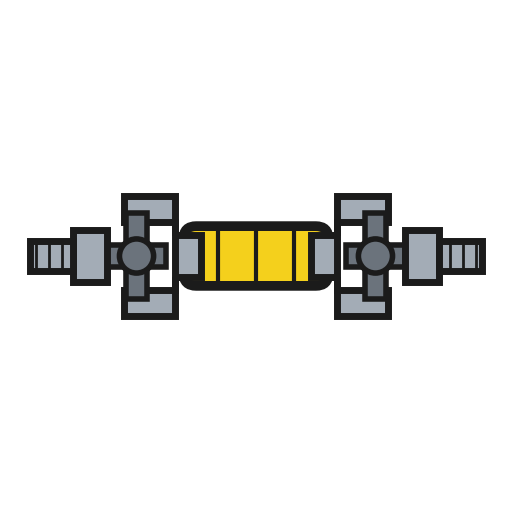 Shafti ya PTO ya trekta1 kipande
Zana zinazohitajika:
 Kipima-pembe
 Rula
Rula Kekee cha Betri
 Seti ya vichimbuzi
 Seti ya funguo za pembe sita
 Spana inayoweza kurekebishwa
4
4
A PTO driveline that shakes or breaks
A PTO driveline that shakes or breaks
Most PTO trouble traces to the shaft geometry or to what protects it.
Flow
Loading...
5
5
History and context
History and context
**International Harvester** put a PTO on its **8-16** tractor in 1918 and designed implements to use it. Engineer **Edward A. Johnston** had seen a home-made PTO in France about ten years earlier. In **April 1927** the ASAE adopted the first PTO standard: 536 ± 10 rpm (later 540), a 1 3/8-inch six-spline shaft on the tractor's centre line, 14 inches ahead of the drawbar pin hole. A 1000 rpm standard with a 21-spline shaft was added later for larger implements.
**Honest limits.** An unguarded PTO shaft is one of the most dangerous parts on a farm: the notebook shows it winds in clothing faster than anyone can react. Always keep the tractor's master shield and the shaft's own guard in place, and stop the engine before going near the shaft. Cardan joints also limit the working angle; wide-angle constant-velocity joints are used where the implement turns sharply.
Vifaa
5- Seti ya viungio vya jumlaKamisheni 10%1 kipandeKishikilia Nafasi
- 1 kipandeKishikilia Nafasi
- Kishikilia Nafasi
- 1 kipandeKishikilia Nafasi
- 1 kipandeKishikilia Nafasi
Zana Zinazohitajika
6- Kishikilia Nafasi
- Kishikilia Nafasi
- 1 vendor sell this, none ship to you yetKishikilia Nafasi
- Kishikilia Nafasi
- Kishikilia Nafasi
- Kishikilia Nafasi
Blueprint zinazohusiana
Blueprint hizi zinashiriki maarifa — mbinu, vifaa au kanuni


CC0 Umma Wote
Mchoro huu umetolewa chini ya CC0. Uko huru kunakili, kubadilisha, kusambaza, na kutumia kazi hii kwa madhumuni yoyote, bila kuomba ruhusa.
Saidia Mtengenezaji kwa kununua bidhaa kupitia Mchoro wao ambapo wanapata Kamisheni ya Mtengenezaji iliyowekwa na Wachuuzi, au unda marudio mapya ya Mchoro huu na uiunganishe kama kiungo katika Mchoro wako kuchangia mapato.