SANAA
UREMBO NA USTAWI
UJANJA
UTAMADUNI NA HISTORIA
BURUDANI
MAZINGIRA
CHAKULA NA VINYWAJI
UHANDISI WA KINYUME
SAYANSI
MICHEZO
TEKNOLOJIA
VAZI
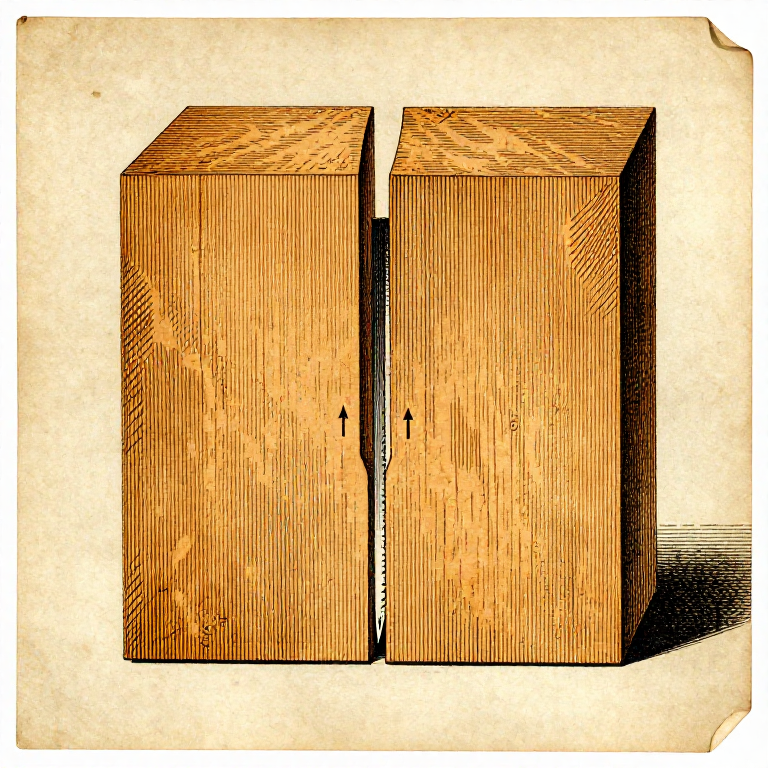


The Tooth and the Kerf: Why a Saw Cuts a Slot Wider Than Itself
A saw does not cut a line. It cuts a SLOT — the kerf — and that slot has to be wider than the blade, or the blade jams in its own cut.
Everything else follows. The teeth are bent alternately left and right, which is called SET, and the set is what makes the kerf wide. Too little and the saw binds; too much and it wanders, wastes wood and takes far more effort. It also means every cut loses a millimetre or two of material, which matters when you are cutting several pieces from one board.
331 published blueprints on Youblob list a saw among their tools, and until now not one explained how to use it. This is the first of eight rungs.
Mwanzo
2 hours
Maagizo
1
1
Sight down the teeth and see the set
Sight down the teeth and see the set
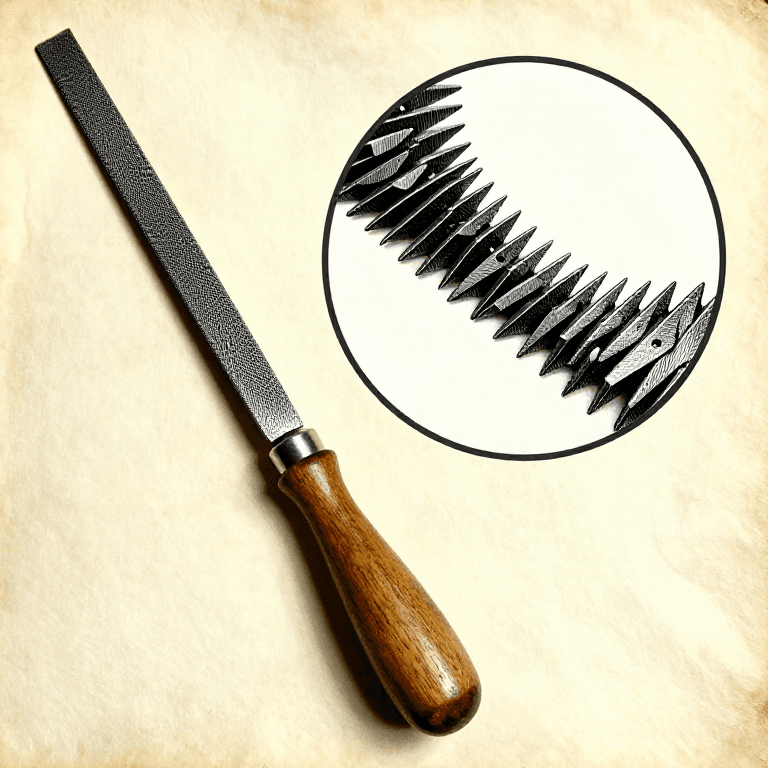
Hold a hand saw with the teeth pointing away from you and sight straight down the line of them, like looking down a rifle. The teeth are not in a single line — they zigzag, one leaning left, the next right.
Now look at the blade from the side. The body of the blade is thinner than the width that zigzag spans. That difference is the whole reason a saw works: the teeth cut a slot wider than the steel behind them, so the steel runs free.
A blade with no set at all will cut for a centimetre and then seize solid, because the wood closes on it. The exceptions prove the point: a Japanese pull saw has very little set and gets away with it because it cuts on the PULL, so the blade is in tension and cannot buckle.
Zana zinazohitajika:
 Msumeno wa mkono
 Msumeno wa Kijapani wa kuvuta
 Lupu ya Kukuza
2
2
Count the teeth: TPI decides speed against finish
Count the teeth: TPI decides speed against finish
Lay a rule on the blade and count the teeth in one inch. A coarse rip saw has four or five; a tenon saw has fourteen; a hacksaw blade for thin tube has thirty-two.
Fewer, bigger teeth each take a bigger bite, so the saw cuts fast and leaves a rough edge. More, smaller teeth cut slowly and leave a clean one. There is no setting that is simply better — the choice is the same speed-against-finish trade the sharpening grit progression makes, and for the same reason.
The other thing TPI decides is what the saw can cut at all, which the hacksaw rung takes up: too few teeth for the material's thickness and the teeth straddle it, catch, and snap off.
Zana zinazohitajika:
Msumeno wa mkono Msumeno wa mgongo
 Msumeno wa chuma
 Rula ya kunyoosha
3
3
What the kerf costs you
What the kerf costs you
Inapakia daftari la Jupyter…
Zana zinazohitajika:
 Kikokotoo
 Kalipa ya Vernier
4
4
The kerf has a side, and you must choose it
The kerf has a side, and you must choose it
Because the kerf has width, the blade must run entirely on the WASTE side of your line. Cut down the middle of the line and the piece ends up half a kerf short.
Decide which side is waste before the saw touches the wood, and mark it — a scribble of pencil on the offcut side takes a second and is unambiguous. On a cutting list where several pieces come from one board, the waste side alternates, and this is exactly where people lose a piece.
The disciplined version is to leave the line visible on the piece you are keeping. That is the same rule as filing to a line, and for the same reason: material can come off afterwards, and it cannot go back on.
Vifaa kwa hatua hii:
 Ubao wa Mti Laini Uliokauka1 kipande
Zana zinazohitajika:
 Kipima pembe cha nyuzi tisiniMsumeno wa mkono
Vifaa
1- 1 kipandeKishikilia Nafasi
Zana Zinazohitajika
9- Kishikilia Nafasi
- Kishikilia Nafasi
- Kishikilia Nafasi
- Kishikilia Nafasi
- Kishikilia Nafasi
- Kishikilia Nafasi
- Kishikilia Nafasi
- Kishikilia Nafasi
- Kishikilia Nafasi
Blueprint zinazohusiana
Blueprint hizi zinashiriki maarifa — mbinu, vifaa au kanuni
CC0 Umma Wote
Mchoro huu umetolewa chini ya CC0. Uko huru kunakili, kubadilisha, kusambaza, na kutumia kazi hii kwa madhumuni yoyote, bila kuomba ruhusa.
Saidia Mtengenezaji kwa kununua bidhaa kupitia Mchoro wao ambapo wanapata Kamisheni ya Mtengenezaji iliyowekwa na Wachuuzi, au unda marudio mapya ya Mchoro huu na uiunganishe kama kiungo katika Mchoro wako kuchangia mapato.