

The Tunnel Shield
Soft ground has no roof. Dig a tunnel through clay, sand or silt and there is nothing overhead to arch across the hole — the ground simply comes down, and in waterlogged ground it comes down as a flood. Before 1818 no soft-ground tunnel under a river had ever been finished. Several had been started.
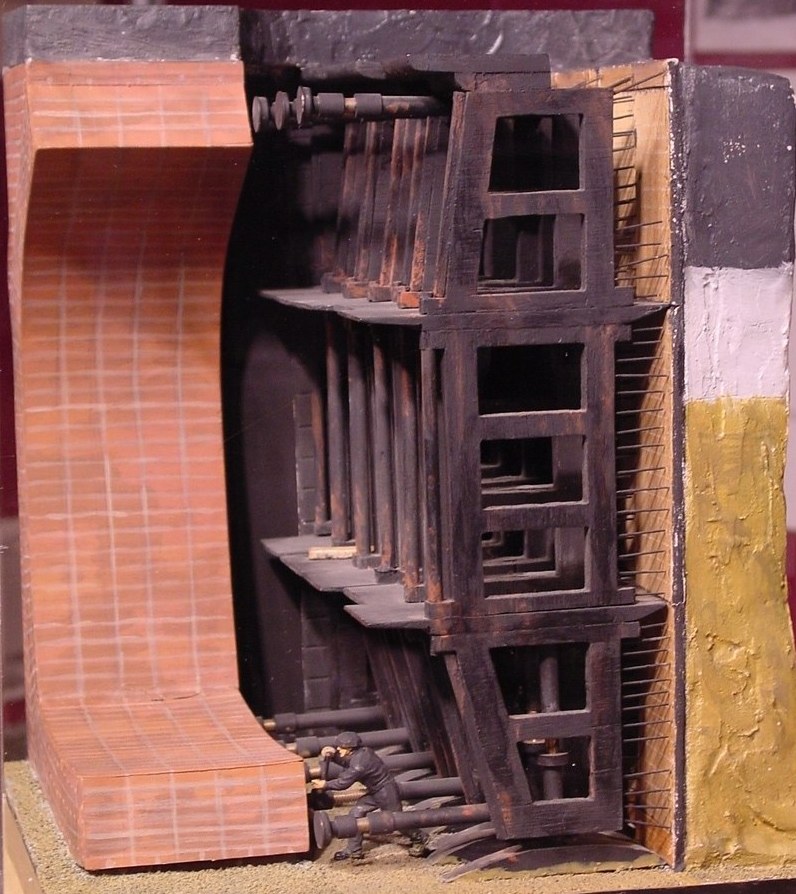
The invention is a moving box that holds the ground open in the gap between the digging face and the permanent lining. Miners work inside the shield, taking the face down a few centimetres at a time behind boards that can be closed at once if the ground runs. Then the whole shield is jacked forward into the space they made, and another ring of lining is built in the tail behind it. The ground is never unsupported anywhere.
Marc Isambard Brunel patented it in January 1818 — British patent 4204, "Forming tunnels or drifts underground" — and the idea came from watching Teredo navalis, the shipworm, which bores through ship timber behind a hard shield on its head and lines the bore behind itself as it goes. The Thames Tunnel began in 1825 and opened in 1843, and it very nearly killed everyone involved.
The step that made it routine came later, and it is not the shield. The shield's skin is thicker than nothing, so it leaves an annular gap — the tail void — behind every ring of lining. Fill that gap and the ground above stays where it is. Leave it and the ground closes it for you, which means the surface drops. James Henry Greathead supplied the missing piece on the Tower Subway in 1869: grout, injected under pressure into the void.
Drive a tunnel through a box of damp sand and measure what happens to the surface.
Maagizo
Build a ground box with a face you can see
Build a ground box with a face you can see
Make a box with one clear side. Fill it with damp sand in compacted layers, to a depth of at least three tunnel diameters above the crown of your intended tunnel.
Rule a grid of fine lines on the sand against the clear side, and mark the surface at 20 mm intervals.
The grid is the instrument. Everything this blueprint measures is how those lines move.
Vifaa kwa hatua hii:
 Mchanga Mgumu (Ujenzi/Ufinyanzi)15 kg
Zana zinazohitajika:
 Tepi ya kupimia
Dig without a shield, once
Dig without a shield, once
Bore a horizontal hole into the sand with a tube and pull the tube straight back out, leaving an open bore.
Expect the bore to collapse within seconds, and the surface directly above it to drop.
This is the baseline, and it is the reason for everything that follows. Soft ground does not hold a hole open even for the length of time it takes to line it.
Make the shield and the lining rings
Make the shield and the lining rings
Cut a short section of rigid tube as the shield — one and a half diameters long. Cut a second tube of slightly smaller diameter into rings; these are the lining.
Measure the difference between the shield's outside diameter and the lining's outside diameter, and write it down.
That difference is the tail void, and it is the whole subject of steps 5 and 6.
Vifaa kwa hatua hii:
 Kiungio cha kufurika cha PVC2 vipande
Zana zinazohitajika:
 Msumeno wa chuma
 Kipima-unene cha dijitali cha inchi 6
Drive the shield in cycles
Drive the shield in cycles
Push the shield in one shield-length. Excavate only the sand inside it, never ahead of the cutting edge. Push it forward again by one ring width and build a ring of lining into the space left in the tail.
Repeat: excavate, shove, build. Never two at once.
The cycle is the safety system. Every excavation happens inside steel, and every advance is immediately backed by lining.
Zana zinazohitajika:
 Kijiti cha mbao (dauli)
Measure the settlement trough
Measure the settlement trough
With the drive finished and the tail void left open, measure the height of every surface mark against its original level. Plot height against distance across the tunnel.
Expect a smooth trough, deepest over the centreline and tailing off to either side — not a local hole.
Ground loss at the tunnel propagates upward and spreads out. A few millimetres lost at the shield becomes a wide, shallow dish at the surface, which is what damages buildings that are nowhere near the tunnel.
Zana zinazohitajika:
Kipima-unene cha dijitali cha inchi 6 Karatasi ya gridi
Grout the tail void and repeat
Grout the tail void and repeat
Rebuild the bed and drive a second tunnel. This time, as each ring leaves the tail, inject a thin mortar slurry into the annular gap through a syringe until it refuses.
Measure the surface again and plot both troughs on the same axes.
Expect the grouted trough to be markedly shallower.
Greathead's grout is not a finishing operation, it is the settlement control. The shield stops the tunnel collapsing; the grout stops the city above it sinking.
Vifaa kwa hatua hii:
 Mchanganyiko wa chokaa1 kg
Zana zinazohitajika:
 Seti ya sindano za kunyonya
History & Context
History & Context
The shipworm story is true and is in the patent's own logic. Teredo navalis destroys ship timber by boring with a pair of hard shelly plates on its head, and it lines the bore behind itself with a calcareous tube as it advances. Brunel, who had worked with ships' timber, took both halves: a hard shield at the face, and a permanent lining built immediately behind it. British patent 4204 of January 1818 actually describes two schemes — one built around a central auger, and one showing a shield divided into cells, one miner to a cell. It was the cellular shield that was built.
The Thames Tunnel cost eighteen years and a great deal more than money. Begun in 1825, it flooded repeatedly from the riverbed above — the cover was thin and the ground was worse than surveyed. Isambard Kingdom Brunel nearly drowned in the 1828 irruption that killed six men; work stopped for seven years for want of funds and restarted in 1835. It opened in 1843 as a foot tunnel, was widely considered a commercial failure, and today carries the London Overground — the oldest tunnel under a navigable river anywhere, still in daily service.
Brunel's shield was rectangular, and that was the problem. A rectangle in soft ground is fighting the pressure field; a circle is the shape the ground itself wants. Peter W. Barlow patented a circular cast-iron shield in 1864, and again in 1868, but never built one. On the Tower Subway of 1869, Barlow was the engineer and James Henry Greathead ran the drive with a cylinder 7 ft 3 in (2.21 m) across, jacked forward on screws, with cast-iron segments bolted up behind it. Greathead added what Barlow's patent had left unexplained — how to fill the gap between the lining and the ground — and pressure grouting is his. The result, the Greathead shield, went on to bore the London Underground's deep tube lines and is the direct ancestor of every tunnel boring machine working today.
Compressed air and the shield were often used together, the shield holding the ground and the air holding back the water — which puts the tunnel workforce squarely into the caisson-disease problem covered elsewhere in this batch. Modern closed-face machines removed the need for both, by pressurising only the small chamber at the face — earth-pressure balance or slurry — so nobody works in pressure at all. The engineering did not get braver; it got better at keeping people out of the dangerous part.
The honest limits. A shield is a soft-ground tool: in strong rock it is unnecessary and a plain bored heading is cheaper. Settlement is never zero, only managed, and the acceptable figure is set by what is on the surface — a park tolerates what a Victorian terrace does not. Mixed face conditions, half rock and half sand across the same cutting edge, are the classic way to jam or steer a shield off line. And a shield cannot be reversed: it is built to advance, so an obstruction ahead of it has to be dealt with from inside the face, which is exactly the situation the shield exists to avoid.
Vifaa
3- Kishikilia Nafasi
- 2 vipandeKishikilia Nafasi
- Kishikilia Nafasi
Zana Zinazohitajika
6- 1 vendor sell this, none ship to you yetKishikilia Nafasi
- Kishikilia Nafasi
- Kishikilia Nafasi
- Kishikilia Nafasi
- Kishikilia Nafasi
- Kishikilia Nafasi
Vifaa vya Michoro Iliyounganishwa
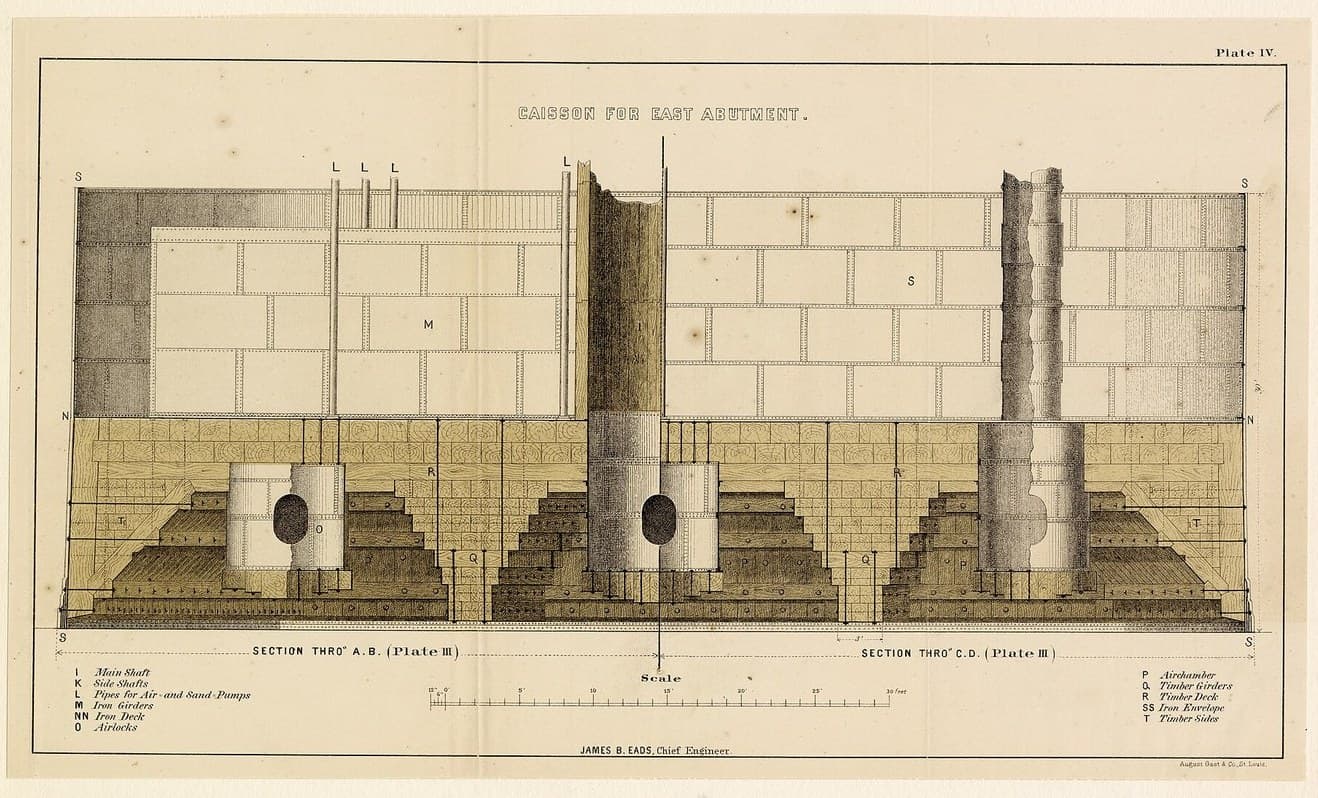

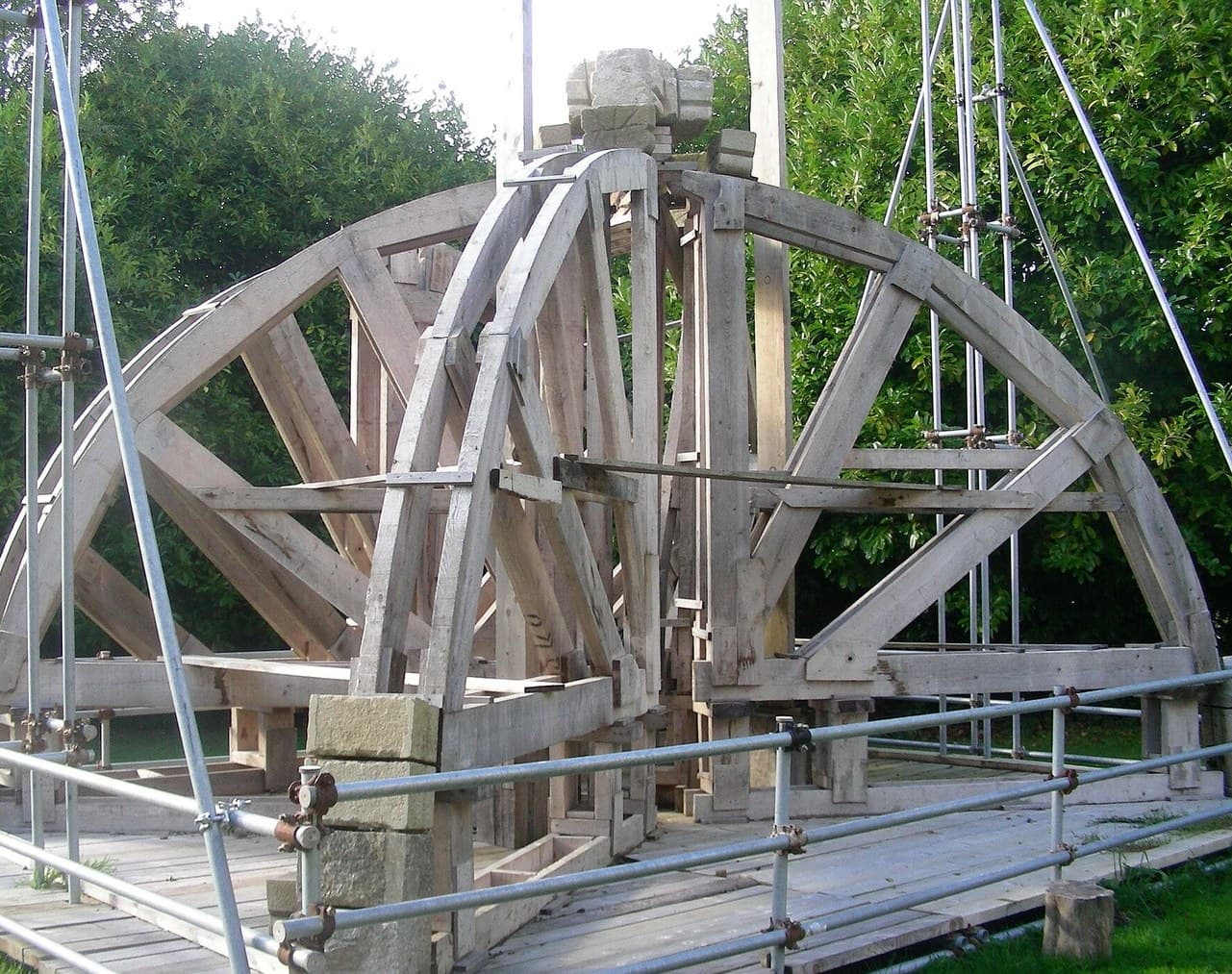
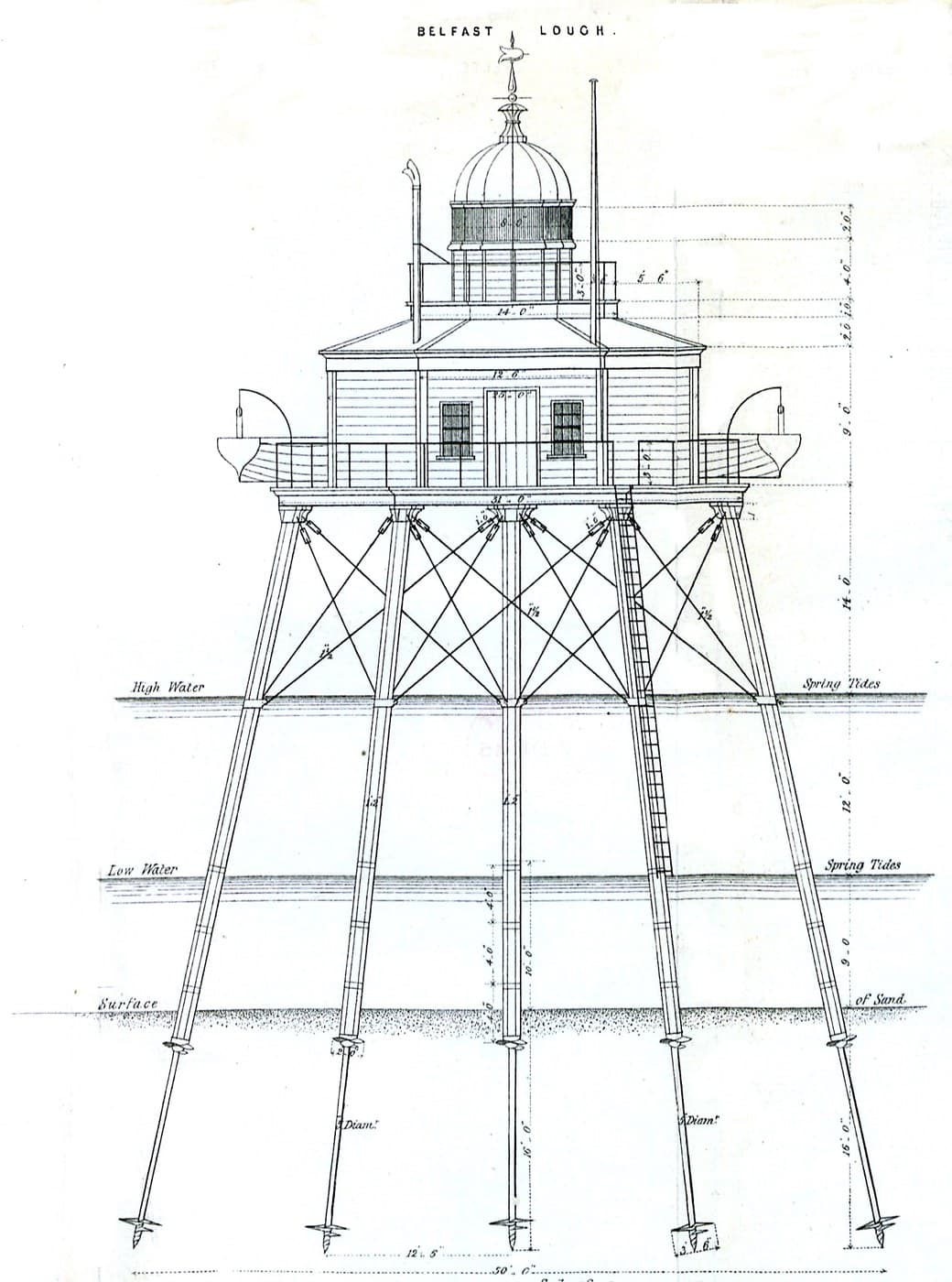
Blueprint zinazohusiana
Blueprint hizi zinashiriki maarifa — mbinu, vifaa au kanuni



CC0 Umma Wote
Mchoro huu umetolewa chini ya CC0. Uko huru kunakili, kubadilisha, kusambaza, na kutumia kazi hii kwa madhumuni yoyote, bila kuomba ruhusa.
Saidia Mtengenezaji kwa kununua bidhaa kupitia Mchoro wao ambapo wanapata Kamisheni ya Mtengenezaji iliyowekwa na Wachuuzi, au unda marudio mapya ya Mchoro huu na uiunganishe kama kiungo katika Mchoro wako kuchangia mapato.