
Understanding Zirconium from Zircon — The Ancient Gemstone That Clocks Earth's Age
Zirconium (Zr, element 40) takes its name from zircon (ZrSiO₄), a mineral known since antiquity as a gemstone. The name ultimately derives from Arabic zarqūn or Persian zargun ('gold-colored'), describing the mineral's common yellow-brown hue. Zircon has been prized as a gemstone for centuries — medieval jewelers distinguished it as 'hyacinth' (red-orange) or 'jargon' (colorless).
Martin Heinrich Klaproth — who also discovered uranium and titanium — identified the element zirconium in zircon in 1789. Jöns Jacob Berzelius first isolated impure metallic zirconium in 1824 by reducing potassium fluorozirconate (K₂ZrF₆) with potassium metal. Pure, ductile zirconium was not produced until 1925 by Anton Eduard van Arkel and Jan Hendrik de Boer using the crystal bar process (thermal decomposition of ZrI₄).
Zircon's greatest scientific contribution is as Earth's oldest clock. Zircon crystals are extraordinarily durable — they resist weathering, metamorphism, and even melting — and they incorporate trace uranium at the time of crystallization. The uranium-lead dating of zircon crystals has determined Earth's age (4.54 billion years) and provides the timeline for virtually all of deep Earth history. The oldest known terrestrial material is a detrital zircon crystal from Jack Hills, Western Australia, dated at 4.374 billion years.
NOTE: Zirconium cannot be extracted by carbon reduction. Like titanium, it forms carbides rather than metal when heated with carbon. This blueprint is educational, focusing on zircon identification, geochronology, and zirconium's nuclear applications.
Maagizo
Understand zirconium's properties and nuclear significance
Understand zirconium's properties and nuclear significance
Zirconium (Zr, element 40) is a lustrous, greyish-white transition metal with a density of 6.52 g/cm³, melting point of 1855 °C, and Mohs hardness of 5. It is in Group 4 alongside titanium and hafnium. Like titanium, zirconium is remarkably corrosion-resistant — it forms a tenacious, self-healing oxide layer (ZrO₂) that protects against attack by most acids, alkalis, and seawater.
Zirconium's most critical application is in nuclear reactor fuel cladding. The tubes that contain uranium fuel pellets in most water-cooled reactors are made of zirconium alloys (Zircaloy-2, Zircaloy-4). Zirconium was chosen because it has an extremely low neutron absorption cross-section — it is nearly 'transparent' to thermal neutrons, allowing the nuclear chain reaction to proceed efficiently while providing a strong, corrosion-resistant containment for the fuel. No other structural metal combines such low neutron absorption with such good mechanical and corrosion properties.
The major complication: natural zirconium ore always contains 1–3% hafnium (Hf, element 72), and hafnium has a neutron absorption cross-section approximately 600 times higher than zirconium. For nuclear applications, the hafnium must be almost completely removed — a separation so difficult that it was one of the major challenges of early nuclear engineering. The separated hafnium is itself valuable as a neutron absorber for reactor control rods.
Identify zircon in the field
Identify zircon in the field
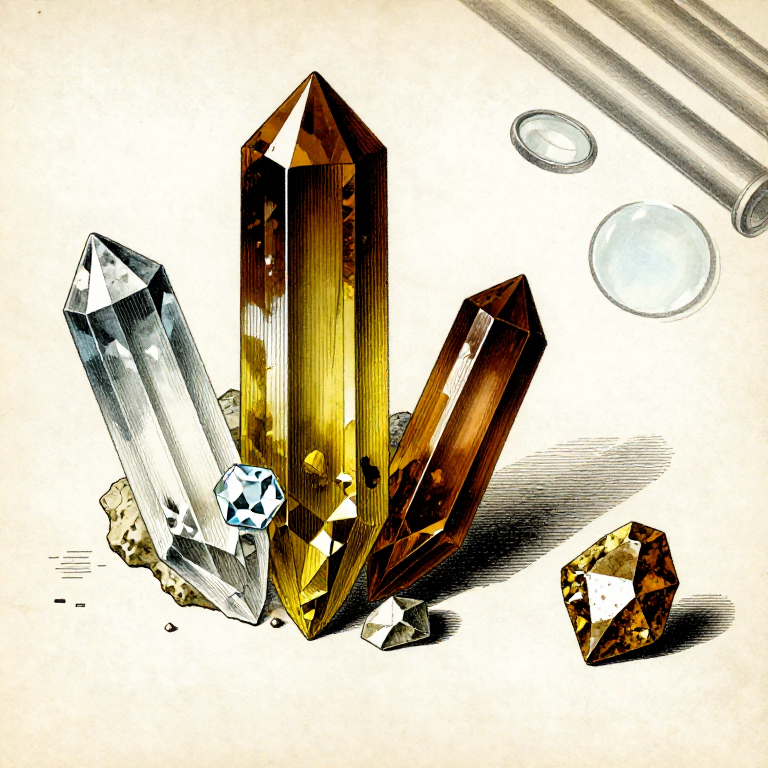
Zircon (ZrSiO₄) is a tetragonal mineral forming stubby, prismatic crystals with a characteristic square cross-section and pyramidal terminations. Key identification features: Mohs hardness 7.5 (very hard — it scratches quartz), specific gravity 4.6–4.7 (notably heavy for a non-metallic mineral), adamantine to vitreous luster, and a white streak. Colors range from colorless through yellow, orange, red, brown, to green, depending on trace impurities and radiation damage.
Zircon is one of the most common accessory minerals in igneous rocks — nearly every granite, diorite, and gneiss contains zircon, though usually as tiny crystals (0.1–0.5 mm) visible only under magnification. Larger gem-quality zircon (1–10+ carats) comes primarily from gem gravels in Sri Lanka, Cambodia, Myanmar, and Tanzania. Detrital zircon — grains eroded from their source rocks and concentrated in sediments — is found in virtually all beach and river sand deposits worldwide.
Zircon is easily collected from heavy mineral concentrates (the same black sand deposits that contain ilmenite, magnetite, and gold). Its high density (4.6–4.7) concentrates it in the heaviest fraction of panned sediment, and its characteristic stubby crystal shape and adamantine luster distinguish it from other heavy minerals under a hand lens.
Vifaa kwa hatua hii:
 Sampuli ya zirkoni
Zana zinazohitajika:
 Nyundo ya jiolojia
 Kioo cha kukuza cha mkono 10x
 Sinia ya kuosha dhahabu
 Sumaku NdogoKioo cha kukuza cha mkono 10x
 Bamba la mstari (kaure isiyong'arishwa)
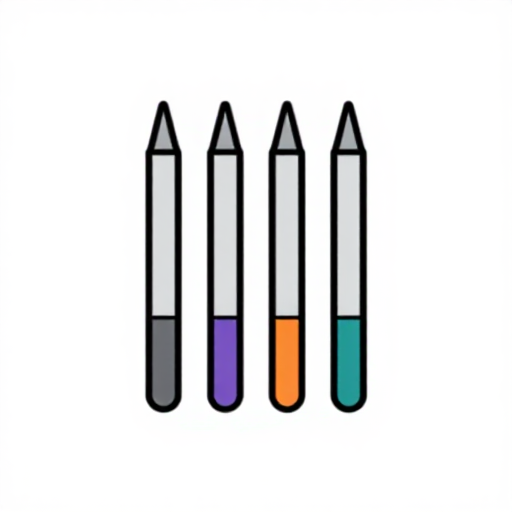 Ncha za Ugumu wa Mohs
Understand zircon as Earth's oldest clock
Understand zircon as Earth's oldest clock
Zircon is the foundation of geochronology — the science of dating rocks and geological events. When zircon crystallizes from magma, it incorporates trace amounts of uranium (U) into its crystal structure but strongly excludes lead (Pb). Over time, the uranium decays to lead through a known, constant rate: ²³⁸U → ²⁰⁶Pb (half-life 4.47 billion years) and ²³⁵U → ²⁰⁷Pb (half-life 704 million years). By measuring the ratio of uranium to lead in a zircon crystal, its crystallization age can be calculated.
Two independent decay chains (²³⁸U/²⁰⁶Pb and ²³⁵U/²⁰⁷Pb) provide a built-in cross-check — the 'concordia' method. If both systems give the same age, the date is considered reliable. If they disagree, it indicates the crystal has been disturbed (by metamorphism, for example), and the pattern of discordance itself provides information about when the disturbance occurred.
The oldest known material on Earth is a detrital zircon crystal from the Jack Hills metaconglomerate in Western Australia, dated at 4.374 ± 0.006 billion years — formed only approximately 160 million years after Earth's formation. This single tiny crystal (about 0.4 mm long) provides evidence that Earth had solid crust, liquid water, and a geochemical cycle functioning within its first few hundred million years — overturning previous assumptions about the early Earth being entirely molten.
Understand zirconium extraction — why carbon fails again
Understand zirconium extraction — why carbon fails again
Zirconium shares titanium's fundamental extraction problem: ZrO₂ is too thermodynamically stable for carbon reduction. Heating zirconium oxide with carbon produces zirconium carbide (ZrC, an extremely hard ceramic, Mohs 8.5) rather than metallic zirconium. The Ellingham diagram places ZrO₂ below the CO line at all practical temperatures.
Commercial zirconium production follows a similar path to titanium. First, zircon sand is chlorinated: ZrSiO₄ + 4Cl₂ + 4C → ZrCl₄ + SiCl₄ + 4CO. The volatile ZrCl₄ (sublimes at 331 °C) is separated from SiCl₄ by fractional distillation. Then, ZrCl₄ is reduced by magnesium metal (Kroll process, identical to titanium): ZrCl₄ + 2Mg → Zr + 2MgCl₂. The product is zirconium sponge, consolidated by vacuum arc melting.
The hafnium separation step (required for nuclear-grade zirconium) uses liquid-liquid extraction with thiocyanate solutions or fractional distillation of the chlorides — both exploit subtle differences in the chemistry of zirconium and hafnium, which are among the most chemically similar element pairs in the periodic table. Zirconium and hafnium always occur together in nature because they have nearly identical ionic radii and charge.
Understand cubic zirconia — the diamond simulant
Understand cubic zirconia — the diamond simulant
Cubic zirconia (CZ) — stabilized cubic zirconium dioxide (ZrO₂) — is the world's most popular diamond simulant. Pure ZrO₂ is monoclinic at room temperature, but adding 8–10% yttrium oxide (Y₂O₃) stabilizes the cubic crystal structure, producing a colorless, highly refractive (RI 2.15–2.18, versus diamond's 2.42), dense (SG 5.6–6.0) crystal with a hardness of 8–8.5 on the Mohs scale.
Cubic zirconia was first synthesized in the Soviet Union in the 1970s using a skull crucible method — ZrO₂ melts at 2750 °C, which is too hot for any conventional crucible material. The skull method uses radiofrequency induction heating to melt the interior of a mass of ZrO₂ powder while the outer layer remains solid, forming its own 'skull' crucible. This ingenious technique allowed production of large, gem-quality CZ crystals for the first time.
CZ is often confused with zircon (the natural mineral ZrSiO₄), but they are completely different materials. Zircon is a natural silicate mineral; cubic zirconia is a synthetic oxide. Zircon has lower refractive index (1.92–1.98) and is softer (Mohs 7.5) than CZ. Both are legitimate gemstones in their own right — natural zircon's brilliance and fire rival many precious stones, and its ancient history as the gemstone 'hyacinth' predates modern synthetic alternatives by millennia.
Document findings and collect zircon specimens
Document findings and collect zircon specimens
Document your observations of any zircon specimens collected: crystal form (tetragonal prism with pyramid), color, luster (adamantine — very bright, almost diamond-like), hardness (scratches quartz), density (noticeably heavy), and any fluorescence under UV light (some zircons fluoresce yellow). If collecting from heavy mineral concentrates, note the relative abundance of zircon versus other heavy minerals (ilmenite, magnetite, rutile).
Zircon is safe to handle — the trace uranium content in most zircon crystals produces negligible radiation. Heavily metamict zircon (radiation-damaged, often green or brown, with lowered density and hardness) contains more uranium and should be handled briefly and stored in a sealed container, but even these specimens are not hazardous for mineral collections.
Zirconium's story connects ancient gemology (hyacinth, known for over 2,000 years) through 18th-century analytical chemistry (Klaproth, 1789) to nuclear physics (reactor fuel cladding) to Earth's deepest history (Jack Hills zircon, 4.37 billion years). The mineral zircon — a common, overlooked grain in beach sand — is simultaneously one of humanity's oldest gemstones and the key to measuring the age of the planet itself.
Zana zinazohitajika:
 Chupa Ndogo ya Kioo ya SampuliKioo cha kukuza cha mkono 10x
Ore grade: how much zircon per kilogram
Ore grade: how much zircon per kilogram
Vifaa
1- 1 kipandeKishikilia Nafasi
Zana Zinazohitajika
7- Kishikilia Nafasi
- Kishikilia Nafasi
- Kishikilia Nafasi
- Kishikilia Nafasi
- Kishikilia Nafasi
- Kishikilia Nafasi
- Kishikilia Nafasi
CC0 Umma Wote
Mchoro huu umetolewa chini ya CC0. Uko huru kunakili, kubadilisha, kusambaza, na kutumia kazi hii kwa madhumuni yoyote, bila kuomba ruhusa.
Saidia Mtengenezaji kwa kununua bidhaa kupitia Mchoro wao ambapo wanapata Kamisheni ya Mtengenezaji iliyowekwa na Wachuuzi, au unda marudio mapya ya Mchoro huu na uiunganishe kama kiungo katika Mchoro wako kuchangia mapato.