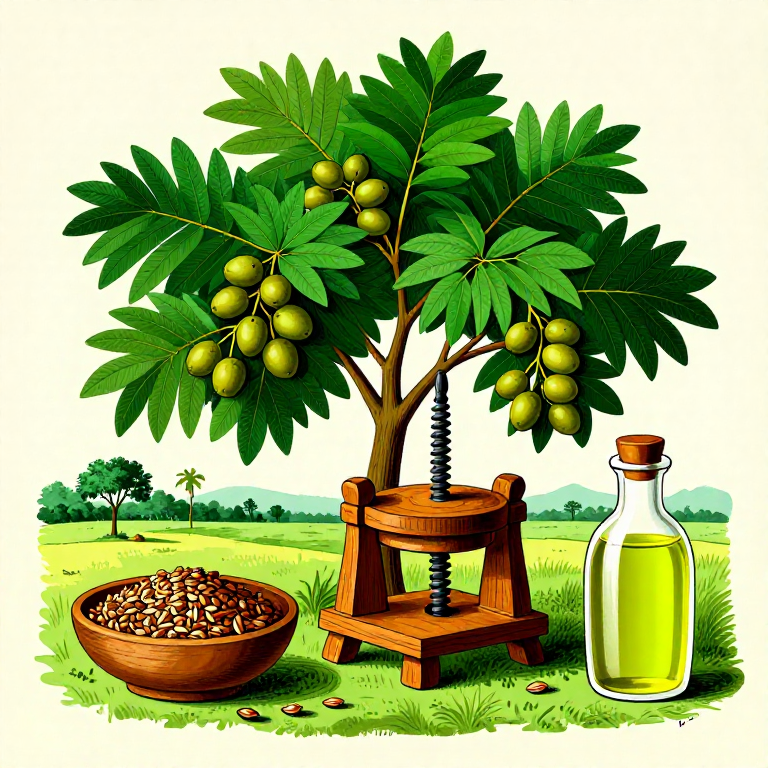


వేప విత్తనాల నూనె తీయడం — ఆంధ్రప్రదేశ్ సంప్రదాయ చల్లని ఒత్తిడి పద్ధతి
ఆంధ్రప్రదేశ్లో వేప చెట్ల (Azadirachta indica) విత్తనాల నుండి చల్లని ఒత్తిడి పద్ధతిలో వేప నూనె తీయడానికి సంపూర్ణ మార్గదర్శి. వేప చెట్టు దక్షిణ ఆసియా స్వదేశీ వృక్షం, భారతదేశమంతటా — ముఖ్యంగా ఆంధ్రప్రదేశ్, తెలంగాణ, కర్ణాటక, తమిళనాడులో — విస్తారంగా పెరుగుతుంది. వేప విత్తనాలను జూన్-ఆగస్టు నెలల్లో రాలిన పళ్ల నుండి సేకరిస్తారు. చల్లని ఒత్తిడి (cold-pressing) పద్ధతి అజాడిరాక్టిన్ (0.2-0.6%) వంటి జీవ సక్రియ సమ్మేళనాలను భద్రపరుస్తుంది — ఇది సహజ పురుగుమందుగా 4,000 సంవత్సరాలకు పైగా వాడబడుతోంది. ఈ బ్లూప్రింట్ పండు సేకరణ, గుజ్జు తొలగించడం, విత్తనాలు ఆరబెట్టడం, గింజలు వేరు చేయడం, చల్లని ఒత్తిడి, వడపోత, నాణ్యత పరీక్ష, నిల్వ వరకు అన్ని దశలను కవర్ చేస్తుంది.
Maagizo
వేప చెట్టు గురించి తెలుసుకోవడం (Azadirachta indica)
వేప చెట్టు గురించి తెలుసుకోవడం (Azadirachta indica)
వేప (Azadirachta indica, Meliaceae కుటుంబం) భారత ఉపఖండం మూలస్థానమైన సదాపచ్చ (evergreen) వృక్షం. ఈ చెట్టు 15-20 మీటర్ల ఎత్తుకు పెరుగుతుంది, విశాలమైన, దట్టమైన పందిరి ఆకారపు ఆకుపచ్చ కొమ్మలతో ఉంటుంది. ఆకులు పిన్నేట్ (compound) రకం, 20-40 సెం.మీ. పొడవు, ప్రతి ఆకులో 8-19 చిన్న ఆకుపత్రాలు (leaflets) ఉంటాయి. ఈ ఆకుపత్రాలకు రంపపు పళ్ల అంచులు ఉంటాయి. చెట్టు మార్చి-మే మధ్య తెల్లటి, సువాసన గల పూలు పూస్తుంది. పళ్ళు మే-ఆగస్టు మధ్య పక్వానికి వస్తాయి — ఆకుపచ్చ రంగు నుండి పసుపు-ఆకుపచ్చగా మారతాయి. ప్రతి పండు 1-2 సెం.మీ. పొడవు గల అండాకార డ్రూప్ (drupe), లోపల ఒక గట్టి గింజ (seed kernel) ఉంటుంది. ఒక పరిణత చెట్టు సంవత్సరానికి 30-50 కేజీల పళ్లు ఇస్తుంది. వేపలో 300కు పైగా జీవ సక్రియ సమ్మేళనాలు ఉన్నాయి, వాటిలో అజాడిరాక్టిన్ (azadirachtin) అత్యంత ముఖ్యమైనది — ఇది శక్తివంతమైన సహజ పురుగు నిరోధక రసాయనం.
వేప పళ్ల సేకరణ కాలాన్ని గుర్తించడం
వేప పళ్ల సేకరణ కాలాన్ని గుర్తించడం
ఆంధ్రప్రదేశ్లో వేప పళ్ళు జూన్ నుండి ఆగస్టు మధ్య పక్వమై రాలుతాయి — ఇది ఋతుపవనాల (monsoon) ప్రారంభ సమయం. పక్వమైన పళ్ళు ఆకుపచ్చ నుండి పసుపు-ఆకుపచ్చగా మారి సహజంగా రాలుతాయి. రాలిన పళ్ళ గుజ్జు మెత్తగా, తీయగా ఉంటుంది — పక్షులు, గబ్బిలాలు ఈ గుజ్జును తింటాయి, గింజలను వ్యాప్తి చేస్తాయి. సేకరణకు ఉత్తమ సమయం ఉదయం తొలి వేళలో, రాత్రి రాలిన తాజా పళ్ళను ఏరడం. రాలిన తర్వాత 2-3 రోజులకు మించి భూమి మీద ఉన్న పళ్ళు కుళ్ళడం ప్రారంభిస్తాయి — కుళ్ళిన గుజ్జు గింజ నాణ్యతను తగ్గిస్తుంది. వేప చెట్లు రోడ్ల పక్కన, పొలాల గట్ల మీద, గ్రామాలలో సహజంగా పెరుగుతాయి — ఆంధ్రప్రదేశ్ పల్లెలలో ప్రతి గ్రామంలో పది నుండి వందల వేప చెట్లు ఉంటాయి.
పళ్ల సేకరణ పద్ధతి
పళ్ల సేకరణ పద్ధతి
ఉదయం 6:00-9:00 మధ్య సేకరణ ప్రారంభించండి. చెట్టు క్రింద రాలిన పసుపు-ఆకుపచ్చ పళ్లను ఏరుకోండి. పచ్చగా ఉన్న (పక్వం కాని) పళ్లు వదిలేయండి — వాటిలో గింజ పూర్తిగా ఏర్పడదు, నూనె శాతం తక్కువగా ఉంటుంది. నల్లగా, కుళ్ళిపోయిన పళ్లను కూడా వదిలేయండి. ఒక వ్యక్తి రోజుకు 15-25 కేజీల పళ్లు సేకరించగలరు. సేకరించిన పళ్లను గోనె సంచిలో నింపండి — ప్లాస్టిక్ సంచిలో కట్టవద్దు, ఎందుకంటే తేమ బంధించబడి కుళ్ళు ప్రారంభమవుతుంది. సంచిని మూడొంతుల కంటే ఎక్కువ నింపవద్దు, అడుగున ఉన్న పళ్ళు నలిగిపోతాయి. సేకరించిన పళ్లను అదే రోజున లేదా మరుసటి రోజు ప్రాసెసింగ్ ప్రారంభించండి.
Vifaa kwa hatua hii:
 Gunia la juti kwa ukusanyaji3 vipande
Zana zinazohitajika:
 Kikapu cha mwanzi kilichosukwa
గుజ్జు తొలగించడం (depulping)
గుజ్జు తొలగించడం (depulping)
సేకరించిన పళ్ల నుండి బయటి గుజ్జును (pulp) తొలగించాలి — గింజ (seed) మాత్రమే నూనె తీయడానికి వాడతారు. పళ్లను పెద్ద బకెట్లో నీటిలో నానబెట్టండి — 12-24 గంటలు నానబెట్టితే గుజ్జు మెత్తబడి సులభంగా తొలగుతుంది. నానబెట్టిన పళ్లను తీసి, చేతులతో నొక్కి గుజ్జును విడదీయండి. గింజలు గట్టిగా, అండాకారంగా, బూడిద-తెలుపు రంగులో ఉంటాయి. గుజ్జు పీల్చుకున్న నీటిని కాలువలోకి పోయవద్దు — ఈ నీటిలో saponins ఉంటాయి, చేపలకు హానికరం. బదులుగా గుజ్జు నీటిని కంపోస్ట్ గుంతలో పోయండి — ఇది మంచి సేంద్రియ ఎరువు. 10 కేజీల పళ్ల నుండి సుమారు 5-6 కేజీల గింజలు వస్తాయి.
Vifaa kwa hatua hii:
 Maji yaliyosafishwa kwa mvuke40 lita
Zana zinazohitajika:
 Glavu za mpira
 Ndoo ya plastiki ya lita 20
గింజలను కడిగి శుభ్రం చేయడం
గింజలను కడిగి శుభ్రం చేయడం
గుజ్జు తొలగించిన తర్వాత, గింజల మీద అంటుకుని ఉన్న మిగిలిన గుజ్జు పీచులను శుభ్రమైన నీటిలో బాగా కడగండి. 2-3 సార్లు నీళ్ళు మార్చి కడగండి — నీరు తేటగా వచ్చే వరకు. గింజల మీద గుజ్జు అవశేషాలు ఉంటే ఆరబెట్టేటప్పుడు బూజు పడుతుంది, నూనె నాణ్యత తగ్గుతుంది. కడిగిన గింజలను వెంటనే ఆరబెట్టడానికి పట్టుకెళ్ళండి — తడిగా ఉన్న గింజలను రాసిగా పెట్టవద్దు, వేడెక్కి కుళ్ళుతాయి. శుభ్రమైన గింజలు ముతక, బూడిద-గోధుమ రంగు బయటి పొరతో ఉంటాయి.
Vifaa kwa hatua hii:
Maji yaliyosafishwa kwa mvuke30 litaZana zinazohitajika:
 Kichujio cha plastiki (kikubwa)Glavu za mpira
గింజలను ఆరబెట్టడం
గింజలను ఆరబెట్టడం
కడిగిన గింజలను తట్ట (చాప) మీద ఒక్క పొరగా పరచి ఎండలో ఆరబెట్టండి. నేరుగా మట్టి నేల మీద ఆరబెట్టవద్దు — తేమ తిరిగి చేరుతుంది. తాటాకు చాప, బాంబూ తడిక, లేదా టార్పాలిన్ మీద ఆరబెట్టండి. రోజుకు 3-4 సార్లు తిప్పండి — అన్ని వైపులా సమానంగా ఎండాలి. బాగా ఎండిన గింజలు 3-5 రోజుల్లో సిద్ధమవుతాయి. ఎండిన గింజను వేలితో కొట్టినప్పుడు గట్టిగా, 'టక్' అనే శబ్దంతో విరగాలి — మెత్తగా వంగితే ఇంకా తేమ ఉన్నట్లు. తేమ శాతం 10% కంటే తక్కువకు రావాలి. రాత్రి పూట టార్పాలిన్తో కప్పండి, వర్షం నుండి రక్షించండి. సరిగ్గా ఎండని గింజల నుండి వచ్చే నూనెలో ఫ్రీ ఫ్యాటీ యాసిడ్ (FFA) ఎక్కువగా ఉంటుంది, నాణ్యత తగ్గుతుంది.
Vifaa kwa hatua hii:
 Jamvi la mwanzi la kukaushia3 vipande
 Turubai1 kipande
Zana zinazohitajika:
 Reki ya mbao
గింజ పొర (shell) తొలగించి కెర్నల్ వేరు చేయడం
గింజ పొర (shell) తొలగించి కెర్నల్ వేరు చేయడం
ఎండిన వేప గింజకు గట్టి బయటి పొర (shell) ఉంటుంది, దాని లోపల 1-2 కెర్నల్లు (seed kernels) ఉంటాయి — ఇవే నూనె ఇచ్చే భాగం. కెర్నల్లో 40-50% నూనె అంశం ఉంటుంది. గింజలను చిన్న రాతి రోలు లేదా చెక్క సుత్తితో మెల్లగా కొట్టి పొరను పగలగొట్టండి — ఎక్కువ బలంతో కొడితే కెర్నల్ నలిగిపోతుంది. పగిలిన పొర ముక్కలను కెర్నల్ నుండి వేరు చేయండి. కెర్నల్ తెల్ల-పసుపు రంగులో, కొద్దిగా నూనెయితో ఉంటుంది. పొరలను పడేయకండి — ఇవి సేంద్రియ ఎరువుగా ఉపయోగపడతాయి. కెర్నల్లను శుభ్రమైన పాత్రలో సేకరించండి. 10 కేజీల గింజల నుండి సుమారు 5-6 కేజీల కెర్నల్లు వస్తాయి.
Zana zinazohitajika:
 Nyundo ya mbao
 Kinu cha jiwe
 Bakuli la kukusanyia la chuma cha pua
కెర్నల్లను నూనె ఒత్తిడికి సిద్ధం చేయడం
కెర్నల్లను నూనె ఒత్తిడికి సిద్ధం చేయడం
వేరు చేసిన కెర్నల్లను రోటి (stone mortar) లేదా గ్రైండర్లో ముతకగా నలగగొట్టండి — చాలా మెత్తగా అరగకూడదు, ముతక ముక్కలుగా (coarse crush) ఉండాలి. మెత్తగా అరిగితే ఒత్తిడి సమయంలో గుజ్జు (paste) గా మారి నూనె సరిగ్గా వేరుపడదు. ముతకగా నలిగిన కెర్నల్లను ఒత్తిడి యంత్రంలో వేయడానికి ముందు గది ఉష్ణోగ్రత (25-30°C) వద్ద ఉంచండి. వేడి చేయవద్దు — చల్లని ఒత్తిడి (cold-pressing) పద్ధతిలో వేడి వేయడం నిషేధం, ఎందుకంటే వేడి వల్ల అజాడిరాక్టిన్ విచ్ఛిన్నమవుతుంది (azadirachtin degrades above 60°C). ఒక బ్యాచ్కు 3-5 కేజీల నలిగిన కెర్నల్లు తీసుకోండి.
Vifaa kwa hatua hii:
 Punje za mbegu ya mwarobaini (zilizokaushwa)5 kg
Zana zinazohitajika:
 Kinu na mchi wa jiwe
చల్లని ఒత్తిడి (cold-pressing) ద్వారా నూనె తీయడం
చల్లని ఒత్తిడి (cold-pressing) ద్వారా నూనె తీయడం
సంప్రదాయ చెక్క ఘానీ (wooden oil press / ghani) లేదా చేతితో నడిపే స్క్రూ ప్రెస్లో ముతకగా నలిగిన కెర్నల్లను వేసి ఒత్తిడి చేయండి. చెక్క ఘానీ సంప్రదాయ భారతీయ నూనె ఒత్తిడి పద్ధతి — ఎద్దు లేదా చేతితో తిప్పే యంత్రం ద్వారా నడుస్తుంది. ఆధునిక చేతి స్క్రూ ప్రెస్ చిన్న స్థాయి ఉత్పత్తికి అనుకూలం. ఒత్తిడి సమయంలో ఉష్ణోగ్రత 50°C కంటే తక్కువగా ఉండేలా చూడండి — ఇది cold-pressing నిర్వచనం. నూనె నిదానంగా, చుక్కలు చుక్కలుగా కారుతుంది — తొందరపడి ఎక్కువ వేగంతో ఒత్తిడి చేయవద్దు. 5 కేజీల కెర్నల్ నుండి సుమారు 1.5-2 లీటర్ల వేప నూనె వస్తుంది (30-40% yield). ఒత్తిడి తర్వాత మిగిలిన పిప్పి (oil cake/press cake) ను తీసి పక్కన పెట్టండి — ఇది విలువైన సేంద్రియ ఎరువు మరియు పురుగు నిరోధకం.
Zana zinazohitajika:
 Kishindo cha mafuta cha skrubu ya mkono
 Chombo cha kukusanya mafuta
నూనెను వడపోయడం
నూనెను వడపోయడం
ఒత్తిడి నుండి వచ్చిన ముడి వేప నూనెలో చిన్న కెర్నల్ ముక్కలు, మెత్తని అవశేషాలు కలిసి ఉంటాయి. నూనెను మొదట ముతక నేత వస్త్రం (muslin cloth) ద్వారా వడపోయండి — ఇది పెద్ద ముక్కలను తొలగిస్తుంది. తర్వాత సన్నని నేత వస్త్రం (fine cotton cloth) ద్వారా రెండోసారి వడపోయండి. వడపోసిన నూనెను గాజు లేదా స్టెయిన్లెస్ స్టీల్ పాత్రలో 24-48 గంటలు నిశ్చలంగా ఉంచండి — చిన్న కణాలు అడుగుకు చేరతాయి (sedimentation). పై భాగం తేటగా ఉన్న నూనెను జాగ్రత్తగా వేరే పాత్రలోకి పోయండి (decanting). అడుగున మిగిలిన మడ్డి (sediment) ను నూనె పిప్పితో కలిపి ఎరువుగా వాడవచ్చు. శుద్ధి చేసిన వేప నూనె ముదురు గోధుమ-పసుపు రంగులో, బలమైన వెల్లుల్లి-గంధక వాసనతో ఉంటుంది.
Vifaa kwa hatua hii:
 Kitambaa cha musulini2 vipande
 Kitambaa laini cha pamba cha kuchujia2 vipande
 Chupa ya kioo ya kutulizia1 kipande
Zana zinazohitajika:
 Faneli ya chuma cha pua
నూనె నాణ్యత పరీక్ష
నూనె నాణ్యత పరీక్ష
వేప నూనె నాణ్యతను కొన్ని సాధారణ పరీక్షలతో తనిఖీ చేయండి. రంగు: మంచి నాణ్యత నూనె ముదురు గోధుమ నుండి ముదురు పసుపు రంగులో ఉంటుంది — చాలా లేత రంగు అంటే కలిసించి ఉండవచ్చు. వాసన: బలమైన, చేదు, వెల్లుల్లి-గంధక వాసన సహజం — వాసన లేకపోతే అజాడిరాక్టిన్ నష్టమైనదని సూచన. స్నిగ్ధత: నూనె చమురుయితగా, కొద్దిగా చిక్కగా ఉండాలి — నీటిలాగా పల్చగా ఉంటే కలిసించి ఉంది. ఘనీభవన పరీక్ష: వేప నూనె 15-20°C కంటే తక్కువ ఉష్ణోగ్రత వద్ద సహజంగా గట్టిపడుతుంది (solidifies) — ఇది అధిక stearic acid మరియు oleic acid కారణంగా ఏర్పడే సహజ లక్షణం. వ్యవసాయ వాడకానికి అజాడిరాక్టిన్ కంటెంట్ కనీసం 0.15% ఉండాలి — ల్యాబ్ పరీక్ష ద్వారా ఖచ్చితంగా నిర్ధారించవచ్చు.
Zana zinazohitajika:
 Chupa Ndogo ya Kioo ya Sampuli
 Kipimajoto
నూనెను నిల్వ చేయడం మరియు వేప పిప్పి వాడకం
నూనెను నిల్వ చేయడం మరియు వేప పిప్పి వాడకం
వడపోసిన వేప నూనెను ముదురు రంగు గాజు సీసాలలో లేదా HDPE ప్లాస్టిక్ డబ్బాలలో నిల్వ చేయండి. నూనె కాంతికి గురైతే అజాడిరాక్టిన్ విచ్ఛిన్నమవుతుంది (photodegradation) — కనుక చీకటి ప్రదేశంలో నిల్వ చేయండి. సీసాలను పూర్తిగా నింపండి — గాలి ఖాళీ ఉంటే ఆక్సీకరణం (oxidation) జరుగుతుంది. చల్లని (15-25°C), పొడి ప్రదేశంలో నిల్వ చేస్తే 1-2 సంవత్సరాలు బాగుంటుంది. ప్రతి సీసా మీద తయారీ తేదీ, బ్యాచ్ నంబర్ రాయండి. ఒత్తిడి తర్వాత మిగిలిన వేప పిప్పి (neem cake) చాలా విలువైనది — 5-6% నైట్రోజన్ ఉన్న సేంద్రియ ఎరువు, అదే సమయంలో మట్టిలో నెమటోడ్లు, తెల్ల పురుగులు, గొంగళి పురుగుల వంటి హానికరమైన క్రిములను నిరోధిస్తుంది. ఎకరానికి 200-250 కేజీల వేప పిప్పిని మట్టిలో కలిపి వాడతారు.
Vifaa kwa hatua hii:
 Chombo cha kuhifadhia cha HDPE1 kipande
 Vibandiko vya Alama10 vipande
Zana zinazohitajika:
 Kikombe cha kupima
 Chupa ya kioo cha kahawia
Vifaa
10- 3 vipandeKishikilia Nafasi
- Kishikilia Nafasi
- 3 vipandeKishikilia Nafasi
- 1 kipandeKishikilia Nafasi
- Kishikilia Nafasi
- 2 vipandeKishikilia Nafasi
- Kishikilia Nafasi
- 1 kipandeKishikilia Nafasi
- 1 kipandeKishikilia Nafasi
- 10 vipandeKishikilia Nafasi
Zana Zinazohitajika
16- Kishikilia Nafasi
- Kishikilia Nafasi
- Kishikilia Nafasi
- Kishikilia Nafasi
- Kishikilia Nafasi
- Kishikilia Nafasi
- Kishikilia Nafasi
- Kishikilia Nafasi
- Kishikilia Nafasi
- Kishikilia Nafasi
- Kishikilia Nafasi
- Kishikilia Nafasi
- Kishikilia Nafasi
- Kishikilia Nafasi
- Kishikilia Nafasi
- Kishikilia Nafasi
Mchoro huu unatengeneza

CC0 Umma Wote
Mchoro huu umetolewa chini ya CC0. Uko huru kunakili, kubadilisha, kusambaza, na kutumia kazi hii kwa madhumuni yoyote, bila kuomba ruhusa.
Saidia Mtengenezaji kwa kununua bidhaa kupitia Mchoro wao ambapo wanapata Kamisheni ya Mtengenezaji iliyowekwa na Wachuuzi, au unda marudio mapya ya Mchoro huu na uiunganishe kama kiungo katika Mchoro wako kuchangia mapato.