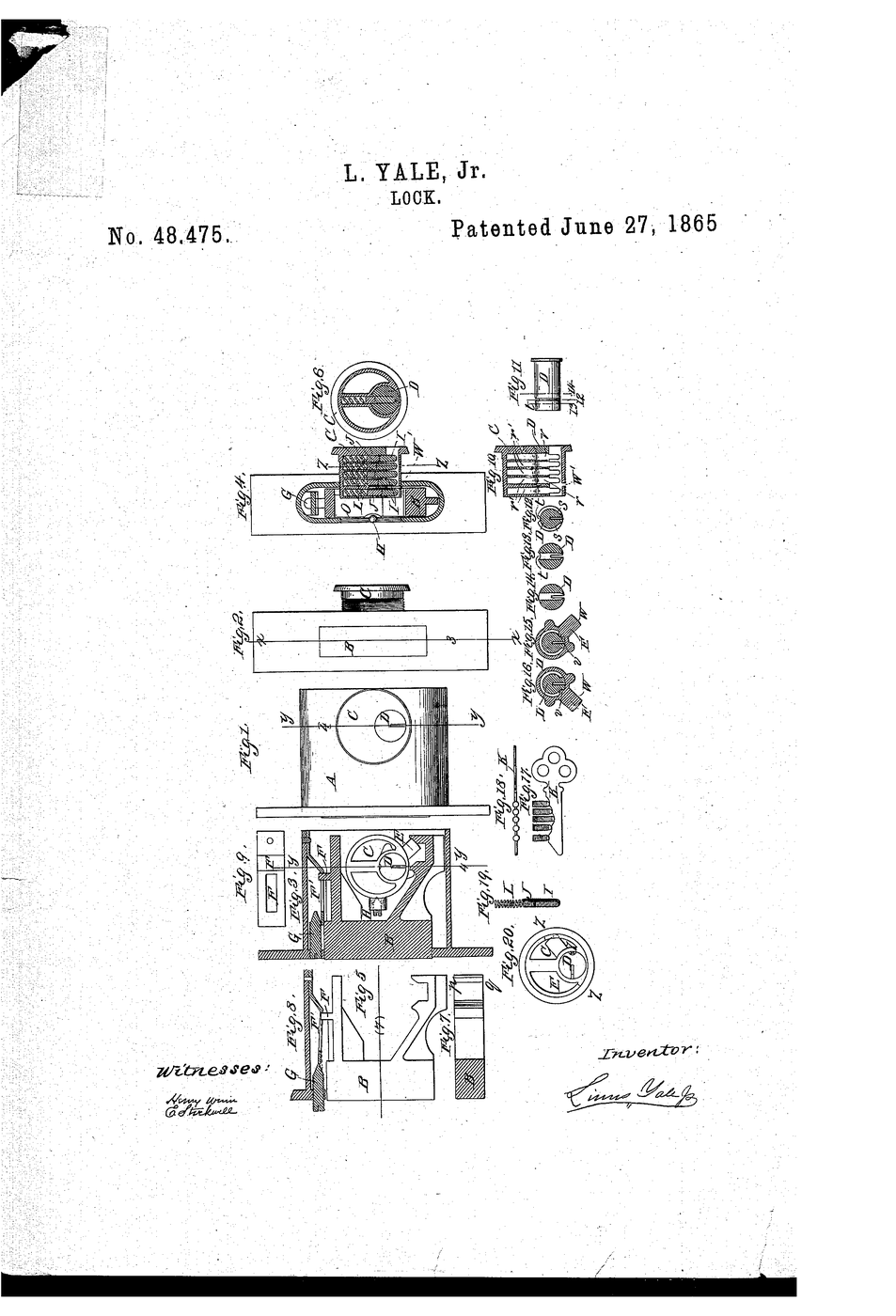


Yale Cylinder Lock
A lever lock puts its security in the door. The mechanism is big, it lives inside the lock case, and the key has to be big enough to reach and lift it — which is why old keys are heavy and why a warded lock's secret is visible to anyone who looks down the keyhole.
A pin-tumbler cylinder puts the security in a plug the size of a thumb. Stacks of pins, each cut to a different length, cross the join between a rotating plug and its housing and jam it. The right key raises every stack by exactly its own amount so all the joins line up at once along a single line — and only then can the plug turn.
The second idea matters as much: the cylinder does not move the bolt. It turns a separate arm, so the small vulnerable part is decoupled from the heavy locking part — and can be made replaceable, and fitted to a left- or right-hand door without changing anything else.
US Patent 48,475, modestly titled "Improvement in locks", granted 27 June 1865 to Linus Yale, Jr. It claims notched pin tumblers, a narrow keyway, a cylinder chamber that screws in from either side, and a "lazy-arm" that works the bolt while the plug rotates independently.
Maagizo
Only ever open locks you own
Only ever open locks you own
Understanding a mechanism is fine and useful. Applying it to someone else's property is not. Build the demonstration cylinder and work on that.
Read US 48,475 and find the lazy-arm
Read US 48,475 and find the lazy-arm
Yale claims notched pin tumblers and a "lazy-arm" that throws the bolt while the key cylinder turns independently. Two separate ideas in one patent.
Cut the housing and the plug
Cut the housing and the plug
Make a rectangular hardwood housing and bore it to take a close-fitting round plug. The plug must rotate freely with almost no play.
Vifaa kwa hatua hii:
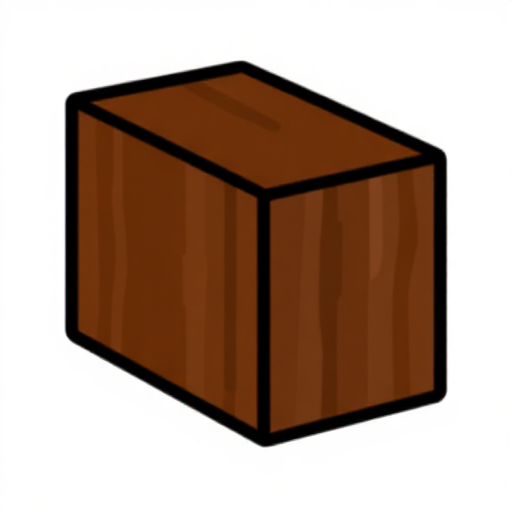 Kipande cha mbao ngumu1 karatasi
Mark the shear line
Mark the shear line
Draw the circle where plug meets housing on the end grain. Everything in the lock is about that one line — pins crossing it jam the plug.
Drill five pin chambers straight through
Drill five pin chambers straight through
With the plug held in place, drill five equally spaced holes down through housing and plug together. Drilling them together is what guarantees they align.
Cut five key pins to different lengths
Cut five key pins to different lengths
Cut steel rod into five key pins of clearly different lengths — say 6, 8, 10, 12 and 14 mm. These sit lowest and touch the key.
Vifaa kwa hatua hii:
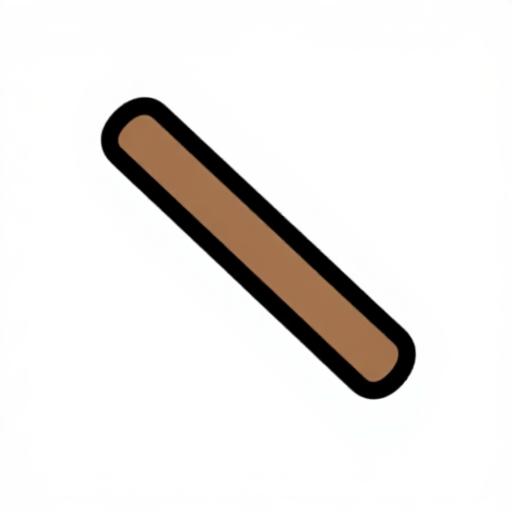 Ufito wa chuma laini1 kipande
Zana zinazohitajika:
 Koleo la Mdomo Bapa
Cut five driver pins all the same length
Cut five driver pins all the same length
Cut five identical drivers to sit above the key pins. Same length every time — the variation lives entirely in the key pins.
Fit springs above the drivers
Fit springs above the drivers
Put a light spring over each driver and cap the chambers. The springs push every stack down so the lock defaults to locked.
Vifaa kwa hatua hii:
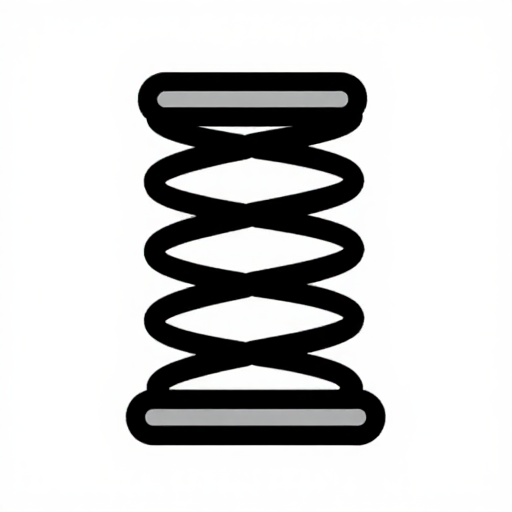 Seti ya springi za kubana1 seti
Try to turn the plug with nothing inserted
Try to turn the plug with nothing inserted
It will not move. Every driver is straddling the shear line. Look down the keyway and confirm you can see the pins sitting across the join.
Cut a key blank to five depths
Cut a key blank to five depths
File five notches into a flat blank so that each lifts its own stack exactly to the shear line. Deep notch under a long pin, shallow under a short one — the key is the inverse of the pin lengths.
Insert the key and read the gaps
Insert the key and read the gaps
Slide it in and look along the shear line. Every join between key pin and driver should sit level with it. Adjust any notch that is over- or under-lifting.
Turn it, then deliberately mis-cut one notch
Turn it, then deliberately mis-cut one notch
The plug turns. Now file one notch 1 mm deeper and try again — it jams. One wrong depth out of five defeats the whole lock, which is where the combinations come from.
Count the possible keys
Count the possible keys
With 5 pins and, say, 6 usable depths each, work out 6⁵. Compare that with a warded lock, whose few wards can be defeated by one skeleton key.
Add the lazy-arm behind the plug
Add the lazy-arm behind the plug
Fit a separate arm driven by a tail on the plug, and let that arm move a sliding bolt. The cylinder now only signals; the bolt does the work.
Flip the cylinder and refit it
Flip the cylinder and refit it
Turn the cylinder around and mount it from the other face. Same lock, opposite-handed door — Yale's chamber is designed to screw in from either side.
History & Context — an improvement, not an invention
History & Context — an improvement, not an invention
The patent. US 48,475, "Improvement in locks", granted 27 June 1865 to Linus Yale, Jr. Application and grant share a date, so only the grant is cited. Note how modest the granted title is, and how accurate it turns out to be.
⚠ Yale did not invent the pin tumbler, and it is not close. The principle — loose pins of differing lengths dropping into a bolt and lifted clear by a matching key — is ancient Egyptian, in wood, roughly four thousand years old. It was reinvented and refined repeatedly; Linus Yale Senior was already making pin-tumbler bank locks before his son. What Yale Jr. contributed was the packaging: shrinking the mechanism into a small cylinder with a narrow flat keyway, so the key becomes a light flat blank instead of a barrel, and separating that cylinder from the bolt work. Calling him the inventor of the pin-tumbler lock is wrong; calling him the inventor of the lock on your front door is about right.
The lazy-arm is the underrated half. Decoupling the plug from the bolt means the two parts can be optimised separately — the cylinder for key security and small size, the lock body for brute strength. It also makes the cylinder a replaceable module: rekeying a building means swapping cylinders, not lock cases, and a worn or compromised cylinder can be changed without touching the door hardware. Master-keying systems, hotel locks and the entire modern locksmithing trade rest on that separation. Step 14 and step 15 are where the patent stops being about pins and starts being about product design.
Why the numbers matter. A warded lock's security is the shape of a few obstructions, and a skeleton key that avoids all of them opens the whole family — which is why one key so often opened every door in a house. A five-pin cylinder with six depths gives 6⁵ = 7,776 nominal differs, before removing combinations that are too similar to cut reliably. That is not unbreakable, and it was never meant to be: it is enough that a stranger cannot carry a universal key.
Its honest weaknesses. Pin tumblers are vulnerable precisely because the pins must move freely: manufacturing tolerance means the chambers are never perfectly aligned, so pins bind one at a time under rotational pressure and can be set individually — which is what picking is, and it is why locksport exists as a hobby. Bump keys exploit the same freedom by impact. Security pins — spools and serrated drivers, the descendants of the "notched" tumblers Yale claims here — exist to make that harder by giving false feedback. A cylinder lock keeps out an opportunist, and its real job is to be inconvenient enough that a determined attacker goes through the window instead.
Vifaa
3- 1 karatasiKishikilia Nafasi
- 1 kipandeKishikilia Nafasi
- Kishikilia Nafasi
Zana Zinazohitajika
1- Kishikilia Nafasi
Blueprint zinazohusiana
Blueprint hizi zinashiriki maarifa — mbinu, vifaa au kanuni

CC0 Umma Wote
Mchoro huu umetolewa chini ya CC0. Uko huru kunakili, kubadilisha, kusambaza, na kutumia kazi hii kwa madhumuni yoyote, bila kuomba ruhusa.
Saidia Mtengenezaji kwa kununua bidhaa kupitia Mchoro wao ambapo wanapata Kamisheni ya Mtengenezaji iliyowekwa na Wachuuzi, au unda marudio mapya ya Mchoro huu na uiunganishe kama kiungo katika Mchoro wako kuchangia mapato.