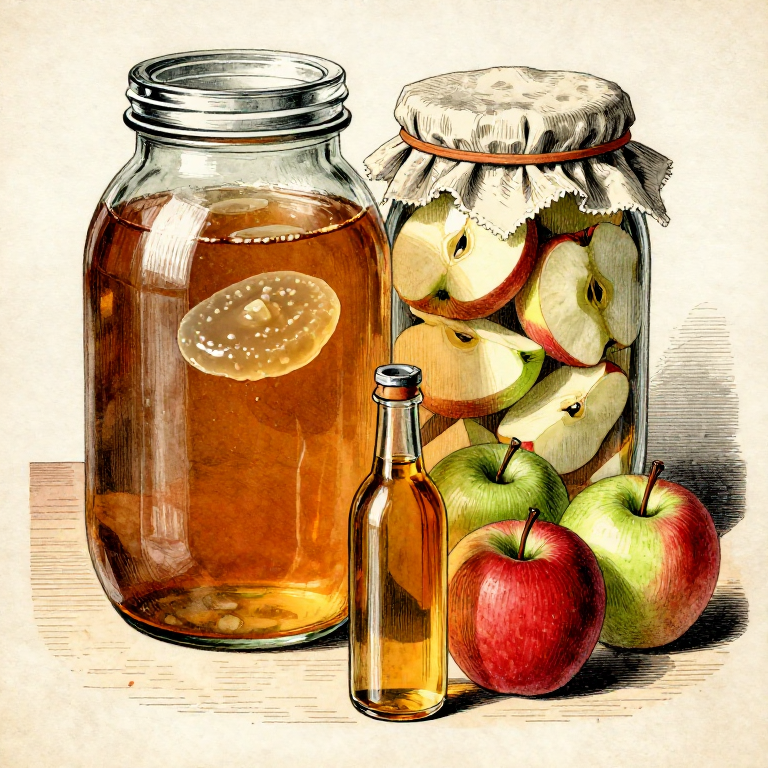


ធ្វើទឹកខ្មេះផ្លែប៉ោមឆៅ ដោយការ fermentation ព្រៃ
ទឹកខ្មេះគឺជាផលិតផលដែលមានជាតិ fermented ដ៏ចំណាស់បំផុតមួយរបស់មនុស្សជាតិ — ភស្តុតាងបុរាណវត្ថុបង្ហាញថាការប្រើប្រាស់របស់វាយ៉ាងហោចណាស់ 7,000 ឆ្នាំមុន។ ពាក្យ 'ទឹកខ្មេះ' មកពីភាសាបារាំងចាស់ vin aigre ('ស្រាជូរ') ដែលពណ៌នាយ៉ាងល្អឥតខ្ចោះអំពីដំណើរការ៖ អាល់កុលត្រូវបាន fermented ដោយបាក់តេរីអាស៊ីតអាសេទិក (អាសេតូបាកទ័រ) ទៅជាអាស៊ីតអាសេទិក។ វត្ថុរាវដែលមានជាតិអាល់កុលអាចក្លាយជាទឹកខ្មេះបាន — ទឹកខ្មេះស្រា ទឹកខ្មេះម៉ល ទឹកខ្មេះបាយ និងទឹកខ្មះ cider ផ្លែប៉ោម សុទ្ធតែធ្វើតាមជីវគីមីដូចគ្នា។
ទឹកខ្មះ cider ផ្លែប៉ោម (ACV) គឺជាមធ្យោបាយងាយស្រួលបំផុតសម្រាប់ផលិតនៅផ្ទះ ព្រោះដំណើរការនេះមិនត្រូវការឧបករណ៍ពិសេស គ្មានវប្បធម៌ដែលបានទិញ និងមិនមានការត្រួតពិនិត្យសីតុណ្ហភាពច្បាស់លាស់។ ដំបែព្រៃនៅលើស្បែកផ្លែប៉ោម ferment ស្ករទៅជាអាល់កុល (cider) បន្ទាប់មកព្រៃAcetobacter ពីខ្យល់បំលែងជាតិអាល់កុលទៅជាអាស៊ីតអាសេទិក (ទឹកខ្មេះ)។ ដំណើរការទាំងមូលត្រូវបានជំរុញដោយអតិសុខុមប្រាណដែលកើតឡើងដោយធម្មជាតិ — វាត្រូវបានកើតឡើងដោយឯកឯងនៅគ្រប់តំបន់ដែលរីកលូតលាស់ផ្លែប៉ោមចាប់តាំងពីផ្លែប៉ោមមានមក។
កម្រិតមធ្យមសំខាន់គឺ 'ម្តាយនៃទឹកខ្មេះ' ដែលជាជីវជាតិសែលុយឡូសផលិតដោយ Acetobacter ដែលបង្កើតជាឌីសនៅលើផ្ទៃនៃសារធាតុ fermenting ។ ឌីសជ័រកៅស៊ូនេះគឺជាវប្បធម៌ស៊ីសង្វាក់រស់នៅដែលអាចផ្ទេរទៅបាច់ថ្មីដោយមិនកំណត់ដូចជាអ្នកចាប់ផ្តើមធ្វើម្សៅជូរ។
ការណែនាំ
ជ្រើសរើសនិងរៀបចំផ្លែប៉ោម
ជ្រើសរើសនិងរៀបចំផ្លែប៉ោម
ប្រើផ្លែប៉ោមប្រភេទណាក៏បាន — ការលាយគ្នានៃពូជផ្អែម ផ្អែម និងល្វីង បង្កើតបានទឹកខ្មេះដ៏ស្មុគស្មាញបំផុត។ ផ្លែប៉ោម Windfall (ធ្លាក់ពីលើដើមឈើ) គឺល្អ - ពួកវាមិនគិតថ្លៃ ជាញឹកញាប់មានស្នាមជាំខ្លាំងពេកសម្រាប់ការបរិភោគ ហើយស្បែករបស់ពួកគេផ្ទុកផ្សិតព្រៃច្រើន។ កាត់ផ្នែកដែលរលួយចេញ ប៉ុន្តែកុំបារម្ភអំពីស្នាមជាំគ្រឿងសម្អាង ស្នាមជាំបន្តិច ឬខូចដង្កូវ។ កុំលាបផ្លែប៉ោម - ស្បែកយកមេផ្សិតព្រៃដែលជំរុញឱ្យមានជាតិ fermentation។
លាងផ្លែប៉ោមមួយភ្លែតដើម្បីលុបភាពកខ្វក់ និងកំទេចកំទី ប៉ុន្តែកុំដុសខ្លាំងពេក - អ្នកចង់រក្សាផ្សិតដំបែ (ស្រទាប់ពណ៌សដែលមានធូលីអាចមើលឃើញនៅលើស្បែកផ្លែប៉ោមដែលមិនទាន់លាងចេញ)។ កាត់ផ្លែប៉ោមជាបំណែកតូចៗ (2-3 សង់ទីម៉ែត្រ) រួមទាំងស្នូល និងគ្រាប់។ អ្នកត្រូវការផ្លែប៉ោមប្រហែល 2-3 គីឡូក្រាមដើម្បីផលិតទឹកខ្មេះ 1 លីត្រ។
សម្ភារៈសម្រាប់ជំហាននេះ៖
 ផ្លែប៉ោម3 គក
ឧបករណ៍ដែលត្រូវការ៖
 កាំបិតផ្ទះបាយ
ស្រង់ទឹកហើយចាប់ផ្តើម fermentation គ្រឿងស្រវឹង
ស្រង់ទឹកហើយចាប់ផ្តើម fermentation គ្រឿងស្រវឹង
ដាក់ផ្លែប៉ោមដែលហាន់រួចក្នុងកែវស្អាត ឬធុងប្លាស្ទីកថ្នាក់អាហារ (មិនដែលលោហធាតុទេ—អាស៊ីតអាសេទិកច្រេះលោហៈភាគច្រើន)។ គ្របដណ្តប់ជាមួយទឹករហូតដល់បំណែកផ្លែប៉ោមទើបតែលិច។ បន្ថែមស្ករ 1-2 ស្លាបព្រាបាយក្នុងមួយលីត្រទឹក ដើម្បីបង្កើនបរិមាណជាតិស្ករដំបូង និងធានាឱ្យមានជាតិអាល់កុល fermentation ខ្លាំង (ជាតិអាល់កុលកាន់តែច្រើន → អាស៊ីតអាសេទិកកាន់តែច្រើន → ទឹកខ្មេះខ្លាំងជាង)។
គ្របធុងដោយក្រណាត់ ឬកន្សែងក្រដាសដែលធានាដោយក្រុមកៅស៊ូ - នេះអនុញ្ញាតឱ្យមានចរន្តខ្យល់ (ដែលអាសេតូបាកតេនឹងទុកចោលនៅពេលក្រោយ)។ ដាក់នៅកន្លែងក្តៅនិងងងឹត (18-28 អង្សាសេ) ។ ក្នុងរយៈពេល 2-5 ថ្ងៃ អ្នកនឹងឃើញពពុះដែលបង្កើតនៅលើផ្ទៃផ្លែប៉ោម - នេះគឺជាផ្សិតព្រៃបំប្លែងស្ករទៅជាអាល់កុល។ កូរជារៀងរាល់ថ្ងៃដើម្បីដាក់បំណែកផ្លែប៉ោមអណ្តែតទឹក (ការពារផ្សិត)។
សម្ភារៈសម្រាប់ជំហាននេះ៖
 ស្ករស50 ក្រ
ឧបករណ៍ដែលត្រូវការ៖
 ធុងផ្សំ
 ក្រណាត់កប្បាស
 កៅស៊ូរឹត
 ដំបងឈើកូរ
ប៉ះពាល់និងចាប់ផ្តើម fermentation acetic
ប៉ះពាល់និងចាប់ផ្តើម fermentation acetic
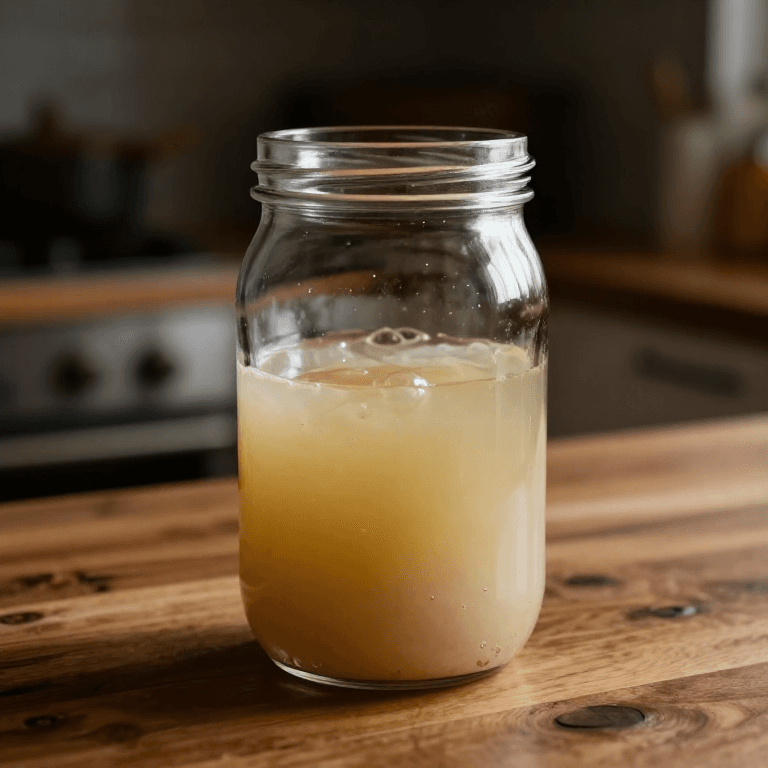
បន្ទាប់ពី 2-3 សប្តាហ៍ ពពុះនឹងថយចុះយ៉ាងខ្លាំង — ជាតិអាល់កុល fermentation គឺពេញលេញ។ វត្ថុរាវគួរមានរសជាតិដូច cider ស្ងួត - មានជាតិអាល់កុល ប៉ុន្តែមិនទាន់ជូរ។ ច្របាច់វត្ថុរាវតាមក្រណាត់ល្អ ច្របាច់ផ្លែប៉ោមដើម្បីយកទឹកចេញ។ បោះចោលម្សៅ (ឬជីកំប៉ុសវា)។
ចាក់វត្ថុរាវដែលច្របាច់ចូលទៅក្នុងពាង ឬក្រឡដែលមានមាត់ធំទូលាយ។ តម្រូវការសំខាន់៖ ផ្ទៃអតិបរមាដែលប៉ះពាល់នឹងខ្យល់។ Acetobacter គឺជាបាក់តេរី aerobic (ត្រូវការអុកស៊ីសែន) — ពួកវាអាចបំប្លែងជាតិអាល់កុលទៅជាអាស៊ីតអាសេទិកបានតែនៅក្នុងវត្តមានអុកស៊ីសែនប៉ុណ្ណោះ។ ធុងធំទូលាយ និងរាក់មានប្រសិទ្ធភាពជាងដបតូចចង្អៀត។ គ្របដោយក្រណាត់ហើយធានា។ ដាក់ក្នុងទីតាំងក្តៅ (20-30°C គឺល្អបំផុតសម្រាប់ Acetobacter)។
ឧបករណ៍ដែលត្រូវការ៖
 សំណាញ់រែង
 ក្អមផ្សំសេរ៉ាមិចក្រណាត់កប្បាស
សង្កេតមើលម្តាយនៃការបង្កើតទឹកខ្មះ
សង្កេតមើលម្តាយនៃការបង្កើតទឹកខ្មះ
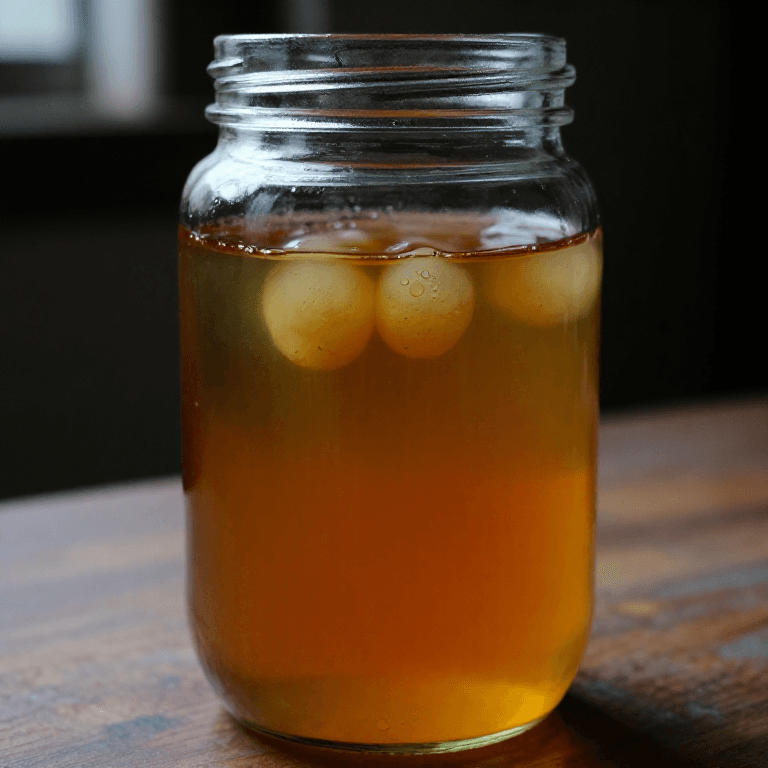
ក្នុងរយៈពេល 1-2 សប្តាហ៍នៃការរឹតបន្តឹង ខ្សែភាពយន្តស្តើង និងថ្លានឹងលេចឡើងលើផ្ទៃវត្ថុរាវ។ នេះគឺជាម្តាយរបស់ទឹកខ្មេះ — ជីវហ្វីលសែលុយឡូសដែលផលិតដោយ អាសេតូបាកតេអាសេទី និងប្រភេទសត្វដែលពាក់ព័ន្ធ។ ក្នុងរយៈពេលប៉ុន្មានសប្តាហ៍បន្ទាប់ វាកាន់តែក្រាស់ទៅជាឌីសជ័រកៅស៊ូ ដែលអាចឡើងដល់កម្រាស់ 1 សង់ទីម៉ែត្រ។ វាអាចមើលទៅគួរឱ្យព្រួយបារម្ភ — ប្រផេះ ជែលលីន ជួនកាលមានបំណះពណ៌ត្នោត ឬពណ៌ស ប៉ុន្តែវាគឺជាម៉ាស៊ីនផលិតទឹកខ្មេះរស់។
កុំរំខានម្តាយ។ ការផ្លាស់ទីកុងតឺន័រឬចាក់ខ្សែភាពយន្តរំខានដល់អាណានិគមនៃបាក់តេរីនិងបន្ថយការ fermentation ។ ប្រសិនបើម្តាយលិច (ដែលជួនកាលកើតឡើងនៅពេលដែលវាធ្ងន់ពេក) ថ្មីមួយនឹងបង្កើតនៅលើផ្ទៃ។ ម្តាយដែលលិចទឹកបន្តរួមចំណែក ប៉ុន្តែមានប្រសិទ្ធភាពតិចជាងអាណានិគមលើផ្ទៃ។ វត្ថុរាវខាងក្រោមនឹងកាន់តែជូរបន្តិចម្តងៗ នៅពេលដែលជាតិអាល់កុលបំប្លែងទៅជាអាស៊ីតអាសេទិក។
សាកល្បងនិងដបទឹកខ្មេះ
សាកល្បងនិងដបទឹកខ្មេះ
បន្ទាប់ពី 4-8 សប្តាហ៍នៃការ fermentation acetic សូមភ្លក់រសជាតិទឹកខ្មេះ (ដោយប្រុងប្រយ័ត្ន - ទឹកខ្មេះខ្លាំងអាចធ្វើឱ្យរលាកបំពង់ក) ។ វាគួរតែមានរសជាតិជូរជាមួយនឹងរសជាតិផ្លែប៉ោមដ៏ស្មុគស្មាញ។ ប្រសិនបើវានៅតែមានរសជាតិអាល់កុល សូមទុកពេលបន្ថែម ប្រសិនបើវាមានរសជាតិសំប៉ែត ឬជូរ នោះការ fermentation អាចនឹងជាប់គាំង — ធានាបាននូវខ្យល់ចេញចូល និងភាពកក់ក្តៅគ្រប់គ្រាន់។
នៅពេលដែលរសជាតិ និងអាស៊ីតសមស្របនឹងចំណង់ចំណូលចិត្តរបស់អ្នក សូមច្របាច់ទឹកខ្មេះតាមរយៈក្រណាត់ចូលទៅក្នុងដបស្អាត។ ដបកែវដែលមានគម្របមិនមែនលោហធាតុគឺល្អ (មួកផ្លាស្ទិច ឆ្នុក ឬគម្របកញ្ចក់ — មិនដែលមួកវីសដែកដែលនឹងរលួយទេ)។ ទឹកខ្មេះនឹងបន្តបង្កើតរសជាតិបន្តិចម្តងៗក្នុងរយៈពេលជាច្រើនខែនៃភាពចាស់នៅក្នុងដប។ ACV ឆៅ និងគ្មានការបឺតស្រូបនឹងបង្កើតម្តាយតូចមួយនៅក្នុងដបដោយធម្មជាតិ — នេះគឺជារឿងធម្មតា ហើយបង្ហាញពីផលិតផលរស់នៅ។
ឧបករណ៍ដែលត្រូវការ៖
សំណាញ់រែង ដបកញ្ចក់ងងឹត (បិទជិតបាន)
រក្សាទុកម្តាយសម្រាប់បាច់នាពេលអនាគត
រក្សាទុកម្តាយសម្រាប់បាច់នាពេលអនាគត
ម្តាយនៃទឹកខ្មេះ គឺជាវប្បធម៌រស់នៅដែលអាចប្រើប្រាស់ឡើងវិញបានដោយគ្មានកំណត់។ ទុកវាក្នុងពាងកែវមួយដោយទឹកខ្មេះខ្លះ (ទឹកអាស៊ីតការពារការចម្លងរោគ)។ ដើម្បីចាប់ផ្តើមបាច់ថ្មី៖ ដាក់ម្តាយលើផ្ទៃនៃ cider ស្រស់ ឬជាតិអាល់កុលណាមួយ ហើយគ្របដោយក្រណាត់។ ម្តាយដែលបានបង្កើតឡើងបង្កើនល្បឿននៃការ fermentation យ៉ាងខ្លាំង — បាច់ថ្មីជាមួយម្តាយចាស់ទុំអាចឈានដល់ទឹកអាស៊ីតពេញលេញក្នុងរយៈពេល 2-3 សប្តាហ៍ជំនួសឱ្យ 6-8 ។
អ្នកក៏អាចចែករំលែកម្តាយផងដែរ៖ កាត់បំណែកមួយសម្រាប់មិត្តភក្តិឬអ្នកជិតខាង (វាបង្កើតឡើងវិញយ៉ាងឆាប់រហ័ស) ។ ជាប្រពៃណី ម្តាយនៃទឹកខ្មេះត្រូវបានរក្សាទុកអស់ជាច្រើនទសវត្សរ៍នៅក្នុងគ្រួសារ និងសហគមន៍ ជាច្រើនដូចជាអ្នកចាប់ផ្តើមជូរ — សារពាង្គកាយមានជីវិតបានឆ្លងពីជំនាន់មួយទៅជំនាន់មួយ ដែលក្រុមនីមួយៗផ្ទុកនូវមរតកអតិសុខុមប្រាណនៃការ fermentation ពីមុនទាំងអស់។
ឧបករណ៍ដែលត្រូវការ៖
 ដបគំរូកញ្ចក់
សម្ភារៈប្លង់ដែលបានភ្ជាប់

ប្លង់នេះធ្វើ
ប្លង់ពាក់ព័ន្ធ
ប្លង់ទាំងនេះចែករំលែកចំណេះដឹង — បច្ចេកទេស សម្ភារៈ ឬគោលការណ៍
CC0 សាធារណៈ
ប្លង់នេះត្រូវបានចេញផ្សាយក្រោម CC0។ អ្នកមានសិទ្ធិចម្លង កែប្រែ ចែកចាយ និងប្រើប្រាស់ដោយមិនចាំបាច់សុំអនុញ្ញាត។
គាំទ្រអ្នកបង្កើតដោយទិញផលិតផលតាមរយៈប្លង់របស់ពួកគេ ដែលពួកគេទទួលបាន កម្រៃជើងសារអ្នកបង្កើត កំណត់ដោយអ្នកលក់ ឬបង្កើតកំណែថ្មីនៃប្លង់នេះ ហើយបញ្ចូលជាការតភ្ជាប់ក្នុងប្លង់របស់អ្នកដើម្បីចែករំលែកចំណូល។