예술
뷰티 및 웰니스
공예
문화 및 역사
엔터테인먼트
환경
음식 및 음료
역공학
과학
스포츠
기술
웨어러블
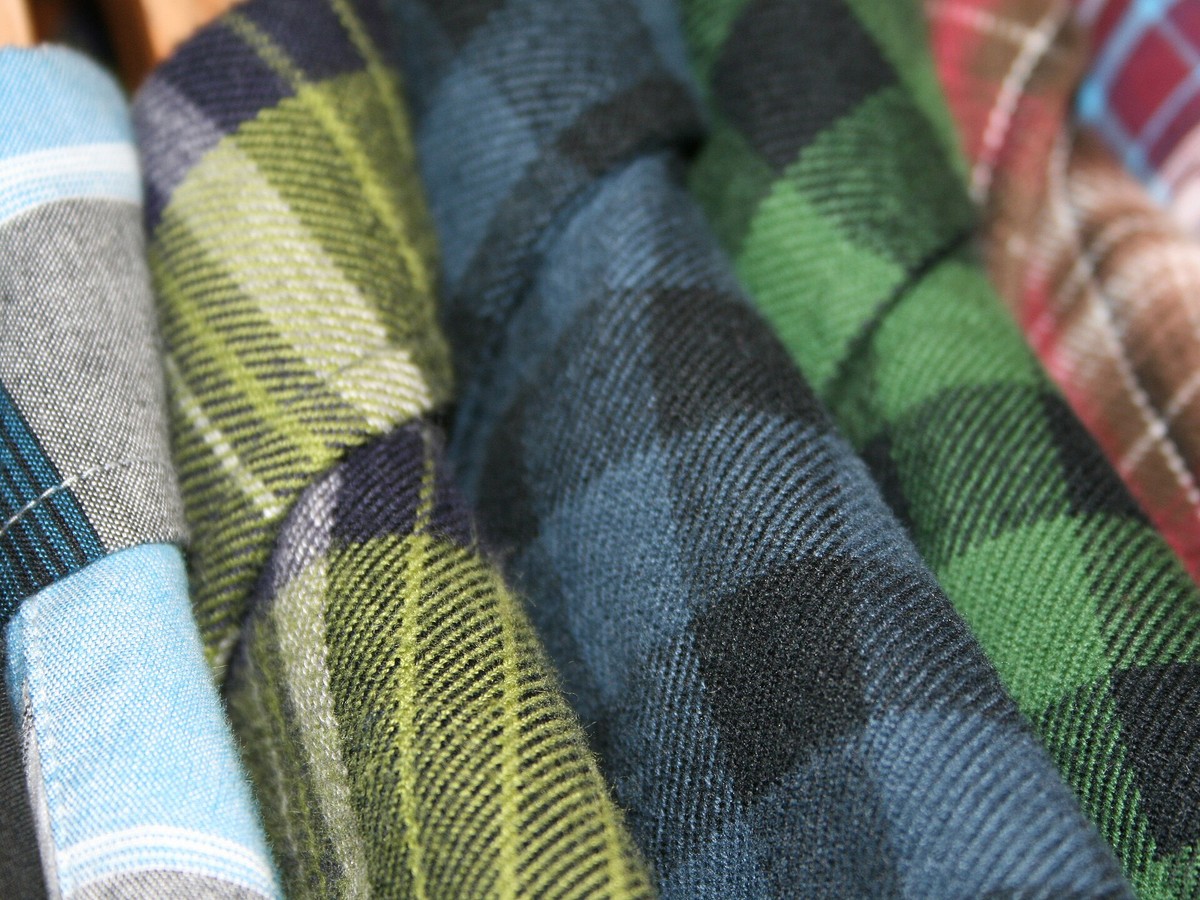


Wool Flannel: Plain-Woven Woollen Yarn, Milled and Raised (Watson, 1921)
A soft wool flannel for shirts, linings and straining bags: woollen-spun yarn woven plain at 24 to 28 ends and 28 to 36 picks per inch, then milled in warm soapy water until it shrinks and closes, and raised to a fibrous face. The settings are William Watson's for an ordinary plain flannel, from Textile Design and Colour (1921).
중급
About 3 days
안내
1
1
Hand-weaving wool cloth
Hand-weaving wool cloth
Weaving and finishing a length of wool fabric by hand (With my hands dream).
2
2
Watson's ordinary flannel
Watson's ordinary flannel
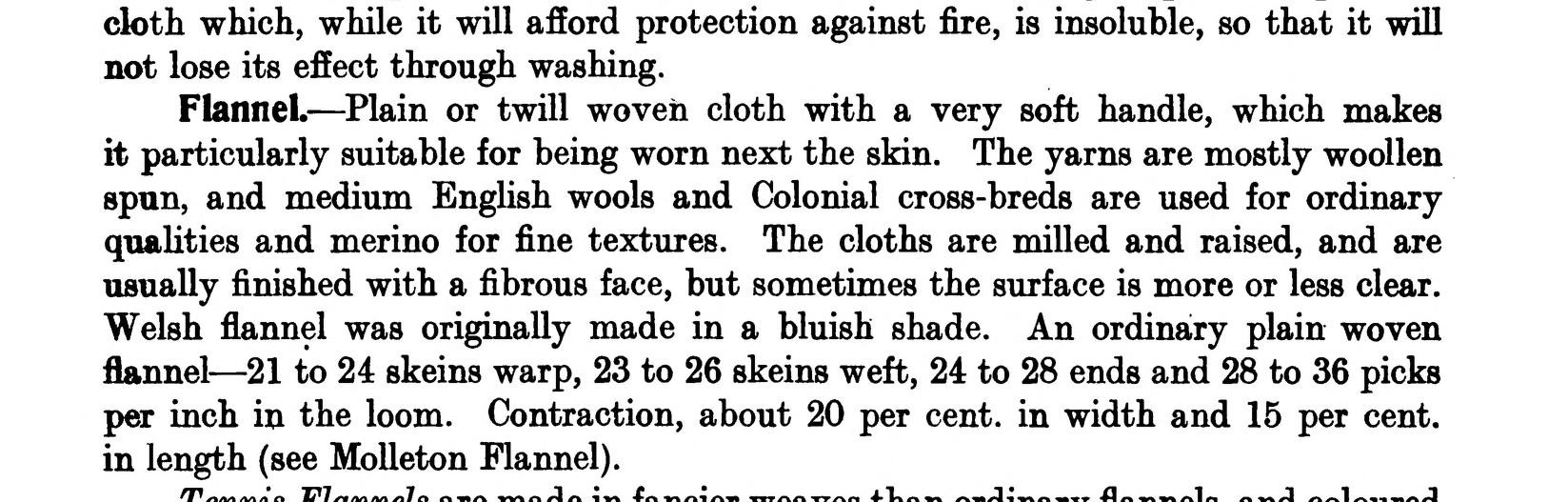
Watson (p. 397): flannel is a plain or twill cloth of woollen-spun yarn, "milled and raised". An ordinary plain flannel has 21 to 24 skeins warp, 23 to 26 skeins weft, 24 to 28 ends and 28 to 36 picks per inch in the loom, and contracts "about 20 per cent. in width and 15 per cent. in length". A skein count is yards per pound divided by 256 (Beaumont, 1888, p. 363).
3
3
Warp and yarn for your piece
Warp and yarn for your piece
Jupyter 노트북 불러오는 중…
필요한 도구:
 자
4
4
Check the yarn count
Check the yarn count
Measure 10 yards of each yarn and weigh it. A 22-skein yarn weighs about 0.81 g per 10 yards; the notebook gives the weight for any count. Use 21 to 24 skeins for the warp and 23 to 26 for the weft.
필요한 도구:
 접시 저울자
5
5
Wind the warp and dress the loom
Wind the warp and dress the loom
Wind the number of ends from the notebook on the warping board, to the warp length it gives. Thread the heddles for plain weave (1-2-1-2 on two shafts) and sley the reed to 24 to 28 ends per inch, for example two ends in each dent of a 13-dent reed for 26 (ours). Beam the warp on under even tension.
이 단계의 재료:
 양모 실타래210 g (warp, 21-24 skeins)
필요한 도구:
 정경판
 발판 바닥 베틀
 바디 걸이
6
6
Weave plain
Weave plain
Weave plain weave, beating to 28 to 36 picks per inch; check with a ruler every few inches. Leave the selvedges a little slack so they draw in with the cloth when it is milled.
이 단계의 재료:
양모 실타래180 g (weft, 23-26 skeins)필요한 도구:
발판 바닥 베틀 배 모양 북자
7
7
Mill the cloth
Mill the cloth
Cut the cloth off the loom and knot the ends. Ours: work it in warm soapy water by hand, squeezing, rolling and throwing it down, and measure it often. Stop when it has shrunk about 20 % in width and 15 % in length, as Watson gives for flannel. Rinse well and squeeze out.
필요한 도구:
 양동이
 비누 한 장자
8
8
Raise the face
Raise the face
While the cloth is still damp, stroke the face lightly with teasel heads, always the same way along the length, until a soft fibrous nap covers the weave. Dry it flat, then brush the nap down.
필요한 도구:
 산토끼꽃 머리
9
9
Troubleshooting
Troubleshooting
Flannel problems and fixes.
Flow
Loading...
10
10
History and honest limits
History and honest limits
William Watson, Textile Design and Colour (1921), p. 397, and Roberts Beaumont, Woollen and Worsted Cloth Manufacture (1888), p. 363. How to mill and raise by hand, the sleying and the cloth size are ours. The cover shows twill flannels (Louis Beche, CC BY 2.0, Wikimedia Commons); this blueprint weaves the plain kind. Not made by us yet.
이 블루프린트로 만드는 것
CC0 퍼블릭 도메인
이 블루프린트는 CC0로 공개되었습니다. 어떤 목적으로든 자유롭게 복사, 수정, 배포 및 사용할 수 있습니다.
제품 구매를 통해 메이커를 지원하세요. 판매자가 설정한 메이커 커미션 을 받거나, 이 블루프린트의 새로운 반복을 만들어 연결로 포함시킬 수 있습니다.