예술
뷰티 및 웰니스
공예
문화 및 역사
엔터테인먼트
환경
음식 및 음료
역공학
과학
스포츠
기술
웨어러블
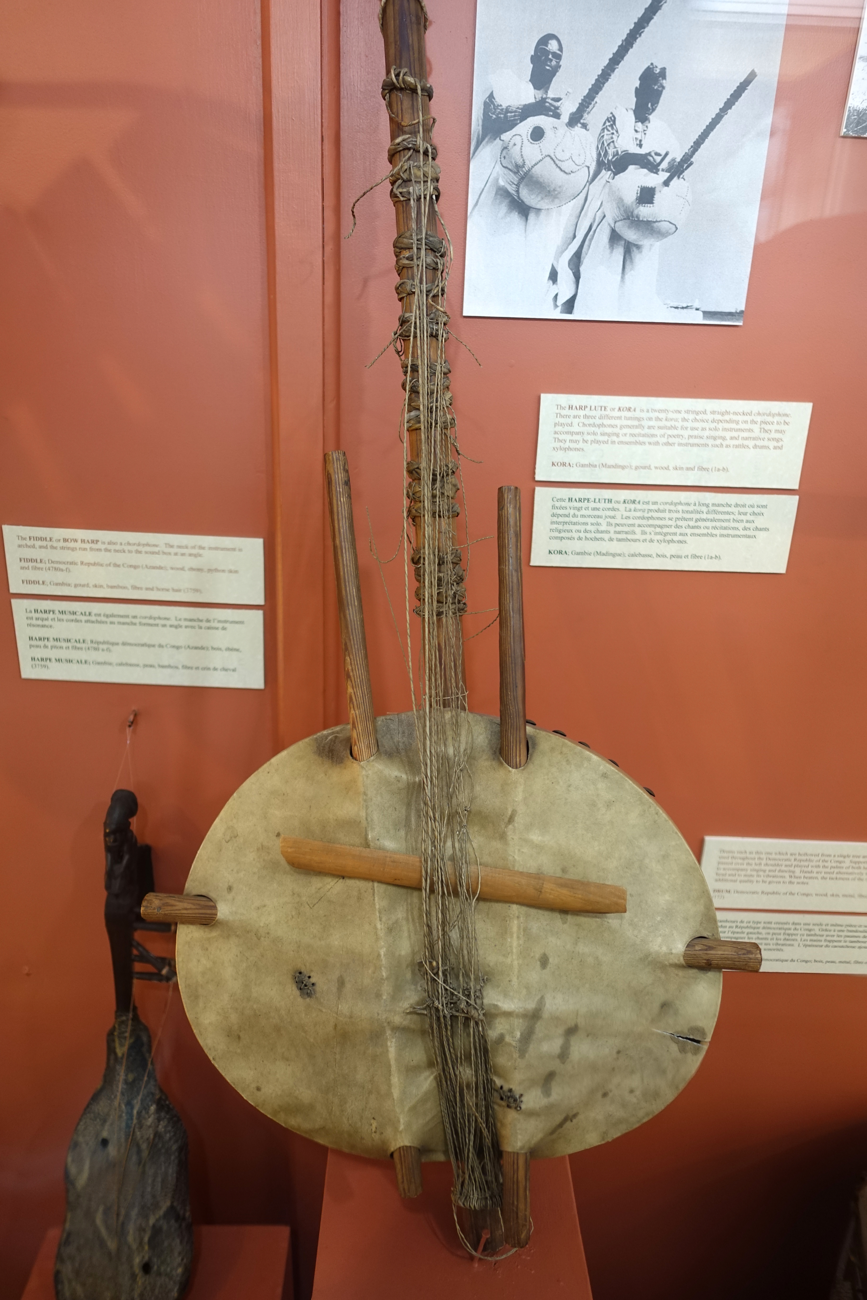
Redpath Museum, McGill University · Public Domain


Building a Kora — The West African Harp-Lute
Build a kora: the great 21-string harp-lute of the Mande griots — a huge calabash gourd faced with skin, a tall notched bridge, and strings running in TWO parallel rows up a long neck, plucked with the thumbs and forefingers. A serious maker build in the harp-lute, part harp and part lute.
중급
Several hours over several sessions
안내
1
1
Half harp, half lute
Half harp, half lute
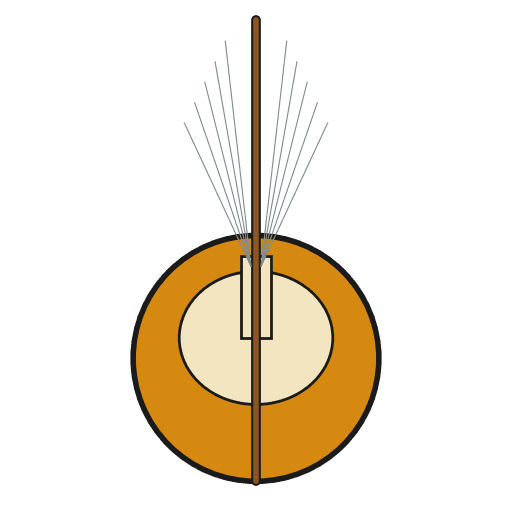
The kora is a 21-string harp-lute of the West African griots. A huge gourd faced with skin is the body; a long neck holds the strings, which run in two parallel rows and are plucked with the thumbs and forefingers.
2
2
Prepare the gourd body
Prepare the gourd body
Take a large calabash gourd and cut a wide flat opening across one side — the biggest gourd you can find, for a deep, full sound.
이 단계의 재료:
 잘 여문 조롱박1 개
필요한 도구:
 슬로이드 조각칼
3
3
Face it with skin
Face it with skin
Stretch cow-skin rawhide drum-tight over the flat opening and lash it down. This skin is the soundboard that radiates the strings.
이 단계의 재료:
 생가죽(로하이드)1 개
 아바카 노끈1 개
4
4
Fit the neck
Fit the neck
Drive a long, straight hardwood neck right through the gourd, sticking out both ends. Two hand-posts either side of the neck give the player something to hold.
이 단계의 재료:
 목재 다월봉1 개
필요한 도구:
 송곳
송곳5
5
Stand the tall bridge
Stand the tall bridge
Stand a tall wooden bridge upright on the skin with a row of notches down EACH edge — the strings will split into two rows, left and right, one for each thumb.
필요한 도구:
슬로이드 조각칼6
6
String it in two rows
String it in two rows
Run twenty-one strings from the base up over the notched bridge and to the neck, eleven in the left row and ten in the right, each held by a sliding leather tuning ring or a peg.
이 단계의 재료:
 강철 피아노선 0.032인치1 개
 줄감개(튜닝 페그)9 개
7
7
Tune and play
Tune and play
Tune the two rows so they interleave into a scale, then pluck with the thumbs and forefingers of both hands, the left and right rows answering each other.
8
8
Compendium — the harp-lute
Compendium — the harp-lute
The kora is a 'harp-lute', and its clever bridge is why. On a true harp, each string runs at its own angle straight from a soundboard to a neck, one string per note; on a lute, a few strings run parallel over a bridge and along a neck. The kora does both at once: its strings run parallel like a lute, but they pass over a TALL bridge notched down both edges, so they leave the bridge in two flat planes, one on the left and one on the right — effectively two little harps sharing one body, one for each thumb. Each string is a single fixed note (the kora, like a harp, is not stopped or fretted — you simply pluck the string you want), and the two interleaved rows let the player weave fast, rippling patterns with just thumbs and forefingers. The sound is radiated by a stretched skin over a giant calabash gourd, exactly the drum-like resonator idea of the ektara and the banjo, scaled up. Strings obey the same rule as the musical bow — tension, length and mass set the pitch — and the kora belongs with the lyre of Ur and every soundbox-and-strings instrument, the branch of the family that keeps one string per note. It is the instrument of the Mande griots (jeliw), the hereditary musician-historians of West Africa.
재료
6- 1 개플레이스홀더
- 1 개플레이스홀더
- 1 개플레이스홀더
- 1 개플레이스홀더
- 플레이스홀더
- 9 개플레이스홀더
이 블루프린트로 만드는 것
관련 블루프린트
이 블루프린트들은 지식을 공유합니다 — 기술, 재료 또는 원리
CC0 퍼블릭 도메인
이 블루프린트는 CC0로 공개되었습니다. 어떤 목적으로든 자유롭게 복사, 수정, 배포 및 사용할 수 있습니다.
제품 구매를 통해 메이커를 지원하세요. 판매자가 설정한 메이커 커미션 을 받거나, 이 블루프린트의 새로운 반복을 만들어 연결로 포함시킬 수 있습니다.