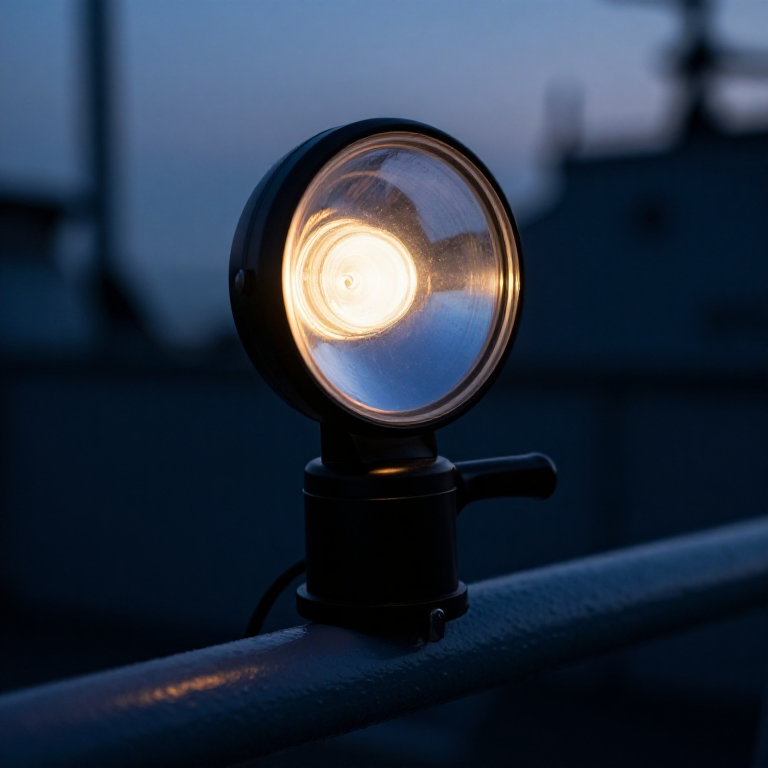

Aldis Signal Lamp
안내
Make a beam instead of a glow
Make a beam instead of a glow
A bare lamp wastes almost all its light. A mirror behind it does not.
- Mount an LED and its battery holder on a small board.
- Curve a strip of acrylic mirror sheet behind it and hold the curve with card.
- Move the lamp back and forth until the projected patch on a distant wall is at its smallest and brightest.
이 단계의 재료:
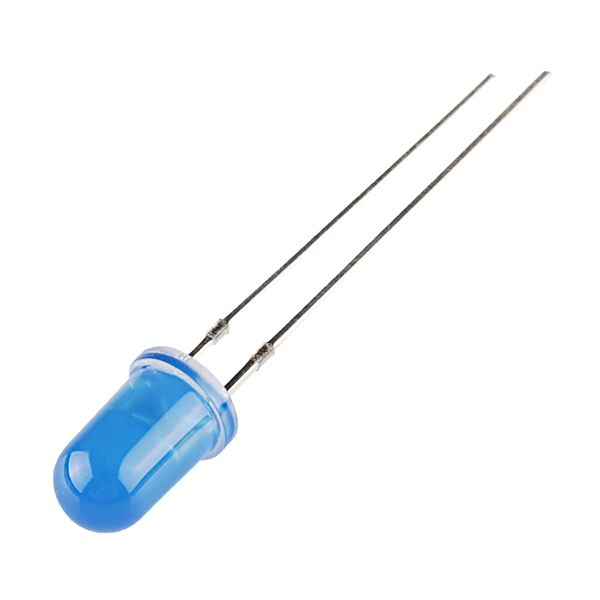 LED - Basic 5mm1 개
 아크릴 거울판1 장
 AA 전지 홀더(4구)1 팩
Add a shutter with a clean edge
Add a shutter with a clean edge
The shutter is the whole signalling mechanism, and its quality is timing quality.
- Cut a card vane that fully blocks the beam.
- Hinge it so a finger press swings it clear and a spring or its own weight returns it.
- Aim for the beam to go from full to none in as short a travel as possible.
이 단계의 재료:
 카드지1 팩
 장 경첩1 개
Sight it, then send
Sight it, then send
A narrow beam has to be aimed, and that is a real operational burden.
- Fix a simple sight along the top of the lamp, aligned with the beam.
- Have a partner stand well away and aim using the sight.
- Send a short Morse message and have them read it back.
- Now have them move ten metres sideways and try again without re-aiming.
Test it against the conditions that defeat the alternatives
Test it against the conditions that defeat the alternatives
Find the boundary of the region this approach owns.
- Send a message in full daylight and note the maximum readable distance.
- Repeat after dark.
- Repeat with a sheet of tracing paper held in the path to imitate haze.
History and context
History and context
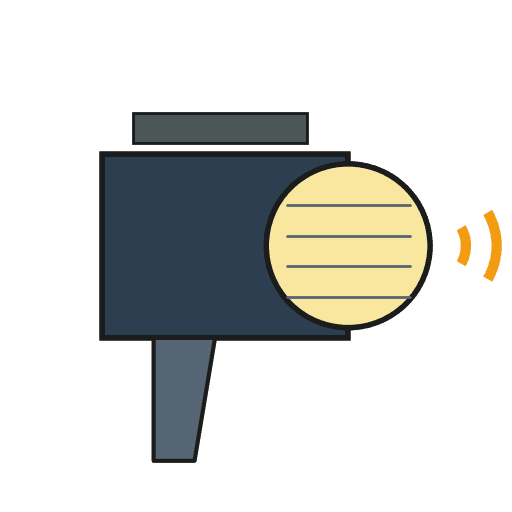
Arthur Cyril Webb Aldis patented his signalling lamp in 1916, during the First World War. The design's distinguishing feature is that the trigger tilts a mirror in and out of the beam path rather than moving a shutter in front of the lens — light, fast and reliable in a hand-held instrument. Aldis was part of the Birmingham optical firm whose name is also on the Aldis camera lens.
Its enduring role is radio silence. A ship transmitting by radio announces its position to anyone listening over the horizon. A narrow light beam pointed at one other ship does not. Signal lamps therefore remained standard equipment through both world wars and long after radio was mature — not because radio was unavailable, but because being heard was the danger. Warships still carry them.
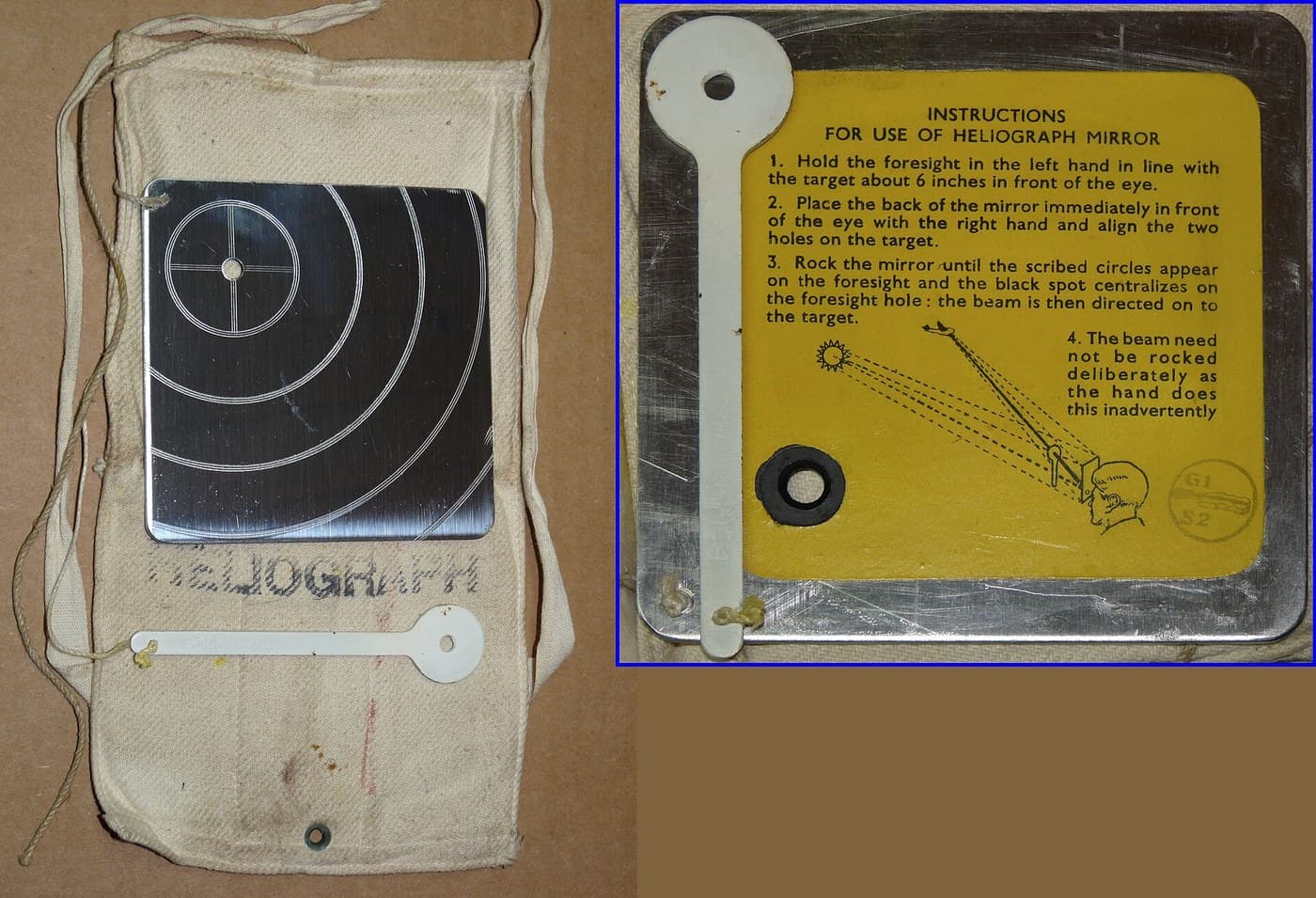
The family it belongs to: heliograph, signal lamp, semaphore flags and Chappe's towers all solve line-of-sight signalling. The lamp's specific region is night, dusk, overcast weather and any situation where the transmission must not spread. It is heavier than flags, needs power, and demands accurate aiming — real costs, freely admitted, paid for capabilities nothing else in the family offers.
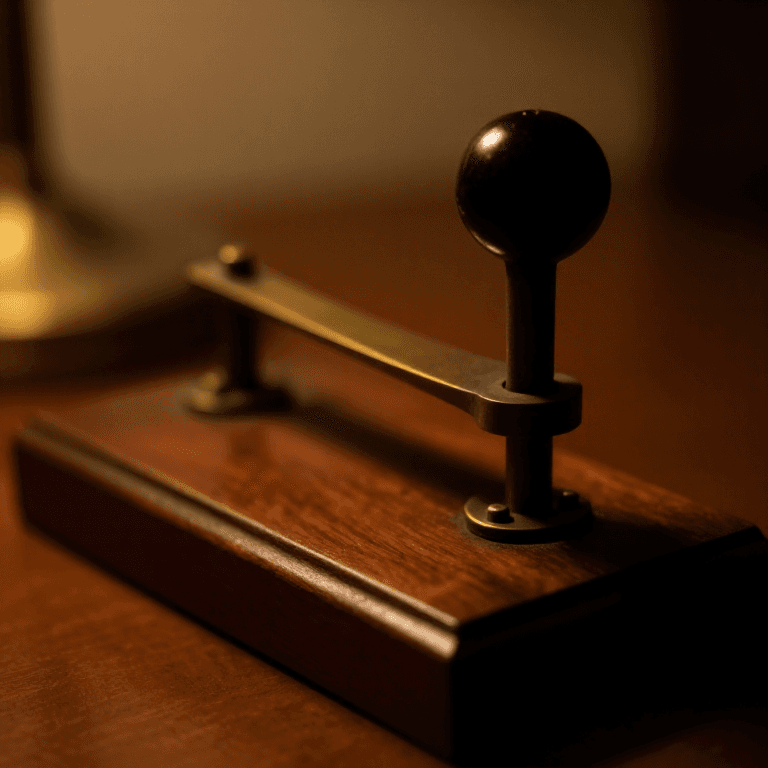
A note on what the shutter is doing: chopping a continuous carrier into timed marks and spaces is exactly what a telegraph key does to a current and what a radio transmitter does to a wave. The medium changes; the modulation is the same idea, which is why Morse could move between all of them without alteration.
재료
5- LED - Basic 5mm10% 수수료1 개₩10
- 1 장플레이스홀더
- 1 팩플레이스홀더
- 1 팩플레이스홀더
- 1 개플레이스홀더
이 블루프린트로 만드는 것

CC0 퍼블릭 도메인
이 블루프린트는 CC0로 공개되었습니다. 어떤 목적으로든 자유롭게 복사, 수정, 배포 및 사용할 수 있습니다.
제품 구매를 통해 메이커를 지원하세요. 판매자가 설정한 메이커 커미션 을 받거나, 이 블루프린트의 새로운 반복을 만들어 연결로 포함시킬 수 있습니다.