

Making Sun-Dried Mud Bricks — Adobe Construction Material
안내
Prepare the Mud Mix
Prepare the Mud Mix
The ideal mud brick mixture contains clay-rich soil (providing cohesion and binding), coarse sand (reducing shrinkage cracking), and chopped straw (providing tensile reinforcement). A good ratio is approximately 60 percent clayey soil, 30 percent sand, and 10 percent straw by volume, though this varies with local soil composition. Mix the dry ingredients together, then add water gradually while treading or stirring until the mixture reaches a thick, plastic consistency — it should hold its shape when formed but not crack when bent. Allow the mixed mud to rest (temper) overnight — this improves workability and allows the clay to fully hydrate.
Build the Brick Mould
Build the Brick Mould
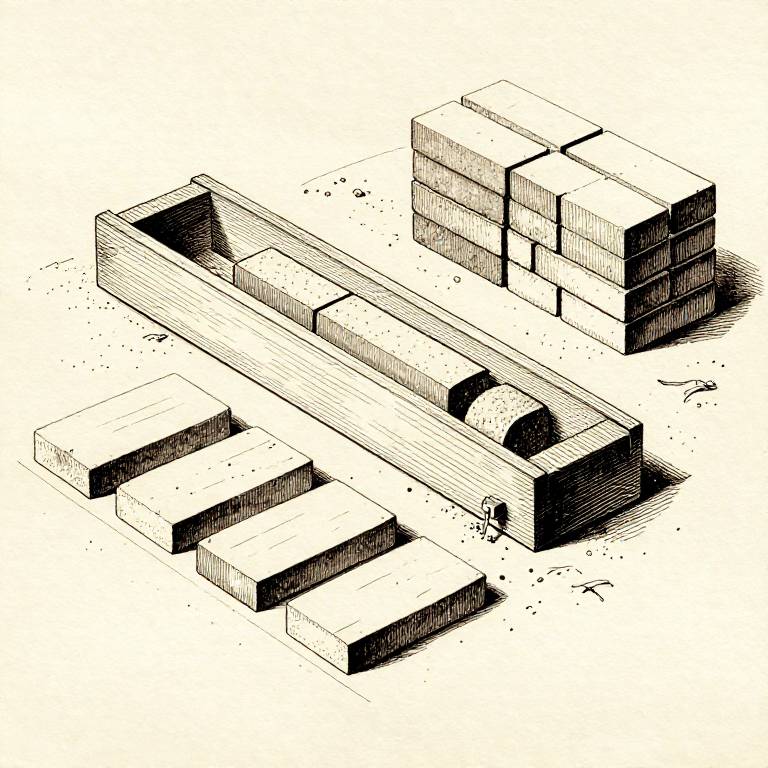
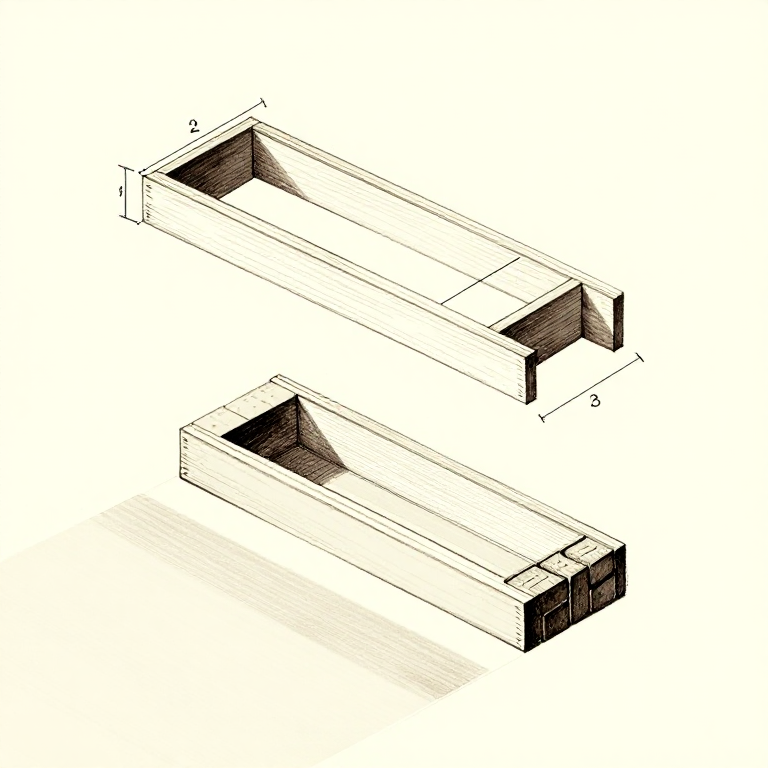
Construct a rectangular wooden frame (the mould) with internal dimensions matching the desired brick size. Mesopotamian standard bricks were typically 30 x 15 x 10 cm, though sizes varied by period and region. The mould is bottomless — it sits on flat ground and is lifted off after filling. Build it from flat boards joined at right angles with pegs or lashings. For production efficiency, make a gang mould that forms 2-4 bricks simultaneously. Soak the mould in water before use and dust the inside with sand or dry straw to prevent the mud from sticking.
이 단계의 재료:
 굵은 모래(건축·도예용)approximately 30% of soil volume 개
 유기 혼화재approximately 5-10% by volume 개
 물enough to make a thick mud 개
Form the Bricks
Form the Bricks
Place the wetted mould on flat, dry ground. Pack the mud mixture firmly into the mould, pressing into all corners and eliminating air pockets. Overfill slightly, then strike the top level using a flat board or the edge of your hand. Carefully lift the mould straight up, leaving the formed brick on the ground. Space bricks 5-10 cm apart to allow air circulation during drying. A single worker can produce 200-400 bricks per day using this method. Stamp or mark the wet surface for identification if desired — many Mesopotamian bricks bear the stamp of the ruler who commissioned the construction.
Dry the Bricks
Dry the Bricks
Allow the bricks to dry in the sun for 3-5 days, then turn them on edge to expose the underside. Full drying takes 1-2 weeks depending on climate. In arid Mesopotamia, bricks dried quickly; in humid climates, shelter the drying bricks from rain under a simple roof. The straw reinforcement is critical during drying — without it, the clay shrinks and cracks severely. With straw, the fibers distribute the shrinkage stress and bridge across any micro-cracks. Properly dried mud bricks are surprisingly hard and strong — they can support the weight of multi-storey buildings.
Build with Mud Bricks
Build with Mud Bricks
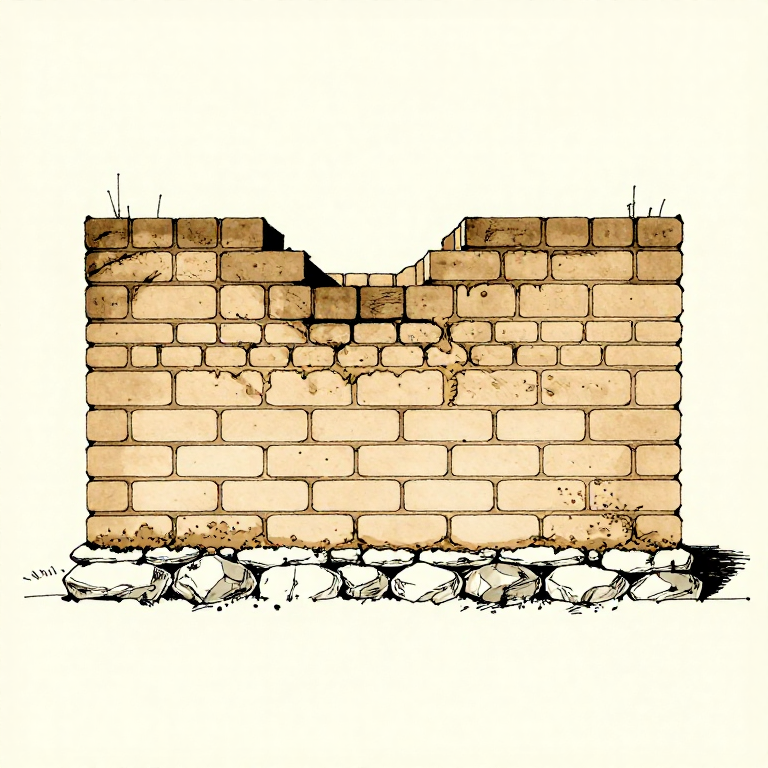
Lay the dried bricks in courses using mud mortar (the same mix as the bricks but wetter). Stagger the joints between courses for structural strength. Mud brick walls are typically 30-60 cm thick — the mass provides thermal insulation (cool in summer, warm in winter). Protect the tops of walls from rain erosion with overhanging roofs or fired-brick capping. The main vulnerability of mud brick is water — prolonged rain dissolves the clay binder. Mud plaster applied to the exterior provides weather protection and must be renewed annually. Despite this maintenance requirement, mud brick structures can last centuries in dry climates — the ruins of the ziggurat at Ur, built circa 2100 BCE, still stand to a height of 15 metres after 4,000 years.
이 단계의 재료:
굵은 모래(건축·도예용)approximately 30% of soil volume 개유기 혼화재approximately 5-10% by volume 개물enough to make a thick mud 개재료
5- approximately 30% of soil volume 개플레이스홀더
- approximately 5-10% by volume 개플레이스홀더
- enough to make a thick mud 개플레이스홀더
- large quantity (depends on production) 개플레이스홀더
- 플레이스홀더
필요 도구
3- 플레이스홀더
- 플레이스홀더
- Flat board (for smoothing top)플레이스홀더
이 블루프린트로 만드는 것

CC0 퍼블릭 도메인
이 블루프린트는 CC0로 공개되었습니다. 어떤 목적으로든 자유롭게 복사, 수정, 배포 및 사용할 수 있습니다.
제품 구매를 통해 메이커를 지원하세요. 판매자가 설정한 메이커 커미션 을 받거나, 이 블루프린트의 새로운 반복을 만들어 연결로 포함시킬 수 있습니다.