예술
뷰티 및 웰니스
공예
문화 및 역사
엔터테인먼트
환경
음식 및 음료
역공학
과학
스포츠
기술
웨어러블
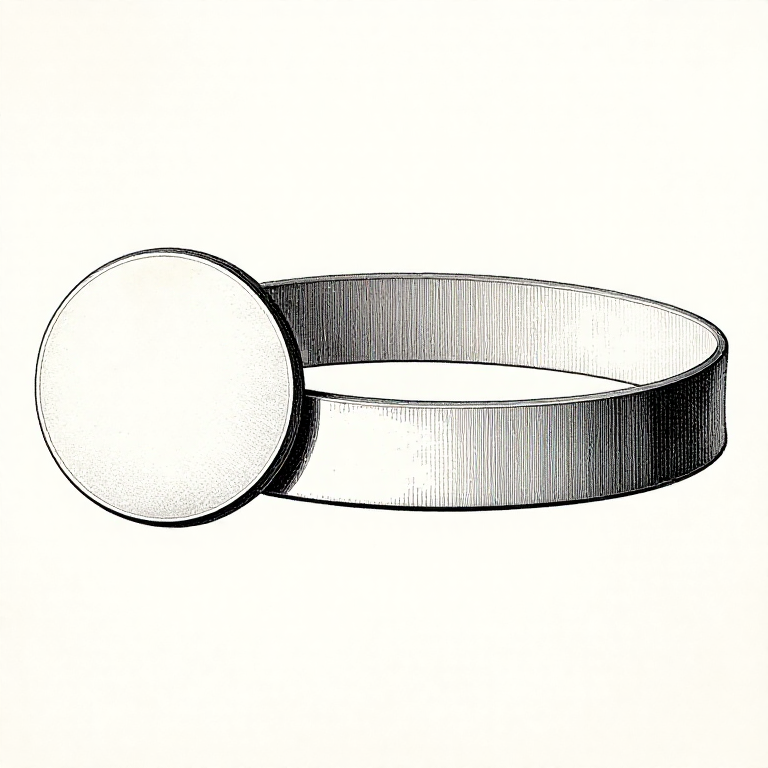


Belts and Chains: Tension, Wrap, and Why Too Tight Kills the Bearings
A slipping belt is obvious and annoying, so people tighten belts. An over-tight belt is not obvious at all, and it destroys the bearings at both ends — slowly, invisibly, and far more expensively than a slipping belt ever would.
The tension a belt needs is the tension that stops it slipping, and that depends on how much of the pulley it wraps around, not on how hard it feels. Grip rises exponentially with wrap angle, which is the whole reason a jockey pulley works.
Chains are the opposite case. A chain does not need tension to grip — the teeth do that — so a chain is deliberately run SLACK, and a tight chain is simply a chain being worn out faster than necessary.
중급
3 hours
안내
1
1
Why wrap angle decides everything
Why wrap angle decides everything
Jupyter 노트북 불러오는 중…
이 단계의 재료:
 타이밍 벨트1 개
필요한 도구:
 데스크톱 컴퓨터
 도르래
도르래 자
자2
2
Setting tension by deflection
Setting tension by deflection
Measure the span between the two pulley centres. Press the belt at the midpoint with a known force and measure how far it moves. The specification is a deflection of roughly 1.6 mm per 100 mm of span, at a force the belt maker states.
That gives a number instead of a feeling, and it is repeatable by somebody else — which is the same argument as weighing salt rather than measuring it in spoons.
Re-tension after the first few hours of running. A new belt seats into the pulley grooves and stretches, so it loses a noticeable fraction of its tension almost immediately. Most belt drives that slip were tensioned once, when new, and never again.
이 단계의 재료:
타이밍 벨트1 개필요한 도구:
자 정밀 저울
정밀 저울3
3
Chains want slack, and they want oil
Chains want slack, and they want oil
A roller chain transmits force through the engagement of rollers and teeth, so it needs no tension to grip. Leave roughly 2% of the span as sag on the slack side — for a 500 mm span, about 10 mm.
A tight chain loads the bearings exactly as a tight belt does, and it also forces the rollers hard into the sprocket teeth, so both wear faster. A chain that 'stretches' has not stretched: the pins and bushes have worn, and the pitch has grown.
Oil is what prevents that wear, and it has to reach INSIDE the rollers where the pins turn. Oil applied to the outside of a chain lubricates nothing that matters; it goes on the inner edge of the slack run, where the links open slightly and draw it in.
이 단계의 재료:
 롤러 체인1 개
필요한 도구:
자 니트릴 고무 장갑
4
4
Alignment matters as much here as at a coupling
Alignment matters as much here as at a coupling
Two pulleys that are not in the same plane make the belt run onto the flange, rub, heat up and wear on one edge. The same misalignment on a chain drive makes it climb the sprocket teeth and eventually jump.
Check with a straightedge across both pulley faces, or a string line. On a V-belt drive the tolerance is about half a degree; on a timing belt or chain it is tighter still.
A belt that wears on one side only, or a chain that is bright on one face of its plates, is reporting misalignment rather than bad luck. That is the diagnostic habit the last rung of this batch is about — the wear pattern names the fault.
이 단계의 재료:
타이밍 벨트1 개롤러 체인1 개필요한 도구:
 직각 자자
직각 자자관련 블루프린트
이 블루프린트들은 지식을 공유합니다 — 기술, 재료 또는 원리

CC0 퍼블릭 도메인
이 블루프린트는 CC0로 공개되었습니다. 어떤 목적으로든 자유롭게 복사, 수정, 배포 및 사용할 수 있습니다.
제품 구매를 통해 메이커를 지원하세요. 판매자가 설정한 메이커 커미션 을 받거나, 이 블루프린트의 새로운 반복을 만들어 연결로 포함시킬 수 있습니다.